
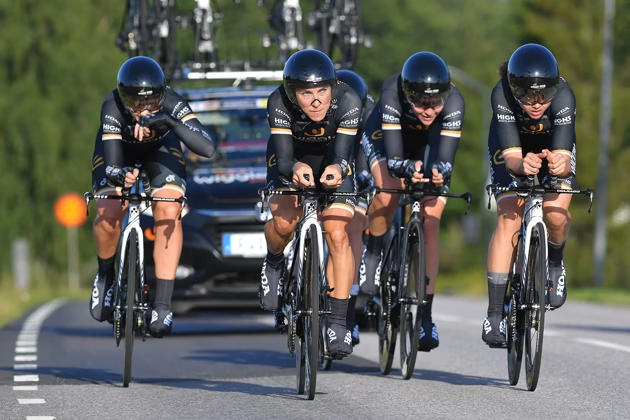
Wiggle High5 was one of the defining women’s cycling teams of the 2010s. It did not last long by historic standards, running from 2013 to 2018, but it helped change the tone around what a professional women’s team could look like, how it could be presented, and how ambitious it could be.
The team began as Wiggle-Honda before becoming Wiggle High5, with Rochelle Gilmore as the driving force behind the project. It was British-registered, internationally built, and deliberately high-profile at a time when women’s cycling still lacked the visibility, investment and structure it deserved.
Its roster was rarely quiet. Giorgia Bronzini, Elisa Longo Borghini, Jolien D’Hoore, Chloe Hosking, Audrey Cordon-Ragot, Emma Johansson, Mara Abbott, Linda Villumsen, Annette Edmondson, Dani King, Katie Archibald, Elinor Barker and Lisa Brennauer all spent time in the team’s colours. That list alone explains part of its importance. Wiggle High5 did not behave like a side project. It built a squad around world champions, Olympic medallists, track stars, classics riders, sprinters and stage-race contenders.
For wider context on the sport it helped shape, our women’s cycling race guides cover the races where teams like Wiggle High5 helped push standards forward, while our women’s cycling team history archive looks at other squads that shaped the modern peloton.
How Wiggle High5 began
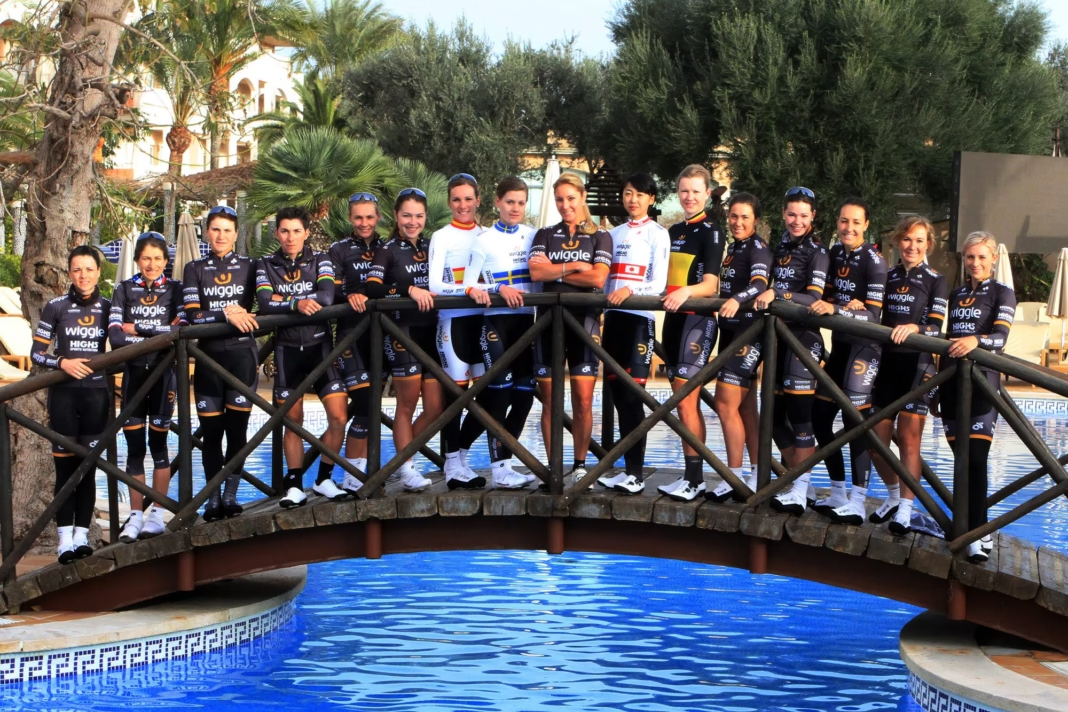
Wiggle-Honda was launched for the 2013 season, to create a more professional environment for elite women riders. That ambition mattered. Women’s cycling had world-class athletes, but too often they were working inside fragile team structures, limited budgets and inconsistent media coverage.
Gilmore, herself a successful rider, understood that the issue was not the quality of the athletes. It was the platform around them. Wiggle-Honda set out to create something more visible and better supported, with commercial partners, a recognisable identity and a roster that could win immediately.
The team made an immediate impact. Emily Collins won Omloop van het Hageland early in the first season, giving the new squad its first victory. From there, the team quickly became associated with Giorgia Bronzini’s finishing speed. Bronzini won the overall classification at the Tour of Zhoushan Island and then dominated La Route de France, where Wiggle-Honda won every road stage, and Bronzini produced a remarkable run of six consecutive stage victories.
That first season told the rest of the peloton that the team was not there merely to add British branding to the bunch. It was there to win.
Giorgia Bronzini and the early sprint identity
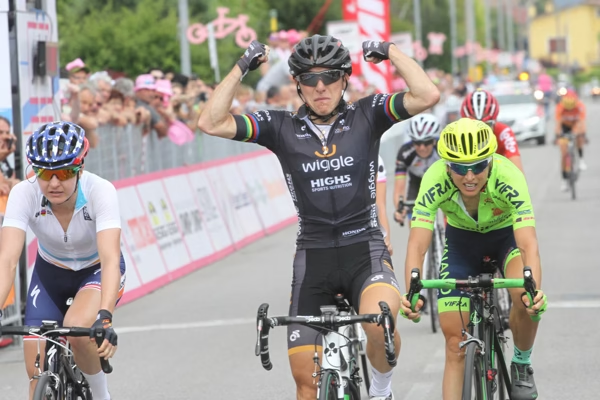
Bronzini gave Wiggle-Honda immediate credibility. She arrived as a double road world champion and one of the sharpest finishers in women’s cycling. For a new team, that was invaluable. She brought authority, wins and the sense that the project could attract riders of genuine global standing.
Her early success also shaped the team’s identity. Wiggle-Honda became associated with fast finishes, aggressive racing and a roster that could combine road and track qualities. That mattered in the 2010s because women’s cycling was still fighting for more race days, better broadcast exposure and stronger commercial support. A team that could win visibly helped make the case for more investment.
Bronzini’s presence also made the team feel international rather than narrowly British. That became one of Wiggle High5’s strengths. It was British-registered and backed by British sponsors, but it recruited widely and operated with a global mindset.
The team’s sprint emphasis also fits into a longer women’s cycling story. Riders such as Bronzini, D’Hoore and Hosking helped define an era before the current dominance of riders like Lorena Wiebes, a shift explored in our guide to the best sprinters in women’s cycling right now.
Building a team of champions
As the team developed, its roster became one of the strongest and most recognisable in the women’s peloton. It brought together sprinters, classics riders, time triallists, track riders and climbers, which gave it multiple ways to win.
Jolien D’Hoore added another elite sprint and track profile. Chloe Hosking brought speed and tactical bite. Elisa Longo Borghini gave the team a world-class classics and stage-race rider. Audrey Cordon-Ragot added time trial strength and durability. Emma Johansson brought experience and consistency. Mara Abbott gave the team a pure climbing profile, while riders such as Dani King, Katie Archibald, Elinor Barker and Annette Edmondson connected the squad to the strength of the track world.
That mixture was important. Wiggle High5 was not built around one obvious leader. It often looked like a collection of winners, which sometimes made the team harder to define but also made it commercially and competitively visible.
It also helped make the women’s peloton feel more professional to outside audiences. The team had star names, strong branding, rider blogs, media content and a sense of personality. In a period before the current Women’s WorldTour structure had fully matured, that visibility carried real value.
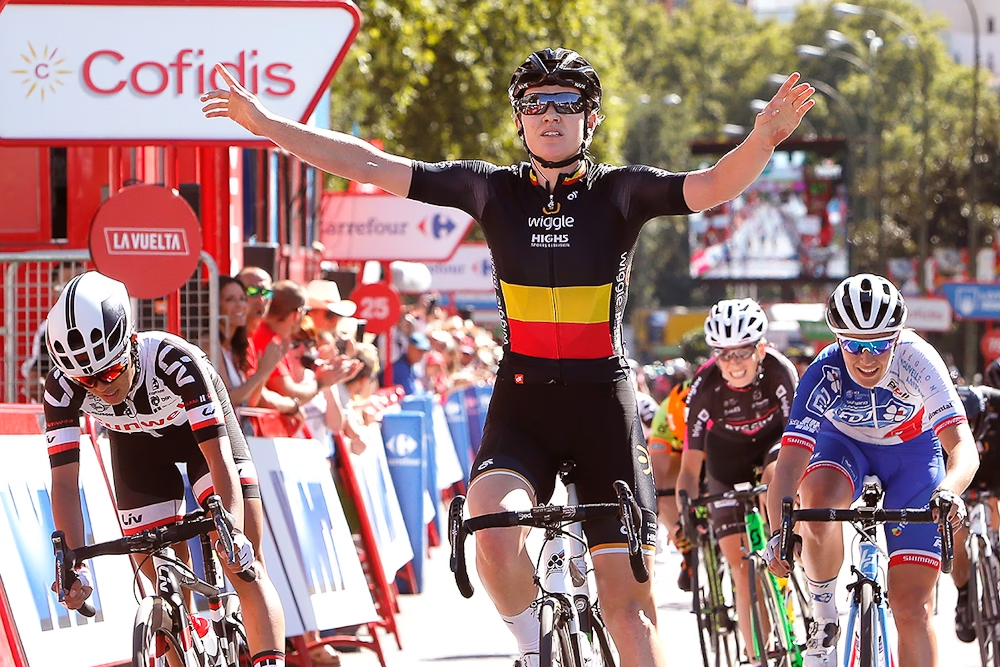 Photo Credit: Tim de Waele
The 2016 peak with La Course and Madrid
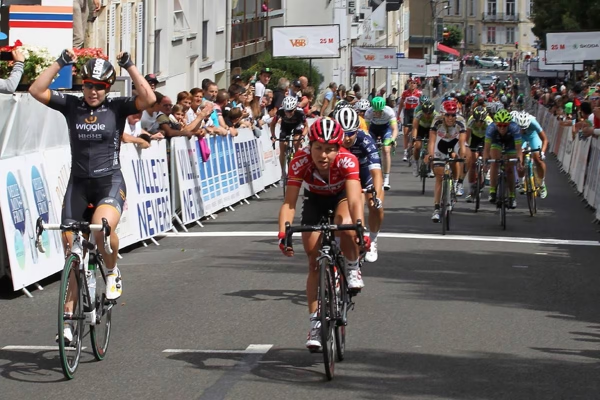
The 2016 season was one of Wiggle High5’s strongest. It produced two victories that gave the team major international visibility: Chloe Hosking’s win at La Course by Le Tour de France and Jolien D’Hoore’s victory at the Madrid Challenge by La Vuelta.
Hosking’s La Course win on the Champs-Élysées was especially significant. At the time, La Course was one of the most visible women’s races in the world because of its association with the Tour de France. It was not a full women’s Tour, but it had a platform that few other races could match. Winning there mattered because casual cycling fans, sponsors and media outside the women’s racing bubble were more likely to notice.
D’Hoore’s Madrid win later that year reinforced the same point. Wiggle High5 went 1-2, with D’Hoore ahead of Hosking, showing the team’s sprint depth and its ability to deliver in the biggest one-day settings attached to men’s Grand Tours.
Those wins captured what Wiggle High5 did well. It could combine track speed, road experience and team execution in finales where pressure was high and visibility mattered.
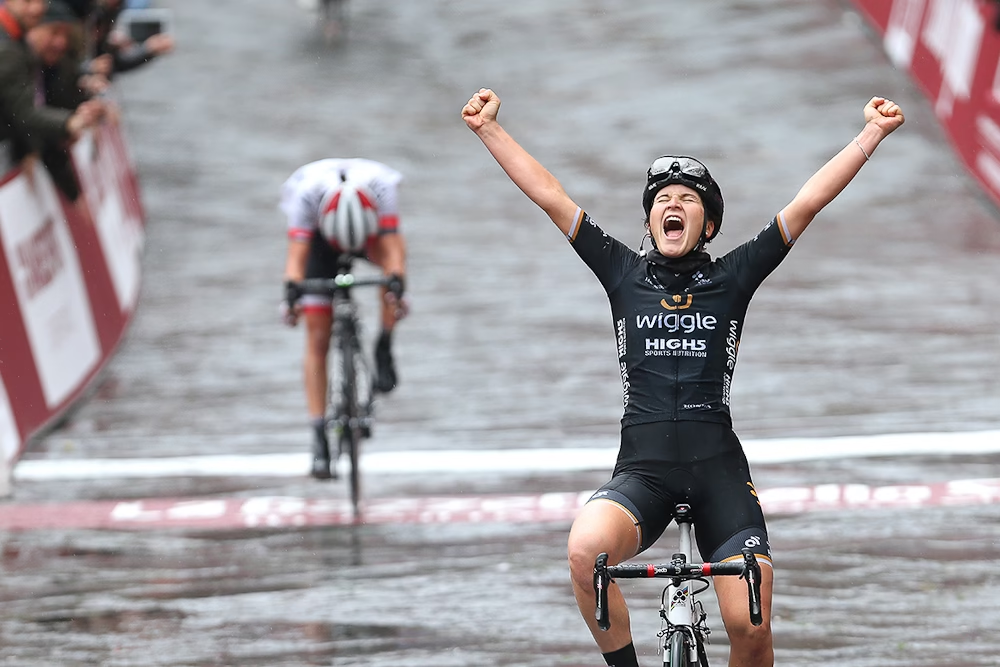 Photo Credit: Tim de Waele
Elisa Longo Borghini and Strade Bianche
If the 2016 season showed Wiggle High5’s sprint strength, Elisa Longo Borghini’s 2017 Strade Bianche victory showed its classics quality. Winning in Siena on the white roads gave the team one of its most prestigious results and attached its name to one of the most atmospheric races in women’s cycling.
Longo Borghini was the ideal rider for that kind of race. She had the climbing strength, tactical aggression and endurance to thrive when the road surface turned difficult, and the selection came from fatigue rather than one clean attack. Her Strade Bianche win also came in a race that was becoming increasingly important to the women’s calendar, giving Wiggle High5 another victory with lasting historical value.
That result sits alongside other major performances from the team in the Women’s WorldTour era. It showed that Wiggle High5 was not only a sprint project. It could win on the Champs-Élysées, in Madrid, on stage-race terrain and on the gravel roads of Tuscany.
Our Strade Bianche Women history looks more closely at why that race has become one of the modern reference points in women’s cycling, while our most important women’s cycling races guide explains how races like Strade Bianche, Paris-Roubaix Femmes and the Tour de France Femmes now anchor the calendar.
British identity, international impact
Wiggle High5’s British identity was important, but it should not be misunderstood. This was not simply a British development team. It was a British-registered international squad that helped raise standards across the women’s peloton.
That distinction matters. British women’s cycling had already produced Olympic success on the track and major road names, but there were still limited top-level professional structures connected to Britain. Wiggle High5 gave the sport a visible British-backed team at the highest level, while also bringing in riders from Italy, Belgium, Australia, France, Sweden, Germany, the United States and beyond.
It helped normalise the idea that women’s teams could be presented with clear branding, strong sponsor identity and proper media output. That might sound basic now, but in the 2010s, it was still part of the fight. Women’s cycling needed more than talented riders. It needed teams capable of looking and operating like serious professional organisations.
The British thread also matters in the wider development of the sport. From riders such as Lizzie Deignan and Nicole Cooke to teams such as Wiggle High5, Britain played a visible role in pushing women’s road cycling into a more professional era. Our features on Nicole Cooke and Lizzie Deignan explore two of the riders who helped shape that wider story.
Wiggle High5 was not perfect, but it was part of that shift.
The difficult final season
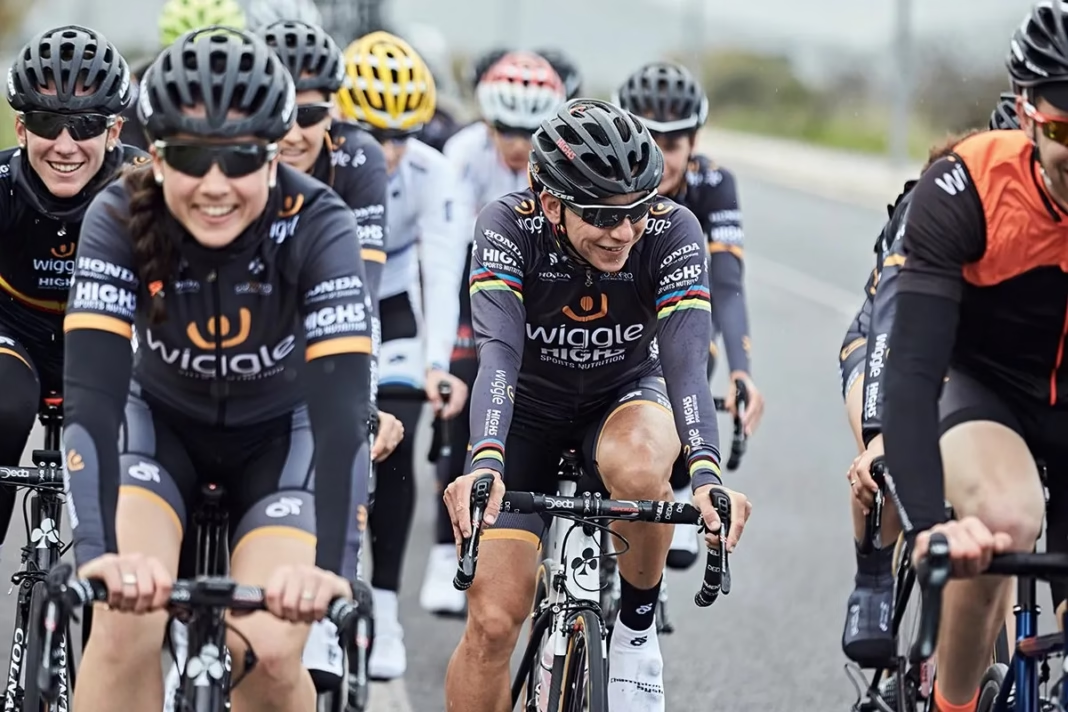
The end of Wiggle High5 was not a neat, celebratory farewell. By the time Gilmore confirmed in July 2018 that the team would not register for the 2019 season, the project had already been through a turbulent final year.
Gilmore framed the decision partly as personal exhaustion. She had moved almost straight from being a professional rider into running one of the most ambitious women’s teams in the world, and by 2018, she said she needed a break from the constant pressure of management, sponsor work, logistics and problem-solving. That explanation was important, but it did not fully capture the atmosphere around the closure.
The team’s final season had already been marked by internal instability. Reports at the time described a string of staff changes, including the departure of head directeur sportif Donna Rae-Szalinski, technical director Alex Greenfield, head mechanic Tim Haverals and soigneur Laura Weislo. There were also reports of legal proceedings involving Rae-Szalinski. For a team that had once been presented as one of the most professional structures in women’s cycling, the public picture in 2018 had become much messier.
The strangest detail was the team bus. During the final season, reports said the Wiggle High5 bus had been left stranded in Mallorca after a former member of staff, who was the registered owner, removed the registration plates before leaving it on the island. Because of Spanish registration rules and the modifications made to the vehicle, the team could not simply re-register it and bring it back into use.
That left riders without the usual race-day changing and support space, with reports of them having to change in cars or public toilets until the team hired a temporary unbranded camper for the Women’s Tour. It was an almost absurd image, but it also said something more serious about how fragile even leading women’s teams could be.
Wiggle High5 had won some of the biggest races in the sport, carried major sponsors, employed world-class riders and helped professionalise the image of women’s cycling. Yet behind the results, the infrastructure still depended heavily on personal relationships, sponsorship continuity and the energy of a small number of people.
Rochelle Gilmore and the fallouts around the closure
Gilmore’s role had always been central to Wiggle High5’s identity. That was part of the team’s strength. It had a recognisable figure behind it, someone who understood the sport from the inside and was willing to push for a more professional women’s team model.
It also meant that when the ending became difficult, the pressure and criticism became more personal. The final months exposed tensions with former staff, damaged relationships and the strain of running a high-profile women’s team in an era when the sport still lacked deeper financial and institutional support.
Those fallouts should not be reduced to gossip, because they reveal something important about the period. Women’s cycling was growing, but many teams still operated with thin margins, fragile logistics and small management groups carrying a huge workload. When relationships broke down, the effects could become very visible very quickly. The team raced without a mechanic in some races, short-term replacement DSes and allegedly old equipment at times too. The stranded team bus in Mallorca became the most memorable symbol of that fragility.
That contradiction sits at the heart of Wiggle High5’s story. It was ambitious and influential, but it was also built in a period when women’s cycling had not yet caught up with the standards the team was trying to set.
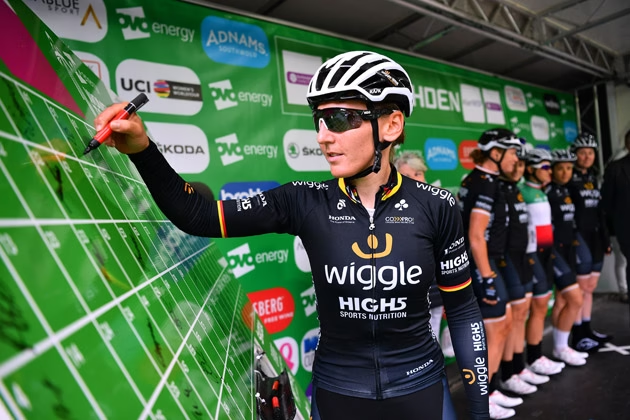 Photo Credit: Getty
Why Wiggle High5 closed
The formal reason for the closure was that the team would not continue into 2019. Gilmore said she needed to step away, and without her continuing in the same role, the project did not carry on. That decision ended one of the most recognisable women’s teams of the decade.
The timing also placed Wiggle High5 at the edge of a bigger transition. As it closed, other structures were beginning to emerge or strengthen. Trek-Segafredo entered women’s cycling with a major new project, and more men’s WorldTour-linked organisations were beginning to treat women’s teams as part of their long-term identity rather than an optional addition.
Several Wiggle High5 riders moved quickly into those new or existing structures. Longo Borghini joined Trek-Segafredo, while Lisa Brennauer and Kirsten Wild moved to WNT-Rotor. Others found places across the peloton. The rider market absorbed the talent, but the disappearance of the team still left a gap.
That does not diminish what Wiggle High5 achieved. If anything, the difficult ending makes its place in the sport’s transition clearer. The team helped raise expectations before the wider system was fully ready to support those expectations.
What Wiggle High5 changed
Wiggle High5 helped push women’s cycling forward in three main ways.
First, it raised expectations. The team showed that a women’s squad could be built around world-class riders, strong branding and visible ambition. It did not treat professionalism as a future dream. It tried to create it in the moment.
Second, it helped make major women’s races feel more commercially valuable. Victories at La Course, the Madrid Challenge and Strade Bianche gave the team results that could be understood beyond a narrow specialist audience. Those wins were not just additions to a palmarès. They were proof that women’s racing had stories, stars and drama worth promoting.
Third, it connected British cycling to the international women’s road scene in a more visible way. The team gave British sponsors and fans a clear reference point, while still respecting the global nature of the peloton.
The sport has moved on since 2018. Team budgets have grown, the Women’s WorldTour has become stronger, and more major organisations now invest in women’s teams. But Wiggle High5 belongs in the story of how that progress was built.
-
 Photo Credit: quentinphotographiebe
 -
 Photo Credit: Getty
Wiggle High5’s legacy
Wiggle High5’s legacy is not only measured by wins. It is measured by the riders it brought together, the races it helped elevate, and the standard it tried to set at a time when women’s cycling still had to argue for the basics.
The team won with Bronzini, Hosking, D’Hoore, Longo Borghini and others, but its deeper importance lies in what it represented. It was ambitious, visible and often ahead of the structures around it. It showed what could be done, while also exposing how hard it still was to sustain a top women’s team without deeper financial foundations.
That makes Wiggle High5 an important bridge in women’s cycling history. It belonged to the period before today’s more developed Women’s WorldTour, but it helped push the sport towards that future. It gave riders a bigger stage, gave sponsors a clearer product, and gave fans one of the most recognisable teams of its era.
The team disappeared after 2018, but its influence did not. Wiggle High5 remains part of the story of how women’s cycling moved from under-supported excellence towards the more visible, better-resourced sport it is still becoming.

