
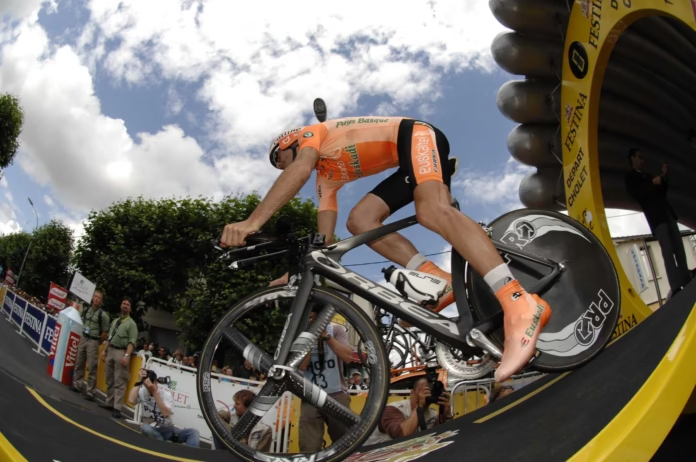
Euskaltel-Euskadi was never just another cycling team. It was a colour, a region, a language, a development idea and a travelling fan movement rolled into one of the most recognisable squads of the modern era. For a generation of cycling followers, the sight of orange jerseys climbing through the Pyrenees immediately meant Basque cycling.
The original team ran from 1994 to 2013, beginning as Euskadi-Petronor before becoming Euskaltel-Euskadi in 1998. Its identity was built around the Basque Country and surrounding cycling culture, with a rider policy that prioritised Basque riders or those formed through the region’s racing system. That made it unusually specific in a sport where most professional teams are commercial, international and sponsor-led.
The team won stages in the Tour de France, the Giro d’Italia and La Vuelta, produced some of Spain’s most distinctive climbers, and created a fan culture that felt closer to football than most of road cycling. When the Tour entered the Pyrenees, Euskaltel-Euskadi did not just have supporters. It had a wall of orange.
For wider context on the races where Euskaltel-Euskadi made its name, our Tour de France coverage, Giro d’Italia coverage and La Vuelta coverage follow the Grand Tours that shaped the team’s story.
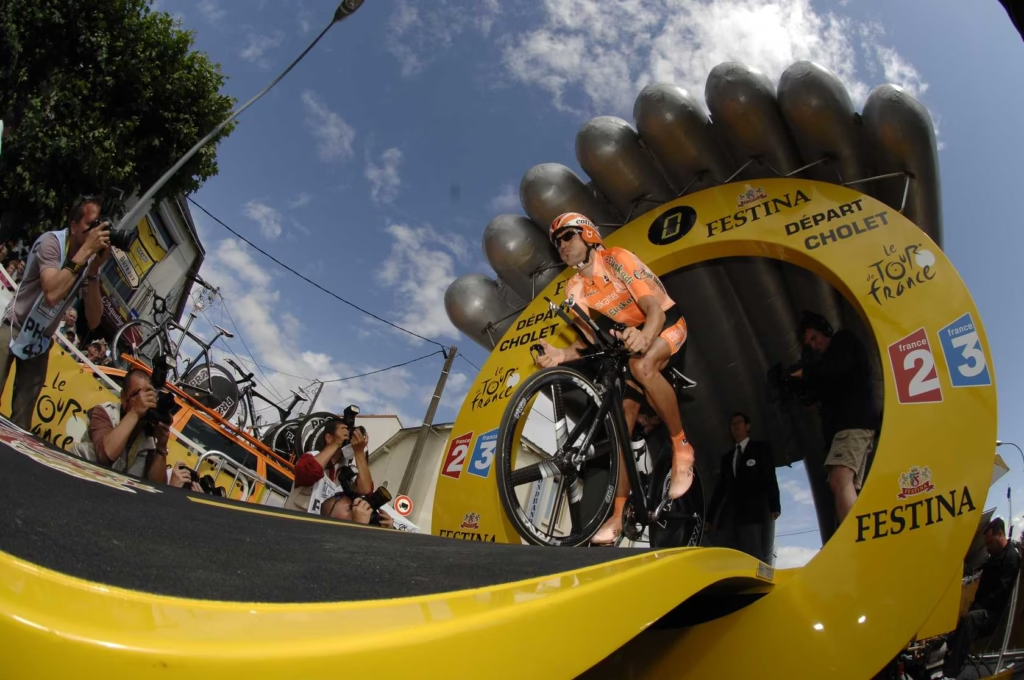 Photo Credit: A.S.O./Bruno Bade
How Euskaltel-Euskadi began
The roots of Euskaltel-Euskadi sit in the Euskadi Cycling Foundation, created in the early 1990s to give Basque cycling a professional pathway. The idea was simple but powerful: build a team that could take riders from one of Europe’s most passionate cycling regions and give them a clear route into the professional peloton.
The professional team began in 1994 as Euskadi-Petronor. It was not launched as a superteam and did not have the budget or depth of the biggest international squads, but it had something many teams lacked: a clear reason to exist. It represented a place with a deep cycling culture, from amateur racing and mountain roads to fans who already saw cycling as part of local identity.
In 1998, the Basque telecommunications company Euskaltel came in as title sponsor, and the team became Euskaltel-Euskadi. That was the moment the orange identity truly took hold. The bright kit made the team instantly visible, while the regional focus gave it a personality that stood apart from the more conventional sponsor-driven outfits around it.
From the beginning, Euskaltel-Euskadi was tied to development as much as results. It was there to win races, but also to make sure Basque riders had a professional team that understood where they came from.
Why the orange jersey became so famous
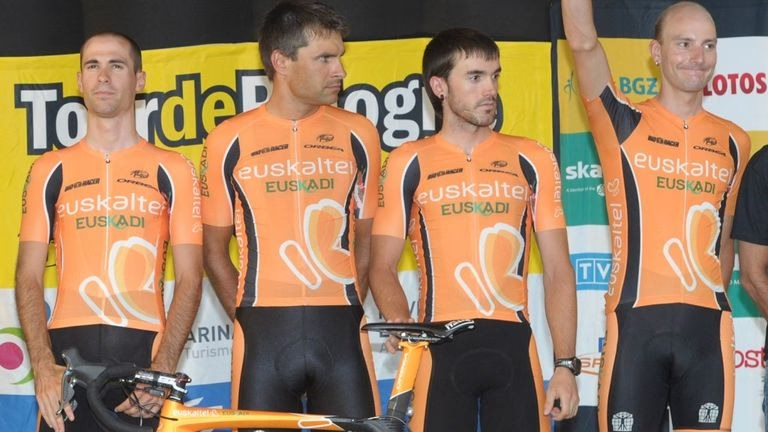
The orange kit became one of the strongest visual identities in cycling. It was loud, simple and instantly recognisable. On television, especially in the mountains, Euskaltel-Euskadi riders were easy to pick out even when the bunch was stretched across a climb.
That visibility mattered because the team’s fan culture amplified it. Euskaltel-Euskadi supporters became known as the Orange Tide, a sea of fans in orange lining the roads, especially when the Tour de France crossed into the Pyrenees. It was one of the few team followings in cycling that felt genuinely territorial.
Most cycling teams have fans because they have famous riders. Euskaltel-Euskadi had fans because it represented something bigger than individual results. It carried Basque pride, local cycling tradition and the sense of a team that belonged to its supporters as much as its sponsors.
That made it emotionally powerful. The orange jersey was not subtle, but that was the point. It stood out because the team itself stood out.
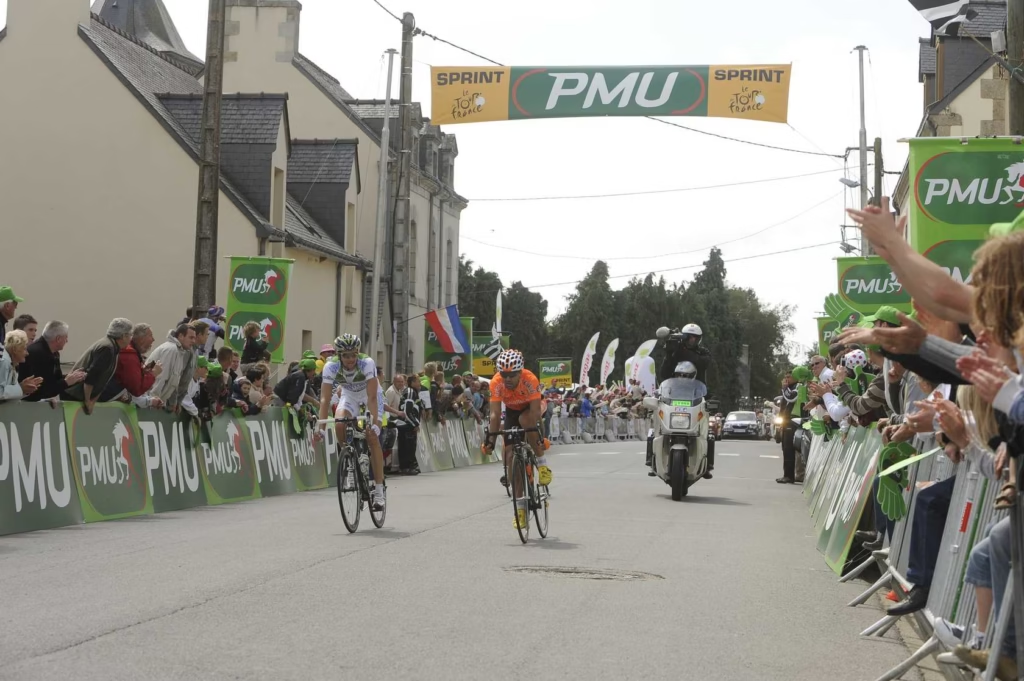 Photo Credit: A.S.O./Bruno Bade
A team built for the mountains
Euskaltel-Euskadi became most closely associated with climbing. Part of that was practical. The Basque Country produces riders raised on short, steep roads, difficult terrain and aggressive amateur racing. Part of it was romantic. The sight of orange jerseys attacking in the Pyrenees fitted perfectly with the team’s image.
Roberto Laiseka gave the team one of its defining early moments with victory at Luz Ardiden in the 2001 Tour de France. It was not just a stage win. It was a symbolic breakthrough, a Basque rider winning a major mountain stage for a Basque team in the mountains where its fans were most visible.
Iban Mayo then became the team’s great climbing star of the early 2000s. His victory on Alpe d’Huez in the 2003 Tour de France made him one of the most exciting riders in the sport. Mayo’s style was explosive, emotional and unpredictable, which made him a perfect fit for a team that often seemed to ride on instinct as much as structure.
The team never became a Grand Tour machine in the way that US Postal, Discovery, Sky or Jumbo-Visma later did. It was not built around relentless control. It was built around moments, attacks and mountain days when the road tilted upwards and the orange jerseys became part of the landscape.
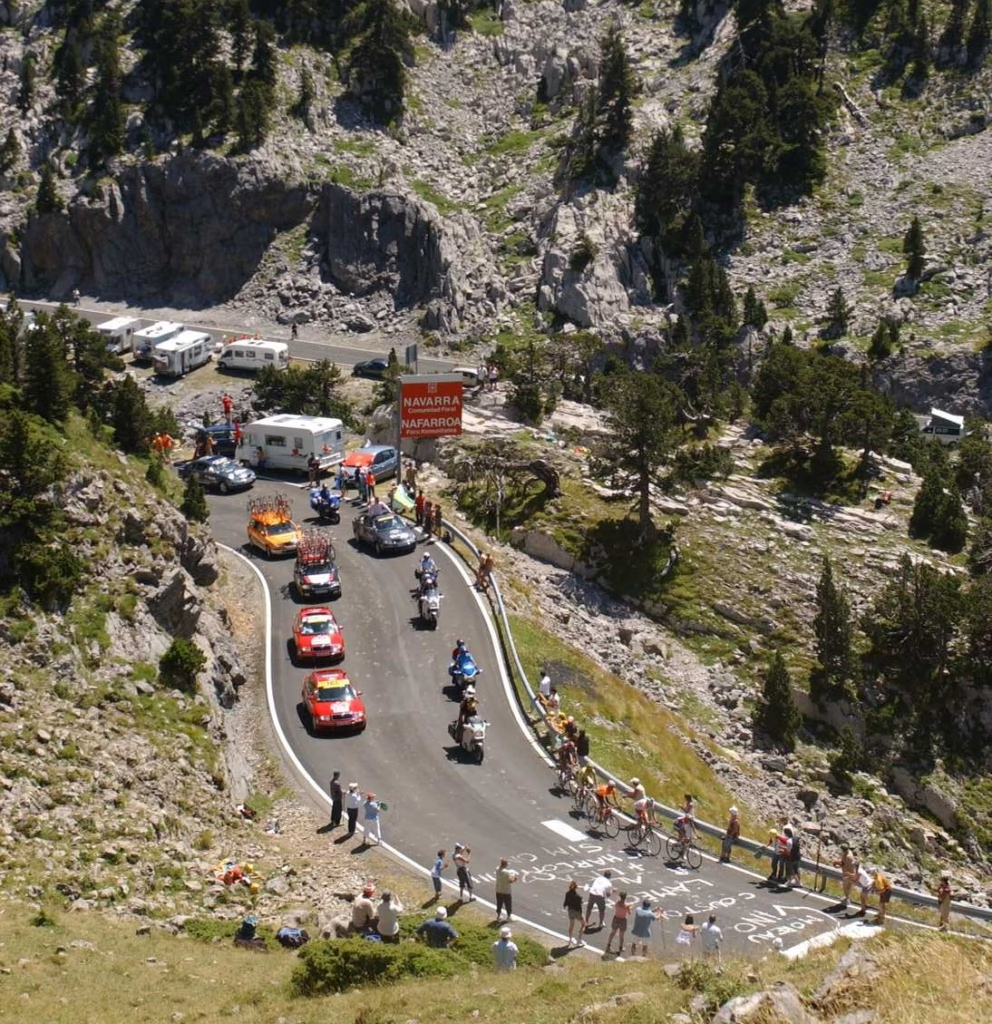 Photo Credit: A.S.O./Bruno Bade
Iban Mayo, promise and pressure
Mayo’s rise gave Euskaltel-Euskadi a level of international attention it had never had before. His Alpe d’Huez win in 2003 was followed by victory in the 2004 Critérium du Dauphiné, where he beat Lance Armstrong and suddenly looked like a possible Tour de France challenger.
That period remains one of the most fascinating parts of the team’s history because it showed both the power and the difficulty of Euskaltel-Euskadi’s model. Mayo gave the team a global star, but carrying Tour-winning expectations was a different challenge from animating mountain stages. The spotlight became brighter, the pressure heavier, and the team’s structure was not built in the same way as the biggest GC organisations of the era.
Mayo never quite converted that promise into a Tour de France podium, but his importance should not be measured only by what he did not achieve. He gave Euskaltel-Euskadi its most electric years and helped turn the orange jersey into something that casual fans recognised far beyond Spain.
For a team defined by emotion, Mayo was exactly the kind of rider who made people care.
Samuel Sánchez and the team’s mature years
Samuel Sánchez gave Euskaltel-Euskadi a different kind of figurehead. Where Mayo was often associated with explosive promise, Sánchez brought durability, tactical intelligence and consistency at the highest level. He became the team’s most complete Grand Tour rider and one of the most important Spanish cyclists of his generation.
His 2011 Tour de France was especially important for the team. Sánchez won at Luz Ardiden, claimed the mountains classification and finished 6th overall, later moved to 5th after Alberto Contador’s disqualification. It was a performance that combined the team’s mountain identity with a more rounded GC presence.
Sánchez also won Olympic road race gold in 2008 while riding for Euskaltel-Euskadi at trade-team level, even though the Olympics are contested by national teams. That result added to his status and, indirectly, to the aura around the orange jersey. He was not just a team leader. He was a world-class rider who had come through the same broader Basque-linked structure.
By the late 2000s and early 2010s, Sánchez helped give Euskaltel-Euskadi a more mature identity. The team could still attack in the mountains, but it also had a rider capable of surviving the full three-week grind.
Giro d’Italia and La Vuelta success
Although the Tour de France gave Euskaltel-Euskadi its biggest global stage, the team’s Grand Tour identity was not limited to July. The Giro d’Italia and La Vuelta also suited the squad’s climbers, especially on steep, irregular days where race control was harder.
Mikel Nieve became one of the team’s defining later-era mountain riders. His win on Stage 15 of the 2011 Giro d’Italia, after a long and punishing mountain stage to Gardeccia-Val di Fassa, was a classic Euskaltel-style victory: endurance, suffering and climbing resilience rewarded on one of the hardest days of the race.
Igor Antón also gave the team major success, particularly in La Vuelta and the Giro. He won on the Monte Zoncolan at the 2011 Giro d’Italia and also produced important Vuelta stage victories, including in the Basque Country when the race returned there in 2011. At his best, Antón was one of the most dangerous climbers in the peloton, capable of making steep finishes feel explosive and emotional rather than controlled.
The Vuelta was always a natural fit. Spanish roads, Basque interest, steep climbs and passionate roadside support gave Euskaltel-Euskadi a setting where it could ride with real purpose. The team did not need to dominate the race to shape it. It only needed the right climb and the right rider.
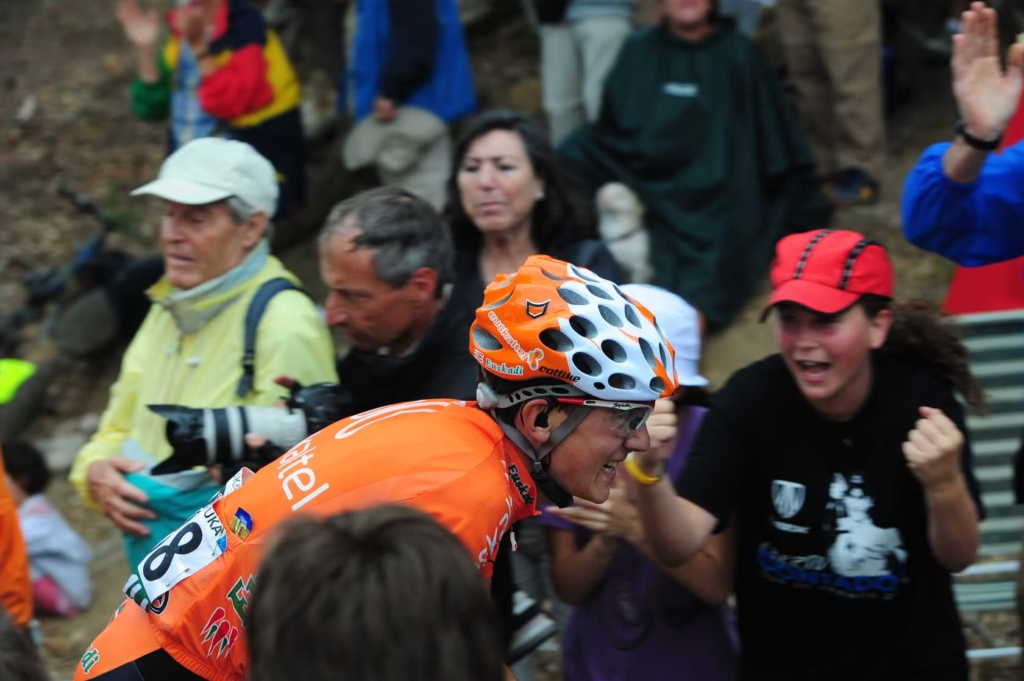 Photo Credit: A.S.O./Bruno Bade
The Basque rider policy and why it mattered
Euskaltel-Euskadi’s rider policy was central to its identity. For much of its history, the team focused on riders from the Basque Country, Navarre, La Rioja and the French Basque Country, or riders developed through the region’s cycling culture.
That made it special, but also difficult. A regionally focused recruitment model creates emotional strength and development clarity, but it narrows the talent pool. When the team needed WorldTour points, deeper squads and more international consistency, the policy became harder to maintain.
By the final years, Euskaltel-Euskadi loosened its recruitment approach in an attempt to remain competitive at the top level. That decision was understandable, but it also created tension. The more international the team became, the more it risked losing the identity that had made it famous in the first place.
This was the team’s central contradiction. To survive in modern cycling, it needed to become more like other teams. But the more it did that, the less it felt like Euskaltel-Euskadi.
The fan culture that made Euskaltel-Euskadi different
Cycling has passionate national and regional fan bases, but few trade teams have produced a culture quite like Euskaltel-Euskadi. The Orange Tide was not a marketing slogan that appeared from nowhere. It was a reflection of how deeply the team was tied to place.
In the Pyrenees, especially during the Tour de France, orange-clad fans became part of the scenery. They were there for the team, but also for what the team represented. It was not only about cheering for whoever happened to be strongest that day. It was about seeing Basque cycling visible on the biggest stage.
That culture gave the team a sense of belonging that most modern squads struggle to create. Sponsors change, rosters change and team names come and go, but Euskaltel-Euskadi had a consistent emotional identity. Fans felt the team was theirs.
This is why the team’s decline hit harder than a normal sponsor withdrawal. When Euskaltel-Euskadi closed, it did not simply remove eight riders from the Tour or a name from the WorldTour list. It removed a colour and a fan presence that had become part of the sport’s visual memory.
Why the original team ended in 2013
The original Euskaltel-Euskadi team closed at the end of 2013 after years of increasing financial and sporting pressure. Euskaltel had been the defining sponsor since 1998, but the team’s budget and WorldTour survival became harder to sustain, particularly after the loss of public funding and the need to compete in an increasingly expensive points-driven environment.
The attempted rescue by Fernando Alonso briefly raised hopes that the team might continue in some form. An agreement was announced in early September 2013, but the deal later collapsed, leaving the team without a path into the following season. The end felt especially painful because it came at a time when professional cycling was becoming more global, more expensive and more dependent on large-scale commercial structures.
Euskaltel-Euskadi had always been different because it was tied to a regional foundation and a specific cycling culture. But that difference became harder to protect as the WorldTour model demanded more points, more budget and more international competitiveness.
The final season therefore felt like the end of an era. The orange jerseys disappeared from the top level, and with them went one of the few teams whose identity was instantly understood even by fans who did not follow every race.
The revival through Fundación Euskadi
The Euskaltel-Euskadi name did not vanish completely. The Basque development idea continued through Fundación Euskadi, which kept the broader project alive at lower levels before rebuilding towards the professional ranks.
The modern team has a different history from the original WorldTour squad, but it deliberately carries the same emotional thread. It came through the Fundación Euskadi structure, returned to UCI Continental level, then stepped up to ProTeam level for 2020. Euskaltel also returned as title sponsor, bringing back the orange identity that many fans still associated with Basque cycling.
Mikel Landa played an important role in the revival period as president of the foundation, helping reconnect the project with the modern professional scene. That added another layer of meaning because Landa himself came from Basque cycling and represented the kind of rider the original team had always wanted to develop.
The current Euskaltel-Euskadi is not a simple continuation of the original team. It operates in a different cycling economy and at a different level. But it keeps alive the idea that Basque cycling deserves a visible professional pathway.
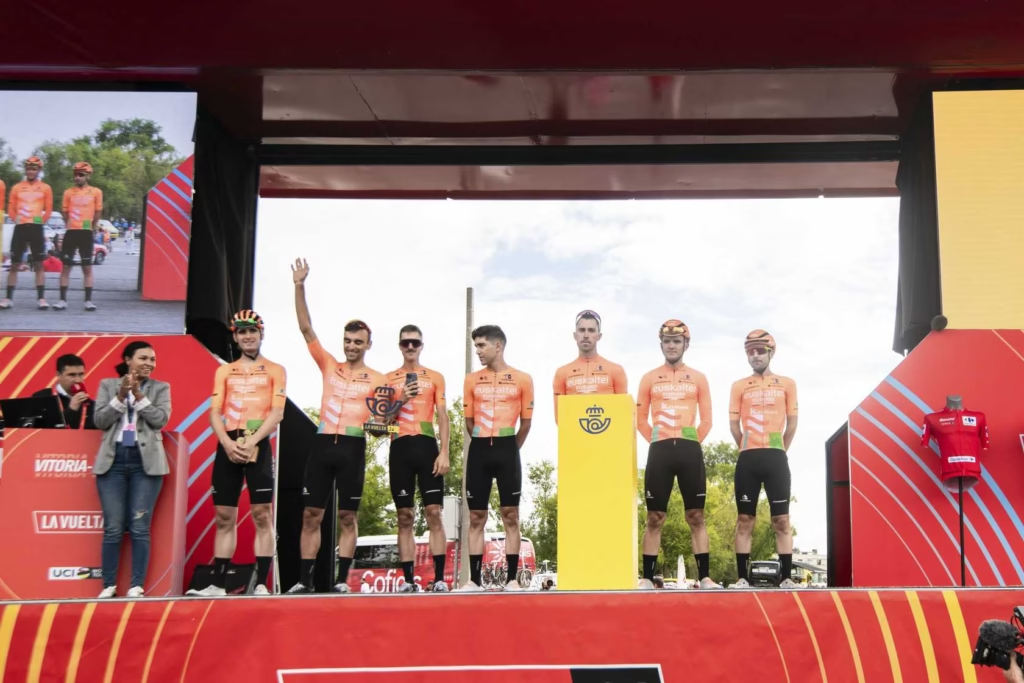 Photo Credit: Unipublic/Cxcling/Naike Ereñozaga
Euskaltel-Euskadi in the modern peloton
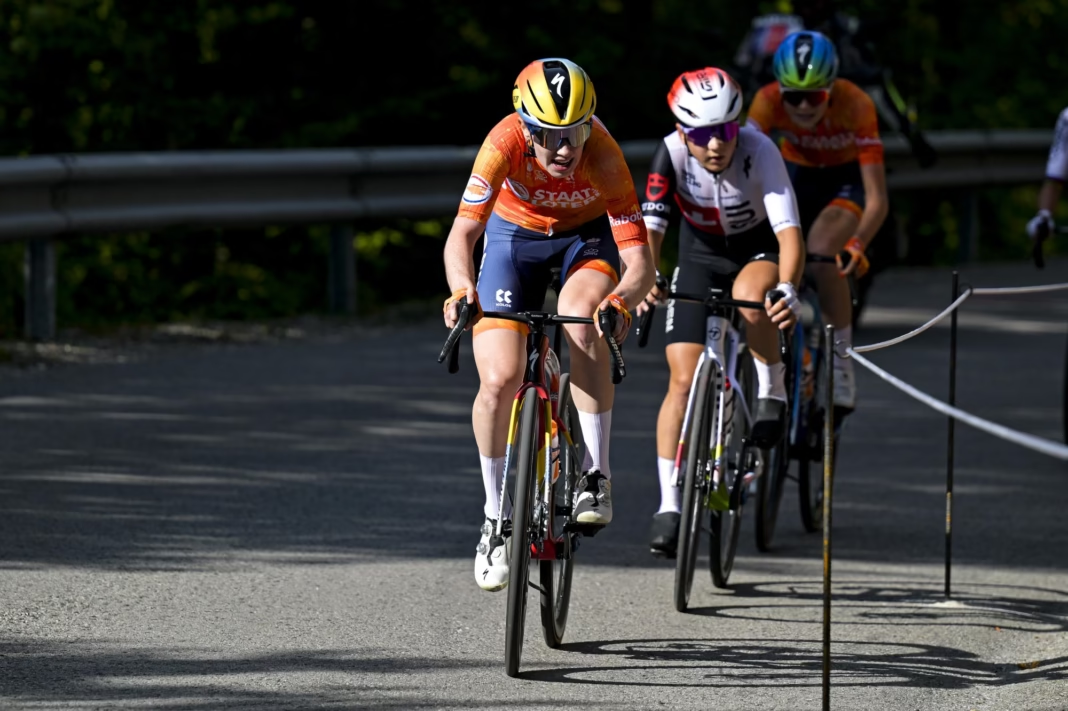
The modern Euskaltel-Euskadi races as a ProTeam rather than a WorldTour squad, which changes its sporting role. It is no longer expected to lead Grand Tours or control major mountain stages. Its opportunities often come through invitations, breakaways, one-week races and Spanish calendar targets.
That role still has value. The team provides a platform for Basque and Spanish riders, keeps the orange jersey visible, and gives races such as Itzulia Basque Country, La Vuelta and the Clásica San Sebastián an additional local thread.
The modern team has also had to adapt commercially. Equipment, sponsorship and team-building now operate in a global market, and the team cannot rely on nostalgia alone. Its identity helps, but results and development still matter.
That makes the current project more modest than the original WorldTour years, but perhaps more realistic. It does not have to recreate Mayo on Alpe d’Huez or Sánchez at Luz Ardiden to matter. It has to keep Basque cycling connected to the professional peloton.
Why Euskaltel-Euskadi still matters
Euskaltel-Euskadi matters because it showed that a team could be built around more than sponsorship. It had commercial partners, of course, but its deeper strength came from identity. It meant something to a region, and that gave it a kind of emotional weight that most teams never find.
It also helped define a particular kind of rider: aggressive, mountainous, resilient and deeply connected to place. Not every Euskaltel rider fitted that stereotype, but enough did to make it part of the team’s mythology. When an orange jersey attacked uphill, fans understood the story immediately.
The team’s history also says something about the changing nature of professional cycling. The original Euskaltel-Euskadi thrived because it was different, then struggled because difference became harder to sustain in an increasingly expensive and points-driven sport. The modern version survives by carrying the identity forward in a more pragmatic form.
That makes it one of cycling’s most interesting team stories. It is not simply a tale of wins and losses. It is about how a region put itself into the peloton, how fans turned a jersey into a movement, and how a team can disappear from the top level without disappearing from memory.
-
 Photo Credit: Cor Vos
 -
 Photo Credit: A.S.O./Billy Ceusters
 -
 Photo Credit: Getty
Euskaltel-Euskadi’s legacy
Euskaltel-Euskadi’s legacy is written in orange. It is in Mayo’s Alpe d’Huez attack, Laiseka at Luz Ardiden, Sánchez climbing in the polka-dot jersey, Nieve winning through exhaustion at the Giro, Antón animating La Vuelta, and thousands of fans turning mountain roads into a Basque celebration.
The team did not win the Tour de France. It did not become the richest squad in the sport. It did not always adapt smoothly to the demands of modern cycling. But it gave the peloton something rare: a team whose identity was as strong as its results.
That is why Euskaltel-Euskadi still resonates. The sport has many successful teams, but fewer teams that feel culturally distinct. Euskaltel-Euskadi was one of them. It belonged to the mountains, to the Basque Country, to the Orange Tide, and to an idea of cycling where place mattered as much as performance.
The modern team carries that story forward, but the original orange years remain the heart of the legend. In a sport often defined by changing sponsors and shifting structures, Euskaltel-Euskadi proved that a team could become part of cycling’s emotional geography.

