
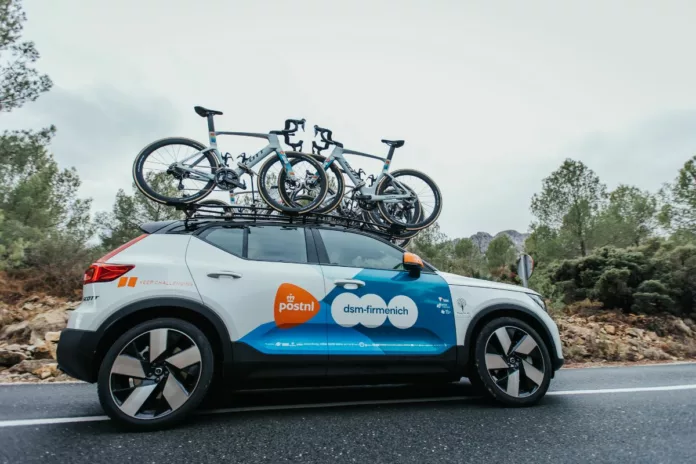
Race radios and team cars are two of the most important parts of modern road cycling, even though much of their influence happens away from the main television picture. They shape tactics, safety, feeding, mechanical support and the flow of information between riders and staff. A rider may win the race on the road, but the decisions coming from the team car can influence when they attack, who chases, when they eat, when they change bikes and how they react to danger.
For newer fans, this can make cycling feel slightly hidden. The broadcast shows the peloton, the breakaway and the finish, but not always the constant communication behind the race. A directeur sportif in the car may be reading time gaps, checking wind direction, speaking to riders by radio, watching live pictures, talking to the mechanic, asking race officials for information and balancing the needs of several riders at once.
That does not mean riders are puppets. The best riders still need instinct, strength, positioning and judgement. But modern cycling is a team sport, and race radios and team cars are the link between the riders on the road and the staff trying to manage the race from behind.
For more beginner-friendly race explainers, our cycling guides cover the tactics, rules and race formats that make road cycling easier to follow.
What are race radios in cycling?
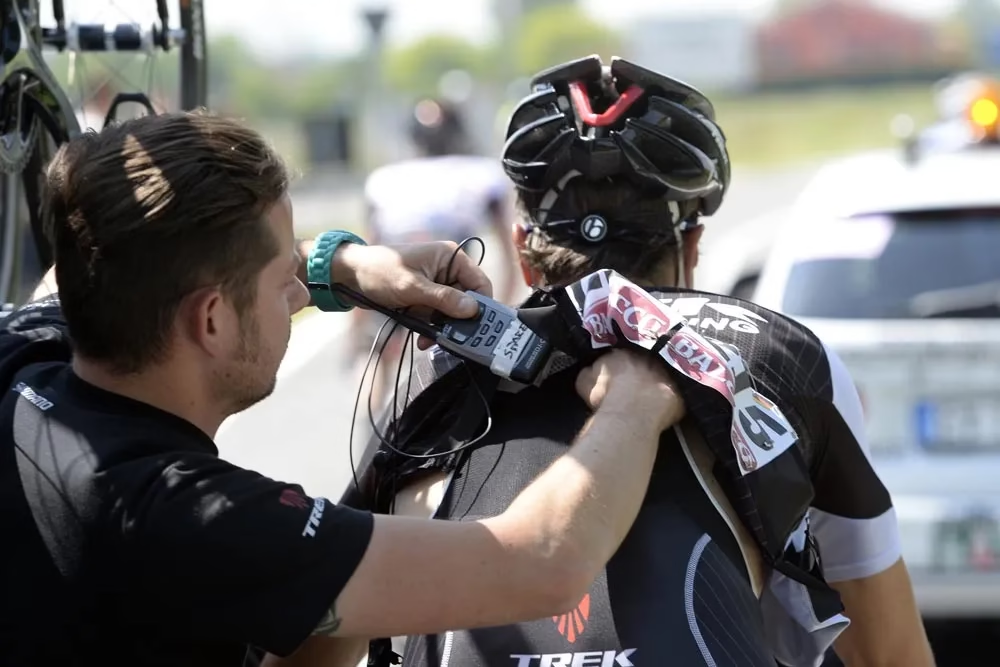
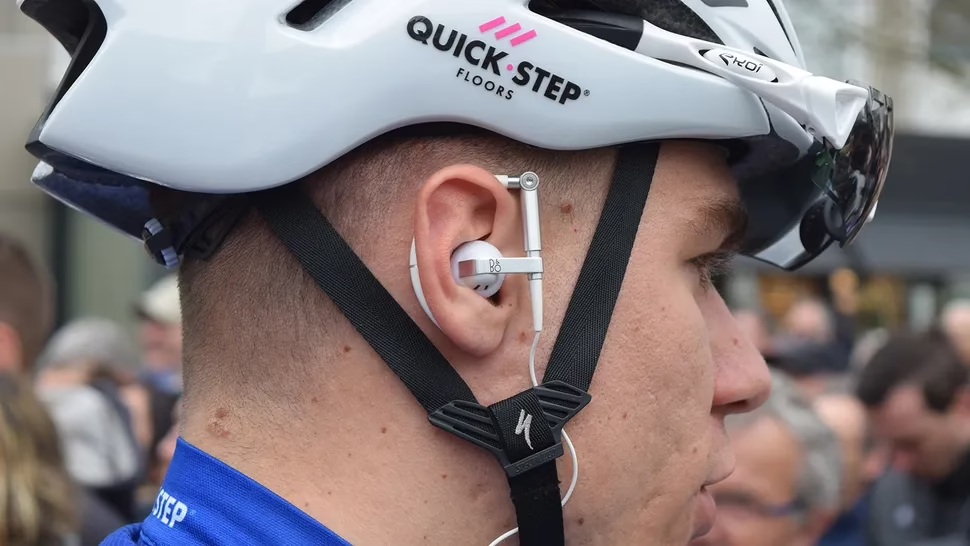
Race radios are small communication systems that allow riders to speak with their team car during a race. Riders usually wear an earpiece connected to a radio unit carried in a pocket or under the jersey. The team car has its own radio system, allowing the directeur sportif to speak to riders and receive messages back.
The radio is used for simple but important information. Riders may be told the gap to the breakaway, warned about road furniture, reminded to eat, told where the wind is coming from, or instructed to move up before a narrow section. A leader might ask for a bottle, a teammate might report a puncture, or a rider in the breakaway might ask whether to keep working.
The key point is that radios are not only tactical. They are also used for safety and logistics. A directeur sportif can warn riders about dangerous corners, crashes ahead, slippery roads or changes in race conditions. Riders can quickly report problems without having to drop back to the car first.
In a long race, that information flow matters. A rider who forgets to eat, misses a dangerous split, or drifts too far back before a climb can lose the race before the final attack ever happens.
Who speaks on the race radio?
The main voice on the radio is usually the directeur sportif, often shortened to DS. This is the person in the team car responsible for managing the race tactically. In major races, there may be two team cars, each with staff inside, but the first car usually carries the lead DS, mechanic and spare equipment.
The DS speaks to the riders, but riders can also speak back. That creates a constant flow of short, practical messages rather than long conversations. The radio is not there for speeches. It is there for clarity.
A typical message might be:
- Move up before the next roundabout
- The break has two minutes
- Eat now before the climb
- The leader needs two teammates around them
- Puncture for rider four, car coming
- Do not chase, we have a rider in the move
The best DSs know when to speak and when to stay quiet. Too much information can distract riders, especially in technical finales. Good radio communication is short, calm and useful.
 Photo Credit: Skoda
What does the team car do?
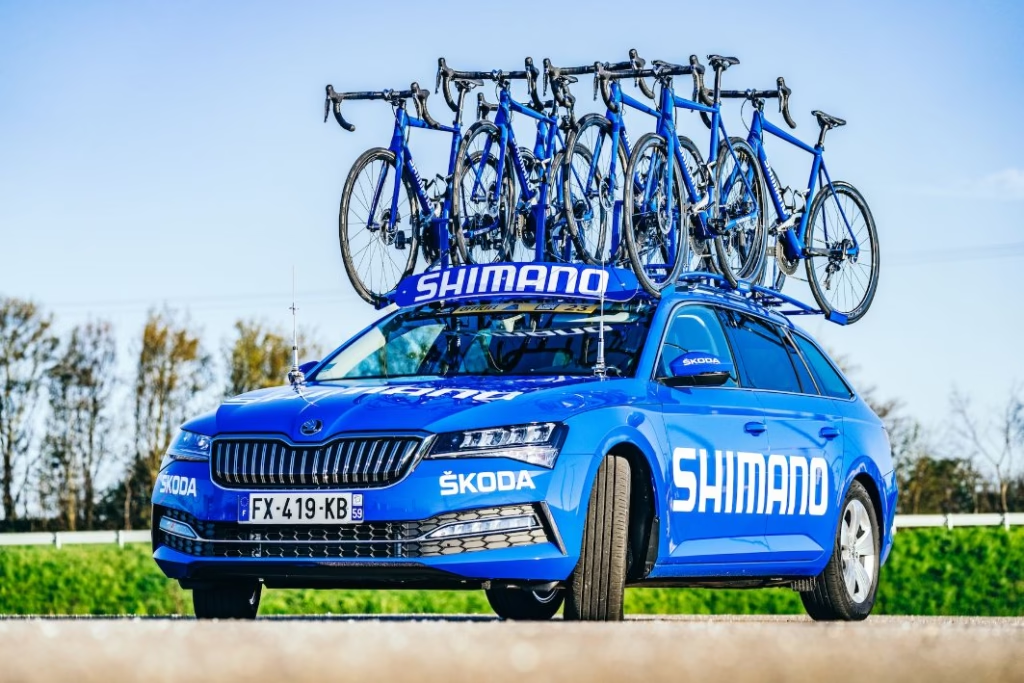
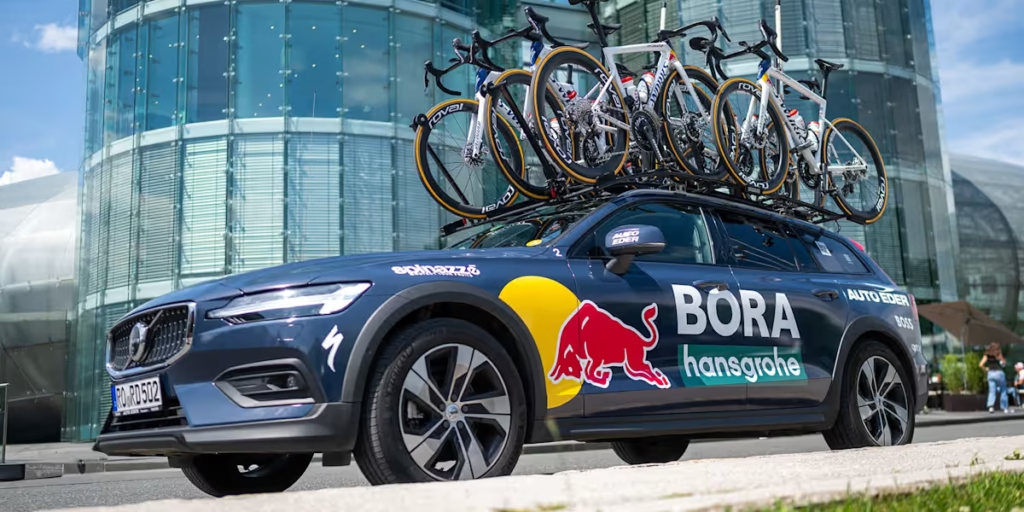
The team car is the mobile base of the team during the race. It carries spare bikes, wheels, bottles, food, clothing, tools and staff. It also carries the tactical brain of the team, because the directeur sportif has access to race information, live pictures and communication with race officials.
A team car usually contains:
- A directeur sportif
- A mechanic
- Spare bikes
- Spare wheels
- Bottles and food
- Clothing such as rain jackets or gloves
- Race radios and communication equipment
- Information about the route, climbs, feed zones and hazards
The car follows in the race convoy behind the peloton. Its position depends on the team’s place in the convoy order, which can be shaped by race rules, general classification position or other organiser regulations. In stage races, the team of the race leader usually has a favourable position among the team cars. That can matter because a car closer to the front can reach riders more quickly.
If a rider punctures, crashes, needs a bike change or wants clothing, the team car may be called forward. The mechanic can lean out of the window to adjust something, hand over a wheel, or prepare a spare bike. Riders may also drop back to the car to collect bottles or speak directly to the DS, although this is carefully managed because of the danger created by riders moving through the convoy.
How do team cars fit into the race convoy?
The convoy is the line of vehicles that follows the race. It includes commissaires, race organisers, neutral service cars, medical vehicles, team cars, television motorbikes, photographers, police motorbikes and other authorised vehicles.
It is not a free-for-all. The convoy has rules, order and hierarchy. Team cars cannot simply drive wherever they want. They move under the control of race commissaires, who decide when cars can pass, when they must wait and how they should behave around riders.
In a normal road stage, the peloton is followed by the main convoy. If a breakaway forms and gains enough time, some team cars may be allowed to move up behind the break. That helps support riders in the front group with bottles, wheels and information. If the gap is too small, cars may be held behind the peloton for safety.
This is one reason breakaway riders sometimes look isolated early in a move. Until the gap is big enough, their team car may not be allowed to come up. They may have to rely on neutral service, motorbike support or supplies taken before the move went clear.
What is neutral service?
Neutral service is support provided by the race rather than by a rider’s own team. Neutral service cars and motorbikes carry spare wheels, bikes and basic equipment for any rider who needs help when their team car is not close enough.
This is especially important in chaotic races. If a rider punctures at the wrong moment, their team car may be too far back in the convoy. Neutral service can get them moving again more quickly, even if the wheel or bike is not a perfect match.
Neutral service is not usually the first choice for a team leader. Riders prefer their own spare bike, already set up with the correct saddle height, pedals, gears and handlebar position. But in an emergency, neutral service can save a race.
It is also useful when the race is split into several groups. Team cars cannot always be everywhere at once, so neutral service helps reduce the risk that a rider is left stranded.
What information do riders get through radios?
The most common radio information falls into four broad areas.
The first is the race situation. Riders are told who is in the breakaway, what the time gaps are, whether a chase is organised, and which teams are working. That helps them decide whether to cooperate, attack, sit on, or conserve energy.
The second is route information. Riders may be warned about climbs, descents, narrow roads, cobbles, gravel, dangerous corners, exposed crosswind sections or road furniture. This can be especially important in races such as Paris-Roubaix Femmes or the Tour of Flanders Women, where positioning before key sectors can decide the race.
The third is team tactics. A rider may be told to stop working in a break, attack over the top of a climb, wait for a teammate, chase a dangerous move or protect the team leader. These calls can change quickly depending on who is up the road and how strong the peloton looks.
The fourth is rider management. Teams remind riders to eat, drink, cool down, put on clothing, remove clothing or take bottles before a feed zone. That may sound simple, but nutrition mistakes can ruin a rider’s day. On a hot mountain stage or a wet Classic, small details matter.
How do race radios change tactics?
Race radios make cycling more controlled. Teams can react quickly to attacks, receive accurate time gaps and coordinate riders across different groups. That makes it harder for a surprise move to succeed simply because the peloton does not know what is happening.
In a stage race, radios help teams manage risk. A GC leader can be told about dangerous splits, crashes, wind direction or rivals in trouble. A domestique can be called back to help. A rider in the breakaway can be told whether to continue working or save energy for later.
In a one-day race, radios can help teams control chaos, but they can also make the racing more calculated. A rider might be told not to chase because a teammate is already in the move. A leader might wait because the car believes the break will come back. Teams can make decisions based on a wider view of the race than any single rider can see from inside the bunch.
This is why race radios are controversial. Supporters argue they improve safety and help teams manage complex races. Critics argue they make racing too controlled, reduce rider instinct and allow the team car to influence the race too heavily.
-
 Photo Credit: Getty

Why are race radios controversial?
The debate around race radios has been going on for years. The basic argument is about control.
Critics say radios make races too predictable. If every team knows the exact time gap, the strength of the break and the danger points on the route, it becomes easier to manage the race from the car. That can reduce the chance of surprise attacks and make riders more dependent on instructions. The last few editions of the Olympics have been raced without radios and have led to exciting finishes.
Some also argue that radios can contribute to speed and risk. If riders are constantly told to move up before every danger point, the entire peloton fights for the same space at the same time. That can make the race more nervous rather than safer.
Supporters see it differently. They argue that radios allow teams to warn riders about hazards, crashes, dangerous descents and medical issues. They also help organise support after punctures and crashes. From that view, removing radios could make riders less informed and potentially less safe.
The UCI has tested restrictions on earpieces as part of its wider race-safety work. Those trials were introduced through the SafeR safety programme alongside other measures such as yellow cards and changes around sprint-stage time gaps. The subject remains live because it sits at the centre of a wider question: should modern cycling be more instinctive and unpredictable, or more informed and controlled?
Are race radios always allowed?
No. Race-radio rules can vary depending on the race level, category and regulations in force. In top-level professional road racing, radios have been widely used for many years, but they are not universally allowed across every form of racing.
Some lower-level races, national events or specific categories may restrict or prohibit them. The UCI has also tested restrictions in selected professional races, particularly as part of wider safety discussions.
For fans, the simplest rule is this: in major men’s and women’s WorldTour races, race radios are usually part of the tactical picture unless a specific restriction applies. In smaller races, development races or national-level events, the rules may be different.
That is one reason racing can feel different across levels. Without radios, riders have to read the race more directly, rely on roadside time boards, communicate with teammates in the bunch, and make more decisions without immediate input from the car.
 Photo Credit: Skoda
How do riders get bottles and food from the team car?
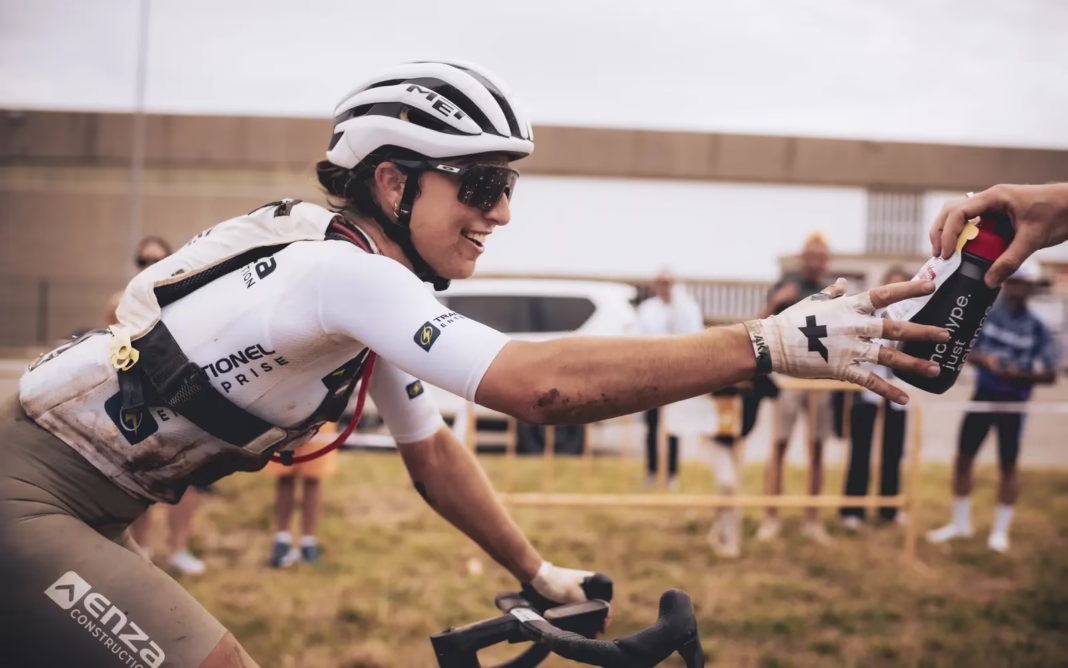
Riders can collect bottles, gels, bars, rice cakes or clothing from the team car by dropping back through the convoy. A rider will usually move to the side of the road, drift back towards the car, take supplies from a staff member, then move back through the cars and towards the peloton.
This is often called going back to the car. It can be physically demanding. The rider loses position, has to accelerate back through the convoy, and may be exposed if the race suddenly speeds up.
Teams manage this carefully. A domestique will often go back for bottles and bring several back to teammates. This is sometimes called a bottle run. The rider may stuff bottles into jersey pockets or pass them out quickly once back in the bunch.
There are also feed zones, where staff stand at the roadside with musettes, cloth bags filled with food and bottles. Riders grab the musette as they pass, remove what they need, and discard the bag safely. Feed zones are planned in advance, but riders still rely on team cars outside those moments.
What happens after a puncture or mechanical problem?
If a rider punctures, they raise an arm, signal the problem and move safely to the side. The team car or neutral service then tries to reach them as quickly as possible.
For a wheel change, the mechanic jumps out, removes the damaged wheel, fits a replacement and gives the rider a push to restart. For a more serious issue, the rider may switch to a spare bike. The spare bike is usually mounted on the roof of the team car and prepared in advance.
The speed of the change matters, but so does calm. A rushed mistake can cost more time than a controlled repair. In big races, the best mechanics are extremely fast, but the situation can still depend on where the car is in the convoy and how quickly it is allowed to reach the rider.
After the change, the rider must chase back. If they are a team leader, teammates may drop back to help pace them. If the race is already intense, a mechanical problem at the wrong moment can end a rider’s chances.
 Photo Credit: Getty
What does a directeur sportif decide?
The directeur sportif makes tactical decisions, but also manages priorities. In a race, not every rider can be protected equally. The DS decides who the leader is, who should chase, who should save energy, who should go in the breakaway and when the team should commit.
A DS may decide:
- Whether a breakaway is dangerous
- Whether the team should chase or let others work
- Which rider should be protected before a climb
- When a sprinter needs teammates around them
- Whether a GC rider should attack or wait
- When to bring the car forward for bottles or clothing
- How to respond if a leader crashes or punctures
The hardest part is that these decisions happen with incomplete information. The DS may have television pictures, GPS gaps, race radio and experience, but they cannot feel exactly what the riders feel. A rider might say they are good and then crack. Another might feel bad early and recover later.
The best DS-rider relationships are built on trust. The car can guide the race, but the rider still has to make the final move.
Can riders ignore the team car?
Yes, and sometimes they do. Riders are not robots. They can make their own decisions, especially in fast-moving finales when the radio may be hard to hear or the situation changes too quickly.
A rider in a breakaway might decide that the moment feels right to attack, even if the car has not called it. A leader might refuse to chase because they know they are close to the limit. A sprinter might choose a different wheel in the final kilometre because the planned lead-out has broken down.
This is one of the reasons cycling remains unpredictable. Radios and team cars add structure, but they do not remove instinct. The best riders use information without becoming dependent on it.
That balance is especially clear in the biggest one-day races. In events such as Paris-Roubaix or the Tour of Flanders, the decisive moment often comes when a rider senses weakness before the car has time to analyse it fully.
How do team cars differ in men’s and women’s racing?
The basic role is the same in men’s and women’s racing: tactics, support, communication and logistics. The differences are more about race structure, resources and convoy depth.
Women’s WorldTour teams now operate at a much higher level than in the past, with professional staff, vehicles, radio systems and detailed planning. But the sport has developed unevenly, and some races still have smaller convoys, different broadcast coverage and fewer logistical resources than the biggest men’s events.
That can affect how much information a DS receives and how quickly a car can respond. A fully televised race gives the team car more context. A race with limited live pictures can make decisions harder, especially if splits form on narrow roads or in bad weather.
The direction of travel is clear, though. As women’s racing becomes more professional and better broadcast, the tactical role of radios and team cars becomes more visible too. Our Women’s WorldTour guide explains how the top level of women’s racing has developed.
Why team cars matter so much in stage races
Stage races make team cars even more important because the goal is not always to win the day. A team may be defending a leader’s jersey, protecting a GC rider, saving energy for tomorrow, chasing bonus seconds, setting up a sprint or trying to place a rider in the breakaway.
The DS has to think beyond the current kilometre. A rider might be told not to chase because the team needs them tomorrow. A breakaway might be allowed to go because none of the riders threaten GC. A sprinter might be protected early, while climbers save energy for later in the week.
This is especially clear in Grand Tours. In races such as the Giro d’Italia, Tour de France and La Vuelta Femenina, the team car is constantly balancing short-term opportunity against long-term survival.
That is why some decisions look strange on television. A team may refuse to chase a stage win because it would weaken its mountain support. A rider may sit in the bunch all day because the real target comes two stages later. The car is often thinking about the race as a whole rather than the moment in front of the camera.
-
Photo Credit: Getty
What should fans watch for?
Once you understand radios and team cars, races become easier to read. Watch when riders drop back to the car, because it can reveal who is calm and who is under pressure. Watch which teams send domestiques for bottles, because it shows who is being protected. Watch when cars are allowed up to a breakaway, because that often means the move has become established.
Also listen to commentators when they mention radio messages or team-car decisions. A sudden chase, a rider sitting up in a break, or a teammate dropping back to help a leader often comes from information passed through the car.
In finales, watch for the moment when team control starts to weaken. Radios can organise a plan, but they cannot create legs. If a leader is isolated, a sprinter loses their train, or a breakaway rider ignores the expected script, that is where the race becomes human again.
Why radios and team cars are part of modern cycling
Race radios and team cars are sometimes criticised for making cycling too controlled, but they are now woven into the way professional racing works. They help teams manage tactics, safety, nutrition, equipment and information across races that are often fast, technical and unpredictable.
They do not replace the riders. The peloton still decides the race with legs, instinct and nerve. But the team car gives riders a wider view, and the radio turns that view into immediate instruction.
For beginners, the simplest way to think of it is this: the rider sees and feels the race from inside the bunch, while the team car sees the race from above and behind. The best performances happen when those two perspectives work together.
That is why radios and team cars matter. They are not the whole race, but they are part of the hidden structure that explains why teams chase when they do, why riders attack when they do, and why cycling is never just a contest between individuals.

