The Tour Féminin International des Pyrénées is still a young race, but it has already lived through more scrutiny than many events twice its age. First held in 2022, it arrived with an obvious sporting purpose: to give women’s cycling another proper mountain stage race, one rooted in the French Pyrenees and capable of testing climbers before the summer’s bigger targets.
That alone gave it value. The women’s calendar has long been short of sustained mountain racing, especially outside the biggest WorldTour events. The Pyrenees offer exactly the terrain needed to expose climbing depth, measure stage-race resilience and give emerging general classification riders a chance to prove themselves away from the shadow of the Tour de France Femmes or Giro d’Italia Women.
Its first few editions, though, have made the race about more than gradients and GC battles. The Tour Féminin International des Pyrénées has become a case study in what women’s racing can gain from ambitious regional organisers, but also what it cannot afford to compromise on: rider safety, road control, professional standards and credibility.
A new mountain race for a changing women’s calendar
The first edition in 2022 came at a moment when women’s cycling was expanding quickly. The Tour de France Femmes had returned to the calendar, the Women’s WorldTour was gaining depth, and more teams were building proper stage-race programmes around riders capable of climbing and recovering across multiple days.
A Pyrenean stage race fitted that shift neatly. The race was not designed to match the scale of the biggest events, but it did not need to. Its value came from giving the calendar another mountain-based platform. For teams outside the very top tier, it could act as a serious target. For WorldTour squads, it offered a chance to test climbing form, develop younger riders and sharpen stage-race structures before July.
Krista Doebel-Hickok won the inaugural 2022 edition, giving the race a first champion with clear climbing credentials. It was a useful opening statement. The event immediately looked like the sort of race where strong climbers could take control, rather than a stage race decided by bonus seconds and cautious bunch finishes.
That identity has remained central. The Tour Féminin International des Pyrénées is not just another short stage race. It is a race shaped by long climbs, difficult terrain and the repeated demands of riding in the mountains. That makes it particularly useful in the modern women’s calendar, where the pool of genuine stage-race climbers continues to grow and where races such as La Vuelta Femenina have raised expectations around how mountain stages can shape women’s general classification racing.
The 2023 edition and the safety crisis
The second edition, held in 2023, should have been an opportunity to build on that sporting foundation. Instead, it became the race’s defining controversy.
Concerns over road safety dominated the event. Riders and teams raised issues around live traffic, road control and the conditions they were being asked to race in. The situation escalated across the opening stages, with riders making their dissatisfaction clear and several teams unwilling to continue under the circumstances.
The final stage was ultimately cancelled, leaving Marta Cavalli as the overall winner after two stages. The result itself was significant, as Cavalli was already an established top-level rider with major one-day wins on her palmarès. Yet the sporting outcome was overshadowed by the circumstances around the race. The story became less about who had climbed best and more about whether the event had met the basic standards required for professional racing.
It was a damaging moment, not only for the race but for the wider conversation around women’s cycling. Too often, riders asking for safe racing conditions have been framed as difficult rather than professional. The Tour Féminin International des Pyrénées exposed that tension sharply. The issue was not luxury, status or comparison with men’s races. It was about being able to race on properly managed roads.
The controversy left the race with serious rebuilding to do. A young event can survive sporting misfortune, poor weather or a thin start list. A breakdown of trust is harder to repair.
A necessary reset in 2024
The 2024 edition was therefore about more than the result. It needed to show that the race could operate credibly, safely and professionally after the previous year’s problems. That made the event a test of organisation as much as racing.
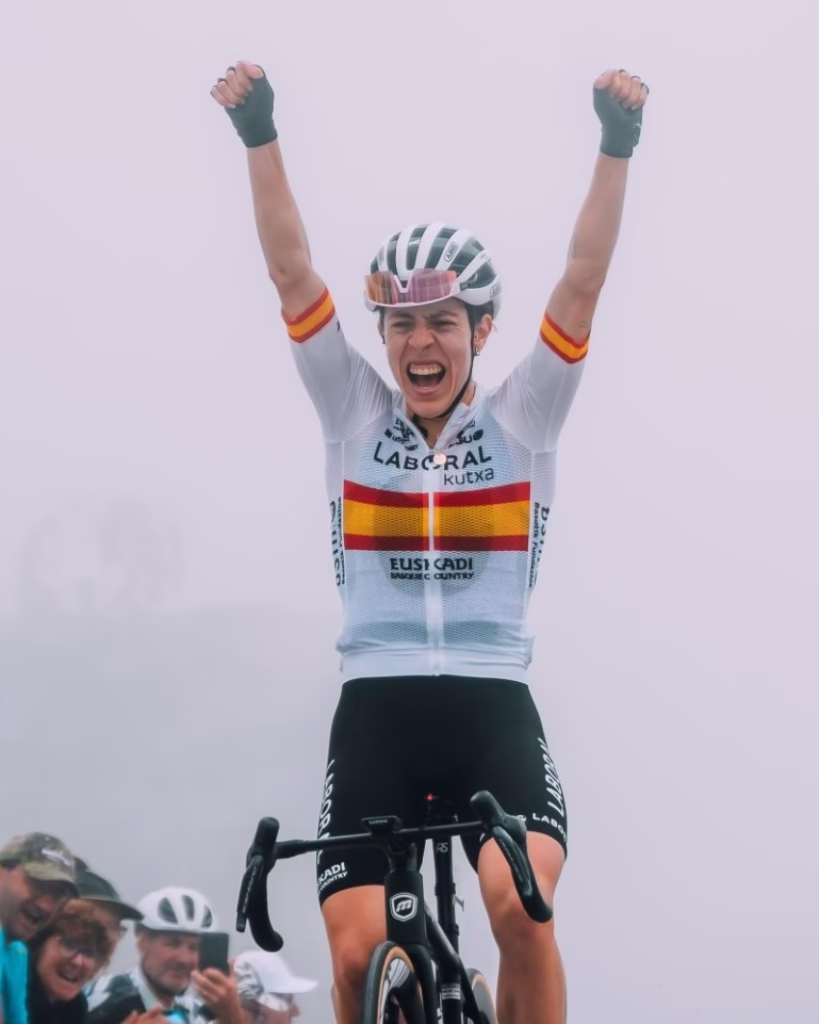
Usoa Ostolaza emerged as the overall winner, beginning what has become a strong association between the race and the Spanish climber. Her victory also gave the event exactly the sort of sporting narrative it needed. Ostolaza was not simply a big name collecting a lower-level result. She was a rider developing into a serious climber, using the Pyrenean terrain to make a clear statement.
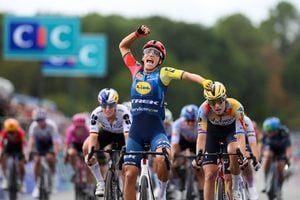
The race also produced the sort of varied stage outcomes that give a short stage race texture. Vittoria Guazzini won the opening stage, showing that the event could still offer chances beyond pure climbing days, while Josie Talbot’s final-stage victory added another layer to the race’s developing identity.
Most importantly, 2024 helped move the conversation on. The previous year’s controversy did not disappear, and nor should it, but the race began to rebuild some of the credibility it had lost. For a developing women’s event, consistency is central. Races do not earn long-term trust simply by existing. They earn it by proving they can provide safe, competitive conditions year after year.
Usoa Ostolaza and the race’s first repeat champion
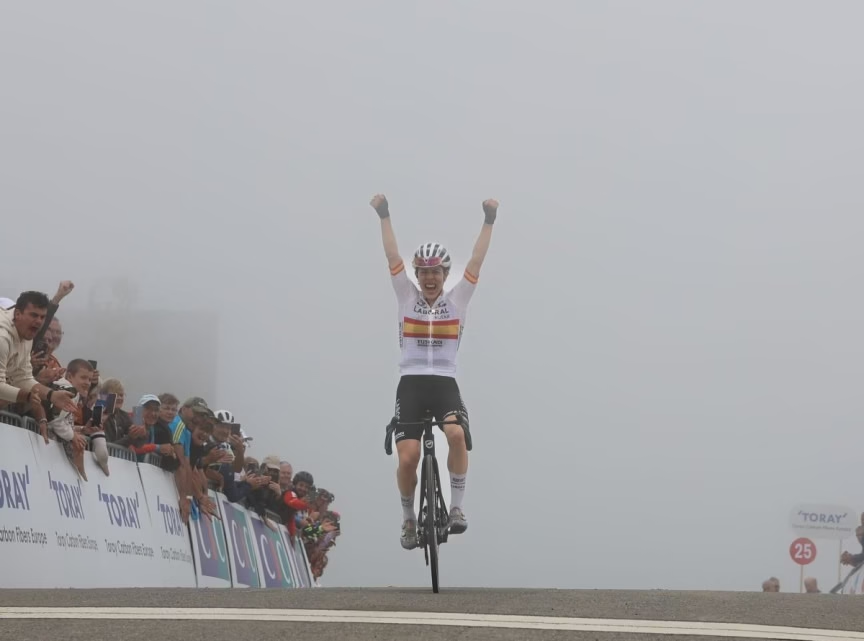
The 2025 edition strengthened the race’s sporting profile. Ostolaza returned and won overall again, becoming the first rider to take back-to-back titles at the Tour Féminin International des Pyrénées. That gave the race its first repeat champion and helped establish a more coherent early history.
Her 2025 win also reinforced the race’s place as a meaningful test for climbers just below, or moving towards, the top tier of stage racing. Ostolaza’s consistency across the Pyrenees showed that the event can reward control as much as aggression. It is short, but not simple. The terrain demands repeated efforts, careful positioning and the ability to manage gaps when the race breaks apart.
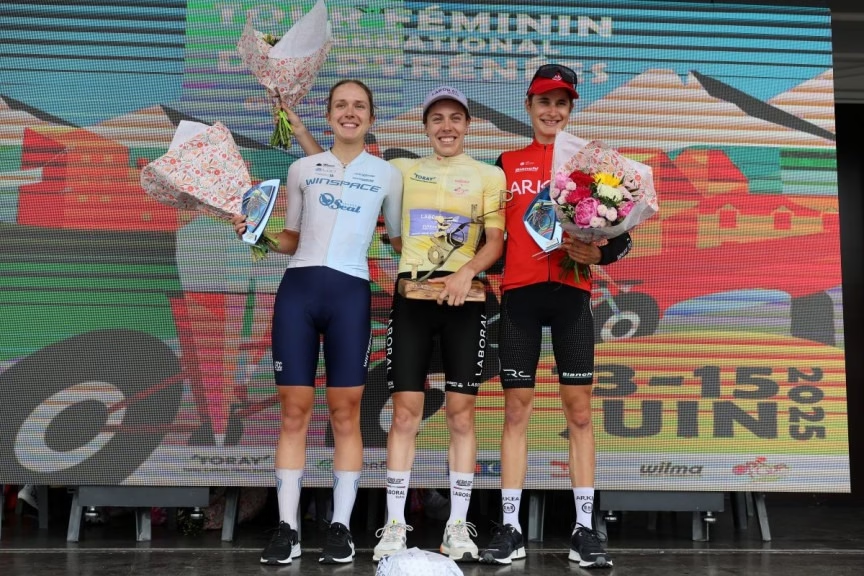
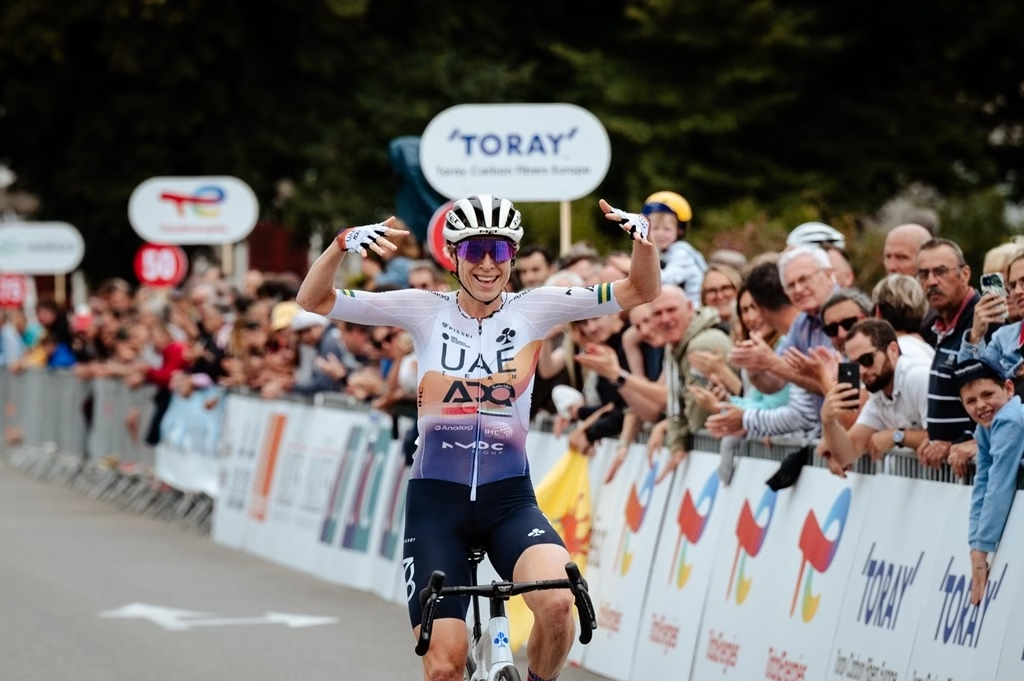
The 2025 podium also gave the race a broader international feel, with Nadia Gontova and Valentina Cavallar joining Ostolaza in the top three. Brodie Chapman’s final-stage solo win into Pau added a strong individual flourish, with the Australian attacking from distance and holding off the chase.
By this point, the race had started to look less like a fragile new event and more like a useful annual marker. Not a Grand Tour, not a WorldTour centrepiece, but a compact Pyrenean stage race with a clear sporting purpose.
Why the race has found a useful niche
The Tour Féminin International des Pyrénées works because it fills a gap. Women’s cycling does not lack one-day races, and it now has more major stage-race opportunities than it once did. What it still needs, though, is a deeper layer of demanding stage races where climbers can develop, teams can build GC habits, and riders can prove themselves on terrain that cannot be faked.
That is where the Pyrenees help. The mountains bring natural selection. They reduce the influence of pure speed and make repeated climbing ability the central currency. For riders targeting bigger summer races, the Tour Féminin International des Pyrénées can act as both preparation and evidence. For riders still building their reputation, it can be a breakthrough platform.
It also sits naturally alongside other important women’s stage races that have helped widen the calendar’s competitive base. The Giro d’Italia Women has long carried historical weight, the Tour de France Femmes has transformed visibility, and La Vuelta Femenina has grown rapidly as a major stage-race target. Below that level, races like the Tour Féminin International des Pyrénées are valuable because they add depth to the season rather than relying on one or two headline events to carry the whole narrative. That same need for depth is explored across ProCyclingUK’s wider women’s cycling coverage, where stage races outside the biggest headlines often reveal the next wave of GC riders before they become obvious to a broader audience.
That depth is important for the riders too. A developing climber needs more than one big week a year. She needs repeated chances to race hard in the mountains, make mistakes, defend leads, recover between stages and learn how to manage the pressure of a general classification.
A race still defining itself
Because it is still so young, the Tour Féminin International des Pyrénées does not yet have the long mythology of older European stage races. There is no deep archive of legendary editions, no multi-decade list of champions, no settled identity passed down across generations. Its history is being built now.
That gives the race both freedom and responsibility. It can still decide what it wants to be. The best version of the event is clear enough: a tough, well-run Pyrenean stage race that gives women’s cycling a reliable climbing test each June, with enough organisational stability to attract strong teams and enough sporting difficulty to produce meaningful winners.
The difficult 2023 edition remains part of its history, but it does not have to define the race permanently. The 2024 and 2025 editions showed that recovery was possible. Ostolaza’s back-to-back victories gave the race continuity. The range of stage winners showed that it can produce more than one kind of story. The move towards a stronger calendar position gives it room to keep growing.
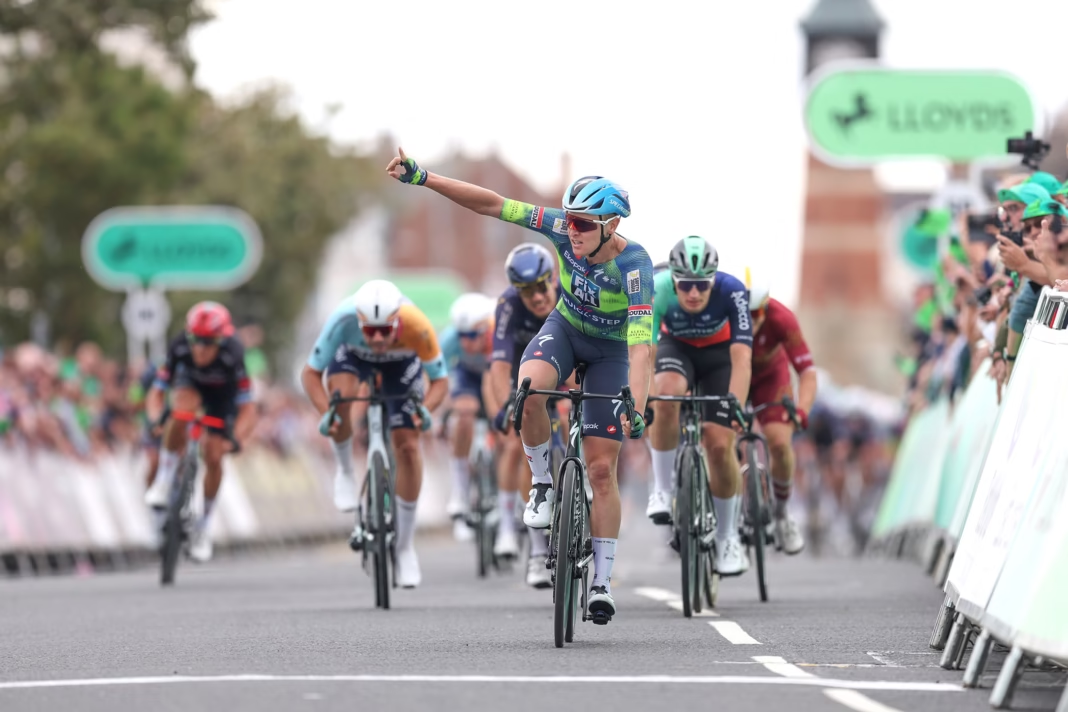
The early winners of Tour Féminin International des Pyrénées
Krista Doebel-Hickok gave the race its first overall winner in 2022, setting the tone for an event where climbing strength would be central. Marta Cavalli followed in 2023, although her victory came in an edition overshadowed by the cancellation of the final stage. Usoa Ostolaza then became the defining rider of the race’s early years, winning overall in both 2024 and 2025.
That short roll of honour already says something about the race. Its winners have not been accidental. They have been riders capable of handling hard terrain, making selections and sustaining form across multiple stages. For a young event, that is a useful foundation.
The next step is consistency. The Tour Féminin International des Pyrénées has the geography, the timing and the sporting logic to become a respected part of the women’s calendar. Its challenge is to keep proving that the racing product can match the ambition.
At its best, this is exactly the kind of event women’s cycling needs more of: mountainous, selective, developmental and distinctive. The Pyrenees give it the scenery and the difficulty. The early years have given it drama, controversy, recovery and a first repeat champion. What comes next will decide whether it becomes a fixture rather than a promising, sometimes turbulent, young race.