
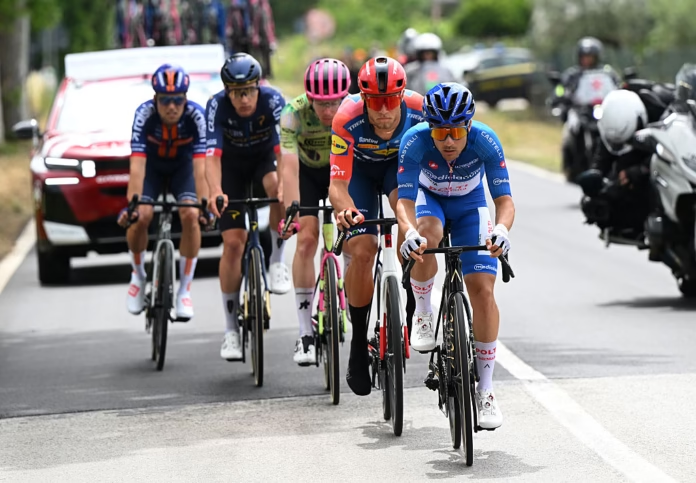
After Blockhaus gave the 2026 Giro d’Italia its first proper general classification fracture, stage 8 asks a very different question. This is not another summit finish, nor a conventional sprinter’s day. It is a sharp, awkward, rolling stage through Abruzzo and the Marche, with a finale built around short climbs, narrow streets and the kind of late gradients that can turn a controlled race into a scramble.
The stage runs from Chieti to Fermo over 156km, beginning inland before moving towards the Adriatic coast and then turning back into hillier terrain for a demanding final hour. It is the sort of route that looks manageable for much of the day, only to become increasingly difficult once positioning, road width, and repeated short climbs come into play.
Jonas Vingegaard’s stage 7 victory on Blockhaus has changed the tone of the Giro. He did not simply win the first mountain finish, he took time on most of the other GC riders and showed that the race now has a clear reference point. Felix Gall was the closest to him on the climb, while Giulio Pellizzari, Jai Hindley and Ben O’Connor limited their losses better than most. Afonso Eulálio, who had been riding with a sizeable buffer, lost 2:50 and now has a very different Giro to manage.
Stage 8 is unlikely to create the same time gaps as Blockhaus, but it could still matter. After a long mountain stage, a punchy, technical day can be dangerous. Riders who emptied themselves on Friday will have to recover quickly, and anyone short of sharpness could be caught out in the final kilometres.
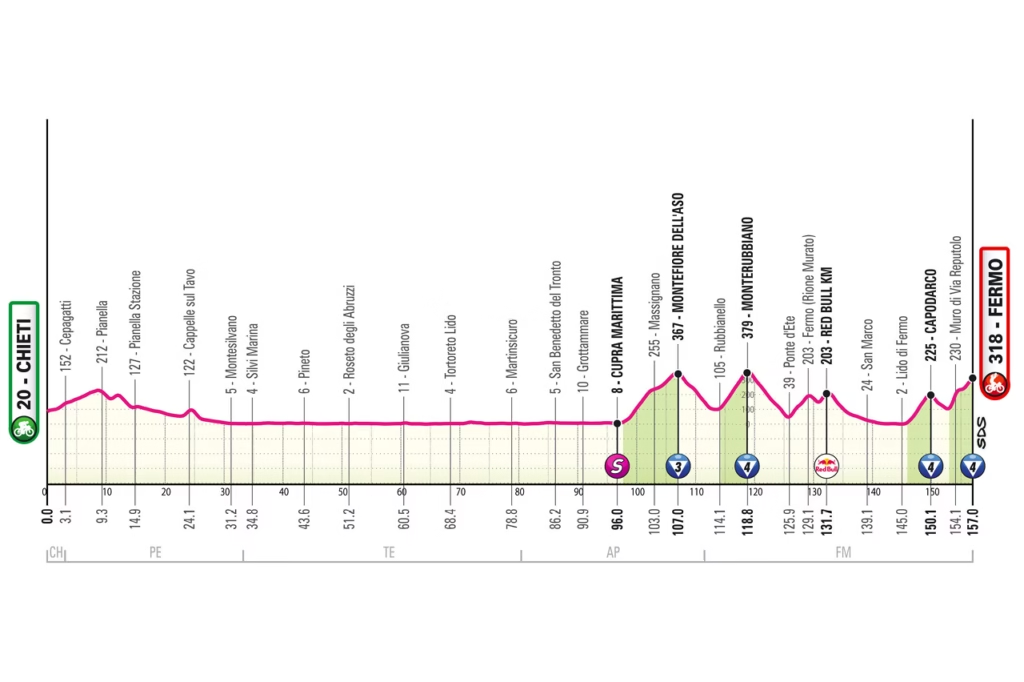
The route
Chieti gives the race an elevated start in Abruzzo before the stage settles into a more rhythm-based opening. The early part of the day is not flat in a laboratory sense, but it should allow a breakaway to form and the peloton to establish some kind of order.
The key change comes after the race reaches the Adriatic coast and then turns inland. From there, the stage becomes much more selective. The final 60km are packed with short climbs, descents and twisting roads, with little of the steady valley-road structure that helps teams keep everything under control.
The categorised climbing begins with Montefiore d’Aso, a third-category climb that should start to thin out the peloton and make the breakaway more serious. Monterubbiano follows soon after, a fourth-category ascent of 4.7km at 5.7 per cent. On paper, that is not brutal, but at this point in the stage it begins the process of breaking rhythm and forcing teams to spend riders.
Fermo appears before the finish, which is one of the more awkward parts of the design. The race reaches the town, tackles steep urban roads, then loops away again before returning for the final climb. That creates a stage where the contenders will know exactly what is coming, but still have to survive another sequence before the decisive run-in.
Capodarco is the last named climb before the finish, a 2.5km ascent averaging 6.3 per cent, with much steeper sections. It comes close enough to the line to be a launching point for a strong move, especially if the peloton has already been reduced or if a team wants to split the GC group before the final ramp into Fermo.
The finish itself is the headline. The final kilometres rise through narrow streets, with steep gradients and cobbled sections in Fermo’s old town. The numbers alone do not tell the full story. A final climb averaging around 5.7 per cent would usually suggest a hard uphill sprint rather than a major GC test, but this one includes a very steep opening section, changes in gradient and a late kick where positioning could be as important as raw power.
What’s on offer
- Stage: 8
- Date: Saturday, 16th May
- Route: Chieti to Fermo
- Distance: 156km
- Start time: 12:15pm BST
- Expected finish: around 4:05pm to 4:15pm BST
- Main climbs: Montefiore d’Aso, Monterubbiano, Capodarco and Fermo
- Likely winner type: puncheur, breakaway rider or explosive GC contender
- Main danger: the steep, narrow and technical finale in Fermo
Why this stage suits attackers
This is a very good day for the breakaway, especially because of where it sits in the race. Stage 7 was long, mountainous and decisive, with Vingegaard’s ride on Blockhaus already reshaping the GC picture. The peloton now has a stage that is too hard for the pure sprinters, not obvious enough for a full GC shutdown, and sufficiently technical late on that chasing requires commitment.
That is exactly the type of stage where the break can survive. Teams with no realistic sprint option will want riders up the road. Teams with GC leaders may prefer to avoid responsibility, especially after the first major mountain test of the race. The strongest squads will still need to keep their leaders safe, but that does not necessarily mean they will chase the break all day.
The final hour also favours riders who can accelerate repeatedly. A steady climber may be comfortable on a longer ascent, but this finale is more awkward. It asks for punch, handling, timing and confidence. The road rises, drops and turns. The climbs are short enough for attacks to stick if the right rider goes at the right moment.
This is where Classics-style instincts could become important. The winner may not be the best climber in the race. More likely, it will be someone who can handle changing gradients, judge a small group and still produce a sharp finish after a messy final 10km.
The GC battle after Blockhaus
The general classification riders face a delicate decision. Stage 8 is not a day where the strongest climber can simply ride everyone off the wheel over 10km of high-altitude climbing. It is more chaotic than that. Attacking here carries risk, but so does passive riding.
Vingegaard’s position has changed after stage 7. He now has proof that he can take time in the mountains, and that may reduce the need to force the race on every difficult day. Team Visma | Lease a Bike may prefer a controlled approach, keeping him safe through the final kilometres and allowing others to chase the stage.
Gall, Pellizzari, Hindley and O’Connor all came out of Blockhaus with reasons to stay alert. None of them will want to concede bonus seconds or allow a rival to sneak away on the final ramps. Ciccone is also an interesting rider for this type of finish. If he has recovered from stage 7, the punchy final climb looks much more suited to him than a pure summit-finish grind.
Eulálio’s race becomes especially interesting. Losing nearly three minutes on Blockhaus changes the psychology around his Giro. The question is no longer just whether he can defend a lead in the biggest mountains, but how confidently he can move through tricky transition stages when the pressure is rising. Stage 8 will test that composure. It is not a day to panic, but it is certainly not a day to drift backwards before the final climb.
The risk is that a small split opens near the top and becomes 10 or 15 seconds by the line. On a Grand Tour stage, that can look minor. In the wider race, it can become one more sign of who is comfortable and who is starting to chase.
The final climb to Fermo
The finale is the reason this stage carries real intrigue. The road into Fermo is not a clean, wide, predictable drag to the line. It is steep, narrow and technical, with urban road furniture, cobbles and a gradient that bites in separate bursts rather than one smooth effort.
That makes positioning crucial before the climb begins. A rider starting the final ramp too far back may not have enough road to recover. It is also a finish where domestiques can only do so much. Once the road narrows and steepens, the leaders will need to be near the front themselves.
The opening steep section could tempt an early attack, but the danger is going too hard too soon. The climb eases before kicking again, so the winning move may come from a rider who waits until others have burned their first acceleration. A reduced group sprint is possible, but only if the strongest riders hesitate.
For GC teams, the final climb is more about avoiding mistakes than making a grand statement. For stage hunters, it is the opposite. This is a rare chance to beat the GC favourites on terrain where timing and punch might overcome pure climbing hierarchy.
-
 Photo Credit: Flavia Ossola
Riders to watch
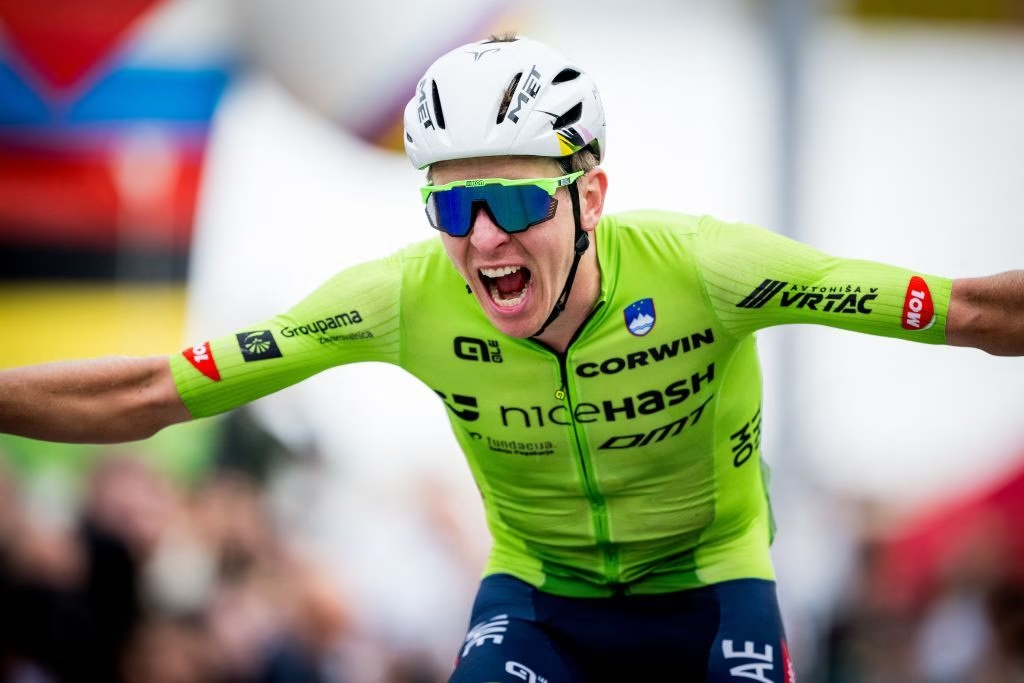
Giulio Ciccone looks well suited to this kind of finish if he has the legs after Blockhaus. The final climb is steep and irregular enough for his punch, and he has the instinct to follow the right move when a stage becomes tactical.
Filippo Zana is another rider who fits the terrain. He has the strength for short climbs, the durability for this kind of rolling stage and the profile of someone who can win from a reduced group or a late attack. If the GC teams hesitate, he is the kind of rider who could turn the final 10km into a stage-winning move.
Ben O’Connor may not be the most obvious punchy finisher, but his strong ride on Blockhaus showed that he is in the GC conversation. He will need to be attentive rather than explosive. The same applies to Jai Hindley, who will want to avoid losing seconds on a day where the terrain is awkward rather than mountainous.
Felix Gall’s stage 7 performance showed that he is one of the strongest climbers in the race, but this is a very different test. If the finale becomes a pure power climb, he can stay close. If it becomes a jumpy fight through narrow streets, others may be more naturally suited.
Vingegaard has the ability to win almost any hard stage when the legs are right, but this may not be the day for an all-out statement. If he is positioned well, he can cover the key moves and perhaps contest the finish. The bigger objective will be to stay safe and avoid giving back anything after his Blockhaus performance.
From the breakaway, this is the sort of stage that could suit a strong all-rounder with a fast uphill finish. The winning move may go early, but the rider who takes the stage will still need enough left to handle Capodarco and the final climb into Fermo.
Prediction
This feels more like a breakaway day than a full GC showdown. The stage is hard enough to discourage the sprinters, but not so obvious that the main GC teams will want to control it from Chieti to Fermo. After the effort of Blockhaus, there is every chance the peloton allows a strong group to go clear, with the final hour deciding which rider has judged the day best.
The final climb should reward punch and timing rather than pure climbing strength. Ciccone is tempting if the GC group contests the win, but the stage profile leans towards a rider who gets up the road and uses the chaos of the final kilometres to stay clear.
Prediction: Filippo Zana to win from a reduced breakaway, with the GC favourites finishing close behind but under real pressure on the steep streets of Fermo.

