
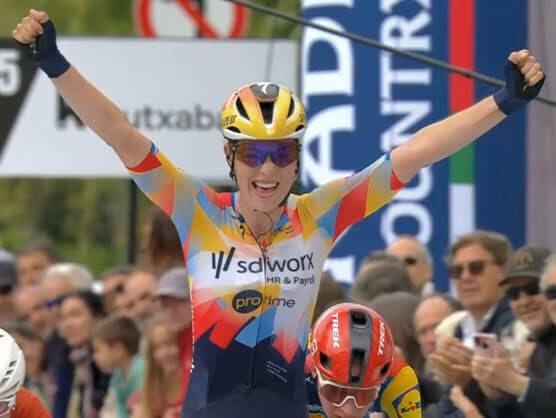
Stage 1 gave Itzulia Women 2026 exactly the sort of opening day the race usually threatens to produce: selective, tense and hard to control. Mischa Bredewold took the win in Zarautz from a reduced five-rider sprint, beating Yara Kastelijn and Riejanne Markus after a rain-soaked day that immediately separated the strongest from the merely well-placed.
That makes stage 2 more than a middle day. Bredewold starts from a position of strength, but not comfort. Kastelijn, Markus, Lauren Dickson and Antonia Niedermaier all finished close enough to keep the general classification open, while riders such as Liane Lippert, Usoa Ostolaza, Dominika Wlodarczyk and Ricarda Bauernfeind remain within striking distance after losing only a handful of seconds more.
The second stage runs from Abadiño to Amorebieta-Etxano over 138km, with another route that avoids any easy reading. There is no summit finish, no long final climb that clearly decides the day, and no obvious sprint stage hiding in the middle of the race. Instead, the stage is built around repeated Basque climbs, technical roads and a final phase where small gaps could become decisive.
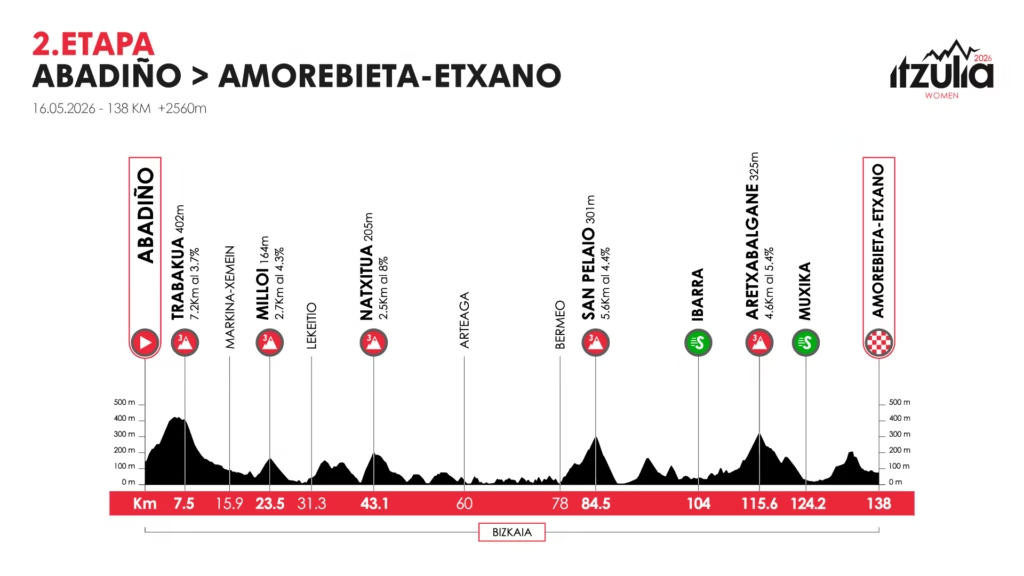
Itzulia Women 2026 stage 2 route
Stage 2 is the longest stage of this year’s Itzulia Women and contains the most vertical metres of the race. That alone makes it significant. At 138km, with more than 2,500 metres of climbing, it has the weight of a proper GC stage even though the finish in Amorebieta-Etxano is not uphill.
The first major climb is Trabakua, 7.2km at 3.7 per cent. The gradient is not severe, but the length matters early in the stage. It gives the breakaway a launchpad and forces the peloton to settle into a pattern quickly. After the opening day’s efforts, there will be riders who want to get ahead of the race rather than spend another stage fighting for position in the bunch.
Milloi comes next, 2.7km at 4.6 per cent, before the sharper Natxitua climb, 2.5km at 7.4 per cent. That is the first place where the race could really start to bite. It is short enough for aggressive riders to punch over the top, but steep enough to expose anyone who has not recovered properly from stage 1.
The route then continues through the coastal and inland Basque terrain, with more changes of rhythm before San Pelaio, 5.5km at 4.4 per cent. Again, the average gradient does not tell the full story. This stage is not about one spectacular climb. It is about the constant interruption of tempo. Every climb makes the next one harder. Every descent adds a positioning fight. Every short valley gives teams a brief chance to reorganise before the road tilts again.
The final categorised climb is Aretxabalgane, 4.6km at around 5 per cent. It comes late enough to shape the finish and should be the most important point of the day. From there, the route drops and runs towards Amorebieta-Etxano, leaving enough road for a regrouping, but not enough for a disorganised chase to feel fully safe.
What’s on offer
- Stage: 2
- Date: Saturday, 16th May
- Route: Abadiño to Amorebieta-Etxano
- Distance: 138km
- Main climbs: Trabakua, Milloi, Natxitua, San Pelaio and Aretxabalgane
- Vertical metres: just over 2,500 metres
- Likely winner type: reduced sprint, late attacker or strong breakaway rider
- Main tactical point: Aretxabalgane, followed by the run-in to Amorebieta-Etxano
Why stage 2 is dangerous for the GC
The temptation is to see stage 3 in Donostia as the obvious general classification stage because of Jaizkibel, Gurutze and Mendizorrotz. That final day still looks like the clearest place to decide the overall race, but stage 2 may be harder to control.
The route has no long summit finish to simplify tactics. Instead, teams have to manage a rolling stage where the key selection may happen before the final climb, over the top of Aretxabalgane, or in the chase afterwards. That opens more possible scenarios, and that usually makes the race harder for the leader’s team.
Team SD Worx-Protime now have the jersey with Bredewold. That gives them control, but also responsibility. The Dutch rider has shown repeatedly that she can survive hard Basque stages and finish quickly from reduced groups, so the team do not need to panic if the race comes back together. The problem is the route gives plenty of scope for rivals to make the race messy before the finale.
Fenix-Premier Tech have Yara Kastelijn close on time, and she is exactly the sort of rider who can benefit from a chaotic middle stage. Lidl-Trek have Riejanne Markus and Ricarda Bauernfeind, giving them more than one way to apply pressure. FDJ United-SUEZ are also well placed with Lauren Dickson and Évita Muzic, while Canyon-SRAM zondacrypto have Antonia Niedermaier close enough to force others to chase if she moves.
This is the awkward part of a three-day race. There is no room to wait forever. If a rider is only 15 or 20 seconds down, stage 2 is a chance to race aggressively before everyone turns their full attention to the final day.
How the stage could unfold
The breakaway should have a better chance here than it did on stage 1, but only if the right mix goes clear. A small move without GC threat may be allowed space, particularly if Team SD Worx-Protime decide the priority is protecting Bredewold rather than chasing another stage win. A dangerous group with riders close on the overall will not be given much room.
Trabakua could help form the early move, but the more interesting racing should come after Natxitua. That is where the stage begins to carry more accumulated fatigue. Riders who are still strong will know they can test the bunch without committing to one long-distance attack.
San Pelaio may act as the first real softening-up climb, particularly if teams want to thin out the group before Aretxabalgane. The final climb is the obvious launchpad. It is hard enough to split a reduced peloton, but not so hard that only pure climbers will survive. That makes it ideal for riders such as Lippert, Kastelijn, Markus and Bredewold, who can handle climbing but still finish quickly if a small group reaches the line.
A solo win is possible, especially if someone crests Aretxabalgane with a small gap and finds hesitation behind. More likely, though, the stage ends with a reduced group sprint in Amorebieta-Etxano. The run-in gives chasers a chance, but not a guarantee.
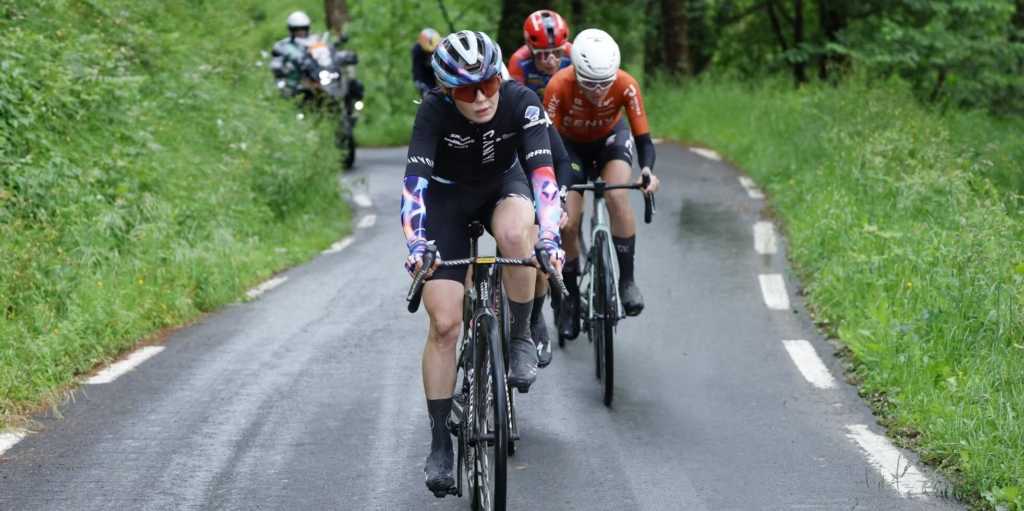
Riders to watch
Bredewold is the obvious starting point. She already has the race lead, stage-winning confidence and a finish that few rivals will want to take to the line. The question is whether she can absorb another hard day and still produce the same sprint after more than 2,500 metres of climbing.
Kastelijn may be the most awkward rider for SD Worx-Protime to manage. She is aggressive, strong on repeated climbs and close enough on GC to make every move count. If the race becomes disorganised, she has the racing style to make it uncomfortable.
Markus gives Lidl-Trek a strong card. Her third place on stage 1 confirmed that she is in the right condition, and this rolling terrain suits her ability to keep applying pressure rather than waiting for one decisive climb. Bauernfeind adds another option, especially if the team wants to attack before the favourites start watching each other.
Lippert lost time on stage 1 but remains a serious threat on this terrain. Movistar do not need to ride defensively now, which could suit her. A punchy, selective stage with a late climb is very much her territory, and she may prefer a harder race rather than a controlled reduced sprint.
Niedermaier is only a few seconds off the race lead and gives Canyon-SRAM zondacrypto a different type of threat. She may not want a sprint against Bredewold, but if the race opens on Aretxabalgane, she has the climbing strength to force a selection.
Ostolaza and Wlodarczyk are also worth watching. Both are close enough to matter and strong enough on repeated climbs to benefit if the stage becomes more attritional than tactical. The key for both is timing. A move too early could be brought back, but a late acceleration over Aretxabalgane could create the kind of gap that reshapes the podium before Donostia.
-
 Photo Credit: Getty

What will the main teams do?
Team SD Worx-Protime will want control, but not necessarily a full-stage chase. Their ideal scenario is probably a manageable breakaway, a reduced peloton over the final climb, and Bredewold kept near the front for the finish. The danger is that too much control makes them vulnerable to repeated attacks.
Fenix-Premier Tech should be more aggressive with Kastelijn. She is close enough to the lead that bonus seconds matter, and she is unlikely to want to give Bredewold another clean sprint. A hard race suits her more than a late waiting game.
Lidl-Trek have options, which may be their biggest strength. Markus can follow the main favourites, while Bauernfeind can be used to test the race from slightly further out. If they can force SD Worx-Protime to chase before Aretxabalgane, that could change the final.
FDJ United-SUEZ have two riders well placed enough to shape the day. Dickson is close on GC after an excellent stage 1, while Muzic gives them a proven climbing option if the pace becomes more selective. They do not have to carry the race, but they do need to make sure they are represented when the decisive moves go.
Movistar’s best route back into the GC fight is likely through Lippert attacking. A conservative stage would not help much, so they have a clear incentive to race on the front foot.
Prediction
Stage 2 looks like a reduced-group day rather than a full bunch sprint or a pure climbers’ showdown. The length, climbing and repeated changes of rhythm should remove plenty of riders, but the distance from Aretxabalgane to the finish may bring the strongest favourites back together.
That still leaves room for late attacks. If the favourites hesitate after the final climb, one rider could steal the stage on the run-in to Amorebieta-Etxano. With Bredewold in yellow, in form and clearly confident, the safest reading is that she survives the climbs and has another chance to use her finishing speed.
Prediction: Mischa Bredewold to win again from a reduced group, with Kastelijn, Markus, Lippert and Niedermaier all close enough to keep the GC battle alive before the final stage in Donostia.

