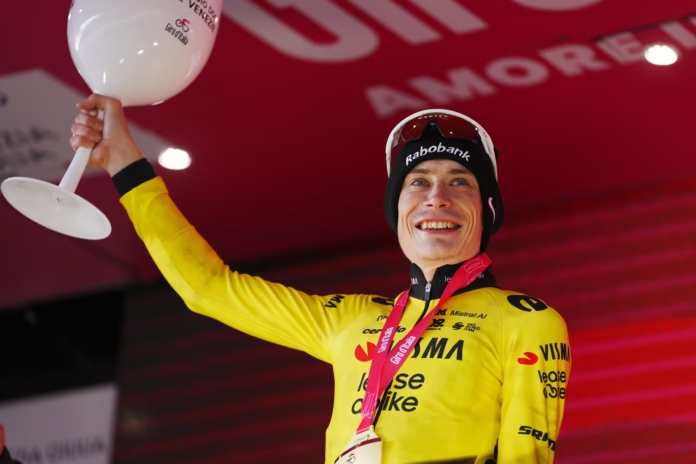
Jonas Vingegaard’s victory on Blockhaus has transformed the shape of the 2026 Giro d’Italia without removing Afonso Eulálio from the maglia rosa. The Portuguese rider remains in the overall lead after stage 7, but the huge buffer he carried into the first major mountain finish has been cut dramatically.
Vingegaard won the stage from Formia to Blockhaus after attacking on the final climb, taking the stage victory ahead of Felix Gall and Jai Hindley. Gall limited the damage best among the direct GC rivals, while Hindley, Giulio Pellizzari and Ben O’Connor also emerged from the first summit-finish test with their overall ambitions intact.
The bigger shift came behind them. Eulálio lost 2:50 on the day, enough to keep pink, but not enough to maintain the sense that he had control of the race. After the unusual circumstances that gave him such a strong position earlier in the Giro, stage 7 brought the race much closer to the expected GC hierarchy. Vingegaard is now second overall at 3:17, with Gall third at 3:34.
Giro d’Italia 2026 general classification after stage 7
Eulálio still leads the Giro, but the race now feels very different. His margin over Vingegaard is 3:17, which remains useful on paper, but the Blockhaus performance showed where the pressure is likely to come from once the race returns to the high mountains.
Gall’s ride was one of the most important of the day. He finished second on the stage and moved to third overall, just 17 seconds behind Vingegaard. Hindley is now fourth at 4:25, with Pellizzari fifth at 4:28 and O’Connor sixth at 4:32. That creates a tight chasing group behind the top three, with less than 10 seconds separating Hindley, Pellizzari and O’Connor.
Current top 10 on GC:
- Afonso Eulálio – 30:59:23
- Jonas Vingegaard – +3:17
- Felix Gall – +3:34
- Jai Hindley – +4:25
- Giulio Pellizzari – +4:28
- Ben O’Connor – +4:32
- Mathys Rondel – +4:56
- Giulio Ciccone – +4:57
- Thymen Arensman – +5:07
- Michael Storer – +5:11
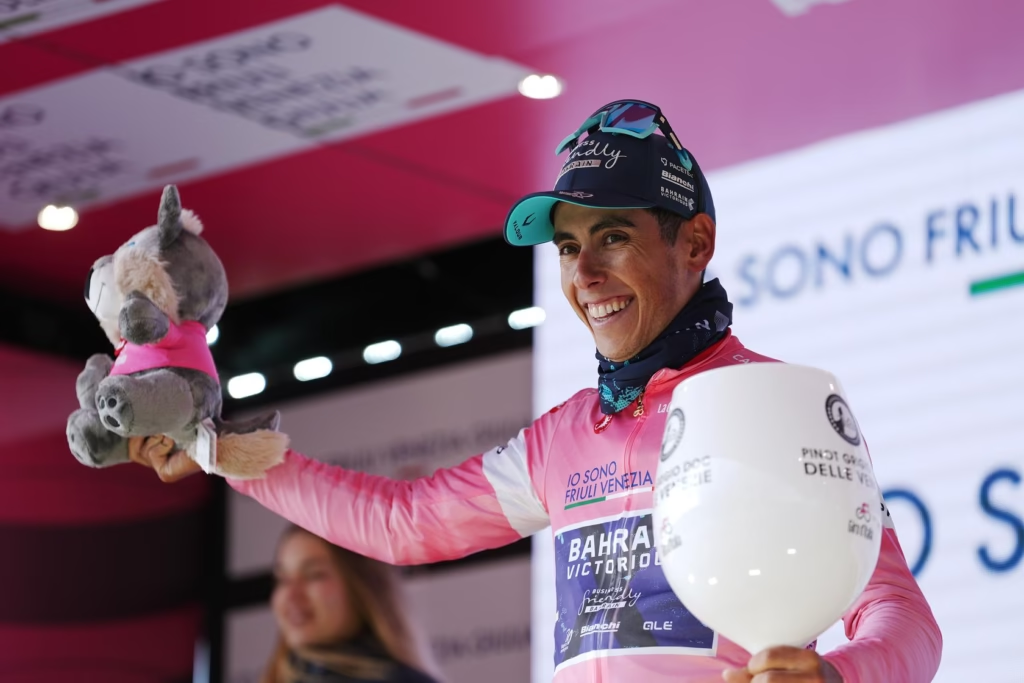 Photo Credit: RCS
Eulálio keeps pink, but the race has tightened
Eulálio’s Giro has already been unusual. He took the race lead on stage 5 after a chaotic day that also saw Igor Arrieta win in Potenza, and he retained the jersey through stage 6 into Napoli. Blockhaus was always the first proper test of whether that advantage could survive against the strongest climbers in the race.
He passed that test in the narrowest practical sense. He is still in pink. Yet the meaning of the jersey has shifted. Before stage 7, Eulálio had enough time to make the GC race feel slightly distorted. After Blockhaus, the race looks more open, and Vingegaard is close enough to make every mountain stage feel like a direct threat.
There is still a difference between losing time and collapsing. Eulálio did not fall out of the top group entirely in the overall standings, and he continues to lead the young rider classification as well. But from here, his race becomes more defensive. He has to manage Vingegaard, Gall, Hindley, Pellizzari and O’Connor, while also carrying the visibility and responsibility of the maglia rosa.
Stage 8 to Fermo is not a summit finish, but it is punchy, technical and awkward. After losing time on Blockhaus, Eulálio cannot afford a careless split on the steep streets of the Marche.
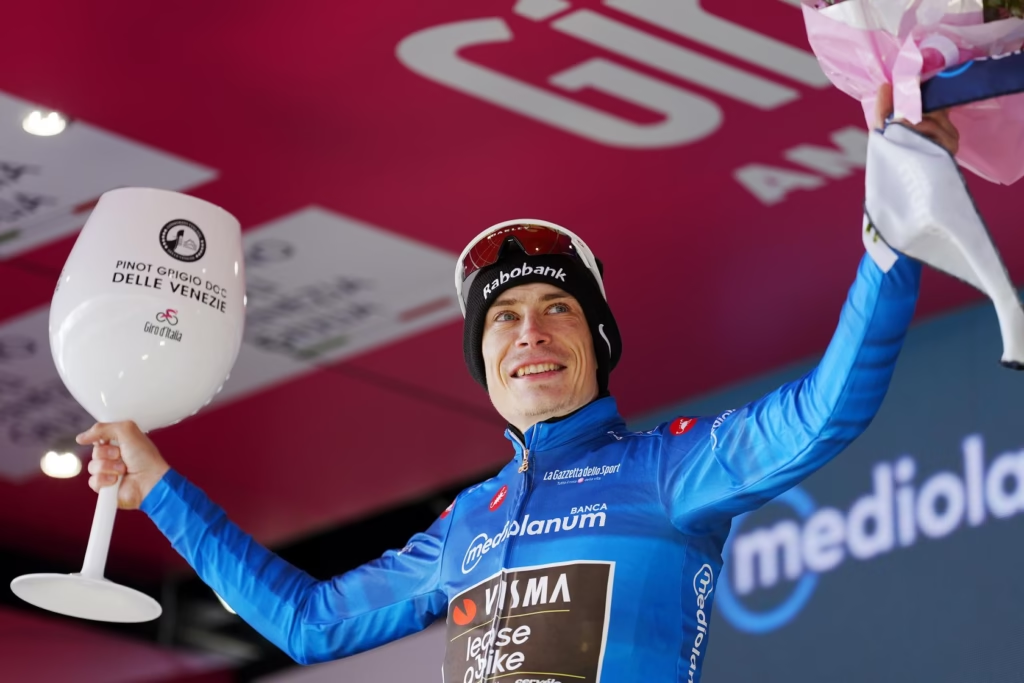 Photo Credit: RCS
Vingegaard takes the mountains jersey
Vingegaard’s Blockhaus victory also moved him into the lead of the mountains classification. He now has 61 points, just one ahead of Diego Pablo Sevilla, who had led the competition after his aggressive start to the race.
That one-point margin does not make the blue jersey secure, but it does show how quickly the Giro’s mountain classification can change once the major climbs arrive. Sevilla has been one of the most visible riders in the competition, but Vingegaard’s win on a high-value summit finish immediately changed the balance.
Current mountains classification:
- Jonas Vingegaard – 61 points
- Diego Pablo Sevilla – 60 points
- Felix Gall – 24 points
- Igor Arrieta – 18 points
- Nelson Oliveira – 18 points
- Jai Hindley – 16 points
- Manuele Tarozzi – 14 points
- Einer Rubio – 13 points
- Giulio Pellizzari – 13 points
- Afonso Eulálio – 10 points
The interesting question is whether Vingegaard actively defends the blue jersey or simply keeps collecting points as a by-product of riding for overall victory. If he continues to win or place highly on summit finishes, the competition may become increasingly difficult for the breakaway climbers to control.
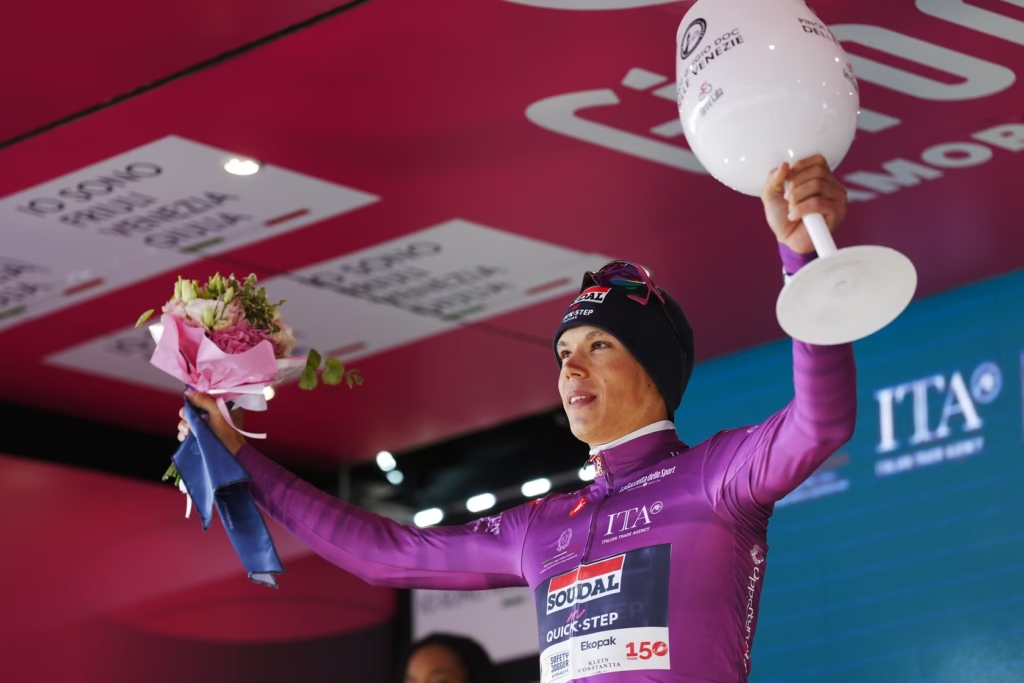 Photo Credit: RCS
Magnier remains in ciclamino
Paul Magnier continues to lead the points classification after stage 7. The French sprinter has 130 points and still holds a significant margin over Jonathan Milan, who sits second on 64 points. Davide Ballerini, the stage 6 winner in Napoli, is third with 58 points.
Blockhaus did not reshape the ciclamino jersey in the same way it changed the GC, but the race for points is not finished. Milan closed some of the gap earlier in the race, while Ballerini’s Napoli victory moved him into the conversation. Magnier, though, still has the clearest control of the classification.
Current points classification:
- Paul Magnier – 130 points
- Jonathan Milan – 64 points
- Davide Ballerini – 58 points
- Jhonatan Narváez – 53 points
- Manuele Tarozzi – 48 points
- Tobias Lund Andresen – 42 points
- Giulio Ciccone – 41 points
- Jasper Stuyven – 40 points
- Guillermo Thomas Silva – 37 points
- Diego Pablo Sevilla – 36 points
Magnier’s advantage remains substantial, but the next sprint opportunities will decide whether this becomes a controlled defence or a proper fight. Milan needs stage wins, not just consistency, if he is going to bring the jersey back within range.
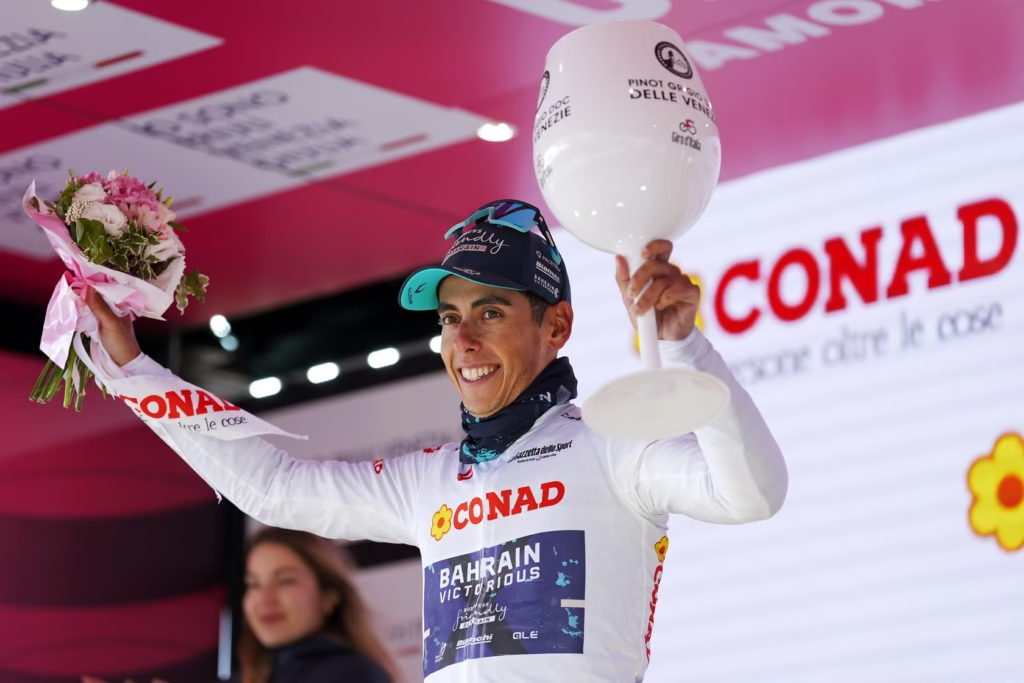 Photo Credit: RCS
Eulálio also leads the white jersey
Eulálio’s pink jersey also comes with control of the young rider classification. He leads that competition ahead of Giulio Pellizzari, Mathys Rondel, Igor Arrieta and Davide Piganzoli.
Pellizzari’s position is important. He is fifth overall and second in the young rider standings at 4:28. That makes him both a GC threat and a white jersey contender if Eulálio fades deeper into the race. Rondel is also close enough to keep the competition interesting, particularly after moving into seventh overall.
Current young rider classification:
- Afonso Eulálio
- Giulio Pellizzari – +4:28
- Mathys Rondel – +4:56
- Igor Arrieta – +6:11
- Davide Piganzoli – +6:22
This classification could become one of the most interesting secondary battles of the Giro. Eulálio has the lead, but Pellizzari and Rondel both look capable of staying high on GC if they recover well from Blockhaus.
What stage 7 changes for the Giro
The race now has a clearer structure. Eulálio is still the leader, but Vingegaard has made the first major move among the expected favourites. Gall has shown that he can follow closest on the hardest climbs, while Hindley, Pellizzari and O’Connor have placed themselves in the next group of genuine GC contenders.
Arrieta’s fall to 14th overall at 6:11 is also significant. After winning stage 5 and sitting second overall before Blockhaus, he lost substantial ground on the first major summit finish. He remains inside the top 15, but the podium picture has moved away from him for now.
Ciccone also remains in the top 10, but at 4:57 he is now nearly five minutes behind Eulálio and 1:40 behind Vingegaard. That does not end his GC hopes, but it narrows the path. He may need a more tactical mountain stage, or a day where he can use aggression rather than simply follow the strongest climbers.
For Vingegaard, the stage did what it needed to do. He won, took time, moved to second overall and took the mountains jersey. For Eulálio, the jersey stayed on his shoulders, but the race around him became much more dangerous.
Giro d’Italia 2026 stage 7 result
| Position | Rider | Team | Time/gap |
|---|---|---|---|
| 1 | Jonas Vingegaard | Team Visma | Lease a Bike | 6:09:15 |
| 2 | Felix Gall | Decathlon CMA CGM | +0:13 |
| 3 | Jai Hindley | Red Bull-BORA-hansgrohe | +1:02 |
| 4 | Giulio Pellizzari | Red Bull-BORA-hansgrohe | +1:05 |
| 5 | Ben O’Connor | Team Jayco AlUla | +1:05 |
| 6 | Mathys Rondel | Tudor Pro Cycling Team | +1:29 |
| 7 | Giulio Ciccone | Lidl-Trek | +1:40 |
| 8 | Derek Gee | Lidl-Trek | +1:42 |
| 9 | Michael Storer | Tudor Pro Cycling Team | +1:44 |
| 10 | Thymen Arensman | Netcompany INEOS | +1:44 |