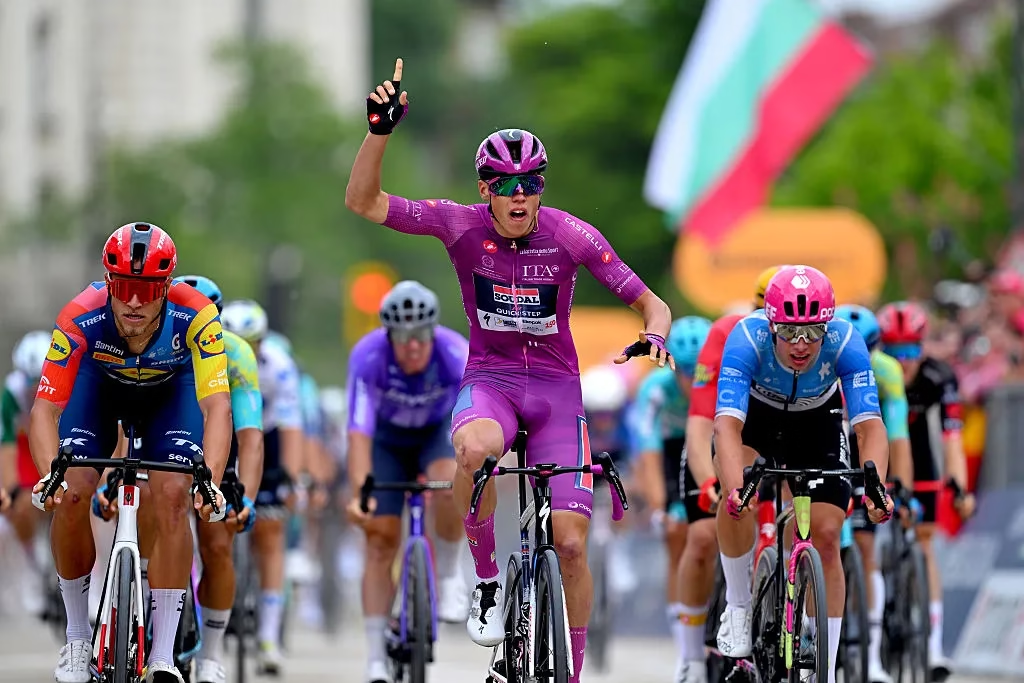
After the breakaway survived on stage 11 to Chiavari, the 2026 Giro d’Italia gives the sprinters another chance on stage 12, but not a simple one. Imperia to Novi Ligure is a 175km route that begins on the Ligurian coast, crosses inland through two categorised climbs, then offers more than 50km for the peloton to regroup before a flat finish.
That makes the stage awkward rather than brutal. It is not hard enough to be a pure climbers’ day, and the final section is long enough for sprint teams to organise a chase. But the climbs through the middle of the stage can still change the composition of the race. Dropped sprinters may have time to return. Dropped lead-out riders may not. That difference could decide whether Novi Ligure becomes a bunch sprint, a reduced sprint, or a stage where the breakaway again tests the peloton’s patience.
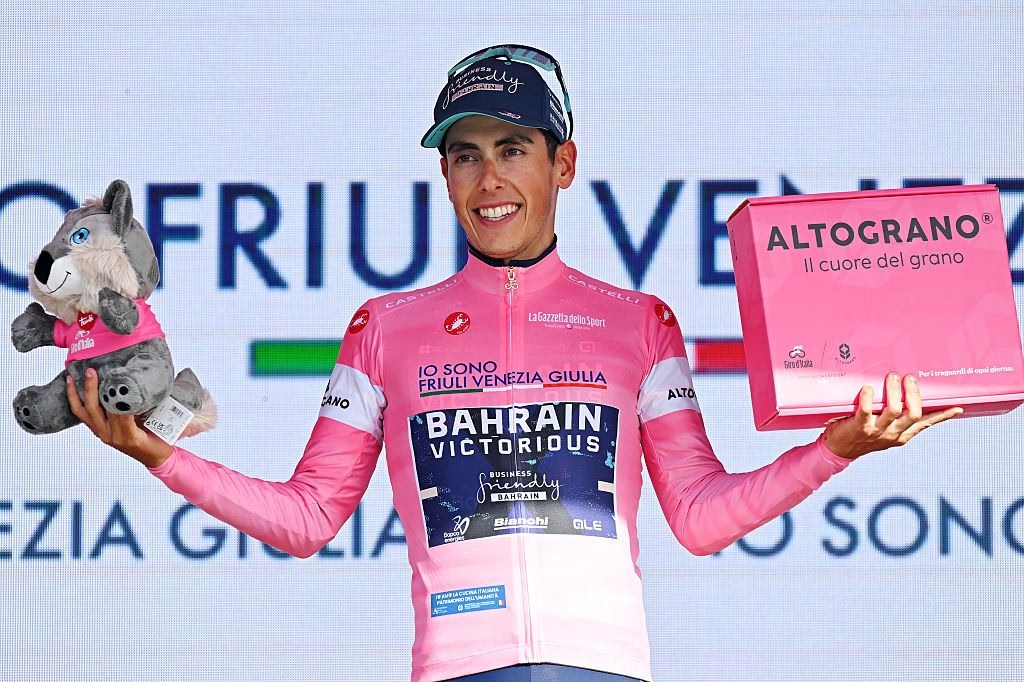
The general classification picture is finely balanced after the time trial in Massa and the hilly stage to Chiavari. Afonso Eulálio still carries the maglia rosa, but Jonas Vingegaard sits close enough that every awkward day now carries extra tension. Stage 12 is unlikely to be a planned GC battle, but after the Giro’s last few days, nobody near the top of the standings can afford to treat it as harmless.
The route
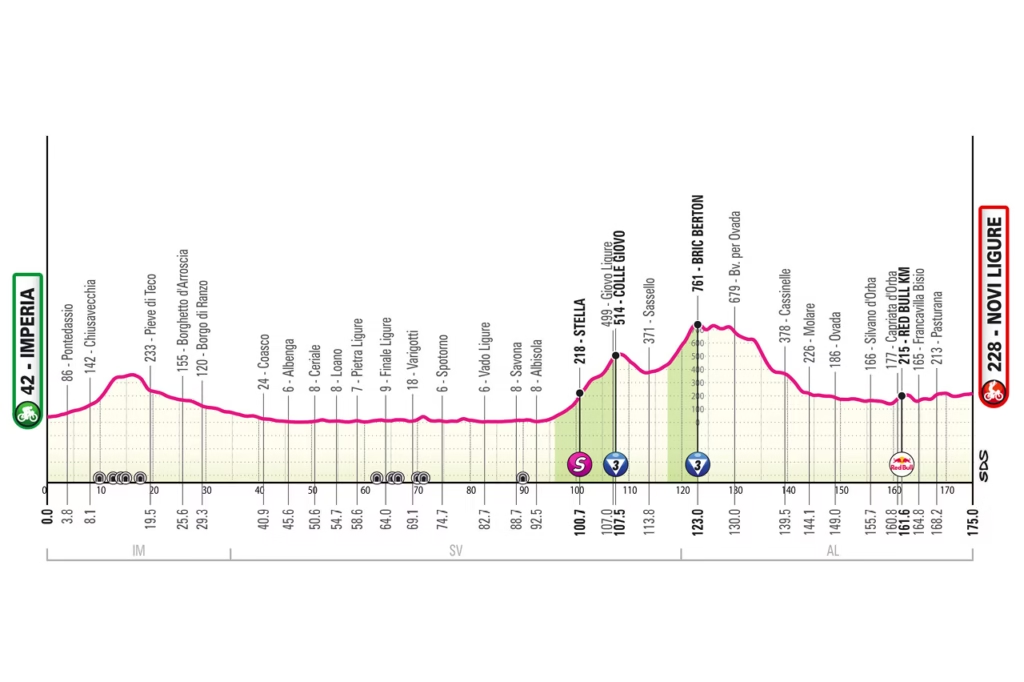
Stage 12 starts in Imperia, a coastal city on the Riviera dei Fiori. The race briefly uses the Ligurian coastline before heading inland, avoiding the most obvious Milan-San Remo reference point of Capo Berta. That early inland loop gives the breakaway a chance to form, but the first half of the stage should still be manageable for the peloton if the sprint teams want control.
The route returns towards the Riviera around Albenga, then leaves the coast again after Savona. That is where the important climbing begins. Colle Giovo is the first major obstacle, a third-category climb of 11.4km at around 4.4 per cent. The gradient is not severe, but the length makes it useful. A steady pace there can start to thin the peloton and make life uncomfortable for heavier sprinters.
Bric Berton follows after a short descent. It is also categorised as third category and is the sharper of the two climbs, 5.5km at around 5.9 per cent, with sections that can do damage if the pace is high. This is the climb most likely to decide which sprinters survive in the front group and which teams still have numbers afterwards.
The key point is distance from the top to the finish. There are more than 50km between Bric Berton and Novi Ligure, which means the climbs are unlikely to decide the stage outright. They should instead set up a long chase, with the peloton trying to bring back the break or dropped sprinters trying to rejoin before the final approach.
The finish in Novi Ligure should be fast if a group comes together. The town has Giro history, with Caleb Ewan winning there in 2019, and the flat run-in gives the sprinters a clear target. The challenge is arriving there with enough team support still intact.
What’s on offer
- Stage: 12
- Date: Thursday, 21st May
- Route: Imperia to Novi Ligure
- Distance: 175km
- Altitude gain: around 2,250 metres
- Start time: around 12:05pm BST
- Expected finish: around 4:15pm BST
- Main climbs: Colle Giovo and Bric Berton
- Likely winner type: sprinter, reduced-sprint specialist or breakaway rider
- Main tactical point: the chase after Bric Berton
Why stage 12 suits sprinters, but not all sprinters
This is the kind of stage where the word “sprinter” needs qualification. A pure flat-road sprinter with a full lead-out and no climbing stress would love the finish, but the route before Novi Ligure is not that clean. The middle section asks enough questions to make the final more selective.
Colle Giovo and Bric Berton are not Alpine monsters, but they are real obstacles. The combined effect could drop some faster riders, especially if teams with more durable sprinters decide to make the race harder. A sprinter who climbs reasonably well should be able to survive or return. A sprinter who needs a completely flat day may struggle.
That gives Paul Magnier an important opportunity. He continues to lead the ciclamino competition and has already shown that he can handle different kinds of finishes in this Giro. Jonathan Milan will also see Novi Ligure as a chance, but the stage is more complicated for him than a simple sprint day. The climbs are manageable if the pace is controlled, but if rival teams push hard on Bric Berton, Milan may need to spend energy getting back before the sprint.
Davide Ballerini is another rider who should like this sort of terrain. He can handle harder roads than many pure sprinters, and if the bunch is reduced, his chances improve. Jasper Stuyven and Tobias Lund Andresen also sit in the category of riders who could benefit if the stage becomes too hard for the fastest pure sprinters but not hard enough for the attackers to stay away.
Why the breakaway still has a chance
Stage 11 showed again that the Giro can reward attackers on days that look controllable in theory. Stage 12 is easier to chase than the road to Chiavari, but the breakaway still has a path to victory if the sprint teams hesitate.
The stage has two useful features for attackers. First, the middle climbs give the breakaway a chance to increase pressure and split itself into a stronger front group. Second, the long run from Bric Berton to Novi Ligure creates a tactical chase rather than an immediate catch. If the peloton is short on domestiques after the climbs, the break can maintain enough speed to make the final 20km stressful.
The key will be the composition of the move. A small, weak breakaway should be caught. A dangerous group of strong rouleurs and punchy riders, all far enough down on GC, could become harder to manage. Sprint teams will not want to make the same mistake twice after Chiavari, but that does not automatically mean they will have the strength to close everything.
This is also the sort of day where teams without a sprint option have every reason to put riders up the road. The final mountain block is still to come, and opportunities for stage hunters may become less predictable. Stage 12 is not the hardest breakaway day, but it is far from impossible.
The GC context
The GC riders should want a quiet day, but the race situation makes that difficult. Eulálio still leads, Vingegaard remains close, and the podium fight behind them has tightened since the time trial. That means every stage now carries a layer of risk, even when the profile does not encourage direct attacks.
Stage 12 should not tempt Vingegaard, Eulálio, Thymen Arensman, Felix Gall, Ben O’Connor or Jai Hindley into a major move. The climbs are too early, and the finish is too flat. But the roads after the climbs, the chase back towards Novi Ligure and the sprint approach all require attention.
For the GC teams, the task is straightforward: stay near the front, avoid splits, keep leaders protected through the descents, and do not get caught behind if the race becomes nervous after Bric Berton. It is not a stage to win the Giro, but it is the kind of stage where a careless leader could lose seconds or suffer a crash at exactly the wrong point in the race.
The bigger GC story may be energy management. After a time trial and a hilly day to Chiavari, stage 12 offers a chance to avoid unnecessary effort before harder stages return. Teams with podium ambitions will want to do as little work as possible without letting the day become dangerous.
How the stage could unfold
The breakaway should form early, possibly after a lively opening as teams try to place riders in the move. Because the route is not immediately mountainous, the peloton may be able to control which group gets away. The sprint teams will want a break they can manage, not a powerful move with too many strong finishers.
The first major decision comes before Colle Giovo. If the peloton rides gently, most sprinters should stay within reach. If teams decide to increase the pace, the stage becomes more selective and the chase after the climb more complicated.
Bric Berton is the most important section. Its steeper gradient can drop riders, split the break and force sprint teams to use workers before the final 50km. The top of the climb will tell us a lot. If the peloton is still organised and the gap is manageable, Novi Ligure should lean towards a sprint. If the peloton is reduced and the break still has several minutes, the stage becomes much more open.
The long run-in will then become a chase. This is where teams need cooperation. If only one sprint squad works, the breakaway can survive. If several teams believe in their fast men, the gap should come down steadily.
The final 10km should be fast and nervous. After a day with climbing in the legs, lead-outs may be shorter than usual. Positioning will be vital, and a sprinter without teammates may have to surf wheels rather than rely on a full train.
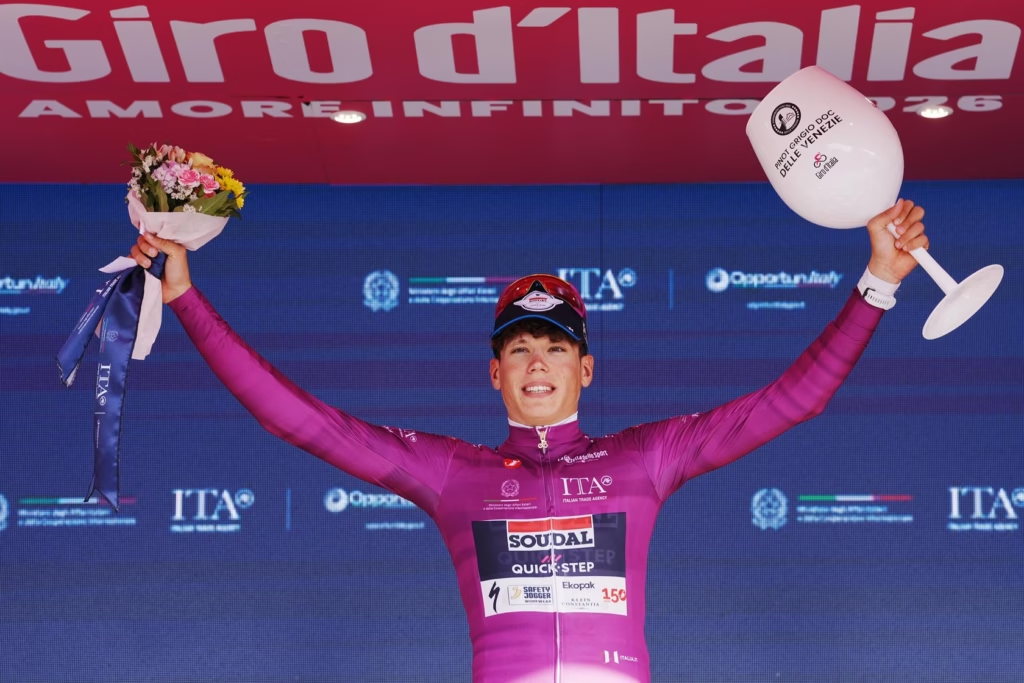 Photo Credit: RCS
Riders to watch
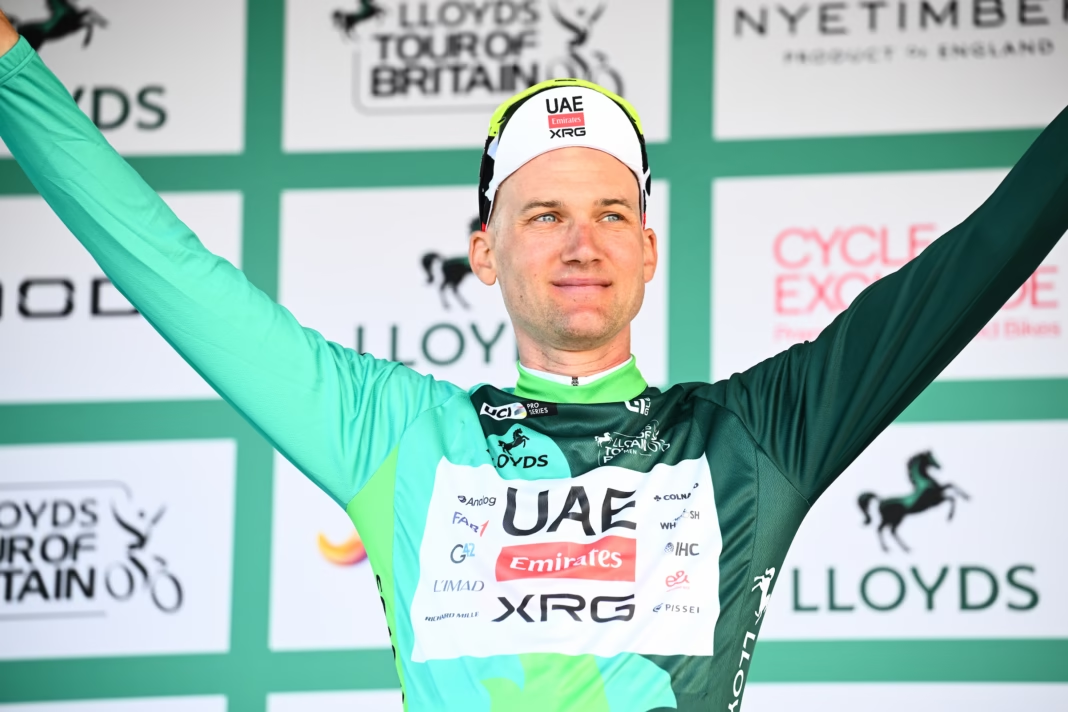
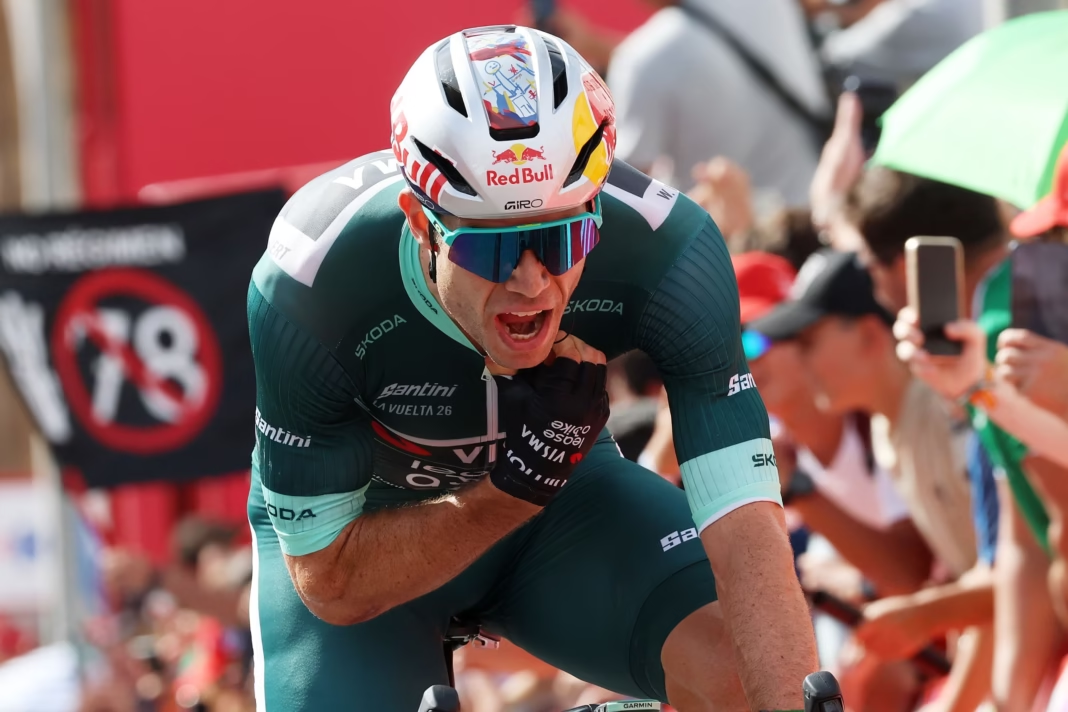
Paul Magnier is the first name to consider because of the ciclamino jersey and his sprint form. If he survives the climbs with support, he has a very strong chance in Novi Ligure. His team will also have a clear incentive to keep the race together, especially with points available.
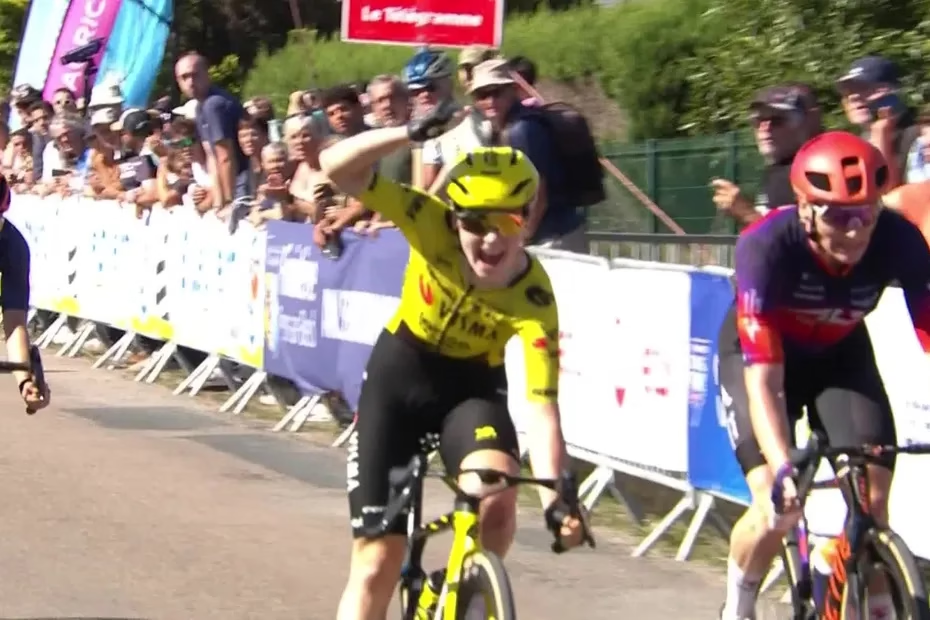
Jonathan Milan needs a clean chance, and stage 12 may be one of the better ones left before the race becomes harder again. The question is whether the climbs are ridden at a pace that allows him to stay in contact without spending too much energy. If he reaches the final with teammates, he is an obvious contender.
Davide Ballerini could become more dangerous if the race is hard but not decisive. A reduced bunch sprint would suit him well, and his ability to handle rougher, hillier days gives him a tactical advantage over some of the pure sprinters.
Jasper Stuyven is another rider who should not be ignored if the finale becomes messy. He may not be the fastest in a full bunch sprint, but after a harder day and with reduced lead-outs, his strength and positioning can make him dangerous.
Tobias Lund Andresen also fits the stage if he survives the climbs. He has enough finishing speed to contest a reduced sprint, and a stage like this may suit him better than the flattest drag races.
For the breakaway, riders such as Jhonatan Narváez, Filippo Zana, Alessandro Pinarello, Manuele Tarozzi or other strong all-rounders would be dangerous if they get into the move. Narváez will be heavily marked after his stage wins, but his profile still fits this kind of stage almost perfectly.
The Novi Ligure finish
Novi Ligure gives the stage a sprint-friendly ending if the peloton brings it back. The final approach should allow teams to organise, and the flat finish means positioning and timing will decide the sprint rather than gradient.
The issue is what the sprint trains look like by then. After Colle Giovo, Bric Berton and a long chase, many teams may have fewer riders left than usual. That can make the final more chaotic, with sprinters forced to improvise rather than sit behind a full lead-out.
The stage also carries a historical note. Novi Ligure is closely associated with Fausto Coppi, one of cycling’s defining figures, and the Giro’s return there gives the finish more weight than a routine sprint town. Sporting history will not decide the winner, but it adds context to a day that may otherwise be judged mainly by whether the sprinters can control the race.
Prediction
Stage 12 should be more favourable to the sprinters than stage 11, but it is still not a guaranteed bunch finish. The climbs are hard enough to make some fast riders uncomfortable, yet far enough from Novi Ligure to give the strongest sprint teams time to reorganise.
The breakaway has a chance if the right group goes clear and the peloton lacks cooperation after Bric Berton. But after losing stage 11 to the attackers, the sprint teams should be more determined here. The long run-in gives them time to correct the race, and the flat finish is too good an opportunity to ignore.
Prediction: Paul Magnier to win in Novi Ligure from a reduced bunch sprint, strengthening his hold on the ciclamino jersey after surviving the mid-stage climbs.