
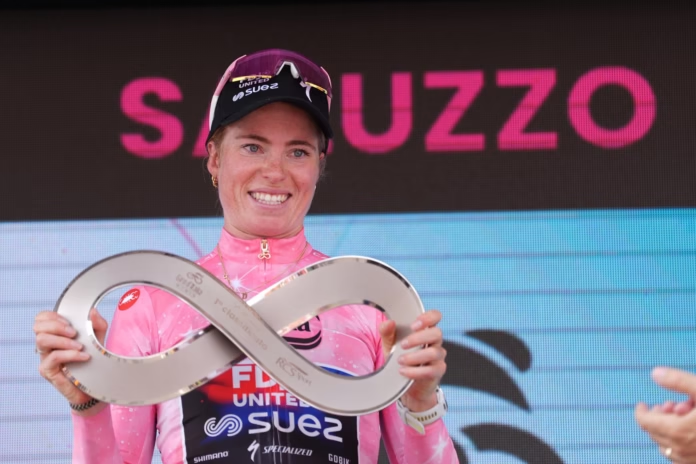
The Giro d’Italia Women 2026 has changed the shape of the women’s cycling season. Before the race, the established hierarchy still had room for debate. Demi Vollering had the pedigree, Anna van der Breggen had returned at a level that made her instantly relevant again, Elisa Longo Borghini was still waiting for the right moment to turn form into a defining result, and several younger GC riders were hovering between promise and proof.
Nine stages later, the picture is clearer, even if it is not settled. Vollering leaves Italy as the strongest stage racer in the peloton again. Antonia Niedermaier has moved from dangerous outsider to genuine Grand Tour podium rider. Van der Breggen has shown that her comeback is not symbolic, even if the final stage exposed the difficulty of controlling a race against younger, deeper and more aggressive opposition.
Elisa Balsamo confirmed she is one of the most reliable sprinters in the women’s peloton, while Isabella Holmgren’s white jersey gave Lidl-Trek another reason to leave the race looking stronger than almost anyone expected. The Giro did not decide the whole 2026 season, but it has reset the form guide before the next major block of racing.
For a fuller race-by-race background, the Giro d’Italia Women 2026 full route guide shows why this edition was always likely to favour complete stage racers, while the final classification recap explains how Vollering overturned the race on the final day.
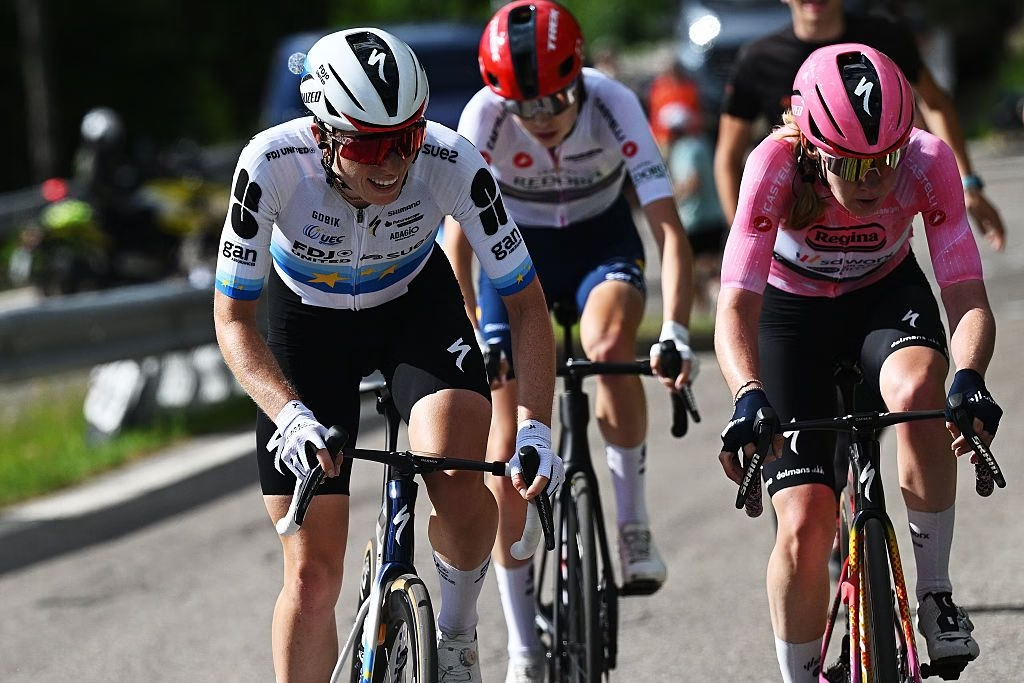 Photo Credit: Getty
Demi Vollering: back on top of the stage-race order
Vollering’s Giro d’Italia Women victory was not comfortable, which is part of why it carries weight. She did not simply defend superiority across nine days. She had to recover the race, absorb pressure, take responsibility and then attack with the overall classification still alive on the final stage.
Her win on stage 5 showed that she had the finishing sharpness to beat Van der Breggen directly. Her victory on the shortened stage 8 to Sestriere proved she could still impose herself in the high mountains. The final stage then turned the Giro from a strong race into a defining one. Vollering started the day behind Van der Breggen, attacked on the Colletta di Brondello, bridged to the key move and took enough time to win the overall.
That final-day reversal gave the race its lasting identity, and it sits neatly alongside the wider analysis in what Giro d’Italia Women 2026 means for the season. It was not flawless dominance. It was more interesting than that. Vollering had to gamble, and the fact she was prepared to risk losing the Giro in order to win it made the performance more convincing.
She now sits at the top of the women’s stage-race form guide because she has done the most complete thing available at this point of the season: won a Grand Tour under pressure.
Paula Blasi: still the season’s other major GC marker
The Giro did not erase what Paula Blasi achieved at La Vuelta Femenina. If anything, Vollering’s ride in Italy makes Blasi’s earlier Grand Tour win feel even more important in the wider season picture. The 2026 campaign now has two defining stage-race reference points: Blasi in Spain and Vollering in Italy.
Blasi’s Vuelta victory remains one of the major breakthroughs of the year. She won the overall, took the mountains jersey and confirmed herself as far more than an emerging Spanish prospect. That performance still places her high in the season form guide, even though the Giro has naturally shifted the most recent attention back towards Vollering, Van der Breggen and Niedermaier.
The La Vuelta Femenina 2026 final classification recap remains the key reference point for her season, while what La Vuelta Femenina 2026 means for the season explains why that victory changed how she would be raced against for the rest of the year.
The difference is context. Vollering is the established Grand Tour force who has reasserted authority. Blasi is the new name who has already changed expectations. If both arrive at the Tour de France Femmes in strong condition, the race has the makings of a much deeper GC fight than a simple duel.
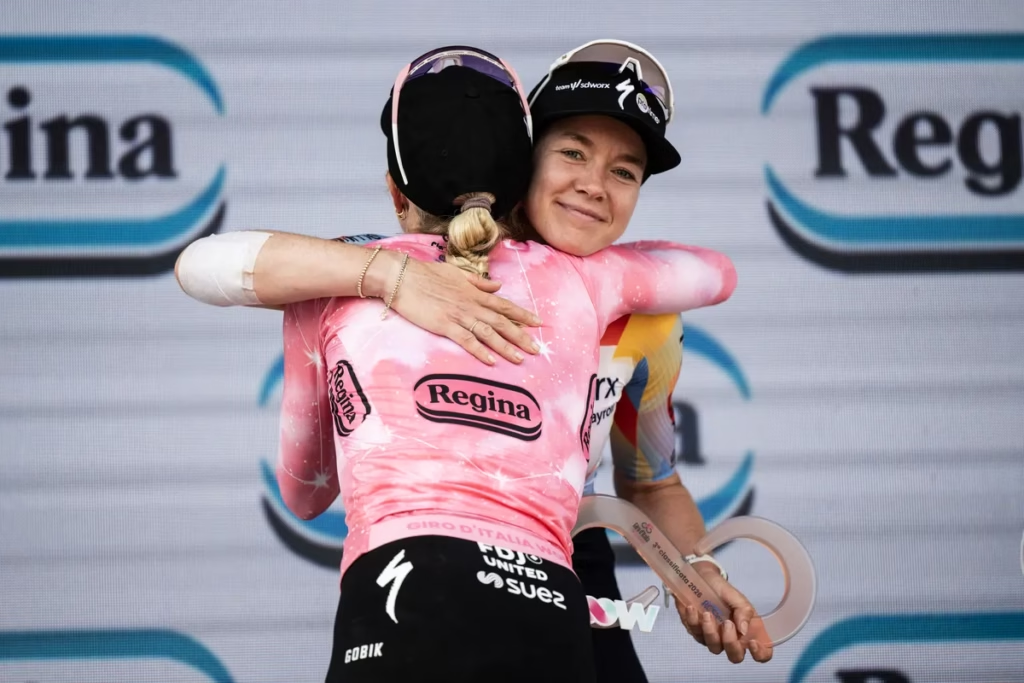 Photo Credit: Getty
Anna van der Breggen: elite again, but no longer untouchable
Van der Breggen’s Giro should be read carefully. She lost the race on the final stage, but she did not leave Italy looking like a rider out of her depth. Quite the opposite. She won the Nevegal uphill time trial, took the maglia rosa, managed the race into the final weekend and still finished 3rd overall in one of the deepest Giro fields of recent years.
The final stage was damaging because it exposed the limits of control. Once Niedermaier went up the road and Vollering made her move, Van der Breggen was forced into a race situation where she could no longer dictate terms. That does not cancel the quality of her Giro. It simply shows that the women’s peloton she has returned to is not the same one she left.
Her season form remains extremely strong. She was 2nd overall at La Vuelta Femenina, then 3rd overall at the Giro d’Italia Women. That is outstanding consistency across the two biggest stage races of the season so far. The question is not whether she is back. She is. The question is whether she can still win the biggest races when the strongest rivals combine depth, youth and risk-taking against her.
Antonia Niedermaier: the biggest GC upgrade of the Giro
No rider improved her season standing more clearly at the Giro than Niedermaier. She began the race as a rider with obvious long-term potential and ended it as a Grand Tour runner-up. Her final-stage ride was especially important. She attacked downhill, helped create the decisive race situation, briefly threatened the overall lead and still had enough left to finish on the stage podium.
That performance changes how she has to be viewed. Niedermaier is no longer just a rider for future editions, selective stages or development conversations. She is already good enough to finish 2nd overall in a Grand Tour and strong enough to shape the final day of one.
There is still room to grow, especially around consistency across the full season and how often Canyon SRAM zondacrypto can place her in winning positions. But her Giro has lifted her into the front rank of GC riders for the rest of 2026. She is not yet at Vollering’s level as a complete, proven stage-race closer, but she has moved much closer to the group immediately behind.
Elisa Longo Borghini: a late reminder of class
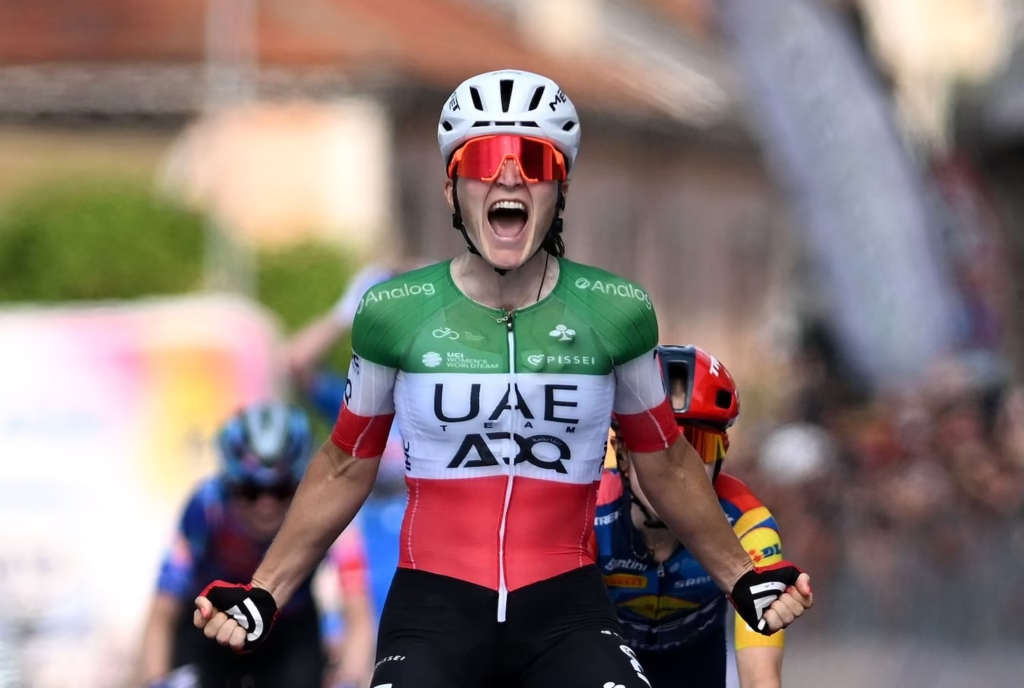
Longo Borghini’s Giro was not the overall title defence or GC challenge she may have wanted, but her final-stage victory changed the tone of her race. Winning in the Italian champion’s jersey on the last day, after a difficult period of illness, was a meaningful result. It also showed that her capacity to read a hard race and finish from an elite group has not gone anywhere.
The stage 9 report from Saluzzo captured the two sides of that final day: Longo Borghini taking the stage and Vollering taking the race. From a season form perspective, Longo Borghini remains slightly difficult to place. She is not currently at the top of the GC order, but she is still one of the most dangerous riders in the peloton when a race becomes selective, tactical and mentally demanding.
Her Giro did not suggest full dominance. It did, however, provide reassurance. For the Tour de France Femmes and the late-season Italian races, Longo Borghini still profiles as a rider who can turn one perfectly judged day into a major result. The Giro final stage was a useful reminder that writing her off too early is usually a mistake.
Elisa Balsamo: sprint form confirmed
Balsamo leaves the Giro as one of the clearest form winners. Lorena Wiebes’ stage 1 disqualification changed the early race picture, but Balsamo did far more than simply inherit opportunity. She converted the sprint stages, carried the points classification with authority and gave Lidl-Trek a reliable winning thread through the whole race.
Her sprinting was not just about top speed. It was about timing, positioning and repeatability. In a Giro where the terrain quickly became harder and the GC battle took over the main narrative, Balsamo still made the fast stages feel like hers.
That strengthens her position in the sprint hierarchy. Wiebes remains one of the fastest riders in the world, but the Giro gave Balsamo the stronger recent evidence. Chiara Consonni, Lara Gillespie and others remain part of the fast-finish conversation, but Balsamo’s post-Giro stock is the one that has risen most clearly.
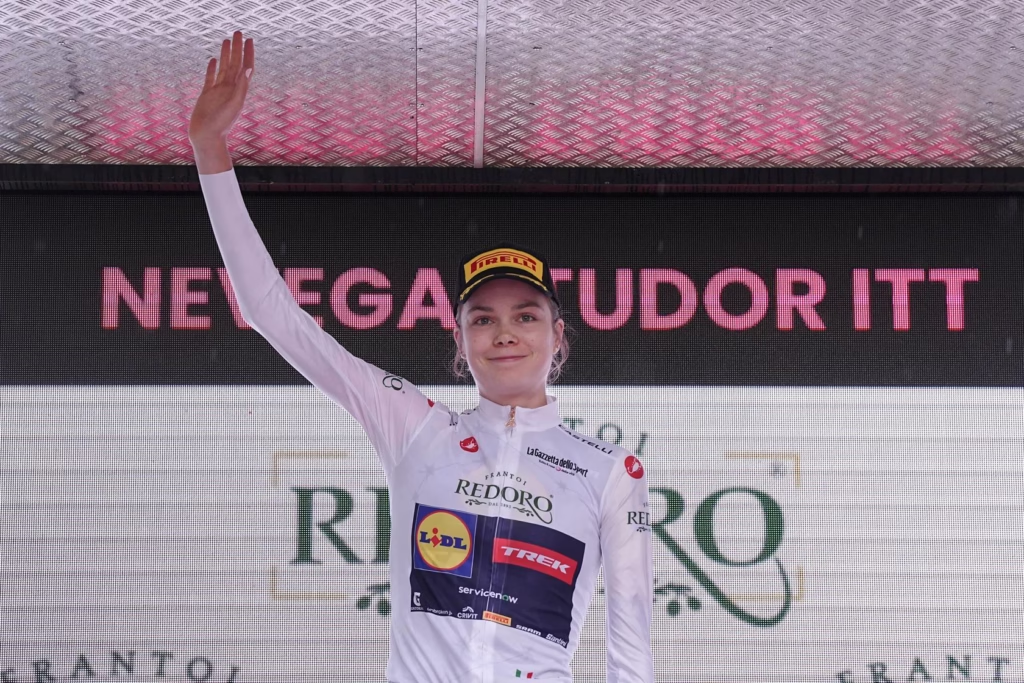 Photo Credit: RCS
Isabella Holmgren: white jersey and a serious GC future
Holmgren’s Giro was one of the most important development rides of the race. Winning the white jersey is already a strong result, but her wider performance suggested more than youth classification management. She stayed relevant deep into the race, handled the mountains well and gave Lidl-Trek another GC reference point alongside its sprint success.
Her 2026 season now looks like a clear step forward. A young rider can sometimes win white because the field is thin or because the strongest GC riders are no longer eligible. That was not the case here. Holmgren earned her result in a race with serious climbing, a mountain time trial, aggressive final stages and a strong overall field.
She does not need to be framed as a future Grand Tour winner immediately. That would be too much too quickly. But she now belongs in the group of young riders whose development has to be taken seriously in the next Tour de France Femmes cycle and beyond.
Niamh Fisher-Black: strong, useful and still moving upwards
Fisher-Black’s Giro should not be overlooked. She finished 5th overall, was 2nd on the final stage and played an important role in Lidl-Trek’s broader success. In a race where Balsamo took the points jersey and Holmgren won white, Fisher-Black gave the team high GC value as well.
Her profile remains slightly different from the pure GC leaders. She can climb, attack, cover moves and finish strongly from a reduced group, but the next step is turning those qualities into a more direct overall winning threat. The Giro suggested she is moving in the right direction.
For Lidl-Trek, that is valuable. They did not leave Italy looking like a one-dimensional team. They had the best sprinter, the best young rider, a top-five GC rider and the team classification. Fisher-Black was central to that depth.
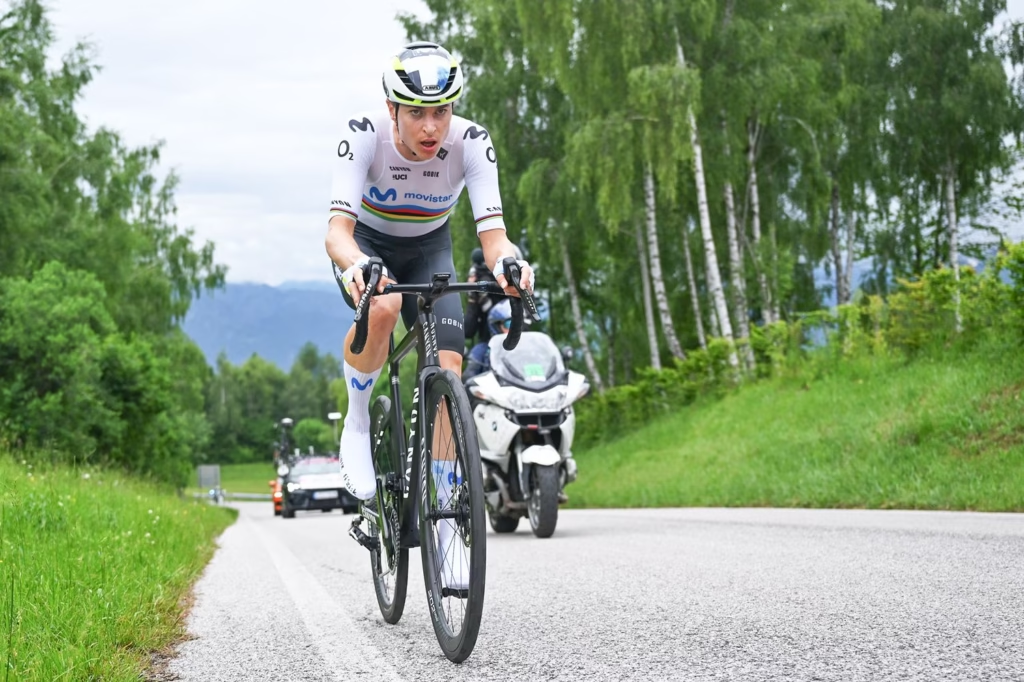
Marlen Reusser: solid rather than spectacular
Reusser’s Giro was respectable without being season-defining. She remained close enough to the GC fight for much of the race and continued to show why her engine makes her dangerous in any stage race. But the final standings left her outside the podium conversation, which means her form guide position is steady rather than transformed.
For Movistar, the question is how best to use her across the summer. Reusser is at her most dangerous when time trials, rolling terrain, exposed roads or tactical uncertainty allow her to turn power into time. The Giro’s decisive moments ultimately favoured the sharper climbers and more explosive mountain attackers.
She remains a major rider, but the Giro did not move her into the same current form tier as Vollering, Van der Breggen or Niedermaier.
Urška Žigart: consistent climbing value
Žigart’s Giro confirmed her as a reliable climbing and stage-race presence. She was not in the podium fight, but she remained visible in the hard terrain and added another strong marker to a season where her role at AG Insurance-Soudal continues to grow.
Her value is in consistency. She can survive the hardest stages, stay relevant on GC and offer a team a serious mountain option. She may still need either a more favourable route or a little more freedom to turn that into a major overall podium, but the Giro did not weaken her standing. If anything, it reinforced her as one of the dependable climbers just below the very top tier.
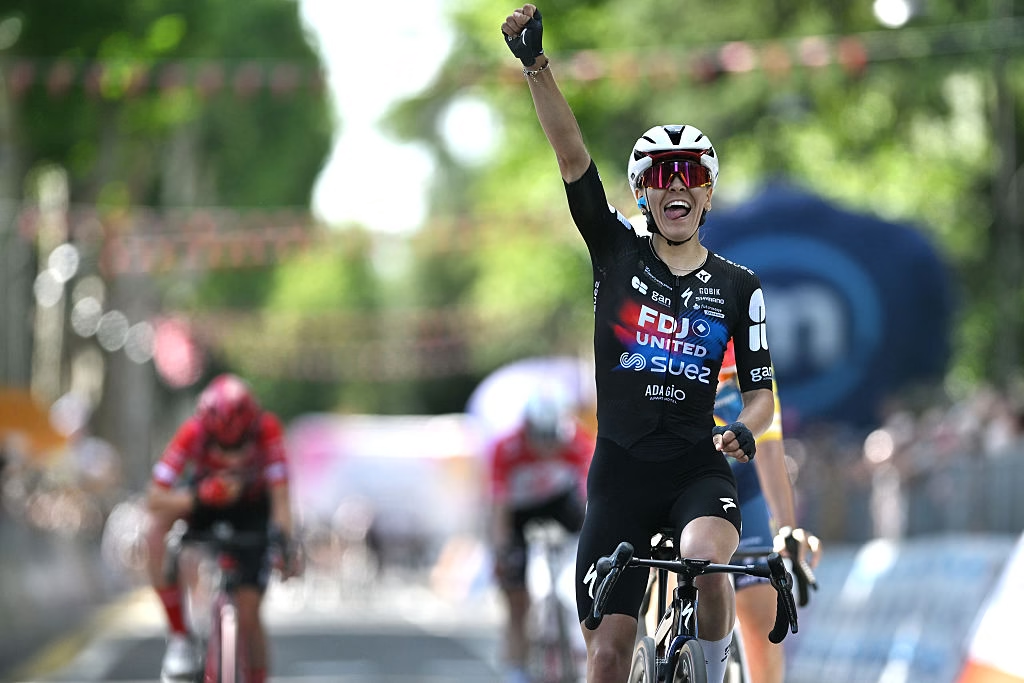
Célia Gery: stage-winning credibility
Gery’s Giro stage win was a major result in its own right and a clear sign of progression. In a race dominated by established names, she carved out space for herself with a performance that gives FDJ United-SUEZ even more depth.
That is important because Vollering’s Giro success was not only about Vollering. It was also about team structure, timing and support. Gery’s result adds to the sense that FDJ United-SUEZ are building something broader than a single-leader model. For Gery individually, the Giro moves her from promising talent into a rider with proven WorldTour stage-winning credibility.
Lorena Wiebes: speed still clear, but Giro damage done
Wiebes’ Giro will be remembered for the wrong reason. Her stage 1 disqualification for an underweight bike removed what would have been an immediate sprint marker and shifted the early momentum towards Balsamo. It does not mean Wiebes has lost speed, but it does mean the Giro cannot be used as positive evidence in the same way it can for Balsamo.
The distinction is important. Wiebes remains one of the fastest riders in the sport. On pure ability, nothing has changed. But form guides are built on delivered results, and after the Giro, Balsamo has the stronger recent case in stage-race sprinting.
Wiebes can correct that quickly. One major win changes the tone. For now, though, the Giro leaves her in a holding pattern rather than a rising one.
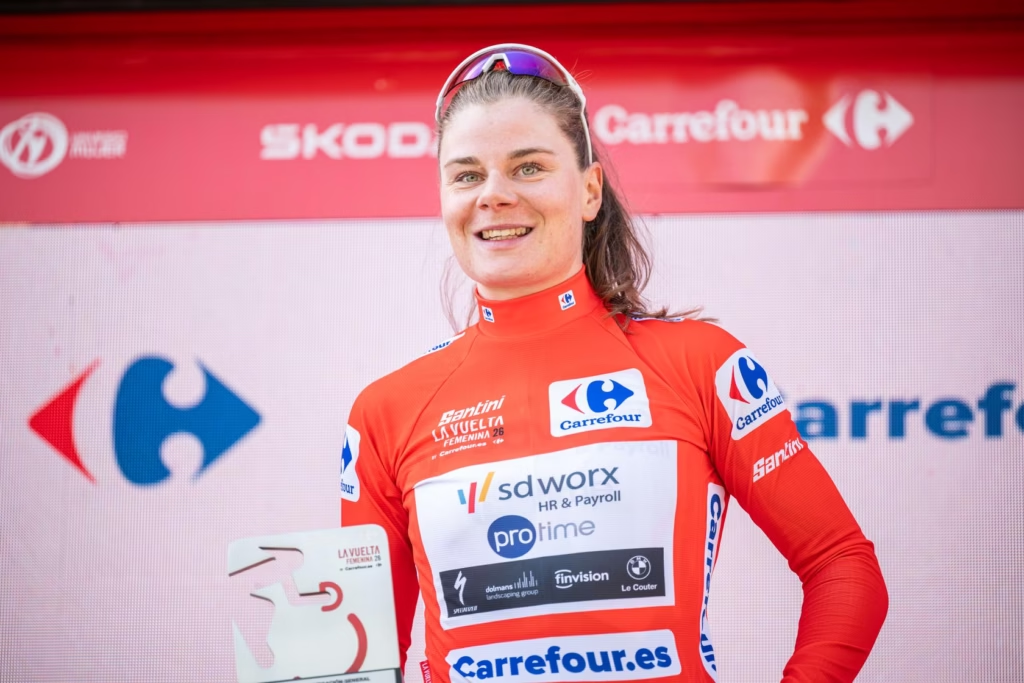
Lotte Kopecky: still central, but the Giro shifts attention away
Kopecky’s season still carries weight because of her points jersey success at La Vuelta Femenina and her ability to win across different terrain. The Giro, however, naturally moved the main stage-race narrative towards Vollering, Blasi, Van der Breggen and Niedermaier.
That does not diminish Kopecky’s broader value. She remains one of the few riders capable of shaping sprints, classics-style stages, rolling GC days and points classifications. But after the Giro, the pure general classification conversation is more clearly tilted towards the riders who proved themselves in the Italian mountains.
Her form guide position is therefore stable rather than rising. She remains one of the season’s defining riders, just not the rider most directly changed by the Giro.
The Lidl-Trek reset
Lidl-Trek were arguably the team whose Giro most improved their wider season standing. Balsamo won the points jersey, Holmgren won the youth classification, Fisher-Black finished 5th overall, and the team won the team classification. That is not a narrow success. It is a complete race across multiple objectives.
That kind of depth has consequences. It means Lidl-Trek can go into the next major block of racing with options. They have sprint firepower, young GC development, climbing support and enough tactical range to avoid being predictable. In a season where FDJ United-SUEZ have the overall Giro winner and Team SD Worx-Protime still have Van der Breggen and Kopecky, Lidl-Trek needed a race that showed breadth. The Giro delivered exactly that.
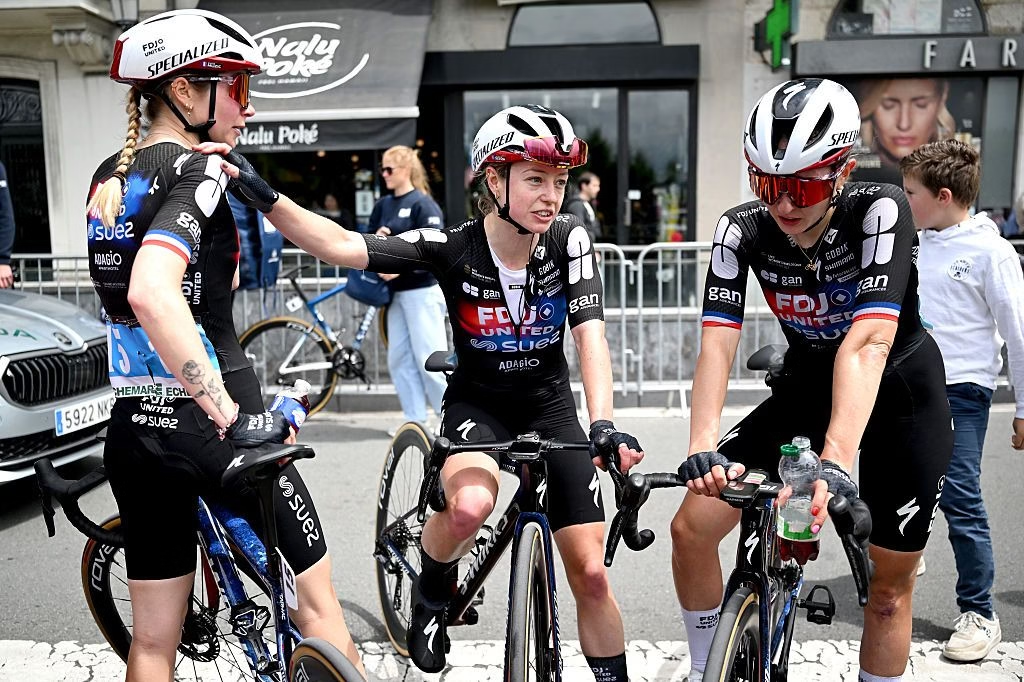
FDJ United-SUEZ: Vollering gives the project its landmark win
FDJ United-SUEZ signed Vollering for wins like this. The Giro d’Italia Women gives the project a Grand Tour landmark, but the way the race was won also matters. Lauren Dickson’s final-stage role was important, Gery delivered a stage win, and the team looked more complete as the race developed.
There will be tougher tactical tests to come, especially when rival teams target Vollering more directly. But this Giro changes the tone of FDJ’s season. They are not simply a team with the best stage racer. They are now a Grand Tour-winning structure around her.
Team SD Worx-Protime: strong but no longer in full control
Team SD Worx-Protime still leave the Giro with plenty of evidence that they are operating at a high level. Van der Breggen won the uphill time trial and finished 3rd overall. That would be an outstanding result for almost any rider and almost any team.
The issue is expectation. This is a squad used to controlling the biggest races. At the Giro, they had the race lead going into the final day and lost it when the tactical situation became too difficult to close down. That does not make their Giro poor. It does suggest the field around them is now stronger and less willing to wait.
For the rest of the season, that is the key lesson. Team SD Worx-Protime still have elite riders, but they may not be able to rely on the same race-control advantage as often.
-
 Photo Credit: Getty
The updated form hierarchy
After the Giro d’Italia Women, the stage-race form guide has a clearer top group.
Vollering is number one because she has the most recent Grand Tour victory and won it with a decisive final-stage move. Blasi remains the season’s other defining GC winner after La Vuelta Femenina. Van der Breggen sits close behind because two Grand Tour podiums in the same season is an exceptional comeback marker. Niedermaier is the biggest riser, now a proven Grand Tour podium rider rather than only a future contender.
Behind them, Longo Borghini remains dangerous, Fisher-Black has strengthened her GC case, Holmgren has emerged as one of the most important young riders of the year, and Reusser, Žigart and others remain strong but still looking for the result that moves them into the front tier.
For the sprinters, Balsamo is the post-Giro form leader. Wiebes still has the raw speed, but Balsamo has the recent race evidence. That distinction could change quickly, but after Italy, it is Balsamo who has the momentum.
The wider race calendar now becomes important. The Women’s WorldTour guide explains why the biggest stage races and one-day events carry such weight in shaping the season, while the women’s cycling race hub gives the broader context for the races still to come.
What the Giro tells us about the rest of 2026
The Giro d’Italia Women did not settle the season, but it sharpened it. Vollering has regained the strongest claim in stage racing. Blasi’s Vuelta win still gives the year a second major storyline. Van der Breggen has proved that her comeback is real, even if the final stage in Italy showed that winning at this level is harder than simply being back at the front. Niedermaier has arrived as a genuine GC name. Balsamo has reasserted herself as a sprinting force. Holmgren has confirmed that Lidl-Trek’s future is already arriving.
The Tour de France Femmes now looks richer because of all that. It is not just Vollering against one rival. It is Vollering against a season that has produced Blasi, revived Van der Breggen, elevated Niedermaier, strengthened Lidl-Trek and reminded everyone that Longo Borghini can still choose the right day to strike. The Tour de France Femmes hub will become the natural next reference point as the summer’s biggest GC question takes shape.
The Giro’s biggest legacy may be that it made the women’s stage-race hierarchy feel less fixed. Vollering is back on top, but the group behind her is deeper, younger and more confident than before. That makes the rest of 2026 feel much more open than it did a week ago.

