
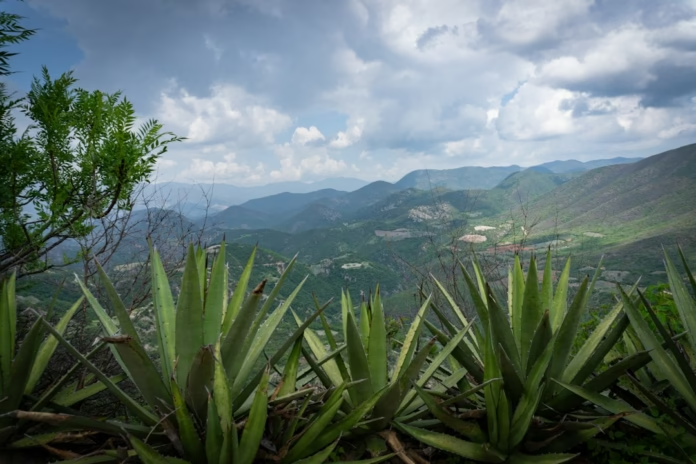
Oaxaca is one of Mexico’s strongest cycling destinations for riders who prefer a trip built around mountains, small roads and places worth stopping in rather than a single famous climb. Oaxaca de Juárez sits at roughly 1,550 metres above sea level in the Central Valleys, with paved roads spreading towards archaeological sites and villages while the Sierra Norte rises sharply to the north-east. Gravel and mountain-bike routes extend that range further, particularly around the Pueblos Mancomunados.
The attraction is variety. A rider can spend one day on rolling valley roads through communities known for crafts, food and mezcal, then climb well above 2,000 metres into pine and oak forest the next. The altitude and repeated climbing make distances feel harder than the numbers suggest, while road surfaces and traffic vary enough that route choice matters. Oaxaca rewards preparation, but it does not require an expedition-style trip to find excellent riding.
Oaxaca de Juárez as a cycling base
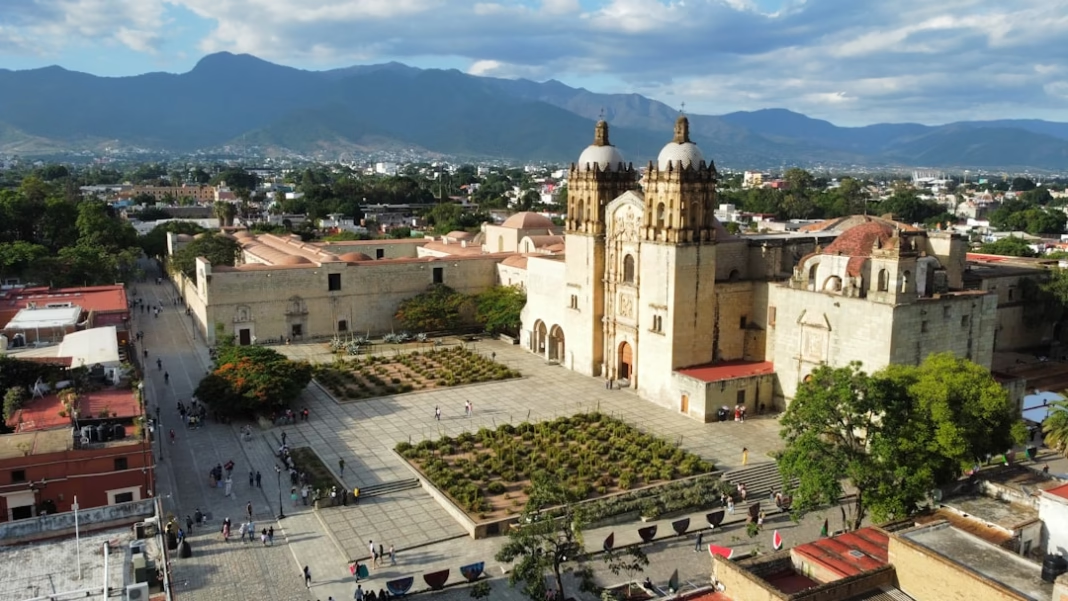
For a first visit, Oaxaca de Juárez is the obvious base. It has the accommodation, food, bike services and transport connections needed for a cycling holiday, while several useful riding directions begin from the city. The drawback is urban traffic. The first and final kilometres of a ride can be the least enjoyable part of the day, so an early start is worthwhile and quieter secondary roads are generally preferable once outside the centre.
The city is already high enough for riders arriving from near sea level to notice the altitude. At around 1,550 metres it is not extreme, but hard efforts can feel different during the first couple of days. Routes into the surrounding mountains climb considerably higher, making a gentle opening ride sensible before committing to a long Sierra day.
Oaxaca’s geography also means there is no single definitive local loop. The Central Valleys spread in several directions, with mountain walls defining the horizon and creating a network of out-and-back rides, linking routes and longer loops. That works well for a multi-day stay because the riding changes noticeably depending on which side of the city you choose.
Road riding through the Central Valleys
The Central Valleys provide the most accessible introduction to cycling in Oaxaca. Roads connect Oaxaca de Juárez with towns and villages across the Etla, Tlacolula and Zimatlán valleys, and the terrain is generally less severe than the Sierra Norte. That does not mean flat riding. Long gradual drags, short sharper ramps and the background effect of altitude can turn a moderate-looking route into a substantial day.
East of the city, the Tlacolula valley gives riders a useful corridor towards places such as Santa María del Tule, Teotitlán del Valle and Tlacolula de Matamoros. The main highways carry faster traffic, so a good cycling route should use local roads wherever practical rather than simply following the most direct driving line. Teotitlán, known for its weaving tradition, works particularly well as a destination because it sits close enough to Oaxaca for a manageable ride while still taking you beyond the urban area.
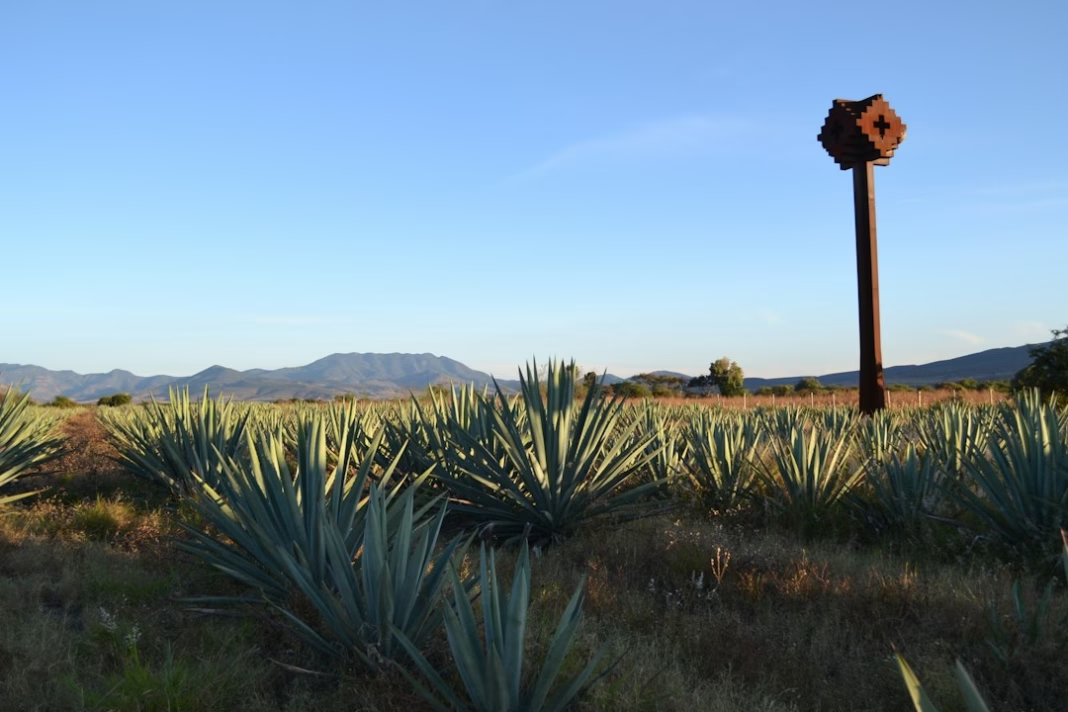
Longer days can incorporate more of the valley or continue towards the foothills. The attraction is not a succession of named cycling climbs but the ability to build a route around a landscape of agave fields, villages and mountain views. Riders used to European road cycling may find the rhythm different: fewer famous passes, more attention required at junctions and road-surface changes, and considerably more reason to stop during the ride.
South and west of the city provide further options, although traffic conditions again make careful mapping important. Oaxaca is a destination where a route designed from satellite imagery alone can be misleading. A road that appears ideal may be rougher, busier or less continuous than expected, so local route knowledge has real value.
Climbing into the Sierra Norte
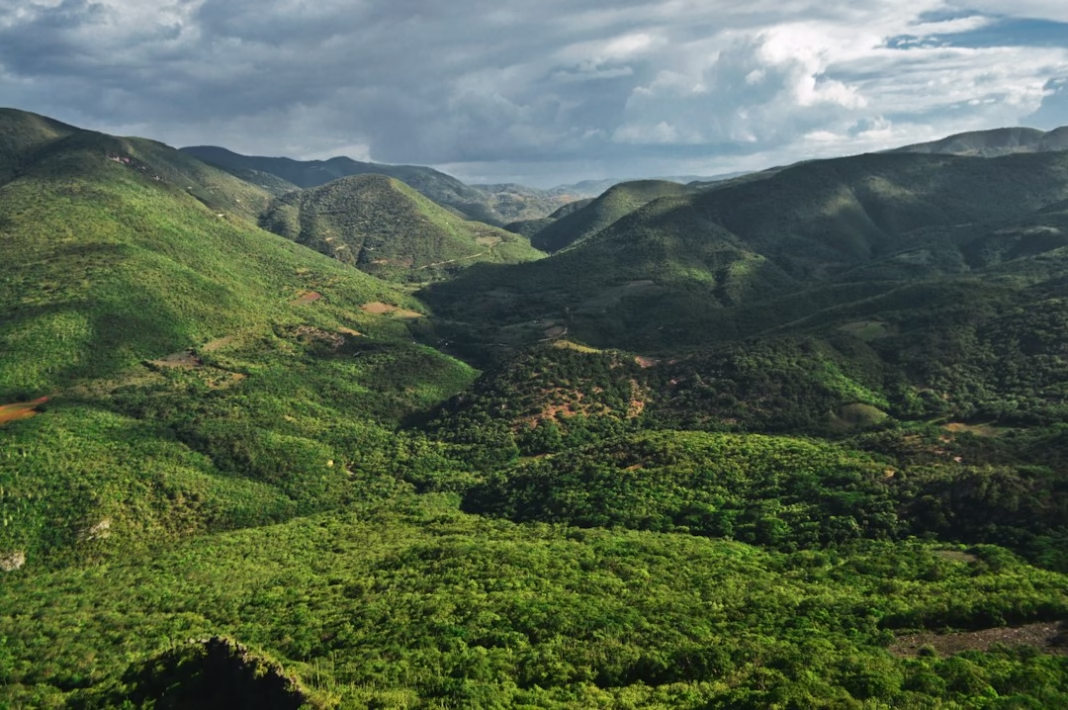
The Sierra Norte changes the scale of the riding. Roads leave the Central Valleys and gain height quickly, moving into cooler forest and bringing sustained climbing into the day. This is where Oaxaca begins to feel like a genuine mountain-cycling destination rather than a city with pleasant roads nearby.
Routes towards communities such as Benito Juárez, Cuajimoloyas, Latuvi and Llano Grande can take riders into the Pueblos Mancomunados, a group of Zapotec communities with a long-established ecotourism network. The villages sit high in the mountains and are linked by roads and trails through forested terrain. Some connections are suitable for gravel or mountain bikes rather than road bikes, and conditions can change after heavy rain.
The climbing is the main physical challenge. Starting from Oaxaca means beginning above 1,500 metres and potentially spending significant time above 2,000 metres, with some high points considerably higher again. Riders should judge a Sierra route by elevation gain and surface as much as distance. A 70km mountain day here can demand far more than a 70km valley ride.
Temperature changes with elevation are equally important. Oaxaca city can be warm and bright while higher forest roads are cool, cloudy or wet. A lightweight layer and rain protection are sensible even when the forecast in the valley looks straightforward. Descents after a long climb can become cold quickly, particularly if rain has moved across the mountains.
Gravel and the Pueblos Mancomunados
Oaxaca’s strongest case for a gravel bike comes in the Sierra Norte. The Pueblos Mancomunados area has an established network of paths, forest roads and community-to-community routes used for hiking and mountain biking. Local operators run multi-day cycling trips through the mountains, which demonstrates that riding between the villages is an established activity rather than an improvised line on a map.
A gravel bike with generous tyres can cover many mixed-surface routes, but this is not uniformly smooth European-style gravel. Steep gradients, loose sections, erosion and rough tracks can make some lines better suited to a mountain bike. Anyone planning an independent route should establish the surface and access conditions rather than assuming every mapped road is straightforward on drop bars.
The community structure matters too. The Sierra Norte is not simply open recreational land surrounding Oaxaca. The Pueblos Mancomunados are locally managed communities with their own ecotourism operations, guides, accommodation and access arrangements. Using those services can simplify logistics while putting money directly into the communities through which you are riding.
Multi-day riding opens up a different version of Oaxaca. Instead of climbing out of the city and returning the same afternoon, riders can stay in mountain cabins or community accommodation and continue through the forest the following day. That reduces the need to force a large amount of climbing into a single ride and makes the journey between villages part of the trip.
When to cycle in Oaxaca
Oaxaca has a pronounced dry and wet-season pattern. The drier months, broadly from November into April, are the easiest period for a cycling trip if predictable conditions are the priority. Days are commonly dry and sunny, although mornings and high-altitude descents can be cool. Dust can become a factor on unpaved roads late in the dry season.
The rainy season generally runs from around May into October. Rain does not necessarily mean an entire day is lost, as storms often build later, but heavy downpours can alter unpaved surfaces rapidly. Mud, washouts and loose material become more likely in the mountains, while thunderstorms are an additional reason to avoid being committed to an exposed high route late in the day.
Starting early is useful in either season. It reduces exposure to city traffic, gives more time for mechanical or navigation problems and, during wetter months, increases the chance of completing the main climbing before afternoon weather develops. The strength of the sun at altitude also makes sunscreen and sufficient water important even when the air temperature feels comfortable.
Traffic, road surfaces and safety
Traffic is the main reason not to treat every road around Oaxaca as equally attractive for cycling. Major routes carry buses, trucks and fast-moving vehicles, and shoulders are inconsistent. Secondary roads can be much calmer, but surfaces vary and speed bumps are common around settlements. Defensive riding and conservative route planning are more useful than chasing the shortest possible line between two points.
Riders should also expect animals, pedestrians, roadside activity and occasional debris, particularly through villages. Descending at full European race-ride speed is rarely sensible when sight lines are limited. Mountain roads can contain broken tarmac, gravel or damage from rainfall, and conditions may be very different from those shown in older route files.
For longer or more remote rides, carry more repair equipment than you might on a supported club run at home. Two tubes or a proper tubeless repair setup, tyre boots, a pump, basic tools, food and sufficient water are sensible. Mobile coverage should not be assumed in every mountain area, so offline mapping is important and somebody should know the intended route if you are riding alone.
Personal-security advice in Mexico can vary by region and can change. Check current UK government travel advice before departure and ask locally about the specific roads you intend to use. Oaxaca’s established tourism areas receive large numbers of visitors, but a cycling route can take you well beyond the places most travellers see, so current local knowledge is particularly valuable.
What bike to take
A road bike works well if the trip is focused on the Central Valleys and paved Sierra climbs. Low gearing is more important than an aggressive race setup because the combination of altitude, heat and long gradients can make climbing harder than expected. Wider tyres also give useful protection against variable tarmac and rough road edges.
For a trip designed around exploration, a gravel bike is the more versatile choice. Tyres around 40mm or wider open up forest roads and mixed-surface links without making the paved valley riding unnecessarily slow. Choose robust tyres rather than lightweight race rubber, particularly if several days will be spent in the Sierra Norte.
A mountain bike is the better option for riders concentrating on technical trails and the rougher Pueblos Mancomunados network. Local guided trips can also remove the complication of transporting a specialist bike to Mexico, and hiring locally makes sense if the cycling forms only part of a longer holiday.
Building a cycling trip around Oaxaca
A week gives enough time to understand the area without turning every day into a major ride. An opening Central Valleys spin allows for acclimatisation, followed by a longer road day and then a Sierra Norte ride once you know how the altitude feels. A rest or short sightseeing day fits naturally in Oaxaca because the city itself is a major reason to visit.
Riders with gravel or mountain-bike ambitions can then devote two or three days to the high country, either from Oaxaca or as an overnight trip through the community tourism network. That structure provides a better experience than trying to collect maximum distance. The strongest rides here are shaped by the terrain and places between the start and finish rather than a mileage target.
-
 Photo Credit: Flavia Ossola
 -
 Photo Credit: Getty



Food and water planning deserves attention on remote routes, but the villages also make stopping part of the experience. Oaxaca’s food culture is unusually rich, and a cycling trip naturally connects the city with smaller communities producing mezcal, textiles and regional dishes. Avoid assuming every village will have a shop open at the exact moment you arrive, particularly on long mountain rides, and carry enough to remain self-sufficient between planned stops.
Oaxaca works best for cyclists who are comfortable with some uncertainty. Roads can be rough, a planned gravel section can take longer than expected and mountain weather can change the day. In return, the region combines substantial climbing, high-altitude forest, quieter rural roads and a cultural landscape that gives each ride a clear destination. It is a strong choice for a cycling holiday precisely because the riding is only one part of what fills the day.

