Alfonsina Strada became the only woman to start the men’s Giro d’Italia when she lined up in 1924. She rode through an exceptionally long and difficult race, but the distinction between completing the route and finishing in the official classification is essential to understanding her story. The Giro’s archive records that she was eliminated on time at Perugia and continued outside the standings to Milan.
A cyclist before the Giro
Alfonsina Morini Strada was born in the Emilia-Romagna region of Italy in 1891 and grew up in a working-class family. She began cycling when women’s participation in organised sport was tightly constrained by social expectations and practical access to equipment. Racing against men was unusual, but she developed a reputation in competitions long before the Giro organisers accepted her entry.
She married Luigi Strada, who supported her racing. Contemporary accounts and later histories describe him giving her a racing bicycle as a wedding present. Cycling was not simply a leisure activity for her: she raced while also working, and the income and opportunities available through competition mattered to her family.
She had already tested herself in major Italian races before 1924. Accounts of her career record appearances in the Giro di Lombardia in 1917 and 1918, although those rides should not be confused with the men’s Giro d’Italia. Her ambition was to race at a level normally reserved for men, and the national road calendar offered few formal routes for a woman to do so.
Why the 1924 Giro was different
The 1924 Giro d’Italia took place amid a dispute involving bicycle manufacturers and the race organisers. Leading contracted riders and their teams were absent, and the event was run for independent riders. That unusual situation opened a route for Strada to enter a race that had not previously admitted a woman. Her name appeared on the start list as ‘Alfonsin Strada’, a detail sometimes repeated as proof that she passed herself off as a man and deceived the organisers. That version is not supported by her established racing history. She had competed against men at Il Lombardia in 1917 and 1918, and the same newspaper organisation had dealt with her earlier entries. Contemporary accounts and later reporting indicate that race director Emilio Colombo knew who she was and recognised the publicity her presence could bring. The precise reason for the shortened name on the list is uncertain, so it should not be presented as evidence of a successful disguise.
She started as rider number 72.
The circumstances of her entry were closely linked to the race’s commercial difficulties. In 1924, disagreements between the cycling industry and La Gazzetta dello Sport led the established manufacturers to withhold their contracted riders. The organisers therefore assembled a field of independents, known in Italian as isolati. Strada’s presence attracted attention at a moment when the Giro needed a compelling story, although her own ambitions predated that opportunity.
Her background helps explain why the Giro mattered so much. The race’s own retrospective describes a childhood in a family of agricultural labourers and an early fascination with bicycles. She worked as a seamstress and competed in men’s races despite the hostility that could follow. Her husband Luigi supported her cycling, but serious illness in the family made earning money particularly important.
Her pre-Giro record included appearances in the Giro di Lombardia and a women’s speed record reported by the Giro’s organisers. These achievements did not create a regular professional calendar for women. Instead, she had to seek opportunities in events structured around male competitors, with all the uncertainty that entailed for entries, equipment and payment.
The stage to Perugia has become the most repeated part of her story because it contains a mechanical failure, an improvised repair and a finish outside the time limit. It is important to retain the less dramatic administrative fact: the official classification ended there for Strada. Emilio Colombo’s decision to support her continuation meant she could complete the remaining route, but it did not reverse the time-limit decision. The race covered approximately 3,613 kilometres across 12 stages, beginning and ending in Milan and reaching as far south as Taranto. Ninety riders started and the official final classification contained 30 finishers. Those figures indicate the scale of the challenge: long distances, difficult roads and limited support even for experienced male competitors.
The absence of some famous names should not be used to diminish the effort. The roads, stage lengths and weather remained demanding, and an independent rider had to manage the physical and logistical pressures of the event. Strada’s entry attracted enormous public attention, some supportive and some openly hostile.
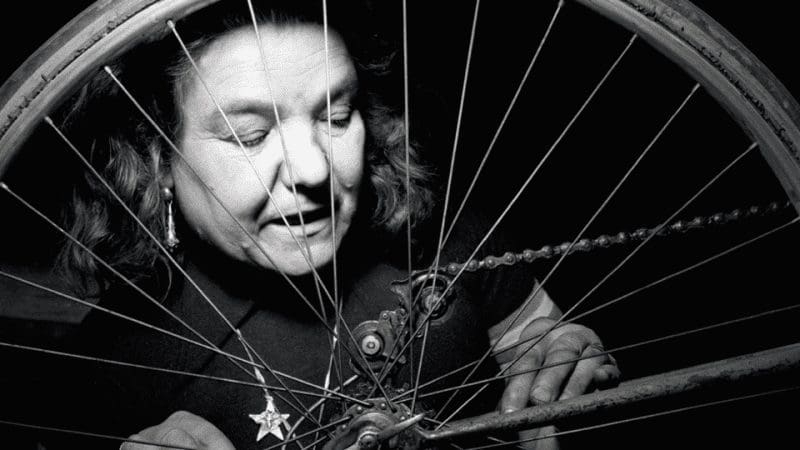
The stage to Perugia and the time limit
Strada continued through the early stages, but the ride from L’Aquila to Perugia became decisive. The stage was roughly 296 kilometres, and she suffered a fall and a broken handlebar. Accounts describe an improvised repair using a broom handle, after which she carried on towards the finish.
She arrived outside the permitted time limit. The official Giro archive states clearly that she remained in the race until Perugia, where she was eliminated from the classification because she finished too late. That distinction is important because some popular retellings simply say she finished the Giro alongside 30 classified riders.
Race organiser Emilio Colombo helped her continue outside the official standings, and she followed the route to Milan. She completed the journey but was not a classified finisher. Her achievement was therefore to start the men’s Giro and ride on to the final city despite being removed from the competition, rather than to place in the final general classification.
How spectators responded
Reports from the time describe crowds gathering to see Strada, whose presence challenged assumptions about what a woman could do on a racing bicycle. The attention was not always straightforward admiration. Some coverage treated her as a curiosity rather than an athlete, and expectations about clothing and behaviour shaped the way her racing was discussed.
Her ability to continue after setbacks gave spectators something concrete to judge. Long stages and mechanical problems were familiar to the men around her, and she faced the same roads. The attention around her entry therefore combined genuine sporting interest with the novelty that organisers and newspapers recognised.
The 1924 race was won by Giuseppe Enrici, with Federico Gay and Angelo Gabrielli completing the podium. Strada’s story sits alongside that official result, not in place of it. The race’s own archive preserves both the classification and her exceptional participation.
What happened after 1924
Strada was not accepted into subsequent editions of the men’s Giro. She continued to ride and perform, including public cycling exhibitions, and remained associated with the sport for decades. The limited opportunities available to women meant that a rider with her ambition had no equivalent professional stage-racing calendar to move into.
Her career is sometimes presented as if one Giro appearance immediately transformed women’s cycling. The history is more complicated. Organised women’s racing developed unevenly, and major professional opportunities arrived much later. Strada’s participation demonstrated what was possible, but the institutions of the sport did not respond by opening a permanent route for women to compete in the Giro.
She died in 1959. The decades since have brought a reassessment of her place in Italian sporting history, with archives and race organisers acknowledging her contribution. The story now appears in discussions of both cycling history and women’s access to professional sport.
 Photo Credit: LaPresse
Why the story about hiding her identity is misleading
A familiar version of Strada’s Giro story claims that she registered as a man and that the organisers only discovered her identity after the race began. That does not fit the evidence of her earlier career. She had already entered the Giro di Lombardia in both 1917 and 1918, years before her appearance in the 1924 Giro. These were public competitions organised within Italian cycling, not private rides undertaken under a false identity. She was an established female competitor, even if some contemporary entry lists shortened her first name.
The 1924 Giro was unusual because a dispute over payments kept several established trade teams away, leaving an unusually open field for independent entrants. Organisers and journalists understood that Strada was a woman, and her participation attracted considerable attention from the outset. Contemporary reports and subsequent Italian archival accounts give a more useful explanation than a story built around a surprise discovery: her entry was possible because of that particular edition’s circumstances, and her cycling record gave her a claim to compete.
The distinction between the official result and the ride to Milan also matters. Her time-limit elimination came on stage eight, from L’Aquila to Perugia. She carried on with the organisers’ agreement but outside the classification. Describing her as an official finisher changes the result; suggesting she did not complete the route omits the final part of her achievement. Neither error is necessary to explain why a female rider racing major Italian events in the 1910s and 1920s was exceptional.
Her place in Giro and women’s cycling history
The Giro d’Italia’s official history identifies Strada as the woman who entered the 1924 men’s race and continued outside the classification after Perugia. That record is more precise than the familiar but misleading claim that she officially finished in the final 30. It is possible to recognise her achievement without changing the result.
Modern women’s stage racing has its own long and complicated development, including the Giro d’Italia Women and the Tour de France Femmes. Those events are not direct continuations of Strada’s 1924 entry, but they make her story relevant to current debates about opportunity, investment and sporting recognition.
Her significance rests on a documented act: she entered a major men’s stage race when the sport offered women very few comparable opportunities, survived most of the official competition and completed the route after being placed outside the classification. That is substantial enough without embellishment.