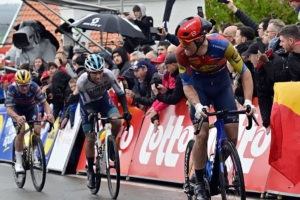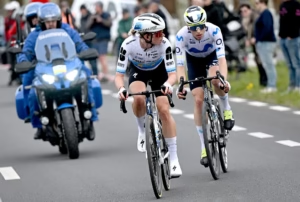
E3 Saxo Classic is one of the younger major races of the Flemish spring, but it has grown into one of the most revealing. First run in 1958, the race began life as Harelbeke-Antwerp-Harelbeke before evolving through E3-Prijs Vlaanderen, E3 Harelbeke, E3 BinckBank Classic and now E3 Saxo Classic. Through all of those name changes, one thing has stayed constant: Harelbeke remains its anchor, and the race has become one of the clearest tests of who is truly ready for the Tour of Flanders.
That is why E3 matters more than its age might suggest. It does not have the centuries-deep roots of some other Classics, but it has built prestige by offering a brutally honest route at exactly the right moment in the calendar. Run in late March, it sits in the heart of the cobbled season and is often described as a mini Tour of Flanders because it uses many of the same climbs and cobbled sectors. That comparison is useful, but slightly incomplete. E3 is not just a rehearsal. It is a major race in its own right.
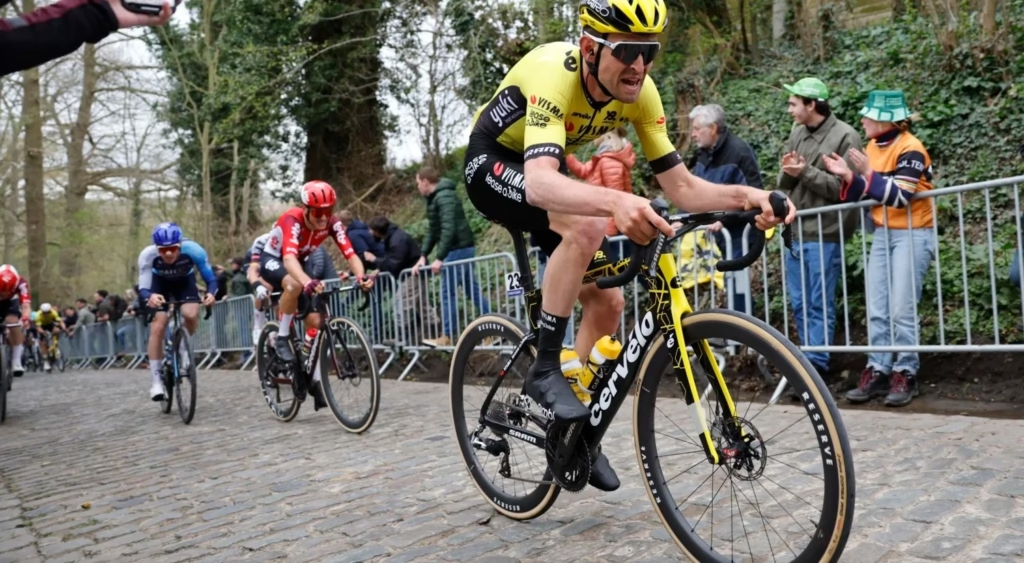 Photo Credit: Cor Vos
How the race got its name
The history of the name is one of the more unusual details in spring racing. The original race linked Harelbeke and Antwerp, but in the 1960s it took on the E3 title as a reference to the old European route E03, the road connection between Antwerp and the Kortrijk area near Harelbeke. That road has long since changed designation, but the name remained and became part of the race’s identity. In that sense, E3 is one of those cycling titles that now means far more as sporting shorthand than as a literal route description.
The sponsor element has shifted over time, which is why modern fans know it as E3 Saxo Classic, while older followers may still instinctively call it E3 Harelbeke. The branding has changed, but the race’s role in the calendar has not. It is still Harelbeke’s race, and it still signals the moment when the cobbled campaign becomes serious.
From promising race to major Flemish classic
E3 was founded in 1958, which makes it relatively young by Belgian Classics standards. Even so, it became prestigious quickly because it offered terrain that suited the best specialists in northern one-day racing. Riders who won here often went on to win much bigger races, and that helped give E3 an outsized importance in the spring.
By the 1990s and 2000s, E3 was already functioning as a major form marker for the Tour of Flanders. It became the race where riders could show that their condition was real rather than theoretical. That role only deepened as the route came to mirror more and more of the defining features of the cobbled Monuments.
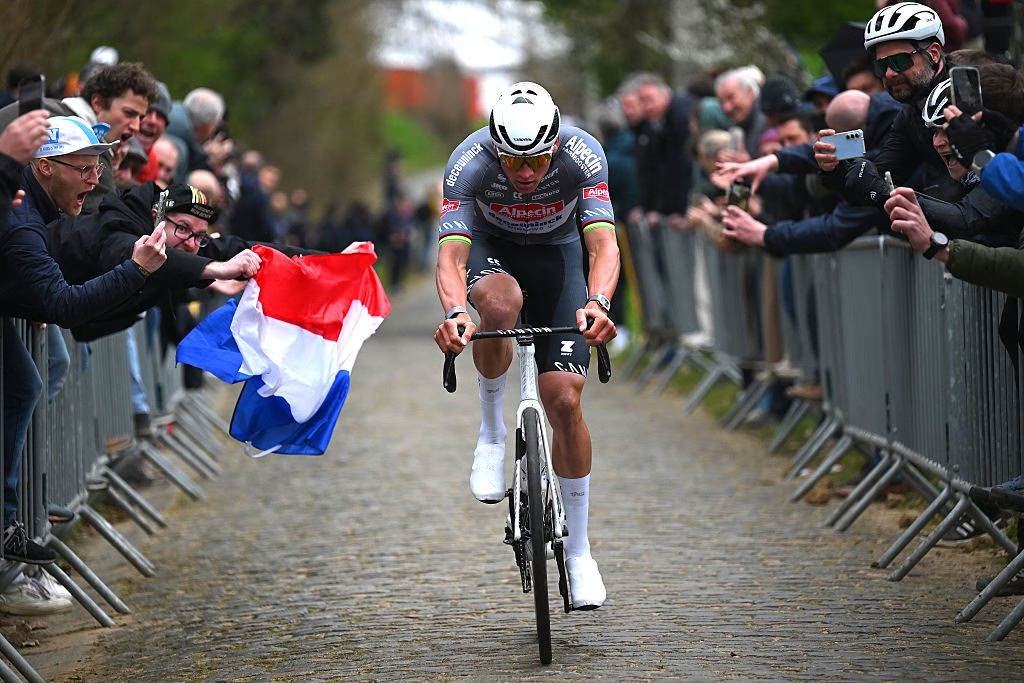
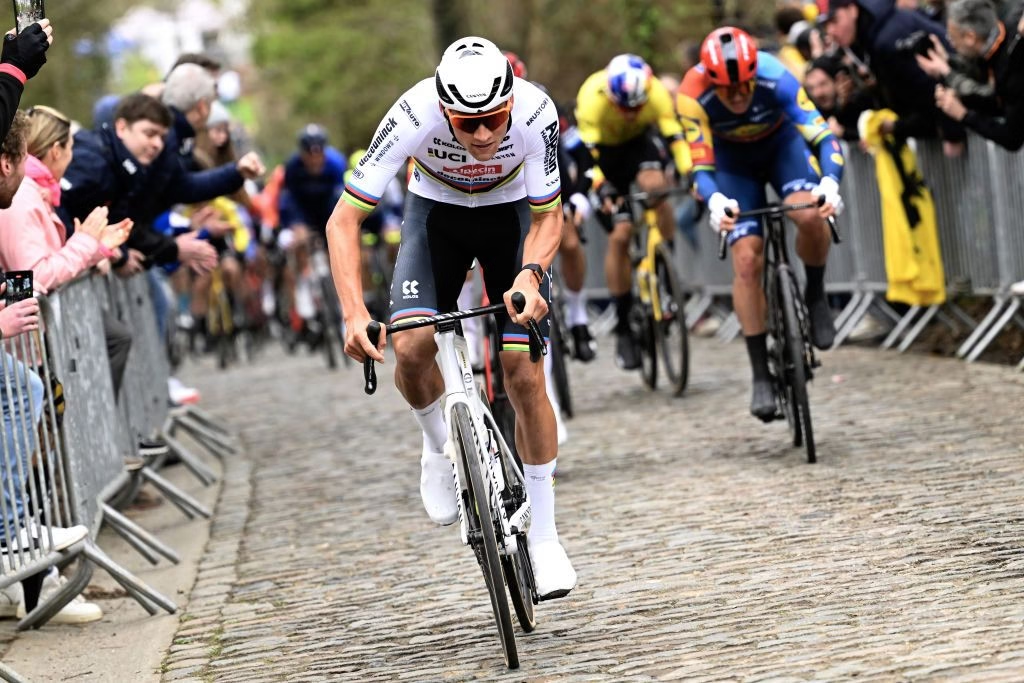 Photo Credit: Getty
Why E3 became known as the mini Tour of Flanders
The nickname did not appear by accident. E3 uses many of the same roads, climbs and cobbled sectors that define the Tour of Flanders, and that has made it one of the clearest pointers to what might happen a little later in the spring.
Even so, it is worth not overstating that comparison. E3 is shorter than Flanders, slightly more compressed and often more aggressive earlier because riders know there is less room to wait. That gives it a rhythm of its own. It tends to reward the same kind of rider, but not always in exactly the same way. That is why it works so well as both a stand-alone race and a form guide. ProCyclingUK’s Beginner’s guide to E3 Saxo Classic 2026 goes deeper into how the route itself creates that feel.
The moment E3 moved up again
A key step in the race’s evolution came in 2012, when E3 was upgraded to WorldTour level. That formalised what many people in the sport already thought, that this was no longer simply a respected Belgian one-day race, but one of the central fixtures of the spring.
That upgrade matters historically because it marks the point where E3 fully moved from an important race to an essential race. The field deepened, the attention intensified, and the results started carrying even more predictive weight for the rest of the cobbled campaign.
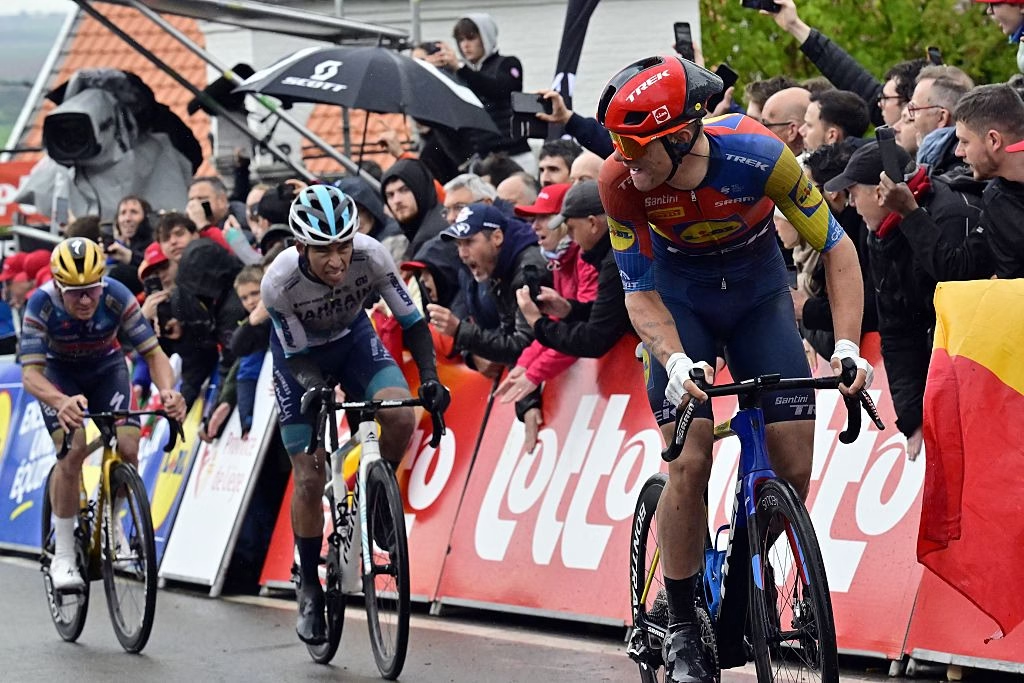
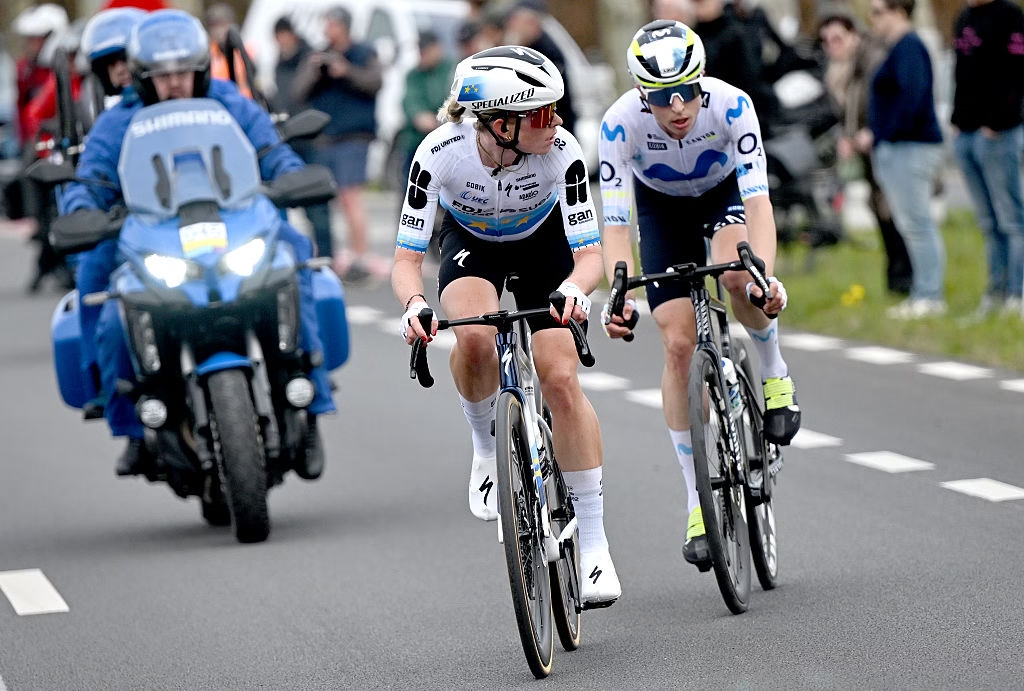
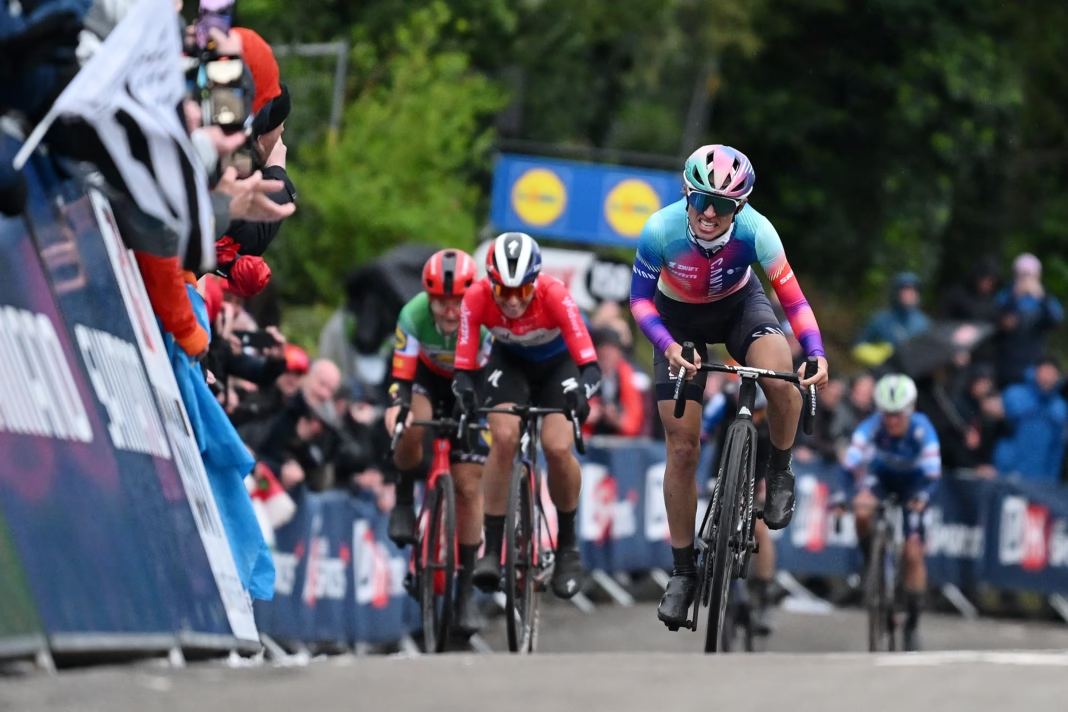
Previous winners of E3 Saxo Classic
The winners list explains the race’s character as clearly as anything else. It is full of riders who defined hard northern one-day racing in their era, and that is why success here tends to carry so much weight.
Recent winners are:
- 2025 – Mathieu van der Poel
- 2024 – Mathieu van der Poel
- 2023 – Wout van Aert
- 2022 – Christophe Laporte
- 2021 – Kasper Asgreen
- 2020 – no race
- 2019 – Zdenek Stybar
- 2018 – Niki Terpstra
- 2017 – Greg Van Avermaet
- 2016 – Michał Kwiatkowski
- 2015 – Geraint Thomas
- 2014 – Peter Sagan
The deeper history is just as revealing. Tom Boonen holds the record with five wins, taken in 2004, 2005, 2006, 2007 and 2012. Rik Van Looy won four times, while Jan Raas and Fabian Cancellara each won three times. More recently, back-to-back wins for Wout van Aert and Christophe Laporte in 2022 and 2023 underlined how teams can use E3 not just to confirm form, but to impose it.
That is not a random collection of names. It is a list of riders who could dominate hard northern one-day races and who often shaped the wider spring around them.
Why E3 still matters so much now
In modern cycling, E3 Saxo Classic has become one of the races where reputation and reality tend to align. It looks important on the calendar and usually is important on the road. The best cobbled riders target it, the route is demanding enough to reward substance over reputation, and the result often changes how the next week is discussed.
That is also why its history matters. E3 Saxo Classic is not just an undercard to bigger races. It has become one of the races that defines the season’s cobbled narrative. For more on where it fits in the spring, ProCyclingUK’s Beginner’s guide to Men’s Dwars door Vlaanderen 2026 and Beginner’s guide to Tour of Flanders Men 2026 are the natural next reads.