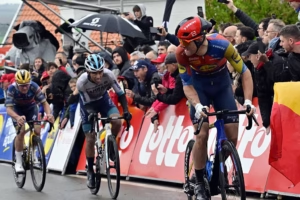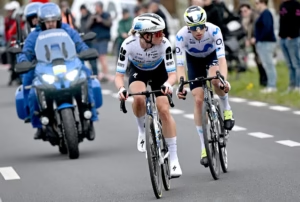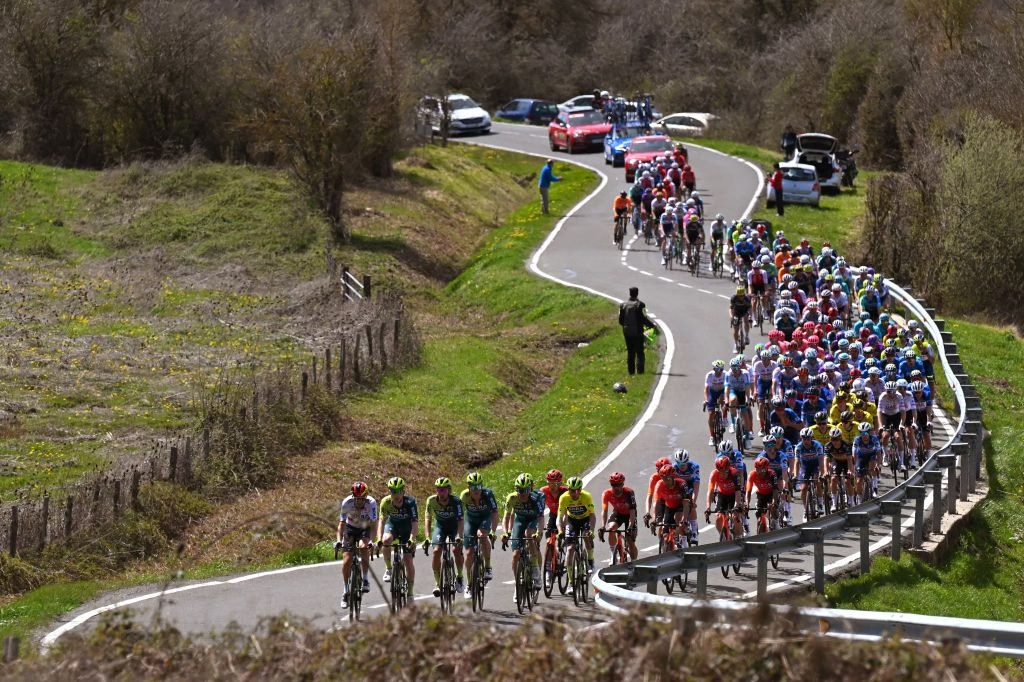
Itzulia Basque Country is one of the oldest and most distinctive stage races in cycling. The first edition was held in 1924, which means the race has now been part of the sport’s story for more than a century. That history matters, but so does the way the race has preserved its identity. Itzulia has long been shaped by the roads, climbs and racing culture of the Basque Country, and that has given it a character that feels different from almost every other one-week event on the calendar.
For modern fans, Itzulia is usually understood as a compact, high-pressure WorldTour stage race built for climbers, puncheurs and complete stage racers. That description is fair enough, but it only tells part of the story. Historically, this race has always been more than just a preparation event or a neat line on the spring calendar. It is one of the great regional races in cycling, one that has repeatedly attracted elite winners and kept its prestige through very different eras of the sport.
If you want the current route and race shape alongside the history, ProCyclingUK’s Beginner’s guide to Itzulia Basque Country 2026 and Volta Ciclista a Catalunya 2026 full route guide helps place Itzulia in the wider stage-racing picture.
A race with deep roots in the Basque Country
The race began in 1924 as the Tour of the Basque Country, and the organisers marked 2024 as the centenary of that first edition. That centenary was more than a symbolic milestone. It underlined how long this event has been woven into the sporting life of the region. Itzulia has always felt grounded in Basque roads, Basque crowds and Basque cycling culture, which is one reason it has retained such a strong identity even as professional cycling has changed around it.
That local weight matters because Itzulia has never been just another stage race passing through. It is the major men’s stage race of the Basque Country, and it carries a sense of place that few races can match. The terrain is a huge part of that. These are not Alpine climbs or endless valley roads. They are sharp, awkward, twisting, tiring roads that force riders to stay alert and keep producing efforts all week.
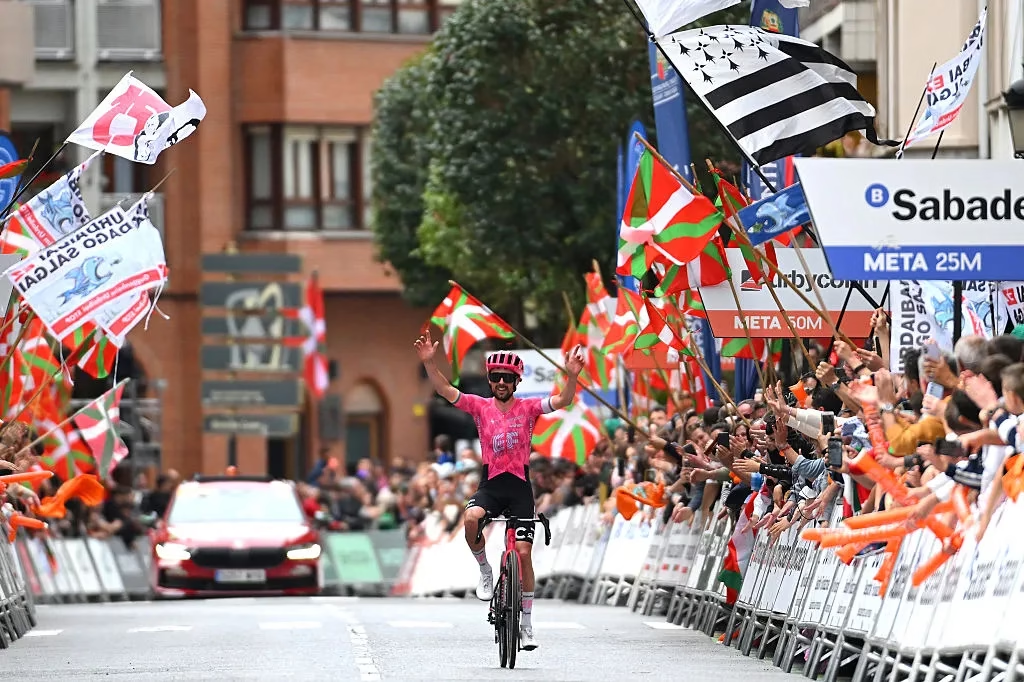
Why Itzulia became so respected
Plenty of one-week races have a history. Not all of them feel as specific as Itzulia. What separates this race is the type of rider it tends to reward. Over time, the winners’ list has become full of elite general classification riders and high-level stage racers, which has helped cement its status as one of the hardest and most revealing races of its kind.
That reputation was built through the route. Itzulia is rarely about one giant summit finish or one huge mountain stage deciding everything cleanly. Instead, it works through accumulation. Climbs come in clusters, roads stay technical, and time gaps can open on days that look manageable at first glance. That makes the race feel tense and alive in a way that suits strong all-round climbers rather than one-dimensional specialists.
Previous winners of Itzulia Basque Country
The winners list says a lot about the race. In recent years, Itzulia has been won by riders who went on to shape the rest of the season, or who were already among the strongest stage racers in the sport.
Recent winners are:
- 2025 – João Almeida
- 2024 – Juan Ayuso
- 2023 – Jonas Vingegaard
- 2022 – Daniel Felipe Martínez
- 2021 – Primož Roglič
- 2020 – no race
- 2019 – Ion Izagirre
- 2018 – Primož Roglič
- 2017 – Alejandro Valverde
- 2016 – Alberto Contador
- 2015 – Joaquim Rodríguez
- 2014 – Alberto Contador
- 2013 – Nairo Quintana
- 2012 – Samuel Sánchez
- 2011 – Andreas Klöden
- 2010 – Christopher Horner
Go further back and the list becomes even richer. Tony Rominger won three straight editions from 1992 to 1994. Sean Kelly won three times in the 1980s. Luis Ocaña won twice, while Jacques Anquetil and Gino Bartali also appear in the race’s history. That spread across generations is one of the clearest signs that Itzulia has always mattered. Great riders have not arrived here by accident. They have targeted it and won it.
The winners tell you what kind of race this is
What links so many of those names is not one perfect rider type, but a shared ability to cope with repeated demands. Roglič, Vingegaard, Contador, Valverde, Ayuso and Almeida are not identical riders, but they all fit the broader Itzulia profile. They can climb, they can accelerate, and they can handle a week where the race keeps changing shape.
That is why Itzulia tends to be such a useful form guide. It exposes condition quickly. A rider can hide a little in some week-long races. It is much harder to hide in the Basque Country.
What Itzulia represents now
In the modern calendar, Itzulia Basque Country still occupies a very specific place. It is not the biggest race of the season, but it is one of the most respected. It often arrives at a point where riders are already close to top form, and because the route is so demanding, the results tend to mean something. When a rider wins Itzulia, it rarely feels accidental.
That is what makes its history worth understanding. Itzulia Basque Country is not simply an old race that has survived. It is an old race that has stayed relevant by remaining true to itself. The roads, the climbs and the regional identity still define it. A century on from the first edition, that is a strong achievement in itself.
For more on the current edition and how this type of route shapes racing, ProCyclingUK’s Beginner’s guide to Itzulia Basque Country 2026 is the best next read.