Men’s Amstel Gold Race is younger than the Monuments, but it has still carved out a distinctive place in the sport. First held in 1966, it became the Netherlands’ flagship men’s one-day race and gradually established itself as the bridge between the cobbled Classics and the hillier Ardennes block. It has never relied on one single mountain or one iconic cobbled sector to define it. Instead, its reputation was built on the repeated short climbs of Limburg, the constant need to reposition, and the way the route keeps draining riders long before the winning move is made.
How Amstel Gold Race began
The first edition of Amstel Gold Race was held in 1966 and won by Jean Stablinski. From the outset, the race offered something different from the bigger northern Classics. Rather than flat roads, crosswinds and pavé, it was shaped by narrow roads, rolling terrain and a relentless sequence of short climbs. That immediately gave it a different identity, one rooted in wear and accumulation rather than one great obstacle.
In those early years, the race still had to grow into its modern status. It did not yet carry the same aura as the biggest Belgian or Italian Classics, but it quickly became an important date on the calendar, especially for riders who could combine endurance, tactical awareness and a sharp finishing effort after a hard day.
The Dutch era and Jan Raas
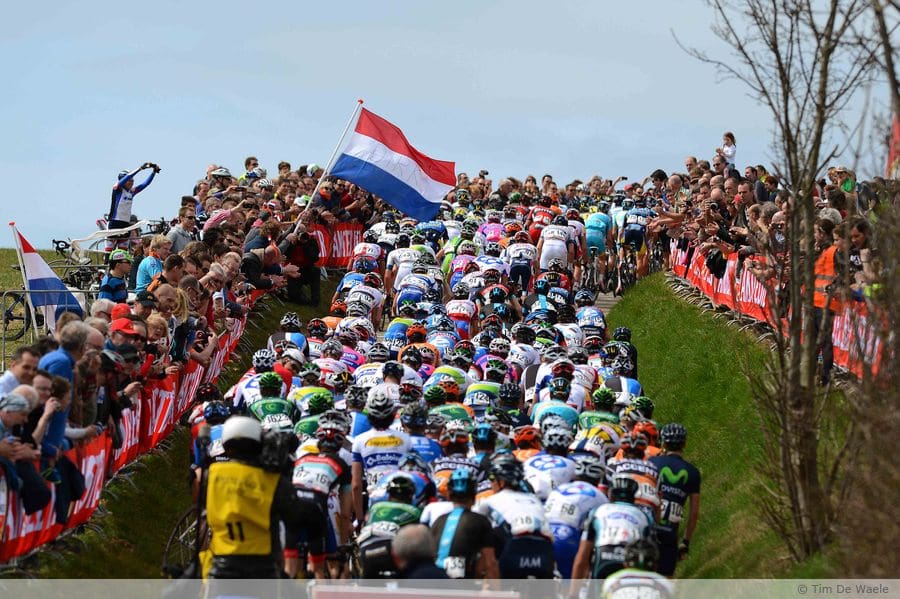
As the race matured, it became closely tied to Dutch cycling. No rider symbolised that more strongly than Jan Raas, who won Amstel Gold Race five times between 1977 and 1982. That remains the race record and still stands as one of the most dominant rider-race relationships in the history of the spring Classics.
Raas helped define the event in more ways than just his victories. His success gave the race a distinctly Dutch centre of gravity and reinforced the idea that Amstel Gold Race was not simply an imported version of an Ardennes Classic, but something shaped by local roads, local crowds and Dutch racing instincts. For a period, it felt almost like a national monument in all but official classification.
How the race grew in prestige
Over time, Amstel Gold Race became more international. Its place on the calendar strengthened as it moved through the major one-day competition structures, from the UCI Road World Cup era to the ProTour and then the WorldTour. That progression cemented its position as one of the key races of the spring, even if it has never been formally counted as one of cycling’s five Monuments.
That rise in status also showed in the winners. The palmarès broadened from its earlier Dutch-heavy pattern to include a much wider range of champions from across Europe and beyond. As the race’s prestige grew, it became a target not just for local specialists but for puncheurs, Classics riders and even Grand Tour contenders with the right explosive profile.
The Cauberg years
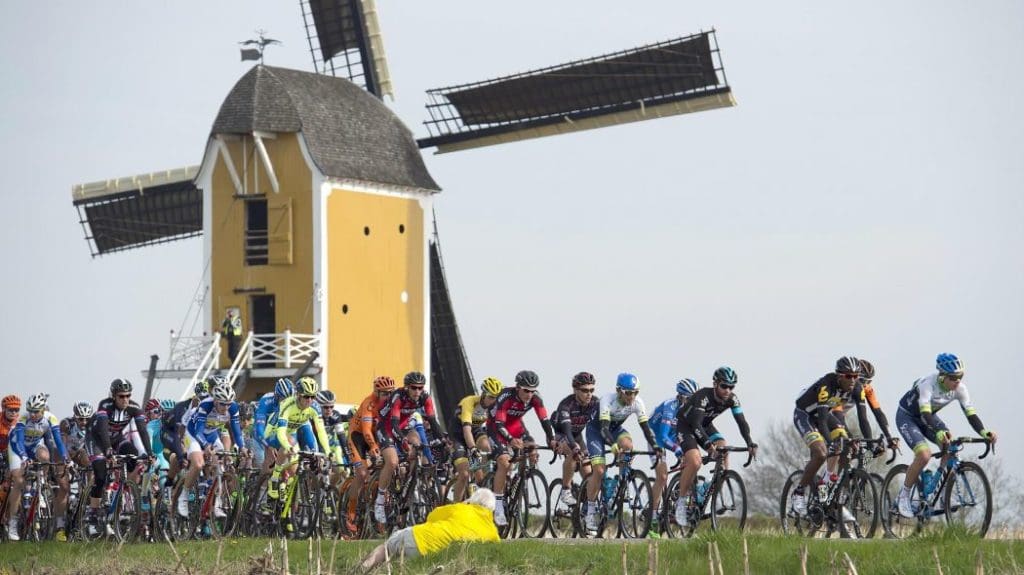
For many fans, Amstel Gold Race became inseparable from the Cauberg. When the finish was moved close to the top of the climb in 2003, the race took on a more recognisable late-race shape. Teams increasingly built their plans around delivering a leader to the bottom of the Cauberg in perfect position, ready to launch one decisive acceleration.
That phase of the race’s history produced another defining champion in Philippe Gilbert. He won four times, in 2010, 2011, 2014 and 2017, and became the rider most closely associated with modern Amstel Gold Race. If Jan Raas dominated the earlier Dutch era, Gilbert came to define the Cauberg period, with his explosive climbing and perfect sense of timing making him the benchmark for how to win the race.
Why the route changed again
The Cauberg finish gave Amstel Gold Race a clear late-race identity, but it also created a risk. At times, the race could become too predictable, with long phases of control building towards one final uphill effort. Organisers responded by adjusting the finish layout. The line moved slightly beyond the top of the Cauberg in 2013, and later the final ascent of the climb was repositioned earlier in the finale to encourage more open, less scripted racing.
Those changes helped restore some uncertainty. Rather than waiting for one final effort on a familiar slope, riders had more room to anticipate, attack earlier or force the race into a different shape. That made Amstel Gold Race feel less formulaic and widened the range of riders who could realistically win it.
-
 Photo Credit: Getty


Memorable modern editions
The race has produced some of the most memorable one-day finishes of recent years. Mathieu van der Poel’s 2019 win remains one of the standout modern editions, built on a remarkable late chase that looked impossible until the final moments. It was the kind of finish that captured exactly what makes Amstel special, because the race can still flip dramatically even when the outcome appears settled.
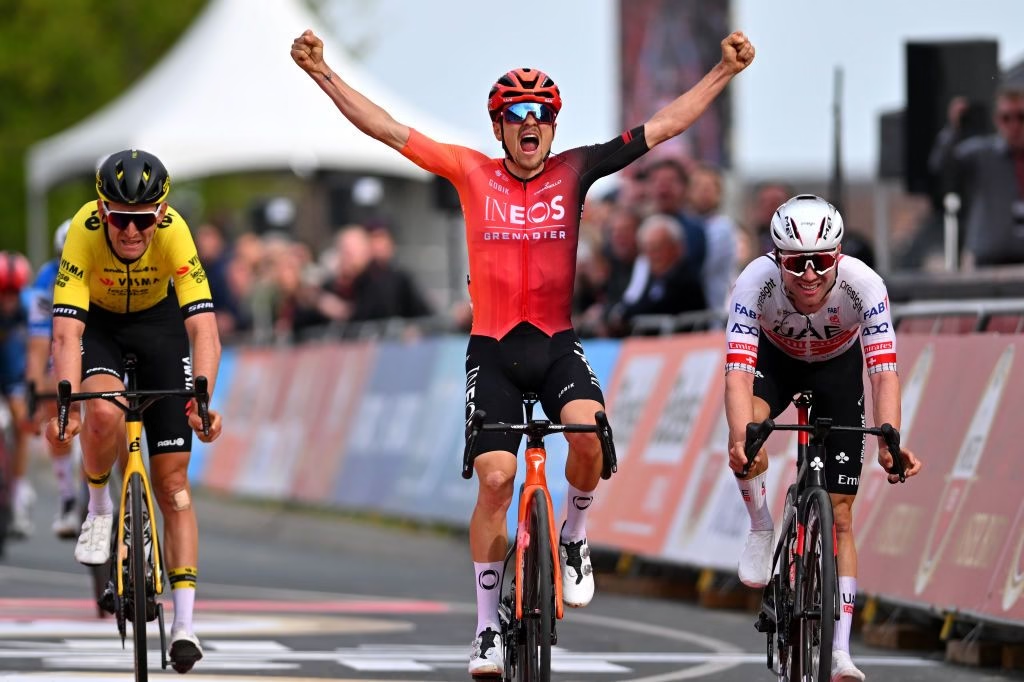
The winners in more recent years also show just how varied the race has become. Wout van Aert, Tadej Pogačar, Tom Pidcock and Mattias Skjelmose all added their names across the modern era, while riders such as Michał Kwiatkowski also fit the profile of the sort of adaptable, intelligent racer who thrives here. That range reflects the race’s unusual balance. It can suit a puncheur, a tactically sharp Classics rider, or a rider strong enough to attack before the final climb sequence and still hold off the chasers.
Why Amstel Gold Race remains so important
Today, Amstel Gold Race is firmly established as one of the most important one-day races of the spring. It may not carry Monument status, but it has an identity strong enough that it does not need that label to stand out. The repeated climbs, the narrow Limburg roads, the tactical uncertainty and the quality of the winners have all combined to give it a place of its own.
It also performs an important role in the rhythm of the season. By the time Amstel arrives, the cobbled specialists are beginning to give way to puncheurs and climbers with a fast finish. In that sense, the race is not just important in isolation. It also helps define what kind of Ardennes week is about to follow.
For readers moving through the wider spring, this piece also sits naturally alongside the A brief history of Amstel Gold Race Women, the Beginner’s guide to La Flèche Wallonne Femmes 2026, the How to watch Ronde van Vlaanderen 2026 in the UK, and the Paris-Roubaix Femmes 2026 route and cobbled sectors guide, as the calendar shifts from the cobbles towards the hillier Classics.