
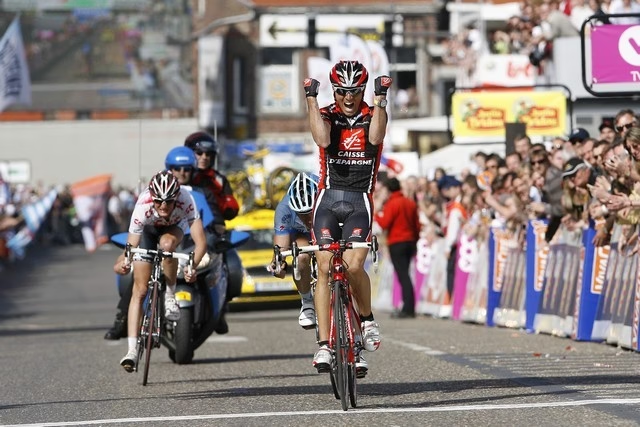
Liège-Bastogne-Liège is the oldest of cycling’s Monuments and the race that has long carried the nickname La Doyenne, the old lady. First held in 1892, it predates the rest of the sport’s great one-day prizes and built its identity around the Ardennes rather than cobbles, crosswinds or flatland attrition. It is a race of climbing, fatigue and judgement, one that tends to reward riders who can keep making hard decisions when the legs are already beginning to fade.
For readers exploring the wider Ardennes story, ProCyclingUK’s A brief history of La Flèche Wallonne, A brief history of Liège-Bastogne-Liège Femmes and A brief history of Men’s Amstel Gold Race help place the race within the full spring trilogy.
How Liège-Bastogne-Liège began
The first editions were very different from the modern race, but the essential idea was already there. Riders left Liège, travelled south to Bastogne, then turned back north again through the Ardennes. Léon Houa won the first three editions in 1892, 1893 and 1894, giving the race its first dominant champion before the event settled into a more irregular early history.
Those beginnings still matter because Liège-Bastogne-Liège was never built around spectacle alone. It came from the landscape itself. The Ardennes roads, rolling rather than alpine but never truly easy, shaped the race into something tougher and more layered than a simple uphill test. Over time, that became its defining strength.
Why it became known as La Doyenne
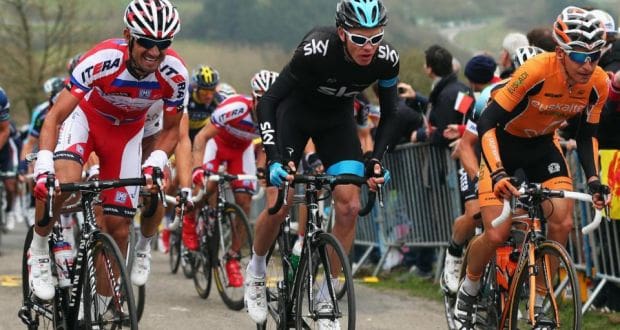
Liège-Bastogne-Liège is known as La Doyenne because it is the oldest major one-day race in professional cycling. That long history gives it a different sort of prestige from the other Monuments. Paris-Roubaix is defined by brutality, the Tour of Flanders by cobbled climbs, Milano-Sanremo by distance and timing, but Liège carries the weight of age as well as difficulty.
It also developed a reputation as the Monument of the champions of stage racing. The repeated Ardennes climbs, the long distance and the cumulative fatigue have often suited riders with Grand Tour engines as much as pure one-day specialists. That has always given the race a slightly different flavour from the northern Classics.
The early decades and interrupted history
The winners list from the first half of the 20th century shows just how uneven the race’s early life could be. Liège-Bastogne-Liège was not held every year in its earliest period, and the gaps around the world wars are a clear reminder of how much European history shaped the race calendar.
That broken timeline is part of why Liège-Bastogne-Liège history feels so broad. It does not read like one neat, uninterrupted sequence. It reads like a race that survived different eras, paused when circumstances forced it to, then kept rebuilding itself around the same roads and the same challenge.
How the race found its modern identity
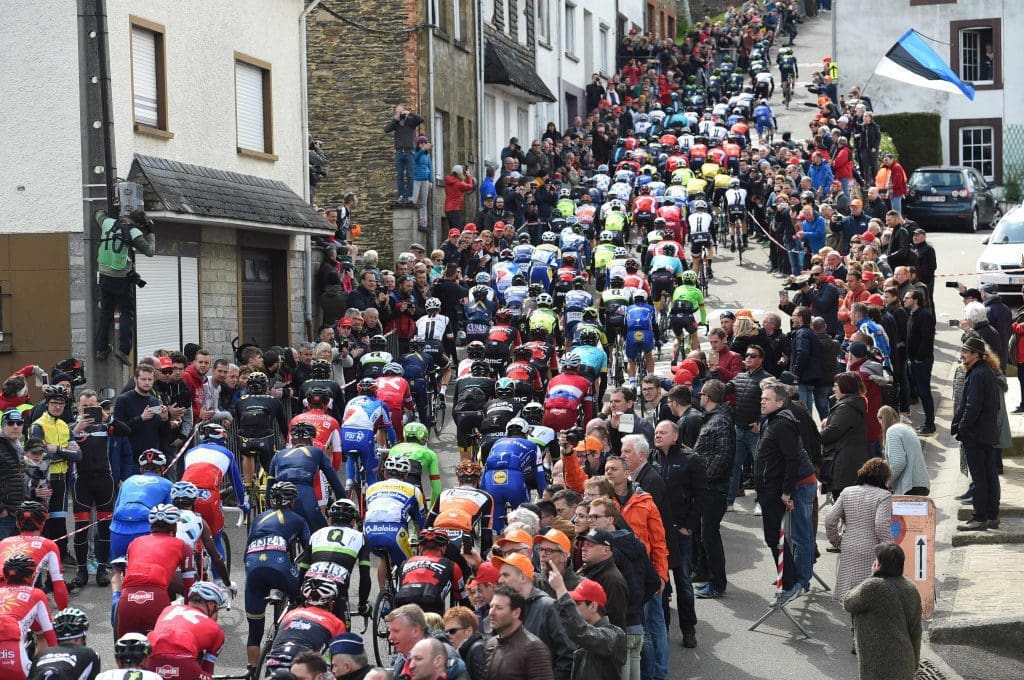
By the mid-20th century, Liège-Bastogne-Liège had started to look more like the race fans now recognise. Riders such as Ferdi Kübler, Rik van Looy and Jacques Anquetil helped push it into the modern era, each bringing a different sort of authority to the winners list.
What emerged more clearly through that period was the type of rider who could win here. Liège-Bastogne-Liège was not usually decided by one explosive moment in the way La Flèche Wallonne often is. Instead, it became a race of repeated effort, selective but not simple, and that gave it room for a wider range of champions, from puncheurs to stage-race greats.
The Merckx era and Belgian weight of history
No rider is more closely tied to the history of the men’s race than Eddy Merckx. He won Liège-Bastogne-Liège five times, in 1969, 1971, 1972, 1973 and 1975, a record that still sets the standard on the honours list.
Merckx’s dominance helped lock the race even more firmly into Belgian sporting culture. Liège-Bastogne-Liège was already prestigious, but having the greatest Belgian rider of them all shape its palmarès so heavily made it feel even more central to the sport’s identity. It also reinforced the idea that this was a race for complete riders, not just one-dimensional attackers.
For readers interested in the great champions who shaped the spring, ProCyclingUK’s historical rider pieces such as Eddy Merckx and Alejandro Valverde fit naturally alongside the race’s own story.
Bernard Hinault and the race’s hardest mythology
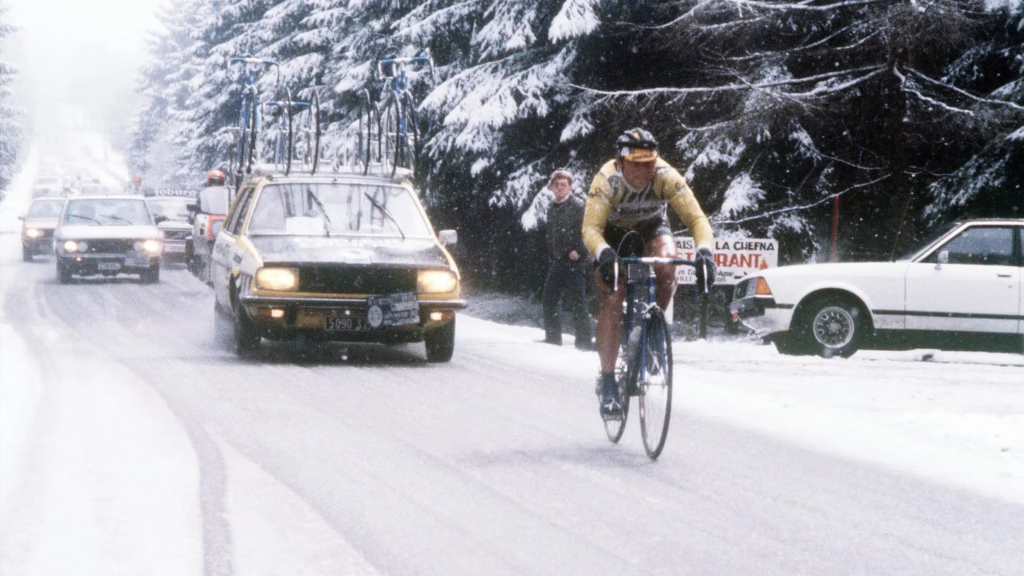
If Merckx dominates the record books, Bernard Hinault produced one of the race’s defining legends. His 1980 victory, raced in dreadful cold and snow, remains one of the most famous single rides in Liège-Bastogne-Liège history.
Hinault won the race twice, in 1977 and 1980, but it is that second success that continues to echo most loudly. It turned Liège-Bastogne-Liège into something more than a prestigious Monument. It became a race associated with suffering in its purest form, where physical strength and refusal to yield could create something close to mythology.
Moreno Argentin, Sean Kelly and the Ardennes specialists
The 1980s and early 1990s brought another shift. Moreno Argentin won four times, in 1985, 1986, 1987 and 1991, making him second only to Merckx on the all-time list. Sean Kelly also left a major mark with victories in 1984 and 1989.
That era showed how Liège-Bastogne-Liège could be mastered by riders with a very specific Ardennes skill set. They were not all built in the same way, but they understood how to survive the distance, read the race and strike on climbs that were selective without always being decisive on their own. In many respects, that remains the classic Liège formula.
From the 1990s into the modern era
The winners from the 1990s and 2000s underline how broad the race’s appeal became. Michele Bartoli won twice, Paolo Bettini won twice, Alejandro Valverde won four times, and riders such as Davide Rebellin, Alexandre Vinokourov and Philippe Gilbert all added their names to the list.
Valverde’s four victories were especially significant because they stretched across different phases of the sport. He was not just a great winner of Liège-Bastogne-Liège, he was proof that the race still rewarded old-fashioned race craft even as cycling became more data-driven and more tightly controlled. The demands remained much the same: climb well, endure well, and pick the right moment.
-
 Photo Credit: Getty
Liège-Bastogne-Liège in the current era
In the current era, the race has continued to attract the sport’s biggest names and most complete riders. That feels entirely appropriate, because Liège-Bastogne-Liège still asks for a rare combination of endurance, climbing depth, tactical intelligence and late-race nerve.
Modern editions have also kept the race relevant within the wider spring narrative. Amstel Gold Race can open the Ardennes block in one way, and La Flèche Wallonne often narrows the focus onto one explosive finish, but Liège still feels like the broadest examination of the three. It is the race where the strongest rider often has the best chance, though not always in the simplest way.
For more on how the race fits into the current calendar, readers can also move across to ProCyclingUK’s Beginner’s guide to men’s Liège-Bastogne-Liège 2026 and the wider Men’s cycling history, races, riders and teams hub.
Why Liège-Bastogne-Liège still stands apart
What makes Liège-Bastogne-Liège special is not just that it is old. It is that its history feels consistent with its character. The winners list is crowded with riders who could suffer, climb and think clearly under pressure. The course has changed over time, as all major races do, but the Ardennes have always made the same basic demand: be strong enough to last, and sharp enough to act before it is too late.
That is why the men’s Liège-Bastogne-Liège still carries such weight in the spring calendar. It closes the Ardennes block, but it also reaches back further than any of the other Monuments. It is cycling’s oldest great one-day race, and it still feels like a race that has been testing champions for longer than the rest.

