Men’s Ronde Van Brugge – Tour of Bruges is new in name, but not new in substance. The 2026 race is the direct successor to Classic Brugge-De Panne, which itself grew out of the old Three Days of De Panne stage race first held in 1977. What changes in 2026 is not just the branding. The race now sits under a Brugge-led identity on the WorldTour calendar, which makes this a genuine repositioning of the event rather than a simple cosmetic relaunch.
For years, this was a race people read through a very specific geography. Brugge gave it prestige and staging. De Panne gave it direction. De Moeren gave it menace. That older version of the race became one of the sport’s purest modern wind tests, a flat but stressful one-day event where positioning mattered constantly and where the strongest sprinters often survived to decide it. The identity was not built around climbs or cobbles in the usual Flemish sense. It was built around exposure. ProCyclingUK’s Beginner’s guide to Men’s Ronde Van Brugge – Tour of Bruges 2026 gives the wider context for how that identity has shifted.
From De Panne stage race to WorldTour one-day race
The roots of the race sit in the Three Days of De Panne, a stage race that for decades held an important place in the final build-up to the Tour of Flanders. It began in 1977 and became known as a compact but serious Flemish test, often mixing crosswinds, short efforts and, in many editions, a final time trial into a format that rewarded complete classics riders. The continuity matters here, because the modern men’s race is best understood as the latest version of that older event rather than a separate creation.
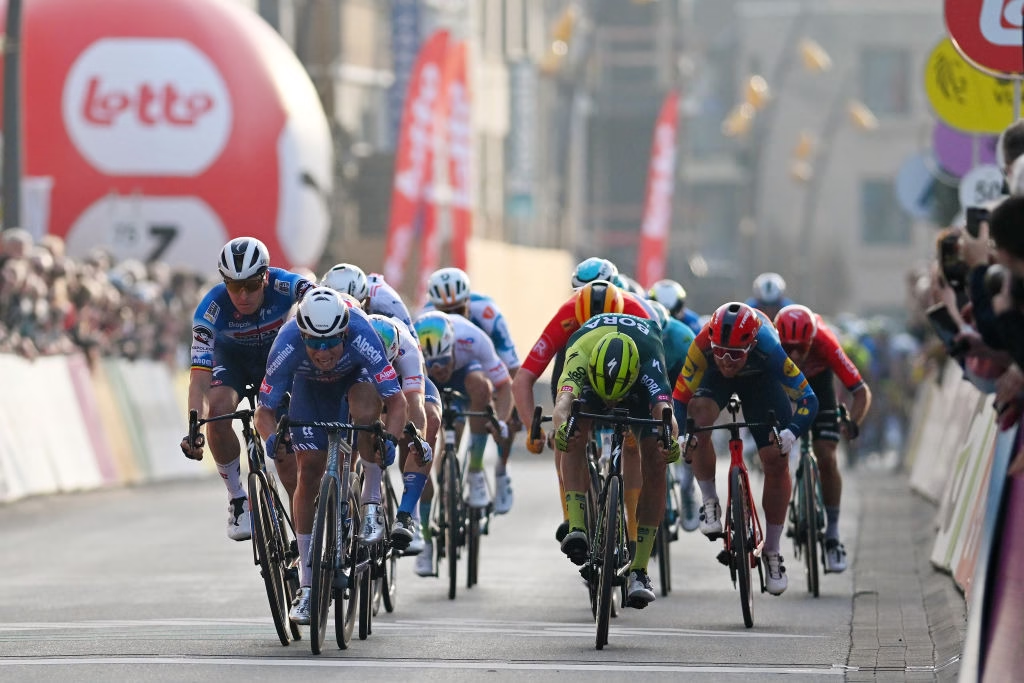
That older stage-race identity lasted until the format overhaul in 2018. From that point, the men’s event became a one-day race, with the women racing separately, and the event leaned much more clearly into being a WorldTour-level spring classic. The one-day version quickly found its own rhythm. Elia Viviani won the first edition under the revised format in 2018, Dylan Groenewegen followed in 2019, and the race increasingly settled into a reputation as one of the calendar’s most stressful sprint classics.
Why Classic Brugge-De Panne worked
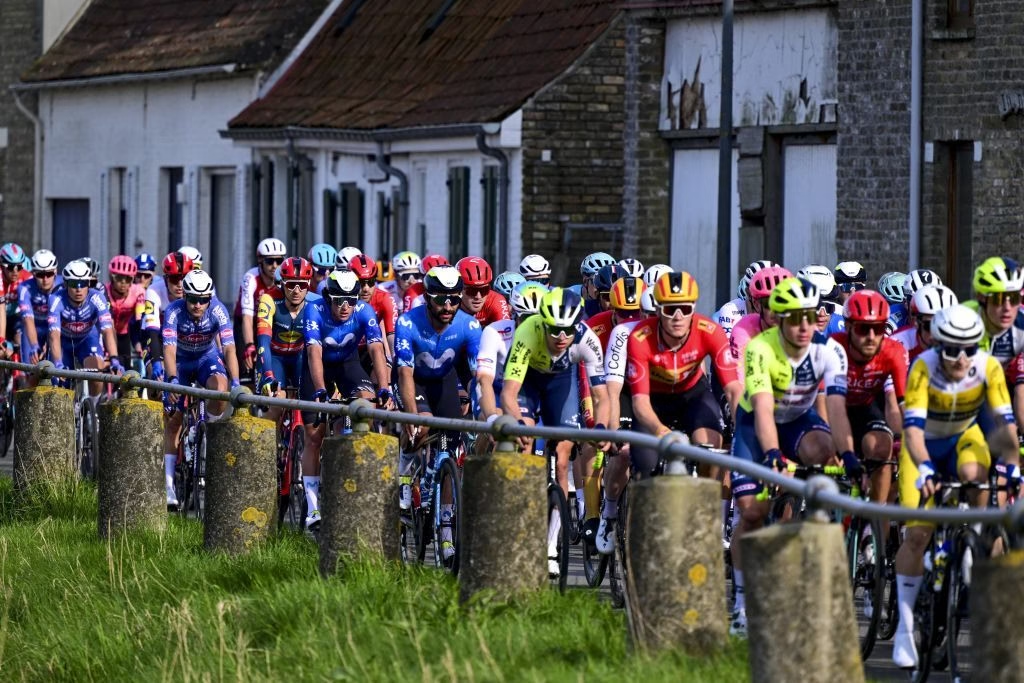
Classic Brugge-De Panne worked because it offered something slightly different from the rest of Flanders week. It was not E3. It was not Gent-Wevelgem. It was not Tour of Flanders in miniature. Instead, it was a race where the terrain looked simple but the racing rarely was. Long straight roads and open landscapes meant the bunch was always vulnerable, and when the wind hit properly, the race could split long before the finish.
That created a very particular type of winner. Some editions ended in bunch sprints, but they were rarely easy bunch sprints. They tended to reward riders who could survive nervous racing, keep position all day and still sprint after hours of stress. That is why the race became such a good fit for powerful fast men rather than simply the purest flat sprinters.
If you want to place it in the broader Belgian spring, ProCyclingUK’s Beginner’s guide to In Flanders Fields 2026 and Beginner’s guide to Tour of Flanders Men 2026 help show how different the major Flemish races can be, even when they sit close together in the calendar.
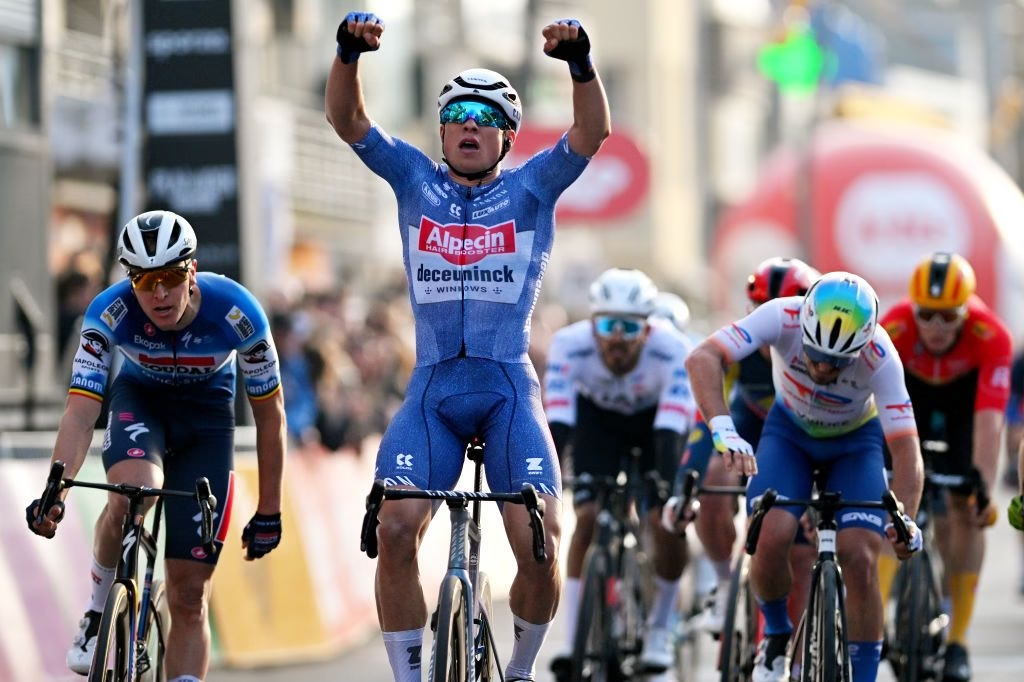
Previous winners of the men’s race
Because Men’s Ronde Van Brugge – Tour of Bruges is the direct successor to Classic Brugge-De Panne and the old Three Days of De Panne, its history should be read as one continuous men’s race rather than as a brand-new event. That is the most accurate way to present the honours list.
Recent winners in the modern one-day era are:
- 2025 – Juan Sebastián Molano
- 2024 – Jasper Philipsen
- 2023 – Jasper Philipsen
- 2022 – Tim Merlier
- 2021 – Sam Bennett
- 2020 – Yves Lampaert
- 2019 – Dylan Groenewegen
- 2018 – Elia Viviani
Before the switch to a one-day format, the race was run as the Three Days of De Panne stage race. The most successful rider in that earlier era was Eric Vanderaerden, who won it five times, a record that still stands.
Why the 2026 change matters
The 2026 shift to Men’s Ronde Van Brugge – Tour of Bruges matters because it is more than a cosmetic rename. The race no longer carries De Panne in the title and now sits explicitly under the Tour of Bruges identity on the WorldTour calendar.
That changes the race’s grammar. Once De Panne and De Moeren disappear from the centre of how people think about the event, the race loses the coastal pull that had defined so much of its modern character. It is still a West Flanders race, and it is still likely to be shaped by exposed roads and the threat of wind, but it is no longer the same tactical problem. It has moved from being a race understood through one long line to the coast into something more self-contained around Brugge.
That is the key point in any history of the race. The name change matters because the route change matters. This is not just a new label attached to familiar terrain. It is a reset in how the race is likely to unfold.

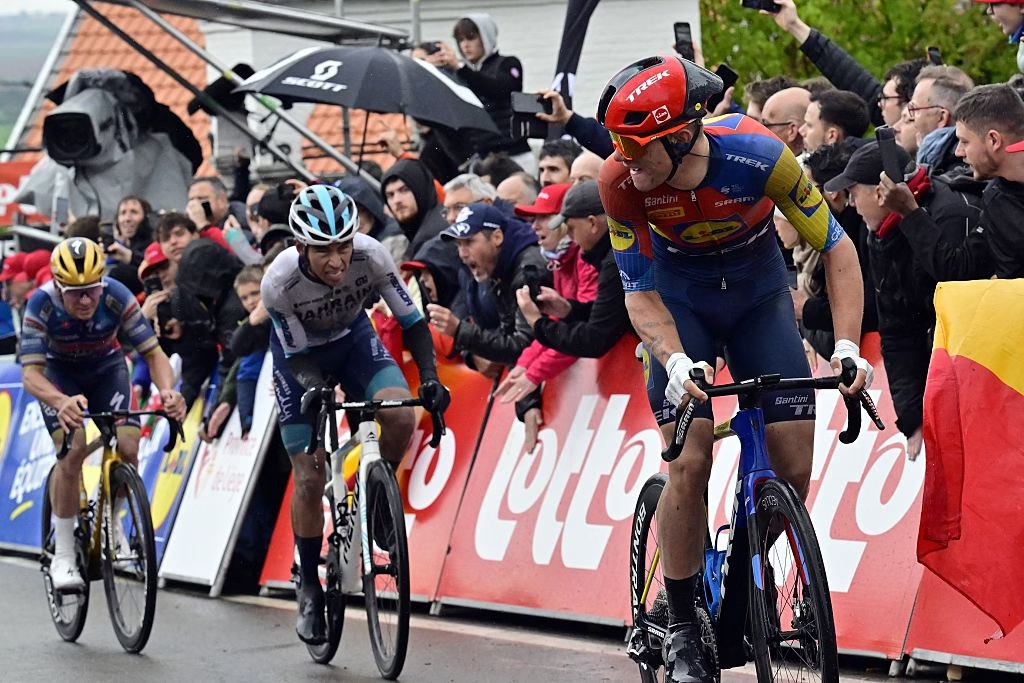
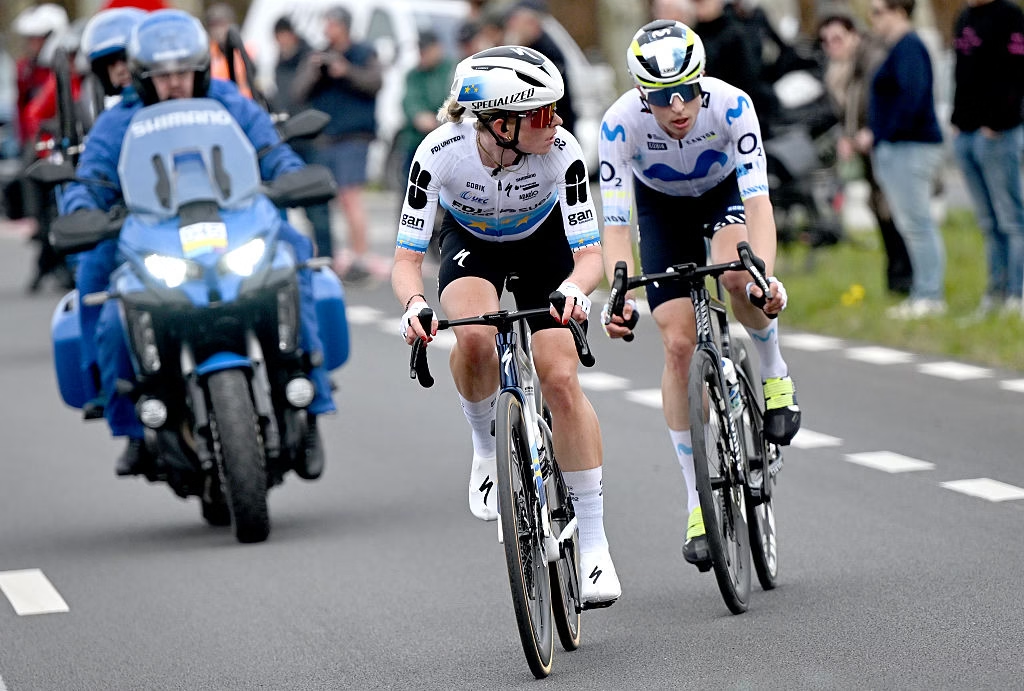
What the new race keeps, and what it leaves behind
The 2026 men’s race keeps the Flemish setting and much of the flat-race tension that made the old event so distinctive, but it sheds one of the strongest visual and tactical signatures of the previous era. That makes this a rare case where continuity and change are both equally important to the story. The lineage is uninterrupted, but the identity is being rewritten.
That is why this is such an interesting moment in the history of the race. Most rebrands in cycling ask supporters to accept a new name for essentially the same event. This one asks for something more complicated. The history remains continuous. The lineage still runs back through Classic Brugge-De Panne and, before that, the Three Days of De Panne. But the 2026 race is also a genuine reset in how the event is likely to be raced and remembered.
What Men’s Ronde Van Brugge – Tour of Bruges now represents
Men’s Ronde Van Brugge – Tour of Bruges now sits at an unusual point between heritage and reinvention. It still carries nearly 50 years of race history. It still belongs to the same spring window. It still occupies an important WorldTour slot. But it also opens a new chapter, one where Brugge is not just the ceremonial start but the full organising centre of the race.
That is what makes its history worth understanding in 2026. This is not a story of an old race disappearing. It is a story of an old race changing shape. The De Panne years gave it one identity. The Brugge-only era will define the next one.
For readers following the wider spring changes, ProCyclingUK’s Beginner’s guide to Men’s Ronde Van Brugge – Tour of Bruges 2026 is the natural next step, especially because the route reset is just as important as the new name.