Volta Ciclista a Catalunya is one of the oldest and most important stage races in professional cycling, and one of the easiest to overlook until the route starts to bite.
That should not really happen, because the race has a remarkable place in the sport’s history. First held in 1911, it is the third-oldest stage race in cycling after the Tour de France and the Giro d’Italia. By the time the 2026 edition rolls around, the event reaches its 105th running. That alone would make it significant. What keeps it important, though, is that it has never become a historical ornament. Catalunya is still a race that matters now.
That is what gives it its particular authority. It has the weight of a century behind it, but it still sits in a modern calendar slot where the strongest climbers and stage-race riders often begin showing what sort of season they are about to have. If you want the current race first, ProCyclingUK’s Beginner’s guide to Volta Ciclista a Catalunya 2026 explains why the race remains such a useful test of form in March.
How the race began
The first Volta a Catalunya started from Barcelona on 6 January 1911 and finished three days later. Barcelona has remained central to the race’s identity ever since, and that continuity tells you a lot about why the event has endured. Catalunya has changed shape, changed dates and changed route design across different eras, but it has never really lost its sense of place.
In those early years, the race was still finding its format, as many events were. Stage structure shifted, timing shifted, and the sport itself was still developing. But the race survived that uncertainty and gradually established itself as one of Spain’s most durable sporting events.
That matters because longevity in cycling is never just about age. Plenty of races have old roots. Fewer have managed to stay relevant across so many different versions of the sport.
Why Catalunya became such an important race
The simplest answer is that the route has long suited the kind of rider cycling values most highly.
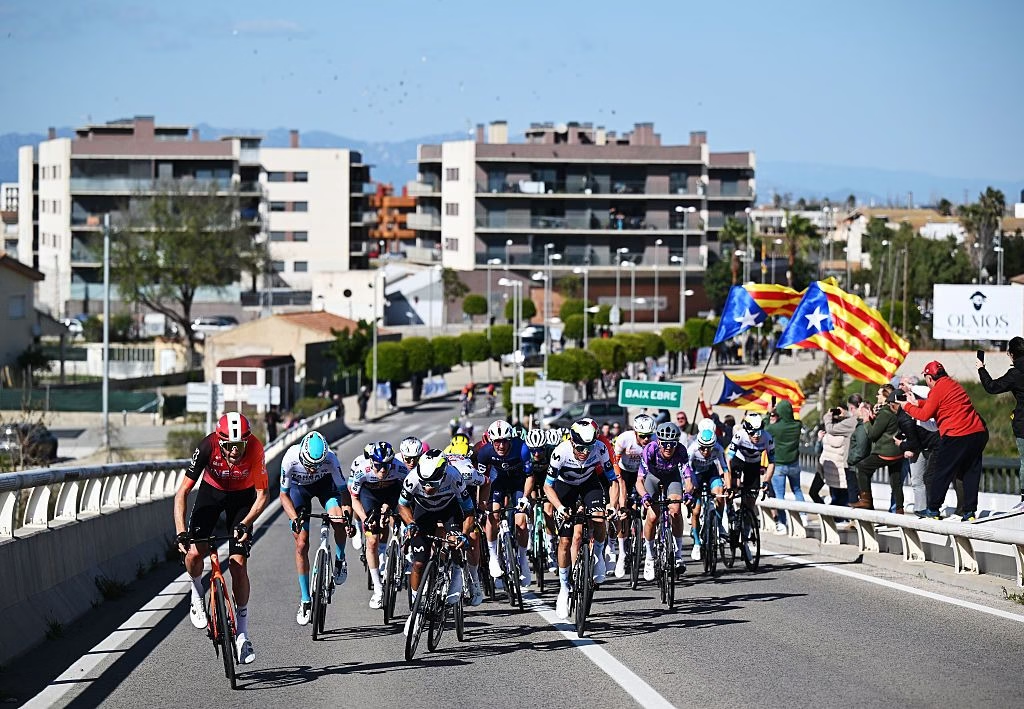
Volta a Catalunya has usually rewarded climbers, stage-race specialists and riders with strong recovery over a week. That has made it an ideal early-season proving ground. It is a race where a rider can start to show not just whether the form is there, but whether the form can hold together across multiple difficult days.
That role has only become clearer over time. Catalunya is not a race that hides what it is. It tends to point the peloton toward the mountains and let the strongest riders begin sorting themselves out. In that sense, it has often felt like one of the cleanest week-long races on the calendar. Hard, selective, and usually very honest.
That is one reason it still matters so much in the modern season. It tells you something real.
Barcelona’s role in the race
One of the strongest threads in the race’s history is its connection to Barcelona.
That link goes all the way back to the first edition, and it has remained a defining part of the event’s identity. Barcelona is not simply a useful host city or a practical finish. It is one of the race’s anchors. Even when the route pushes deep into the mountains or further into Catalonia, the return to Barcelona gives the event a sense of continuity and recognition.
That is especially obvious in the race’s modern finale. The closing circuit in Barcelona, usually shaped around repeated climbs of Montjuïc, has become one of the race’s most recognisable features. It is not a ceremonial final day in the way some stage races end. It is often sharp, aggressive and still capable of forcing a response from the GC.
That helps the race feel complete. Catalunya does not simply drift to the finish. It usually insists on one last effort.
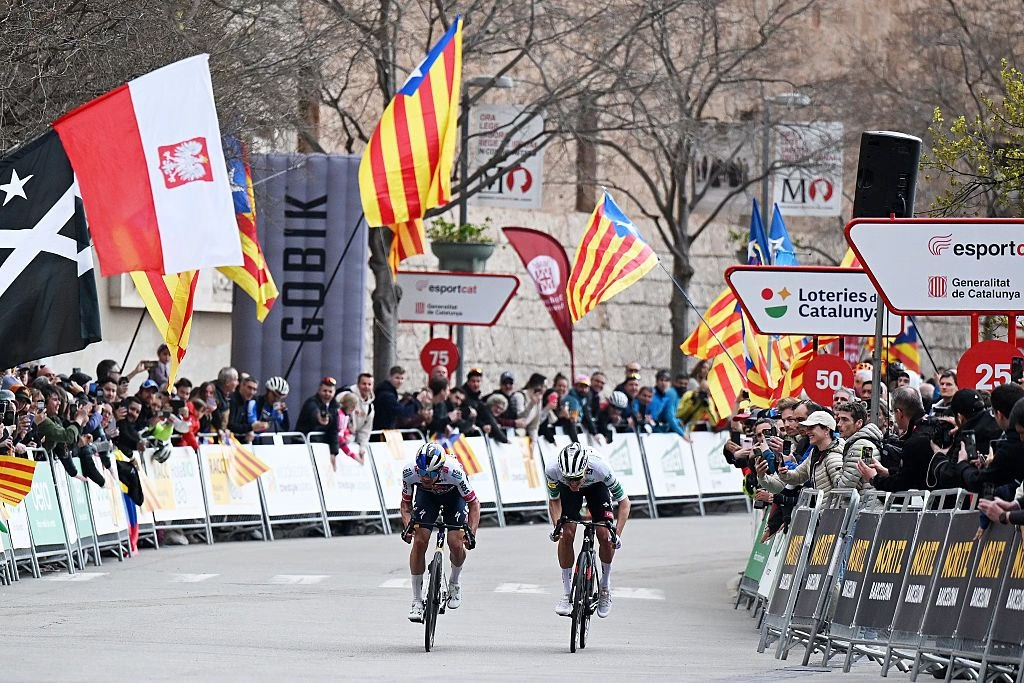
The winners tell the story
The roll of honour is one of the quickest ways to understand what kind of race this has always been.
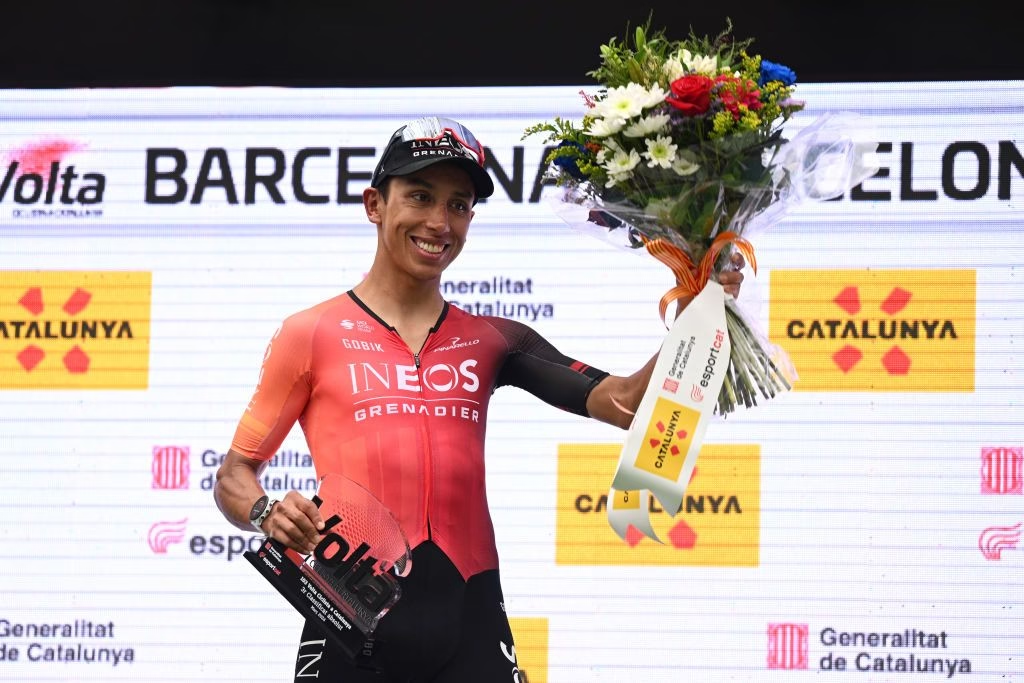
Recent winners include Primož Roglič, Tadej Pogačar, Sergio Higuita and Adam Yates. Before them came riders such as Alejandro Valverde, Nairo Quintana, Richie Porte, Daniel Martin and Miguel Ángel López. That is not the list of a race people ride by accident. It is the list of a race the best stage-race riders regularly want on their palmarès.
And that has been true for a long time. Catalunya has consistently attracted riders who can climb, recover and control a week of racing. It may not always have the Grand Tour spotlight, but its winners list gives it the sort of credibility that few stage races can fake.
That is why the race still feels central rather than nostalgic. It has historic depth, but it also keeps producing winners who matter in the present.
-
 Photo Credit: Getty
The modern identity of the race
What makes Volta a Catalunya so useful now is that it still knows exactly what it is.
Some week-long races are built around time trials. Some are shaped by crosswinds or weather. Some deliberately blur the hierarchy until very late in the week. Catalunya is usually more direct than that. It points the race toward climbing and dares the field to answer properly.
That identity remains clear in 2026. The route again builds around serious mountain stages and summit finishes, which is exactly why the race continues to attract riders such as Jonas Vingegaard, Remco Evenepoel, João Almeida and Tom Pidcock. For that side of the current story, ProCyclingUK’s Beginner’s guide to Volta Ciclista a Catalunya 2026 is the most useful companion piece.
Catalunya still matters because it remains one of the clearest early-season tests of climbing depth. It does not just ask whether a rider can win one stage. It asks whether he can carry that level over a full week.
Why Volta a Catalunya still matters in 2026
That is really the heart of its history.
Volta a Catalunya has lasted because it adapted without giving away its core identity. It began in 1911, lived through different eras of cycling, and still arrives each March with the power to tell us something important about the season ahead. That is not true of every old race. It is true here because Catalunya has kept doing work that matters.
It remains a serious race for serious riders. It remains one of the sport’s best week-long climbing tests outside the Grand Tours. And it remains one of the clearest places in the spring calendar where reputations begin to look either justified or fragile.
That is a strong place for any race to occupy. For one that began more than a century ago, it is even more impressive.
If you are reading this as part of a broader spring build-up, ProCyclingUK’s Beginner’s guide to Milano-Sanremo 2026 also helps place Catalunya in the wider March calendar, where the sport moves quickly from Monument tension to week-long climbing tests.