
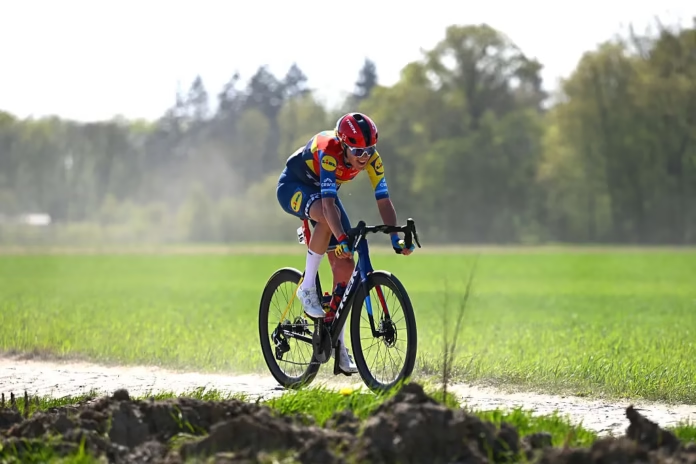
Paris-Roubaix Femmes has very quickly become one of the biggest races in women’s cycling. Even though it is still a relatively new addition to the calendar, it already carries the same sense of prestige, danger and unpredictability that has defined the men’s Paris-Roubaix for generations. The cobbles, the crashes, the punctures and the velodrome finish all give it a character that no other women’s one-day race quite matches.
That sense of importance came from more than just the name. Paris-Roubaix Femmes was created as part of the long overdue expansion of the women’s top-level calendar into races with the same symbolic weight as the men’s Monuments and cobbled Classics. It was first planned for 2020, then postponed more than once, before the inaugural edition finally took place on the 2nd October 2021.
Like the men’s race, the women’s event does not actually start in Paris. The route begins in Denain and finishes on the famous André-Pétrieux velodrome in Roubaix. The exact route has evolved from year to year, but the core identity has stayed the same: a long run-in, a sequence of brutal cobbled sectors, and a finish where strength alone is never enough. Positioning, nerve, bike handling and luck all matter.
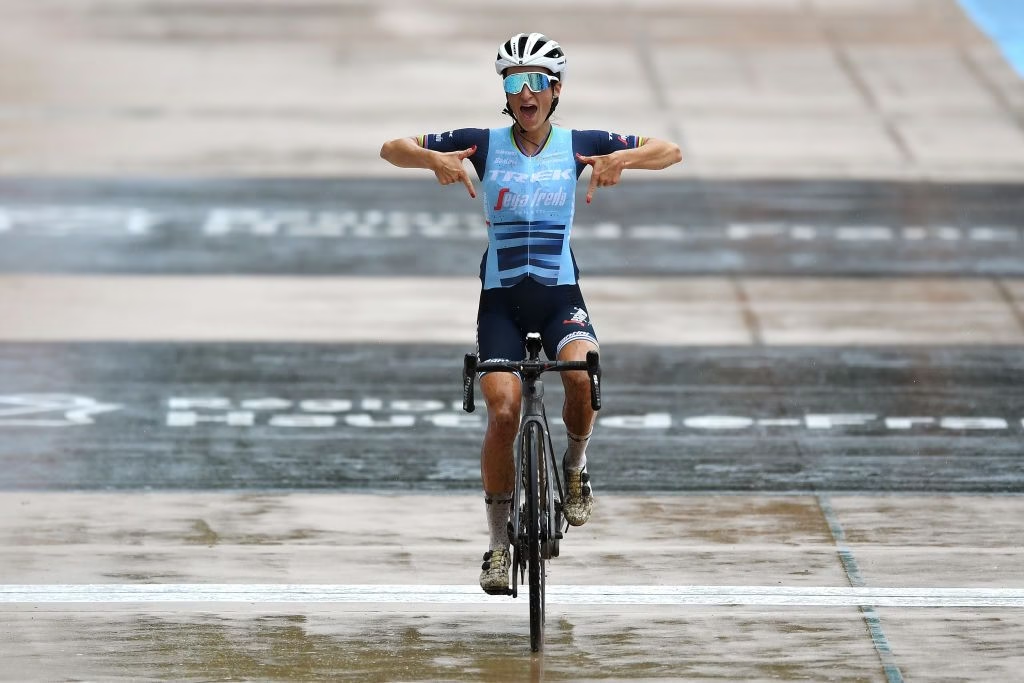 Photo Credit: Getty
The opening edition of Paris-Roubaix Femmes
The first edition in 2021 immediately gave the race its own mythology. The conditions were wet, muddy and chaotic, which made the cobbles even more punishing. Lizzie Deignan attacked from long range and rode alone for more than 80 kilometres to win the inaugural edition, arriving in Roubaix with mud all over her and her hands visibly torn up by the effort. It was one of those victories that instantly gave a new race real weight.
That mattered because the race did not feel like a token addition to the calendar. From the start, Paris-Roubaix Femmes looked and felt like a major goal in its own right. Riders treated it that way, fans responded to it that way, and the images from the first edition helped establish it as one of the defining races of the modern women’s calendar.

From Trek control to breakaway chaos
The second edition, in 2022, was very different. The cobbles were dry rather than soaked, and the race was shaped less by survival and more by power and team control. Elisa Longo Borghini attacked with 34 kilometres to go and won solo, giving Trek-Segafredo a second straight victory after Deignan’s inaugural success.
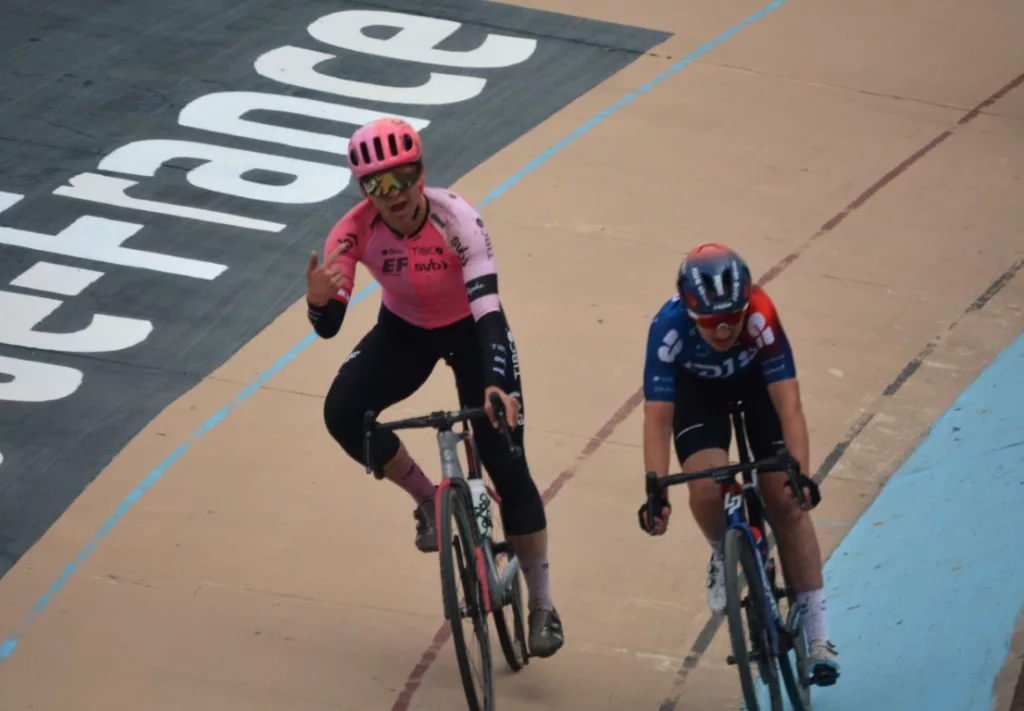
Then came 2023, which remains the great outlier so far. Alison Jackson won from the early break after one of the most chaotic editions yet. A large move went up the road, enough riders survived from it, and the favourites never fully regained control. Elisa Longo Borghini’s slide on a muddy corner helped stall the chase at a key moment, and Jackson took the sprint in Roubaix to deliver one of the race’s biggest surprises.
If you want to trace how the race has already built its own mythology, it sits naturally alongside pieces such as a brief history of Tour of Flanders Women, La Flèche Wallonne Féminine history, previous winners and greatest moments and Anna van der Breggen: the full story of one of women’s cycling’s great all-round champions, because Paris-Roubaix Femmes has already become one of the central races in the modern Spring Classics landscape.
The race keeps growing
If 2023 showed the race’s unpredictability, 2024 restored a more expected winner without making the race feel any less dramatic. Lotte Kopecky finally won Paris-Roubaix Femmes after previous near misses, beating a six-rider front group in the velodrome sprint. That victory mattered because Kopecky had already become the leading Classics rider of her generation, and Roubaix had been one of the major prizes missing from her record.
The 2025 edition added another high-level name to the winners’ list. Pauline Ferrand-Prévot won after attacking with around 25 kilometres to go, catching Emma Norsgaard and then riding clear to Roubaix alone. Letizia Borghesi took 2nd and Lorena Wiebes finished 3rd. By that point, the race already had a roll of honour that reflected just how broad its appeal is: Deignan, Longo Borghini, Jackson, Kopecky and Ferrand-Prévot all reached Roubaix by very different routes and with very different strengths.
That is part of what makes the race so compelling. Paris-Roubaix Femmes does not reward just one type of rider. It can suit a long-range solo specialist, a powerhouse who can attack on the cobbles, a rider with perfect timing from the break, or a Classics star who survives a selective race and still has the finish to win in the velodrome.
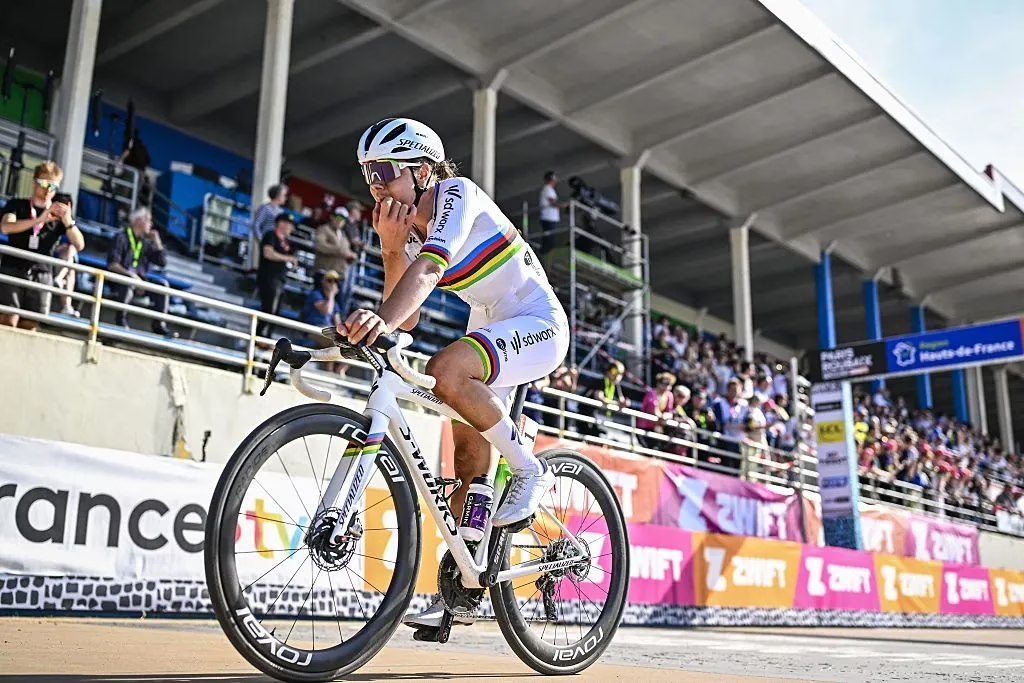 Photo Credit: Getty
Why Paris-Roubaix Femmes matters so much
What has made Paris-Roubaix Femmes so important is not simply that it now exists. It is that it immediately felt indispensable. Women’s cycling had long needed a race with this blend of brutality, prestige and symbolic power. Since 2021, Paris-Roubaix Femmes has delivered exactly that. Each edition has offered a different version of the same test: not just who is strongest, but who can handle the fear, the pressure, the uncertainty and the violence of the cobbles when the race starts to come apart.
It also sits within a wider rise in the visibility and importance of the women’s calendar. More top-tier races now carry serious status, better coverage and stronger fields, but Paris-Roubaix Femmes stands out even within that growth. It is already one of the sport’s reference points, a race riders dream of winning and one that fans circle as soon as the spring calendar comes into view.
That is why it belongs in the same conversation as the other cornerstone races of the season, whether that is Tour of Flanders Women, La Flèche Wallonne Féminine or the great rider histories that define the era, such as Marianne Vos: the full story of one of women’s cycling’s defining champions and Annemiek van Vleuten: the full story of one of women’s cycling’s defining champions.

Paris-Roubaix Femmes winners so far
- 2021 – Lizzie Deignan
- 2022 – Elisa Longo Borghini
- 2023 – Alison Jackson
- 2024 – Lotte Kopecky
- 2025 – Pauline Ferrand-Prévot

