Liège-Bastogne-Liège is the oldest of cycling’s five Monuments, which is why it is so often called La Doyenne, or the Old Lady. For newer fans, that is the best place to start. This is not a race built around one famous cobbled sector or one single climb that decides everything on its own. It is a long, draining, highly selective day in the Ardennes, where the strongest riders are usually forced into showing themselves before the finish. The 2026 edition takes place on Sunday 26th April and closes out the men’s Ardennes Classics after Amstel Gold Race and La Flèche Wallonne.
What is Liège-Bastogne-Liège?
Liège-Bastogne-Liège is a one-day men’s road race in Belgium. It begins near Liège, heads south towards Bastogne, and then returns north through a harder and more selective second half. First held in 1892, it is the oldest Monument on the calendar and one of the sport’s most prestigious one-day prizes.
That age, combined with the nature of the route, gives it a very particular place in the sport. Where Paris-Roubaix is defined by cobbles and brutality, and where Ronde van Vlaanderen is built around repeated cobbled climbs and positioning stress, Liège-Bastogne-Liège is more about sustained endurance on hilly roads. It tends to reward climbers, puncheurs and all-rounders who can keep responding deep into a very long day.
Why is it called La Doyenne?
The nickname La Doyenne means the Old Lady. It reflects the race’s status as the oldest of cycling’s Monuments and gives it a different historical weight from almost every other major spring race.
That does not just make it old. It makes it foundational. Liège-Bastogne-Liège has existed across multiple eras of the sport, from the earliest road racing period through to the modern WorldTour. That sense of continuity is part of what makes victory here feel so important. Riders are not just winning a big one-day race, they are adding their name to one of the deepest roll of honours in cycling.
Why is Liège-Bastogne-Liège so important?
Liège-Bastogne-Liège sits at the end of the spring Classics season and often acts as the final major test for the best puncheurs and climbers before attention shifts more fully towards stage racing and Grand Tours. Winning it places a rider in a very small and very prestigious club.
For beginners, one simple way to think about the race is this: if Paris-Roubaix is about surviving the harshest terrain and if the Tour of Flanders is about handling repeated explosive efforts on cobbles, then Liège-Bastogne-Liège is about lasting deepest in a race of attrition on rolling, hilly roads. It usually rewards riders who can combine endurance, climbing strength, positioning and sharp tactical judgement.
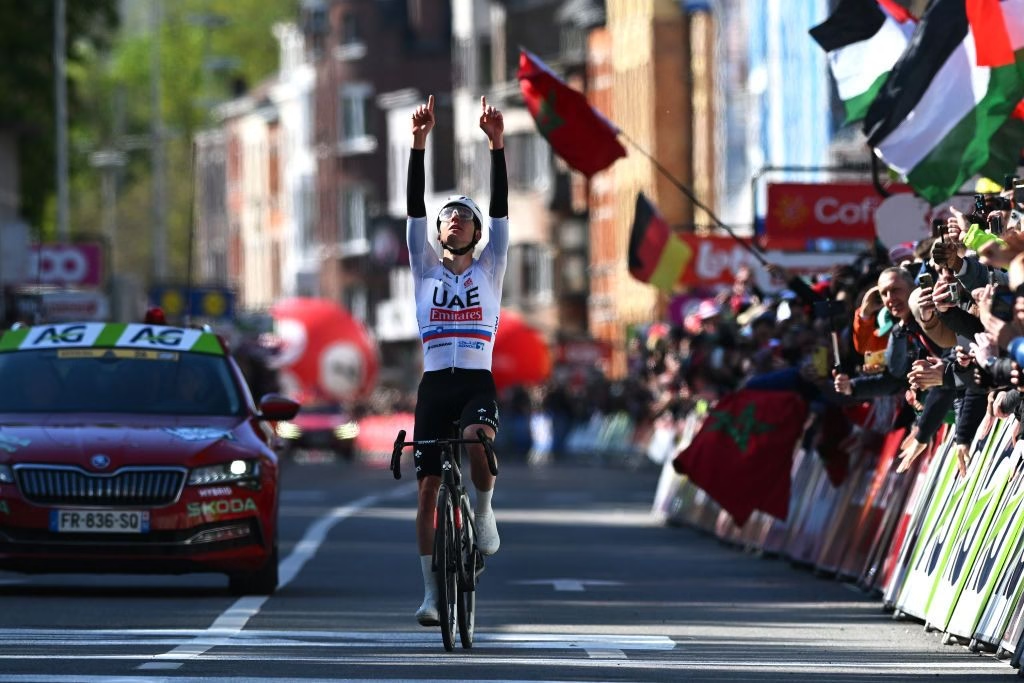
That is why the winners’ list is so strong. Across different eras, the race has suited riders such as Eddy Merckx, Bernard Hinault, Moreno Argentin, Alejandro Valverde and Tadej Pogačar. It is a race that rarely ends up in the hands of a lucky outsider. More often, the winner is one of the very best riders in the race.

How does the route work?
The basic structure is simple. The peloton rolls south from Liège towards Bastogne, then turns back north for the more decisive half of the race. The first half matters because it drains energy and removes freshness from the field, but it is on the way back towards Liège that the race really begins to reveal itself.
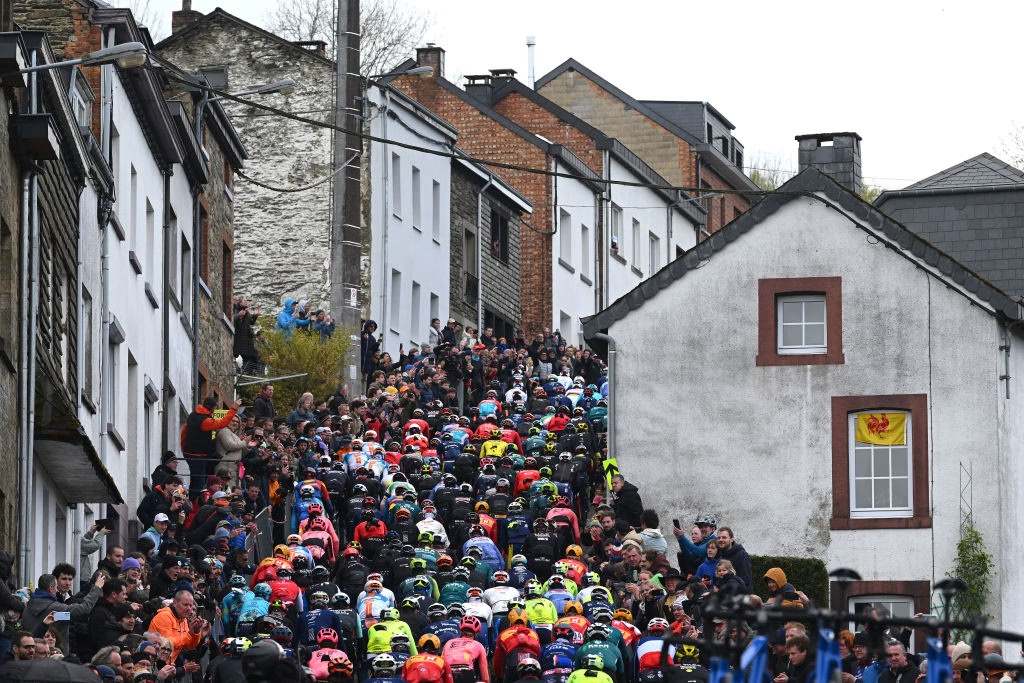
That is when the climbs come more frequently, the pace rises and the field starts to fracture. The men’s race is usually well over 250km, which means the difficulty comes through accumulation rather than one isolated moment. Riders are repeatedly asked to accelerate, recover, reposition and respond. By the final hour, that repeated stress usually leaves only the strongest contenders still in real control of the race.
Which climbs matter most?
For most viewers, the race starts to feel decisive around the late sequence of climbs in the second half. In modern editions, Côte de la Redoute, Côte des Forges and Côte de la Roche-aux-Faucons are the names to watch most closely.
Redoute is often the point where the race becomes visibly more serious. It is steep enough and well known enough that the favourites tend to move closer to the front before it, and any rider who is already struggling there is in trouble. Roche-aux-Faucons, meanwhile, has become one of the most important launchpads in the modern race. It often comes late enough that a strong move there can carry to the finish.
For beginners, the easiest way to watch Liège-Bastogne-Liège is not to worry about memorising every climb straight away. Focus instead on the final sequence. Once the race approaches Redoute and then moves deeper into the closing climbs, the story usually becomes much easier to follow.
What type of rider wins Liège-Bastogne-Liège?
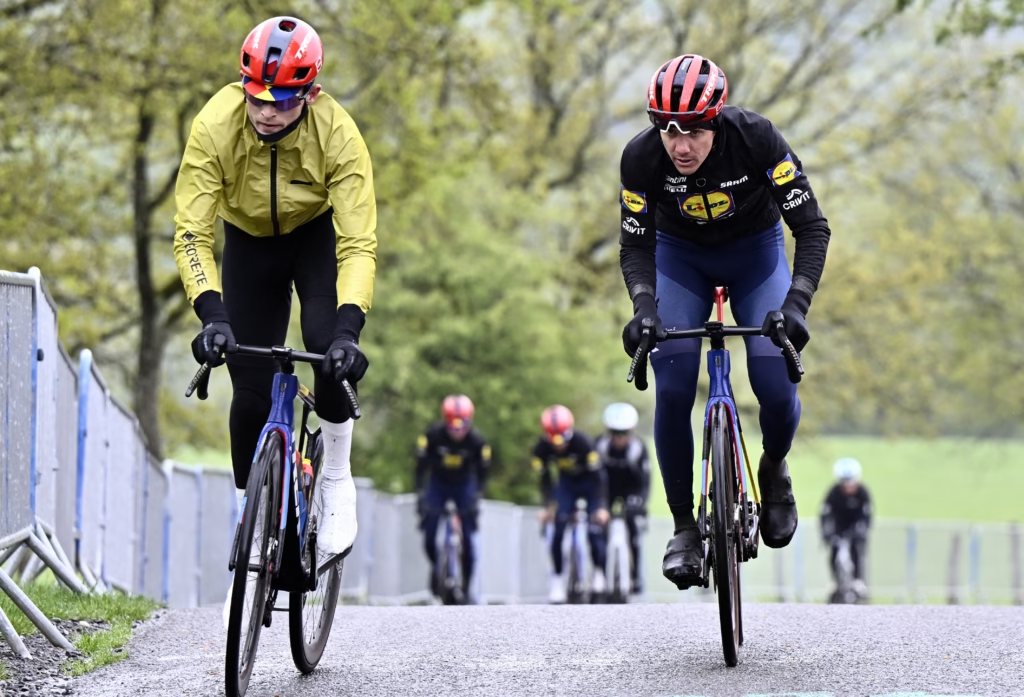
Liège-Bastogne-Liège usually favours punchy climbers, Grand Tour contenders with explosive uphill speed, and elite one-day riders who can sustain repeated hard efforts over a very long distance.
Pure sprinters generally do not survive the route in contention, and pure cobbled specialists often find the terrain too persistently hilly unless they are unusually versatile. That is why so many winners are riders who can attack on a climb and then either ride clear alone or win from a very small group.
It is also why Liège often attracts riders who can realistically target several of the Ardennes races in the same week. The skillset overlaps with Amstel Gold Race and La Flèche Wallonne, but Liège usually asks for the most complete performance of the three.
How is it different from Amstel Gold Race and La Flèche Wallonne?
Amstel Gold Race is usually more chaotic and twisty, with a wider range of possible winners and more emphasis on positioning across a rolling route. La Flèche Wallonne is more concentrated and often revolves around the final ascent of the Mur de Huy. Liège-Bastogne-Liège is different again. It is longer, more attritional and generally more selective across the whole day.
That is one reason Liège often feels like the most prestigious of the Ardennes Classics. It is not simply about being the quickest on one climb or the sharpest in one final effort. It is about still being among the very strongest riders after a full Monument distance on terrain that never really gives much away.
For readers following the wider hilly spring, this sits naturally alongside our A brief history of Amstel Gold Race Women and Beginner’s guide to La Flèche Wallonne Femmes 2026.
Why beginners often end up loving this race
Liège-Bastogne-Liège can look complicated at first because of its length and the number of climbs, but it often becomes very satisfying once you understand its rhythm. The early phase softens the field. The middle section increases the pressure. The final climbs reveal who still has the legs to win.
It is also a race that shows a different side of one-day cycling. It is not as frantic as some cobbled Classics, and it is not as tightly funnelled into one final moment as La Flèche Wallonne can sometimes be. Instead, it unfolds gradually, then becomes increasingly tense as the strongest riders begin to move.
Once you have watched a few editions, the appeal becomes obvious. Liège-Bastogne-Liège strips the race back until only the most complete contenders are left.
Where does it sit in the spring season?
Liège-Bastogne-Liège closes the Ardennes Classics and, in 2026, takes place on Sunday 26th April. That places it after Amstel Gold Race and La Flèche Wallonne, and gives it a natural feel as the last major one-day test of that part of the season.
Riders arriving in top condition for the hilly Classics often target all three races, but Liège is frequently the biggest goal of the set. It is the oldest, the longest and, for many riders, the most prestigious of the Ardennes one-day races.
For readers following the wider spring on ProCyclingUK, this piece also sits naturally alongside the How to watch Ronde van Vlaanderen 2026 in the UK, the Paris-Roubaix Femmes 2026 route and cobbled sectors guide, and the Lorena Wiebes 2026 season guide, as the calendar shifts from the cobbled races towards the hillier end of spring.