Men’s Ronde van Brugge – Tour of Bruges 2026 is one of the more interesting route resets of the spring because the race arrives with a familiar reputation and an unfamiliar map.
For years, this was a race people understood through Brugge, De Panne and De Moeren. That was the old grammar of the event. Flat roads, exposed plains, echelons always threatening in the background, and a finish that usually belonged to the fastest survivors rather than to the purest sprinters in a neat, orderly bunch. In 2026, that changes. The old Brugge-De Panne direction disappears, the men’s race becomes Ronde van Brugge – Tour of Bruges, and the route is now built fully around Brugge itself.
That matters because this is not simply a name change. It is a route change that alters the sporting feel of the race. The old pull toward the coast is gone. De Moeren, the stretch that came to define so much of the race’s danger and identity, is gone too. In its place comes a Brugge-based structure that should still make for a fast and nervous race, but through a different kind of pressure.
If you want the wider historical context first, ProCyclingUK’s A brief history of Women’s Ronde van Brugge explains the same broader event shift from Brugge-De Panne to a fully Brugge-centred identity.
What is Men’s Ronde van Brugge – Tour of Bruges?
This is the men’s WorldTour one-day race that replaces the old Classic Brugge-De Panne identity from 2026 onwards.
That matters because the race has long occupied a very specific place in the spring. It was never a cobbled Monument and never a major climbing Classic. Instead, it became one of the clearest races for specialists in nervous flat one-day racing – riders who could handle crosswinds, positioning and a hard run-in before still having enough left to finish.
The new title reflects the fact that the race no longer belongs to the Brugge-to-De Panne axis in the same way. It now belongs more directly to Brugge itself, and that changes how the race should be read from the start.
What has changed for 2026?
The defining change is simple enough: the race no longer heads to De Panne, and it no longer builds toward De Moeren.
That is not a small adjustment. De Moeren was not just another section of road. It was the central image of the old race. Flat, exposed and always capable of becoming chaotic if the wind came across it properly, it gave the event a very clear tactical identity. Teams knew where the danger was. Riders knew where they needed to be. Fans knew where to look.
The 2026 version removes that familiar landmark. Rather than pulling the peloton toward the coast, the race now stays centred on Brugge. The pressure should therefore come less from one famous wind corridor and more from the repeated race shape created around the city and its outskirts.
That is why the route guide matters. The old danger point has gone. The new race needs to create tension in a different way.
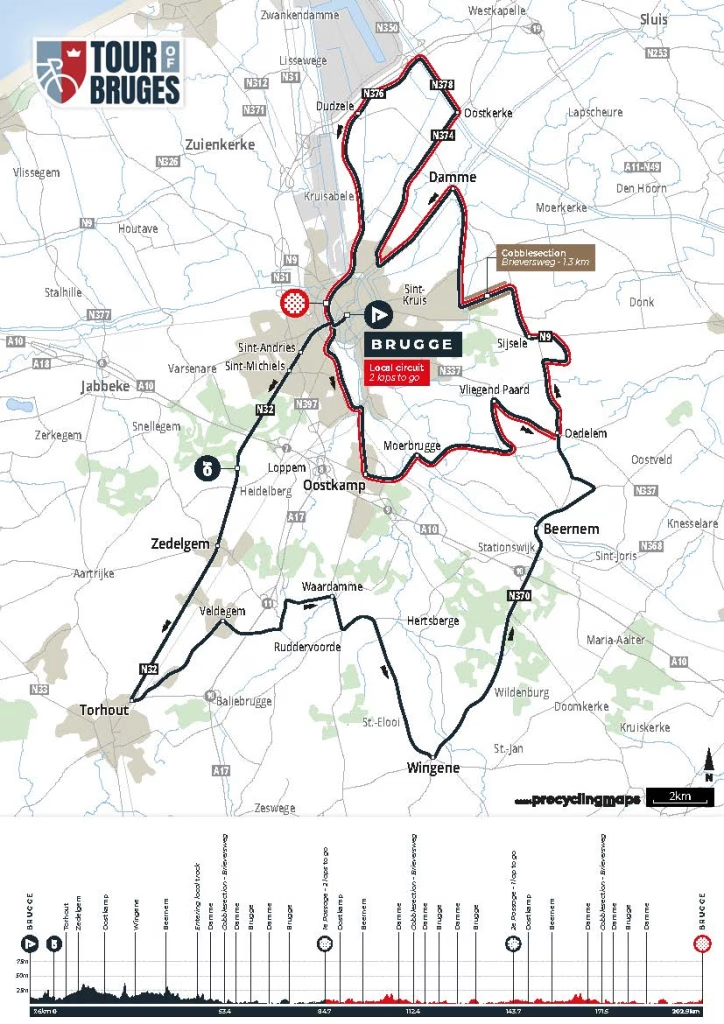
Where does the race start and finish?
The men’s race starts in Brugge and finishes in Brugge.
That already changes the rhythm of the event. The old race had direction built into it. It was always travelling somewhere, and that destination helped shape the tactical imagination of the day. The new race is more self-contained. That should make it feel slightly tighter and more localised, even if the likely winner profile remains broadly familiar.
For a new fan, that can actually be helpful. The old format had one very obvious tactical landmark. The new one should be more about how the peloton manages repeated pressure, organisation and speed around Brugge rather than waiting for one famous stretch of exposed road.
What kind of race should the new route create?
This is the key question, because the old answer no longer fully applies.
Classic Brugge-De Panne usually asked whether the strongest sprint teams could survive the approach to De Moeren and still control the finish. Men’s Ronde van Brugge – Tour of Bruges 2026 should still suit fast finishers and strong one-day specialists, but it is likely to produce that sort of result in a different way.
Without the old coastal plains, the route loses the clearest place for full-echelon warfare. That does not mean the race becomes calm. It means the tension may come more through positioning, repeated speed changes, technical race flow and how teams manage the peloton closer to Brugge itself.
That makes the new version tactically interesting straight away. Everyone knew what the old race used to ask. The new race should still be fast and stressful, but the stress now looks less cinematic and more cumulative.
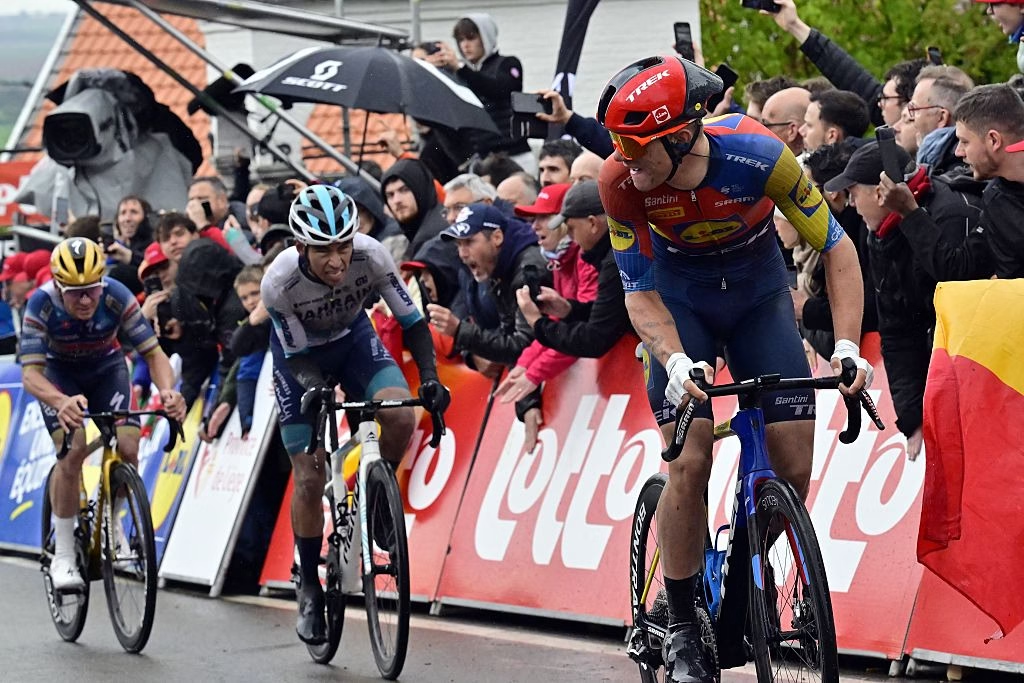
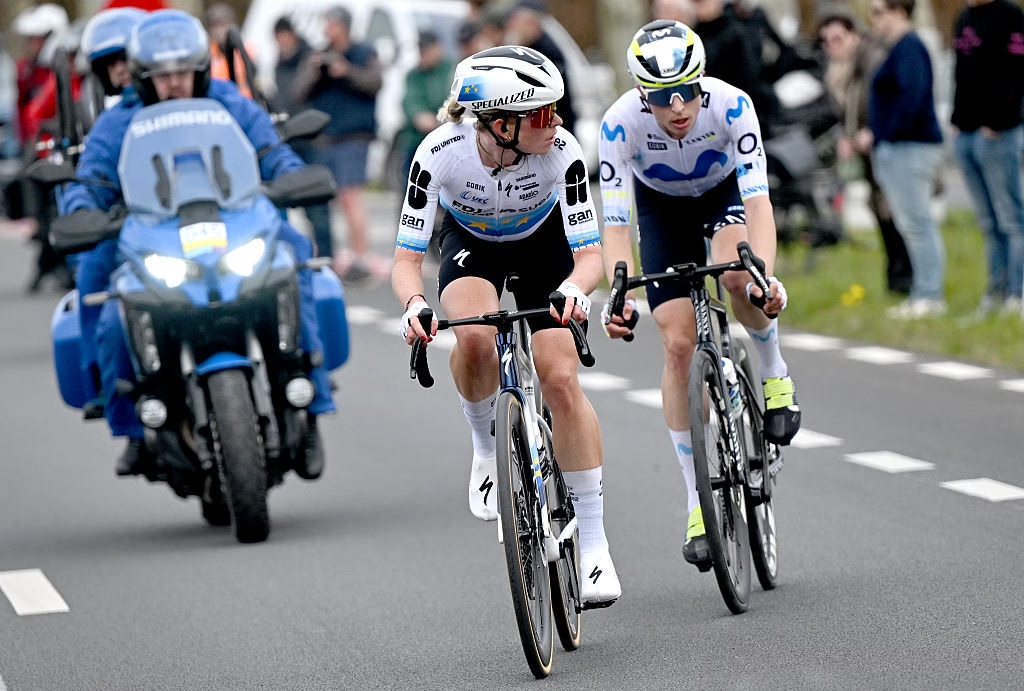
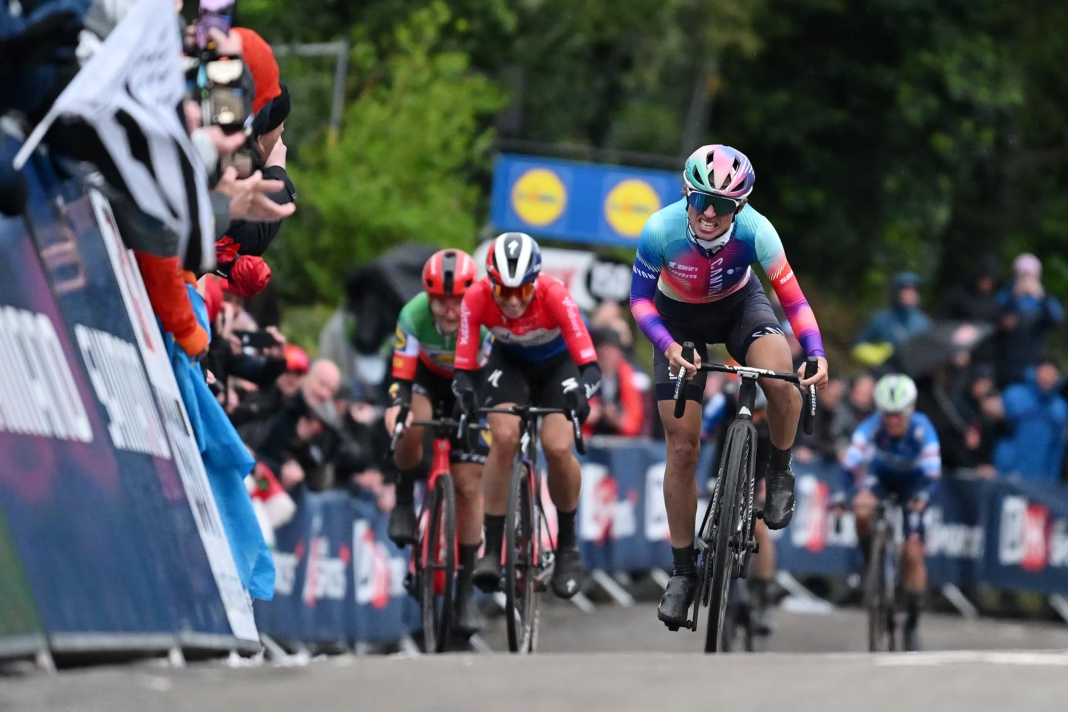
What kind of rider should this route suit?
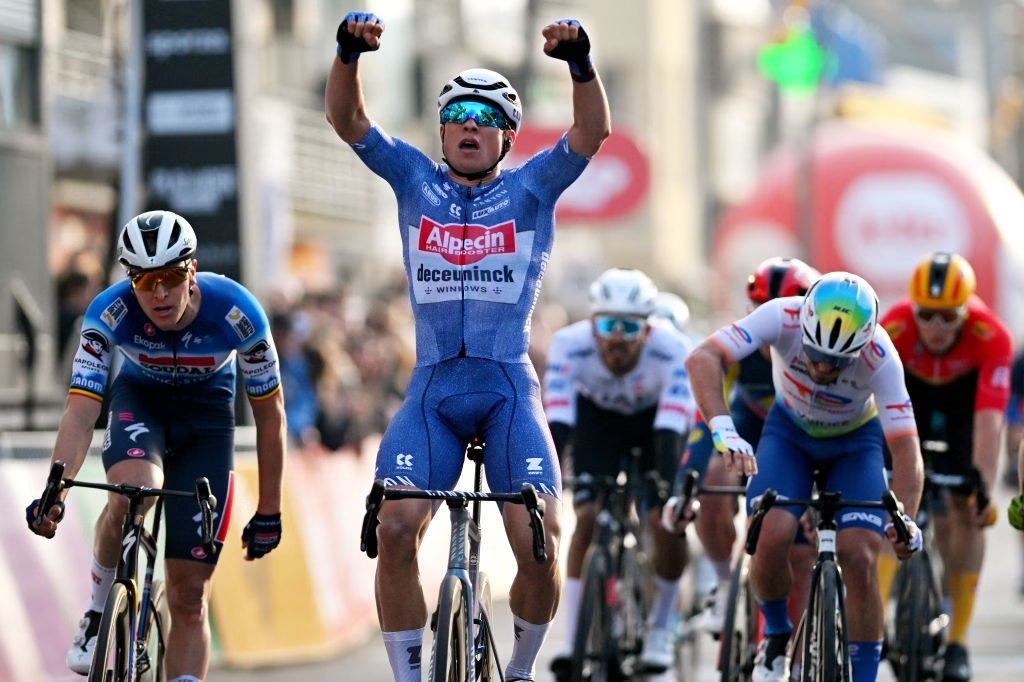
It should still favour durable sprinters and powerful one-day finishers.
That is the key continuity. This is still not a race for pure climbers. It is still a spring one-day race where speed matters enormously. But the sort of rider who tends to thrive here is rarely just a pure drag-race specialist. The winner usually needs positioning, resilience and the ability to stay calm through a nervous Belgian race.
That is why these races often reward riders who can survive a hard one-day event and still finish quickly, rather than riders who only want a clean, textbook lead-out into a simple sprint.
For a useful contrast inside the same spring window, ProCyclingUK’s Beginner’s guide to Scheldeprijs Women 2026 shows what a flatter and more obviously sprint-focused race looks like, while the Beginner’s guide to Dwars door Vlaanderen Women 2026 explains a more selective and cobbled version of Belgian one-day pressure.
How is it different from the old Brugge-De Panne?
The cleanest answer is this: the old race was defined by its movement toward the coast, while the new race is defined by staying around Brugge.
That shift matters because it changes not just where the race goes, but how the tension is created. The old format always had a visible, almost cinematic sense of threat. Everyone knew that if the wind hit De Moeren properly, the race could split to pieces. The new format loses that symbolism.
What it gains is uncertainty. Teams no longer have one old script to follow. Riders no longer have one familiar danger zone to measure everything against. That makes the 2026 edition a more open tactical puzzle, even if the likely winner profile at the finish remains broadly similar.
What should new fans watch for?
The best way to watch Men’s Ronde van Brugge – Tour of Bruges 2026 is to forget the old race for a moment and pay attention to what the new one is trying to become.
Watch how teams handle the race shape around Brugge. Watch which squads still keep several riders near the front as the day tightens. Watch whether the bunch carries the same stretched, nervous feeling the old race often produced, or whether the new route delays the real damage until later.
That is where the interest lies. The old version of the race asked one very famous question. The new version may ask several smaller ones, and that could make the whole event a little harder to read in advance.
Why is this race still worth watching?
Because races like this are important to the spring even when they are not Monuments.
Not every major one-day race needs cobbled bergs or grand climbing prestige to matter. Some races matter because they test a different skillset and because they reveal which teams can still function when the roads are flat, the speeds are high and the pressure never really drops. The old Brugge-De Panne did that very well. The interesting question for 2026 is whether Men’s Ronde van Brugge – Tour of Bruges can keep doing it in a new form.
That alone makes this year’s edition more compelling than a standard route guide might suggest.
So what should you expect from Men’s Ronde van Brugge – Tour of Bruges 2026?
Expect a race that still makes sense for the fastest and toughest finishers, but gets there in a different way from the old Brugge-De Panne model.
Expect Brugge to matter more than ever.
Expect a race that loses one of spring’s most famous wind landmarks, but gains a new tactical uncertainty in return.
And expect one of the more quietly fascinating route resets of the 2026 season. Men’s Ronde van Brugge – Tour of Bruges is no longer the race to De Panne. That is exactly why its new identity is worth paying attention to.