
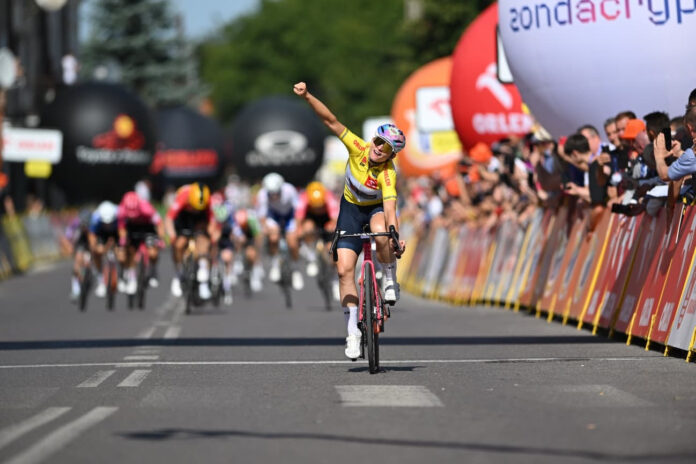
The Tour de Pologne Women 2026 is one of the most interesting short stage races on the women’s calendar, especially for viewers who want a race that is easy to follow but still tactically layered. It runs for three days from Friday, 24th July to Sunday, 26th July, with all three stages taking place in Poland’s Lubelskie region.
This is not a grand tour and it is not a Women’s WorldTour race, but its new UCI ProSeries status gives it a stronger position than in previous years. That means better teams, more ranking value and a bigger opportunity for riders who want results just before the late-summer block of the season.
The race should be especially useful for beginners because the format is compact. There are only three stages, the route is not overloaded with high mountains or complex jersey battles, and the likely winners should come from a mix of sprinters, puncheurs and strong all-rounders rather than pure climbers. It is a good race for understanding how small time gaps, bonus seconds, positioning and uphill finishes can decide a short stage race.
For wider women’s racing context, see our Women’s Cycling Race Hub, our Women’s Cycling Route Guide Hub and our Women’s Cycling TV Guide Hub.
What is the Tour de Pologne Women?
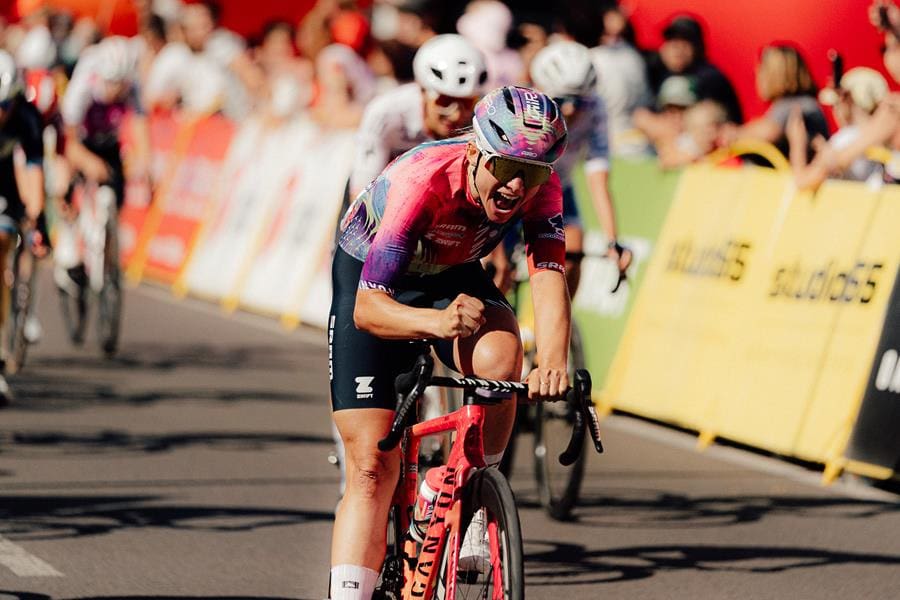
The Tour de Pologne Women is a women’s road cycling stage race held in Poland. The current version is organised by Lang Team, the same organisation behind the men’s Tour de Pologne, and it has been rebuilt as a short but increasingly important race on the international women’s calendar.
The modern race returned in 2024 after a long gap. That revival was important because Poland has a deep cycling culture and a strong men’s WorldTour race, but the women’s version had been absent from the calendar for years. The 2026 edition continues that rebuild, stepping up to UCI ProSeries level and attracting a stronger team list.
For beginners, the important thing is this: the Tour de Pologne Women is a three-day stage race, so the rider with the lowest combined time across all stages wins the general classification. Stages can also have their own winners, and riders can chase daily results even if they are not targeting the overall.
Because it is short, every stage matters. A split in the final kilometres, a missed bonus second, a crash, a poorly timed chase or a strong sprint can change the entire race.
When is the Tour de Pologne Women 2026?
The Tour de Pologne Women 2026 takes place from Friday, 24th July to Sunday, 26th July.
The three stages are:
Friday, 24th July: Stage 1, Tomaszów Lubelski to Zamość, 141.8km
Saturday, 25th July: Stage 2, Włodawa to Lubartów, 118.1km
Sunday, 26th July: Stage 3, Janowiec to Lublin, 101.4km
That makes it a simple race to follow. There is no long build-up across a week and no major reset after a rest day. The race starts, develops quickly and finishes within one weekend.
Where does the Tour de Pologne Women 2026 take place?
The 2026 route is based in Poland’s Lubelskie region, with the race also using the Roztocze area for its opening stage. That gives the race a different feel from the high-mountain stage races that dominate parts of the women’s calendar.
The terrain is likely to be rolling rather than Alpine. That does not mean easy. Short races in this kind of landscape can be difficult because the climbs are often frequent, the roads can be exposed, and the final kilometres may reward positioning as much as pure power.
The race begins in Tomaszów Lubelski and finishes stage 1 in Zamość, a historic city known for its Renaissance old town. Stage 2 runs from Włodawa to Lubartów, while the final stage goes from Janowiec to Lublin. That final stage into Lublin should give the race a strong closing image, especially if the overall classification is still close.
What is the 2026 route like?
The 2026 Tour de Pologne Women route is built around three road stages rather than a time-trial. That makes it more accessible for beginners because the race should be decided by road-race tactics, sprint positioning, climbing resilience and bonus seconds.
Stage 1 is the longest stage, from Tomaszów Lubelski to Zamość over 141.8km. It should be a demanding opener because of the distance and the rolling terrain. In a three-day race, a long first stage can create immediate separation if the peloton is nervous or the final is selective. Teams with strong all-rounders will want to be alert from the start.
Stage 2, from Włodawa to Lubartów, is 118.1km and looks like the clearest opportunity for a sprint. That makes it an important day for fast riders, but also for the GC contenders. If stage 1 creates gaps, stage 2 becomes a control day. If stage 1 ends close, stage 2 could still reshape the race through bonus seconds.
Stage 3, from Janowiec to Lublin, is 101.4km and should decide the overall. The shorter distance could make the racing more aggressive, especially if several riders are still close on GC. A final stage in a short race often becomes harder than the profile suggests because there is no tomorrow. Teams chasing the overall have to commit everything.
Why is it a good race for beginners?
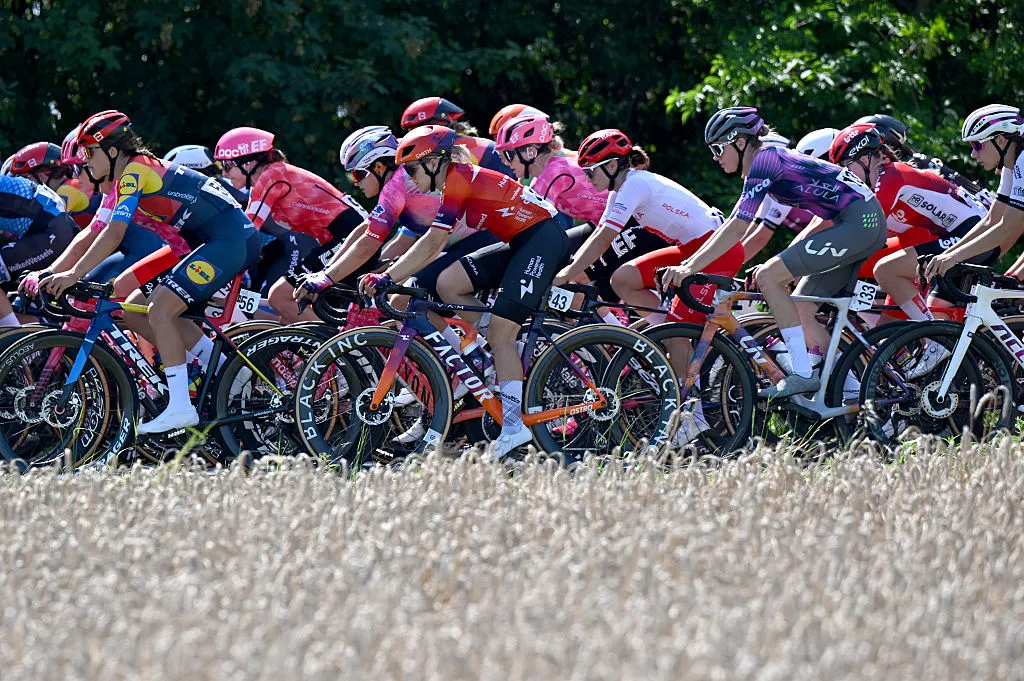
The Tour de Pologne Women is a good beginner race because it has a clear structure. There are only three stages, so the story is easy to follow: establish the hierarchy, protect or challenge it, then settle the race on the final day.
It also shows several important stage-race basics. You can see how teams chase breakaways, how sprinters are protected, how bonus seconds matter, how final kilometres can decide the general classification, and how riders who are not pure climbers can still win a stage race.
The race should also be less predictable than a flat sprinters’ event. A pure bunch sprint may happen, especially on stage 2, but the overall winner will likely need more than speed. The best contenders need positioning, repeatability, road awareness and the ability to handle rolling terrain over three consecutive days.
For new fans, it is a useful reminder that stage racing is not only about high mountains. Plenty of races are won through small margins, tactical control and consistency.
Who races the Tour de Pologne Women 2026?
The 2026 start list is expected to include a strong mix of Women’s WorldTour teams, ProTeams, continental squads and national selections. The confirmed team list includes Canyon SRAM, Human Powered Health, Lidl-Trek, Liv AlUla Jayco, Team Picnic PostNL, Team SD Worx-Protime and UAE Team ADQ, along with teams such as Lotto Intermarché Ladies, VolkerWessels, the Polish national team, the USA national team, Aromitalia Vaiano, Citymesh-Customm Pro Cycling Team, Handsling Alba Development Road Team, MAT Atom Deweloper Wrocław, Nexetis, Team Mendelspeck E-Work, Top Girls Fassa Bortolo and Wheel Divas Cycling Team.
That mix should make the race lively. The WorldTour teams bring the biggest depth and most recognisable names, but the smaller teams and national squads often race more aggressively because this kind of event offers genuine exposure and ranking value.
Polish riders and Polish teams should also treat the race as a major target. A home stage race gives local riders a rare chance to compete against top international squads on familiar roads, and that can make the racing more aggressive than a simple team list might suggest.
The confirmed strength of the field is a major step for the race. ProCyclingUK’s report on the Tour de Pologne Women 2026 team list explains how the race has built a deeper international field as it steps up to ProSeries level.
Which riders are suited to the race?
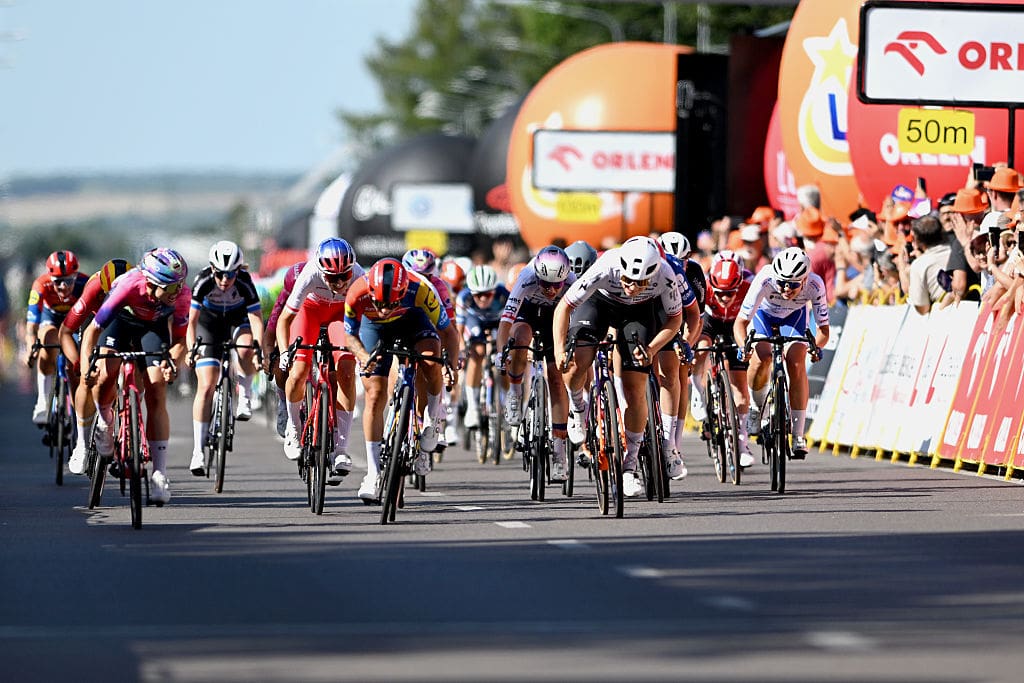
The Tour de Pologne Women usually suits versatile riders more than pure climbers. The 2026 route does not appear to be a mountain-heavy course, so the strongest candidates should come from fast all-rounders, puncheurs, durable sprinters and riders who can handle repeated rolling terrain.
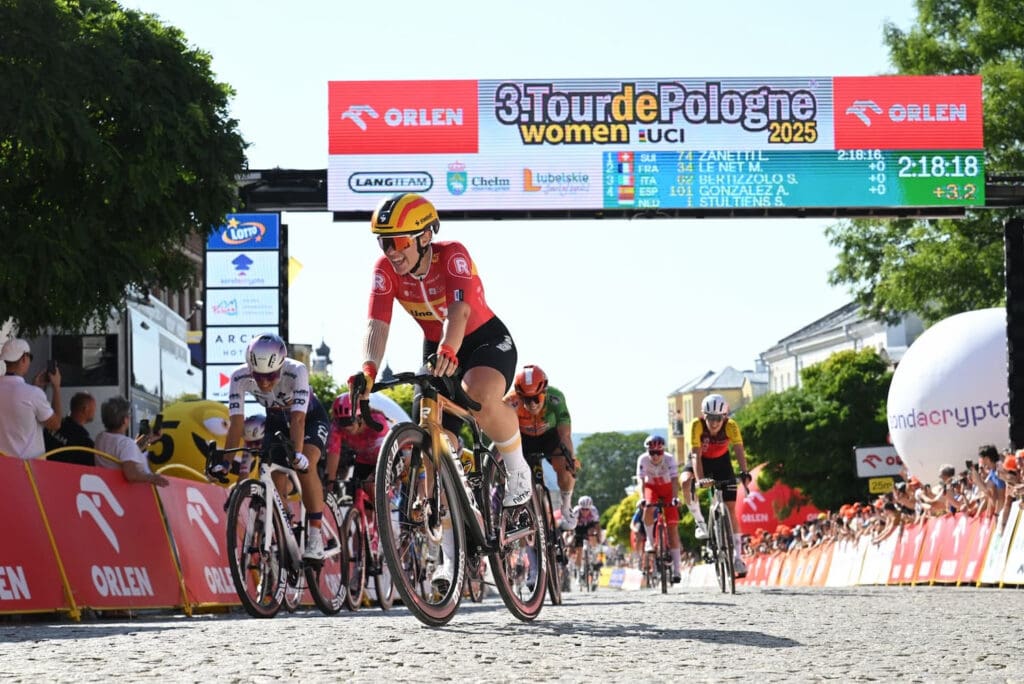
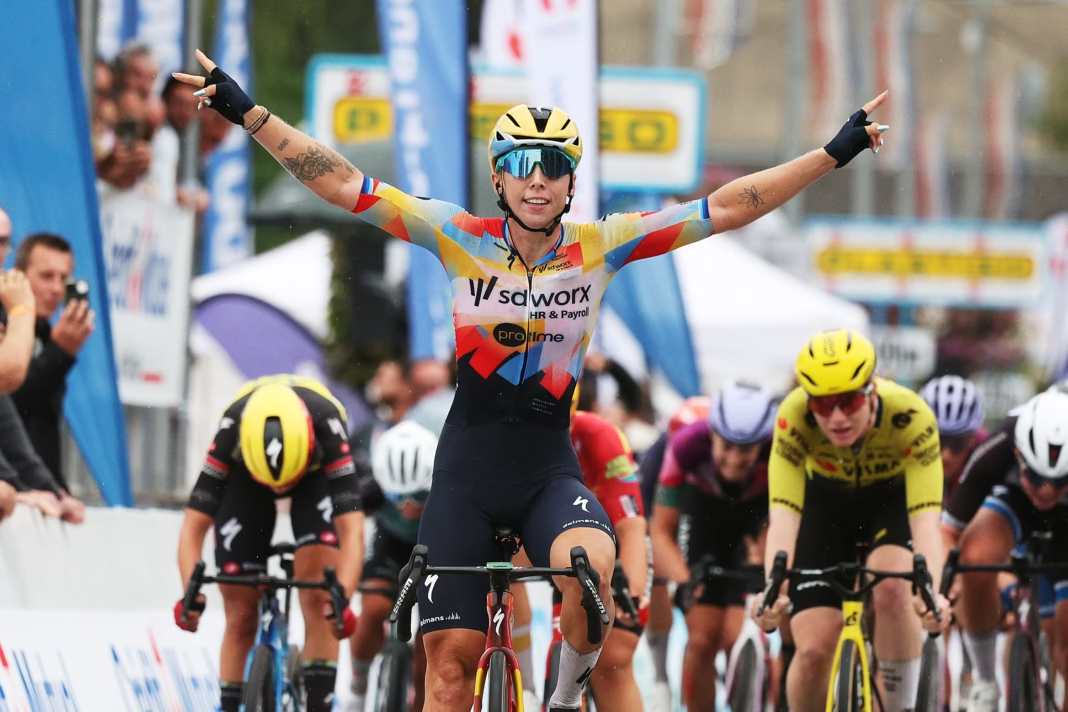
A rider like Chiara Consonni showed in 2025 how a fast finisher can dominate this race when the route rewards sprinting and short uphill finishes. Linda Zanetti also showed how valuable power and positioning can be on harder finishes, with her stage 2 win on the uphill cobbled finish in Chełm a good example of how selective these Polish stages can become.
For 2026, teams such as Canyon SRAM, Liv AlUla Jayco, Lidl-Trek, UAE Team ADQ and Human Powered Health all have the kind of depth that could shape the race depending on their final selections. If the route is controlled, the sprint teams will become central. If stage 1 or stage 3 is more selective than expected, the all-rounders and puncheurs should move to the front of the story.
The most important trait may be repeatability. A rider does not need to be the best climber in the race, but she does need to be near the front every day. In a three-stage race, one bad finish can be enough to lose the overall.
What happened in recent editions?
The modern Tour de Pologne Women returned in 2024, eight years after the previous edition. That comeback gave the race a fresh identity and reconnected the women’s calendar with one of Poland’s best-known cycling events.
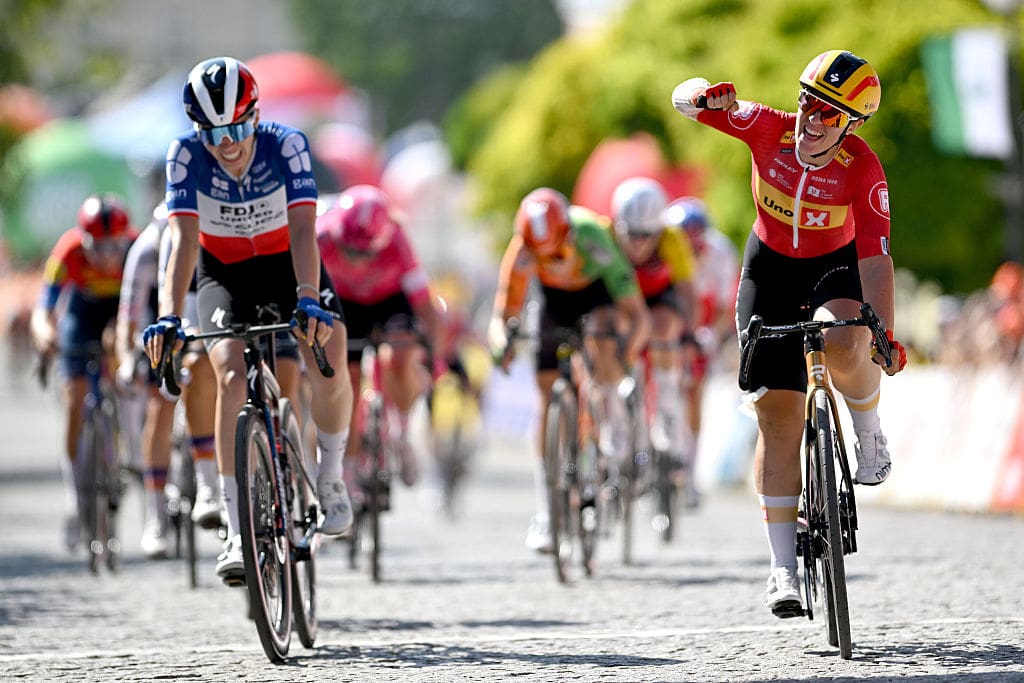
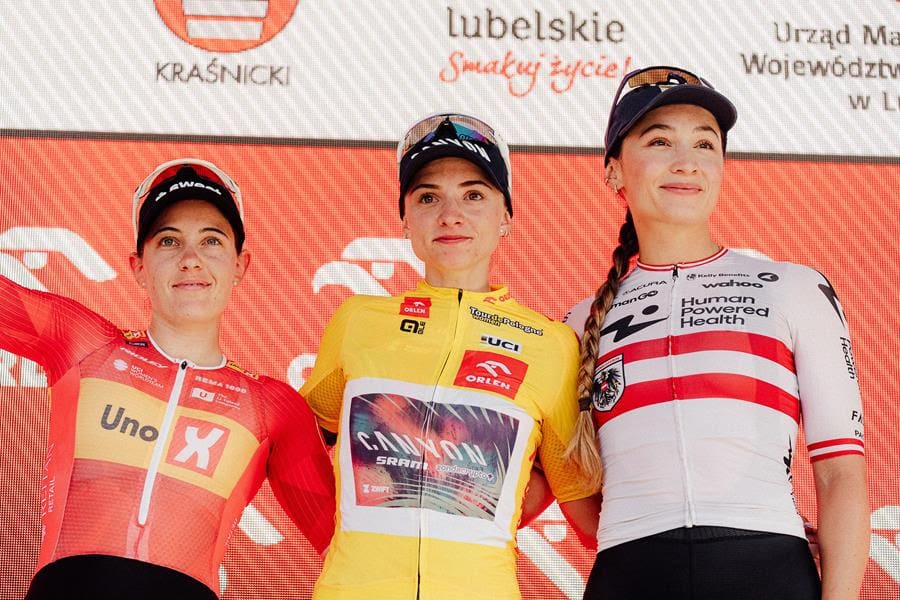
In 2025, Chiara Consonni won the overall after taking two stages. That edition showed how the race can reward a rider with sprint speed, consistency and the ability to handle a testing final. ProCyclingUK’s quick preview of the 2025 Tour de Pologne Women flagged the importance of the Lubelskie and Roztocze terrain, while the race itself confirmed how decisive those uphill and technical finishes could be.
Linda Zanetti’s stage 2 victory in Chełm came on a finish that rewarded power and positioning, while Consonni sealed the race with a dominant final-day sprint in Kraśnik to win the GC. That final stage underlined how quickly a short race can be settled when a fast rider keeps collecting results.
The 2026 edition raises the level again. With ProSeries status and a stronger field, it should feel less like a developing race and more like a genuine mid-season target. It still has the compact shape that makes it accessible, but the team list means the racing should be sharper.
How can the Tour de Pologne Women 2026 be won?
The race can be won in several ways, which is what makes it interesting.
The first route is through stage wins and bonus seconds. If a fast rider wins stage 1 or stage 2, stays safe and collects bonuses, she can build a lead without needing to attack in the hills. That is the most obvious path for a durable sprinter.
The second route is through a selective stage 1. At 141.8km, the opener is long enough to create fatigue. If the final into Zamość is raced hard, a reduced group could form and give an all-rounder an early advantage.
The third route is through the final stage into Lublin. At 101.4km, stage 3 is short enough to invite aggressive racing. If the GC is close, teams may attack early rather than wait for a sprint. A small gap there could decide the overall.
The fourth route is through consistency. In a short race, a rider who finishes in the front group every day can win without a spectacular attack. That makes positioning and avoiding crashes just as important as raw strength.
What should beginners watch during the race?
The first thing to watch is the breakaway. In women’s stage racing, a strong break can survive if the main teams hesitate or if not enough squads want a sprint. On stage 1 especially, an early move could become dangerous if the peloton misjudges the chase.
The second thing is sprint control. If teams with fast riders want to bring stage 2 back together, they need to commit riders early. A late chase can fail quickly, especially on rolling roads.
The third thing is bonus seconds. Beginners sometimes focus only on visible gaps, but time bonuses at the finish can decide short races. A rider who takes stage wins and bonus seconds may build a lead even when the bunch finishes together.
The fourth thing is positioning in the final 10km. On Polish roads, city finishes and technical approaches can make it hard to move up late. The rider who looks strongest is not always the rider who gets the best chance to sprint.
The final thing is the team dynamic. Bigger teams may want control, but smaller teams may want chaos. That tension is often what makes a three-day race more exciting than the profile suggests.
How important is the race in the women’s calendar?
The Tour de Pologne Women is not yet one of the biggest races in women’s cycling, but its 2026 ProSeries status makes it more important than it was. It now sits in the second tier of UCI women’s road racing, below the Women’s WorldTour but above many smaller international races.
That position matters. WorldTour teams can use it to chase wins, test younger riders or give opportunities to riders who may not lead at the biggest races. ProTeams and continental teams can use it to race against stronger opposition and earn valuable ranking points. National selections can use it to showcase riders who may be looking for contracts or bigger roles.
For the wider calendar, it also helps strengthen women’s racing in Central and Eastern Europe. There are fewer high-profile women’s stage races in this part of the continent than in France, Italy, Spain or Belgium. A stronger Tour de Pologne Women adds variety and gives Poland a clearer place in the women’s road season.
-
 Photo Credit: Getty
How to watch the Tour de Pologne Women 2026
UK broadcast details for the Tour de Pologne Women 2026 should be checked closer to the race. In previous editions, coverage availability has been more limited than the biggest Women’s WorldTour races, so viewers may need to rely on official race channels, highlights, social media clips or local broadcast arrangements.
The best place to start is the official Tour de Pologne Women website and social channels, especially around stage start and finish times. ProCyclingUK’s Women’s Cycling TV Guide Hub will also be useful once live coverage information is confirmed.
Even if full live coverage is limited, the race should be easy to follow through stage results, short clips and classification updates because the three-day format keeps the story tight.
Why the Tour de Pologne Women 2026 is worth following
The Tour de Pologne Women 2026 is worth following because it sits in a useful space between the biggest stage races and the smaller one-day events. It is short enough to understand quickly, but important enough to attract strong teams and meaningful racing.
The route through Lubelskie and Roztocze gives the race its own identity. The stages are not built around famous Alpine climbs or iconic Classics roads, but that can be a strength. It puts the focus on stage-race basics: who controls, who attacks, who positions well and who handles three consecutive days without a mistake.
For beginners, it is a good race to learn from. For regular fans, it is a chance to see which riders can turn opportunity into results outside the biggest spotlight. For the women’s calendar, it is another sign that more races are gaining structure, visibility and status.
The 2026 edition should be the strongest modern version yet. Three days, a ProSeries field, a compact route and enough tactical uncertainty to make every stage count.

