Volta Ciclista a Catalunya 2026 is one of the most important stage races of the early men’s season, and one of the easiest to underestimate.
It arrives in that slightly awkward but fascinating slot on the calendar where Milan-Sanremo has just passed, the spring Classics are beginning to dominate attention, and the Grand Tours still feel distant enough to be abstract. Yet Catalunya is often where the first serious arguments between the major stage-race riders begin to take shape. It is not the Tour de France, but it regularly gives a first proper indication of who is already climbing well enough to start thinking about July.
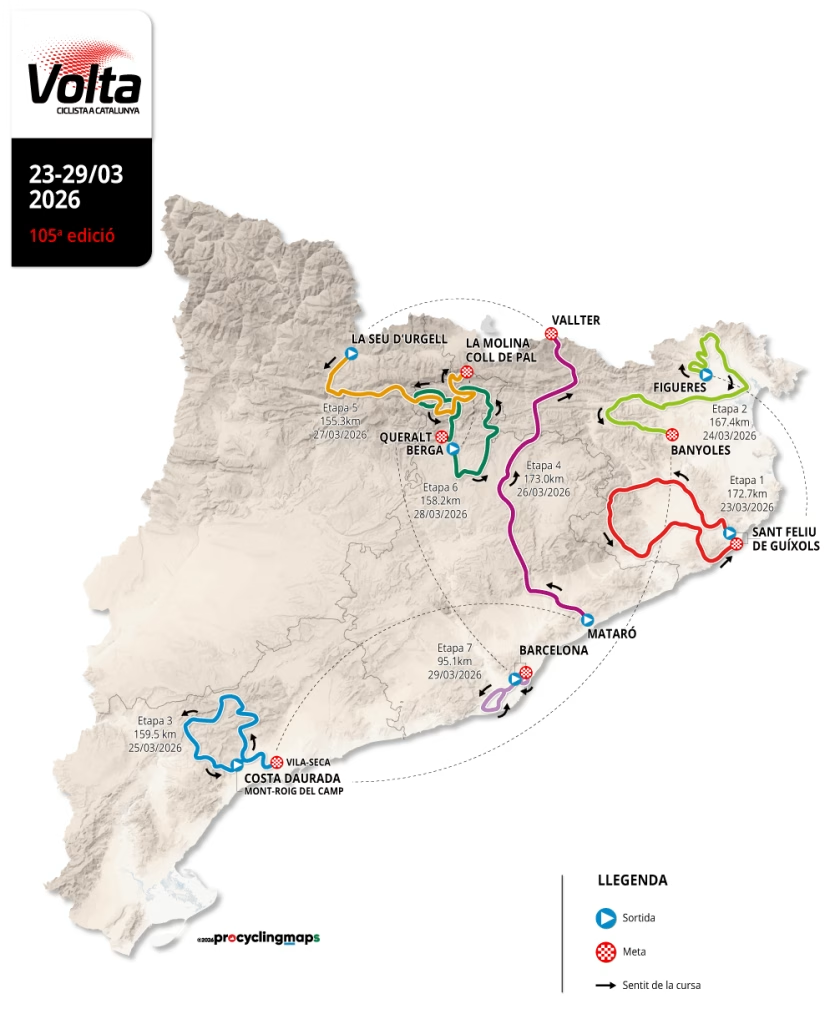
The 2026 edition runs from 23 to 29 March, covers seven stages, starts in Sant Feliu de Guíxols and finishes in Barcelona. More importantly, it again leans heavily into what has always made Catalunya such a useful race to watch: repeated climbing pressure, difficult transitions and a route that gets steadily more demanding as the week goes on.
For newer fans, the easiest way to think about Volta a Catalunya is this: it is a stage race where a lot of riders can stay in contention early, but where the climbers usually end up deciding everything.
What kind of race is Volta Ciclista a Catalunya?
This is a UCI WorldTour stage race, which immediately tells you two things. The first is that the field is serious. The second is that the results matter.
Big teams bring real leaders here. Catalunya is not treated as a secondary week just because it falls in March. In 2026, the organisers have again built the race around a high-level line-up, with Jonas Vingegaard, Remco Evenepoel, João Almeida and Tom Pidcock among the major names attached to the event.
Historically, Catalunya has always had a slightly different feel from Paris-Nice or Tirreno-Adriatico. It is less about bad-weather improvisation and more about mountain pressure. There can still be tactical finishes and awkward transitional stages, but the race almost always circles back to the same question: who can still make a difference when the road rises for long enough?
Why does this race matter so much?
Because it is one of the first major races of the year where the mountains really start to take over.
That makes Catalunya a very good early measuring stick. Riders can arrive with strong winter reputations and promising early form, but over seven days here they usually have to prove something more substantial. They need to climb properly, recover properly and handle a route that keeps asking for strength in different ways.
In 2026, that identity is especially clear. The route includes three mountain finishes and more than 20,000 metres of elevation gain across the week. That does not just make it hard. It makes it selective in the way stage races are most revealing.
For a beginner, that is helpful because it gives the race a clean logic. You are not watching seven disconnected stages. You are watching a week that gradually strips away the riders who cannot keep answering the climbing question.
What does the 2026 route look like?
The 2026 route is built in layers.
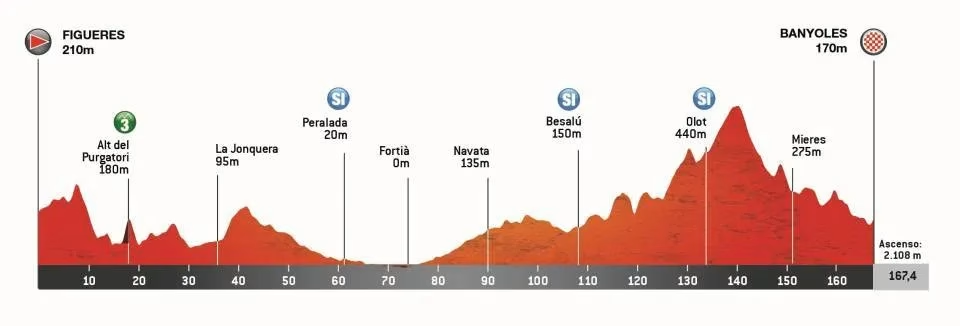
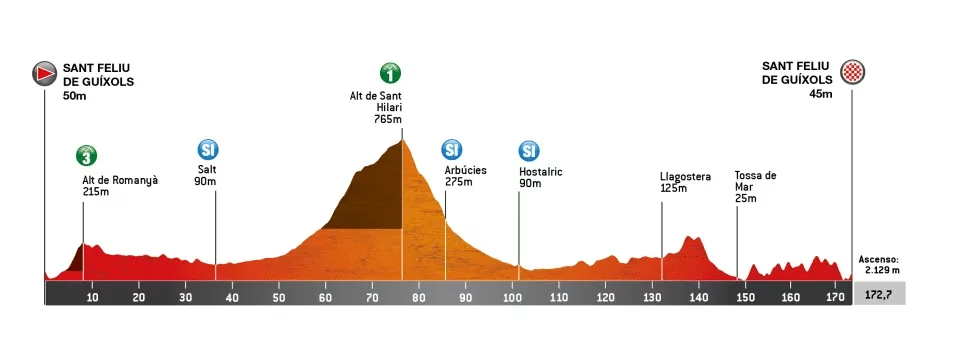
The first three stages are officially listed as flat, but that description needs a little caution. Stage 1 is 172.7 km around Sant Feliu de Guíxols, stage 2 is 167.4 km from Figueres to Banyoles, and stage 3 is 159.4 km from Mont-roig del Camp to Vila-seca. After that, the race turns properly mountainous with stages to Vallter, La Molina / Coll de Pal and Queralt, before ending with the traditional short, sharp day in Barcelona.
That structure tells you a lot. The race starts by giving several rider types a chance to stay involved, but it keeps building pressure. By the time the mountain block arrives, the route has stopped asking for versatility and started demanding climbing authority.
Which stages matter most for the overall?
The obvious answer is stages 4, 5 and 6.
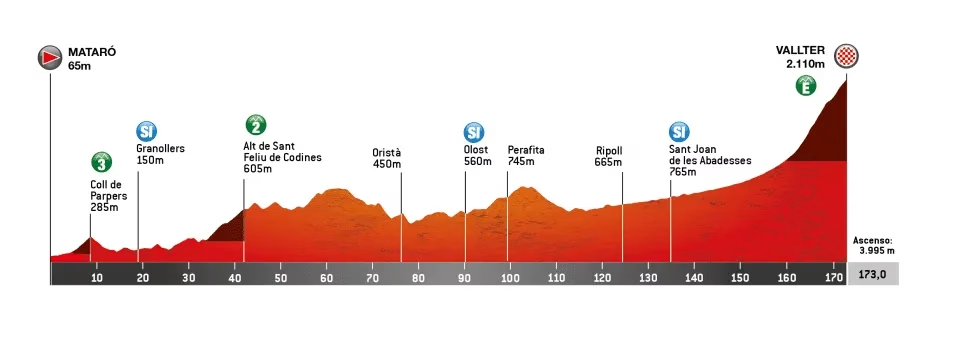
Stage 4 finishes at Vallter, the highest cycling summit in Catalunya at over 2,100 metres. The final climb is 11.4 km at an average gradient of 7.6 per cent, which makes it the first day the GC riders should have to show themselves clearly. This is the sort of summit finish that does not allow much bluffing.
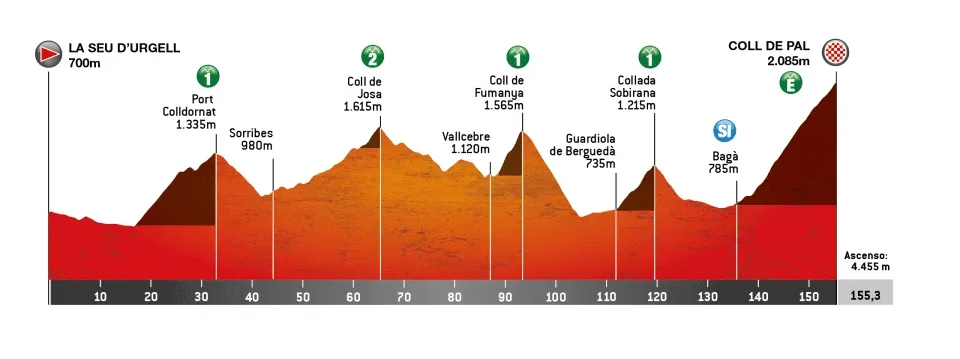
Stage 5 looks even more attritional. From La Seu d’Urgell to La Molina / Coll de Pal, the route packs in 4,500 metres of climbing and a sequence of serious ascents before the final haul to Coll de Pal, which is listed as 17 km at 7 per cent. If stage 4 lays the first cards on the table, stage 5 looks like the day that keeps turning them over until only the strongest climbers are left properly in the conversation.
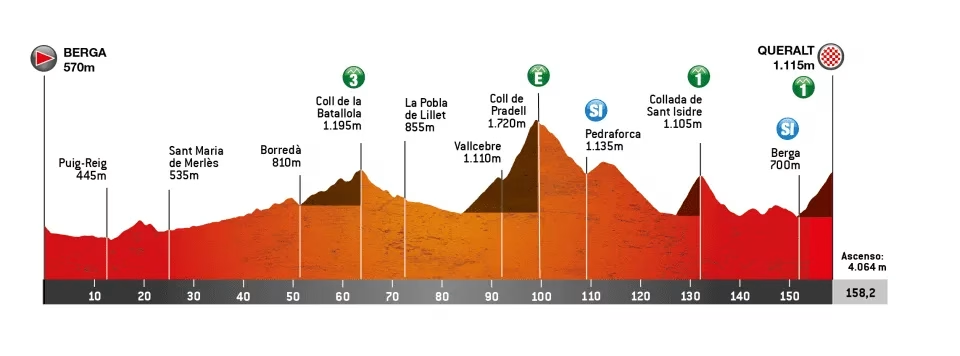
Stage 6 is the other huge one. From Berga to Queralt, the route includes Coll de la Batallola, Coll de Pradell and Collada de Sant Isidre before the final climb to Queralt. It is a stage designed to be decisive, especially after the route there produced such a memorable day in 2024 and could not be fully realised in 2025 because of weather disruption.
Are the first three stages really just for sprinters?
Not quite, and that is one of the useful things about Catalunya.
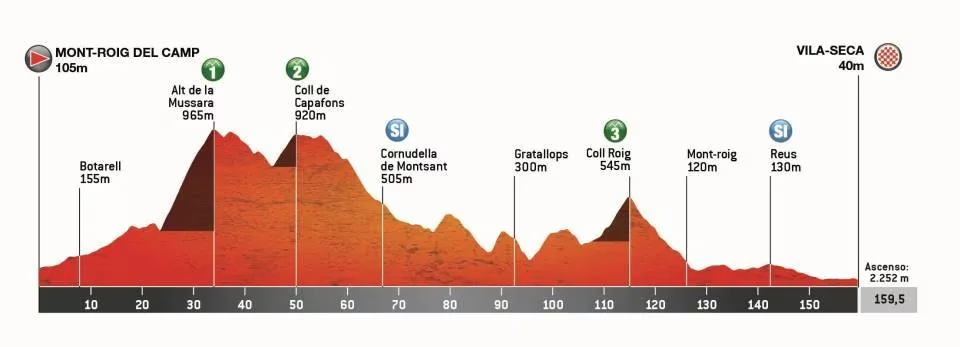
The opening stages are flatter in classification than the mountain block, but they are not passive. Stage 1 includes the climbs of Alt de Romanyà and Alt de Sant Hilari Sacalm before an explosive finish back in Sant Feliu de Guíxols. Stage 2 still carries around 2,000 metres of elevation gain despite only one classified climb. Stage 3 is perhaps the most misleadingly labelled of the lot, because it includes Alt de La Mussara, Coll de Capafonts and Coll Roig on a route that feels much closer to a hard medium-mountain stage than a simple sprint day.
That matters because Catalunya rarely allows the GC riders to relax completely. Even before the summit finishes begin, the race usually asks enough from the bunch to expose weak support or poor positioning.
Could the race still change on the final day?
Yes, and this is one of the reasons Catalunya is such a good stage race.
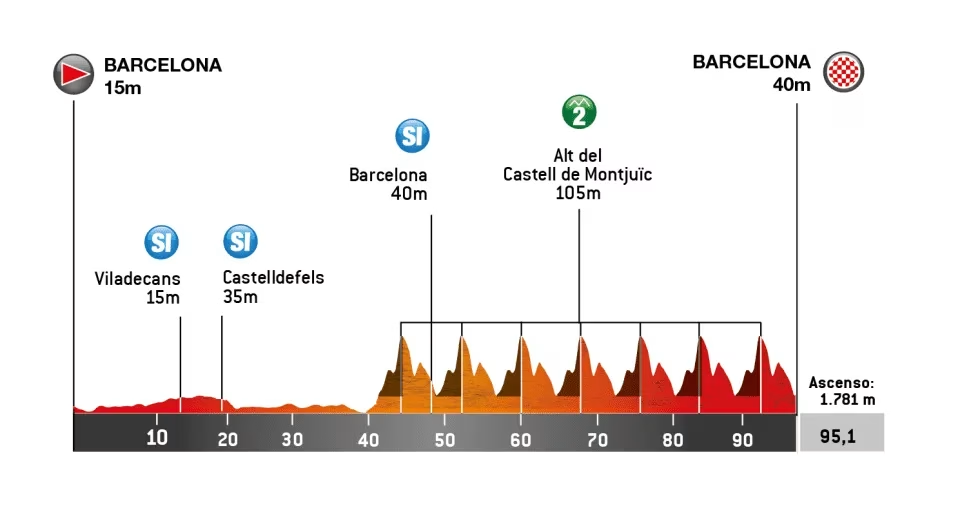
The final stage is listed as Barcelona to Barcelona over 95.1 km, and it remains one of the best short city circuits in men’s stage racing. The route goes out toward Viladecans and Castelldefels before returning to Barcelona, where the riders face seven climbs of Alt del Castell de Montjuïc, one more than in previous years.
That matters because the final day is rarely ceremonial. Catalunya has a good habit of staying alive until the end, and the Montjuïc circuit is a big part of that. It is short enough to encourage attacking, steep enough to hurt, and repeated often enough to stop the GC from settling too comfortably. In each of the last two seasons before this one, the overall winner also won the final stage in Barcelona, which tells you plenty about how late the race can still be active.
For newer fans, that is worth remembering. A week-long stage race does not always end with everyone defending what they already have. Catalunya often still asks for one last aggressive answer.
What kind of rider usually wins Catalunya?
The short answer is a climber with strong recovery.
That is not glamorous phrasing, but it is accurate. This is usually not a race for the pure time trial specialist or for a rider who only needs one perfect summit finish. Catalunya rewards the riders who can keep repeating their level across several mountainous days, while also staying sharp enough for the more awkward and tactical stages at the start and the violent circuit in Barcelona.
That is why the names attached to the 2026 edition make sense immediately. Vingegaard, Evenepoel and Almeida all fit the broad profile of riders who can survive a week like this and still be decisive in the mountains.
What should new fans watch for?
The easiest way to follow Volta a Catalunya is to break it into three parts.
Watch the opening stages for signs of fragility. Which teams already look organised? Which GC riders are staying near the front even when the route is not yet fully mountainous? Which squads start to lose support too early?
Then treat stages 4 to 6 as the real heart of the race. That is where Catalunya usually becomes itself.
And then watch Barcelona properly. Do not dismiss the final day as a parade. Montjuïc has a habit of making the GC uncomfortable, and that is one of the reasons this race stays engaging right to the end.
Why is Volta a Catalunya a good race for beginners?
Because it teaches stage racing in a fairly direct way.
Some week-long races are messy from the opening day, built around wind, time trials or strange route traps. Catalunya is more straightforward in its logic. It gives you a few opening stages to understand the field, then points the race toward the mountains and lets the climbers begin sorting it out. That makes it easier to follow than some other spring stage races, especially if you are still learning who the main riders are and what different route types usually do.
It also helps that the race has prestige and history without becoming inaccessible. Catalunya feels important, but still readable.
So what should you expect from Volta Ciclista a Catalunya 2026?
Expect a race that gets steadily more serious.
Expect the opening three stages to be more complicated than the word flat suggests.
Expect Vallter, Coll de Pal and Queralt to shape the general classification.
Expect Barcelona and Montjuïc to keep the race honest right to the final day.
And expect one of the clearest early-season tests of the men’s climbing hierarchy. Volta a Catalunya 2026 may not have the spotlight of a Grand Tour, but it has exactly the sort of route that forces big riders to start answering big questions.