
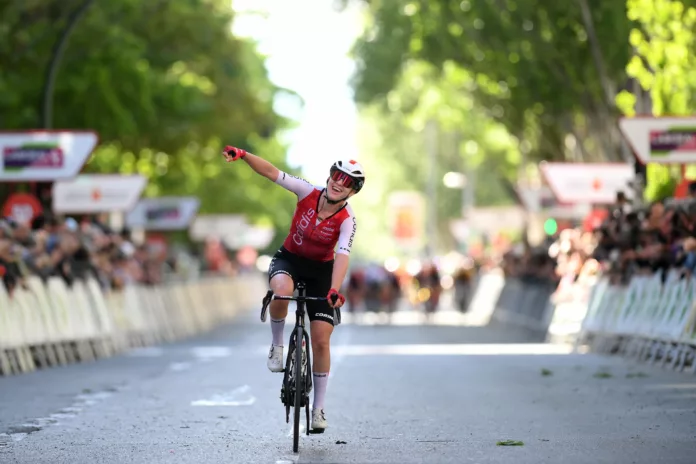
Clasica Femenina Navarra 2026 takes place on Wednesday, 13th May and once again centres its route around Pamplona. That matters straight away because this race has built a very clear identity in recent years. It is not a flat one-day race waiting for a routine sprint, and it is not a pure mountain test built around one overwhelming summit finish. Instead, it sits in the middle ground that often produces some of the most interesting racing, selective enough to drop riders, open enough to reward attacks, and awkward enough that positioning matters almost as much as raw power.
That is the key to understanding Navarra. The route is usually not about one giant climb that decides everything in a single moment. It is about repeated pressure, short ramps, changing rhythm and the sort of terrain that gradually weakens the field before the decisive move finally lands. If you are looking at the race only through a profile image, you can miss what makes it dangerous. The roads around Pamplona are good at making a race feel manageable right up to the point where it suddenly is not.
That is also why the event has found such a useful place in the women’s calendar. It offers a one-day route that suits puncheurs, aggressive all-rounders and riders who know how to read a selective finish. For the broader race context, the beginner’s guide to Clasica Femenina Navarra 2026 and the history of Clasica Femenina Navarra already frame why this race has become such a strong mid-May fixture.
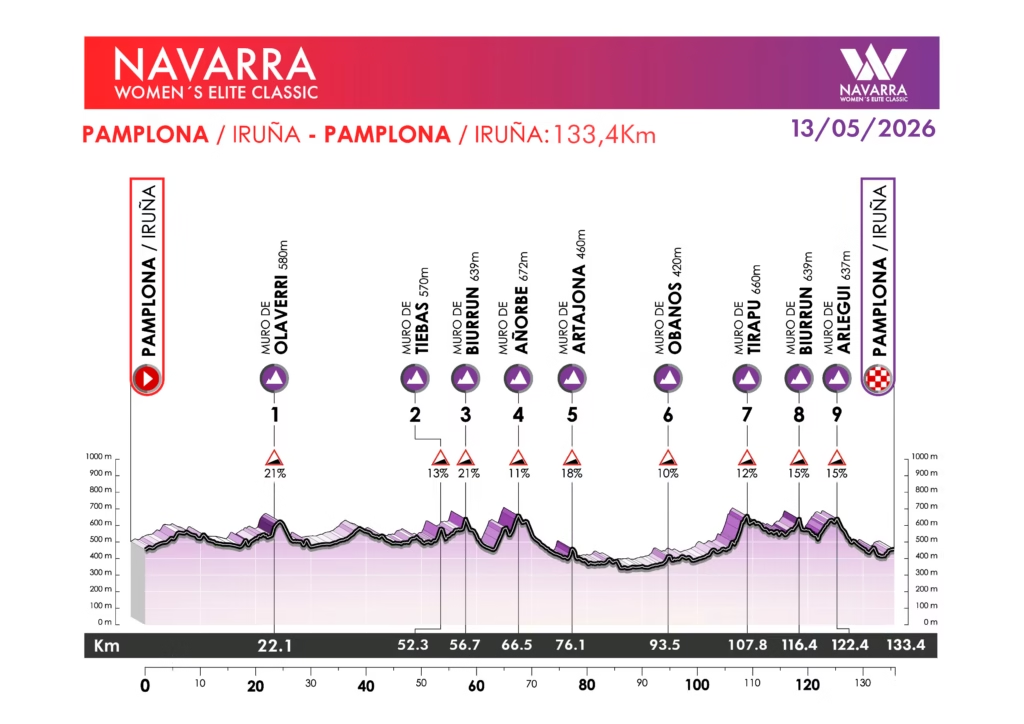
What sort of route is Clasica Femenina Navarra?
The simplest way to describe the route is that it is built for a selective one-day race rather than a pure climbers’ contest or a bunch sprint classic. Navarra tends to reward riders who can handle repeated short efforts, recover quickly between them, and still make sharp decisions late in the day when the race begins to split properly.
That usually produces a very specific type of race. Instead of waiting for one final mountain, riders are forced to respond to terrain changes throughout the day. The strongest puncheurs and aggressive all-rounders tend to thrive in that environment because they can handle the surges, position well before the key ramps and still attack once the field is already beginning to weaken.
That also makes the race quite difficult to control. A flatter one-day event often becomes easy to read early because everyone knows whether the sprint teams are likely to bring things back together. Navarra does not usually offer that kind of clarity. The route tends to leave enough openings for riders to force the race away from a predictable finish.
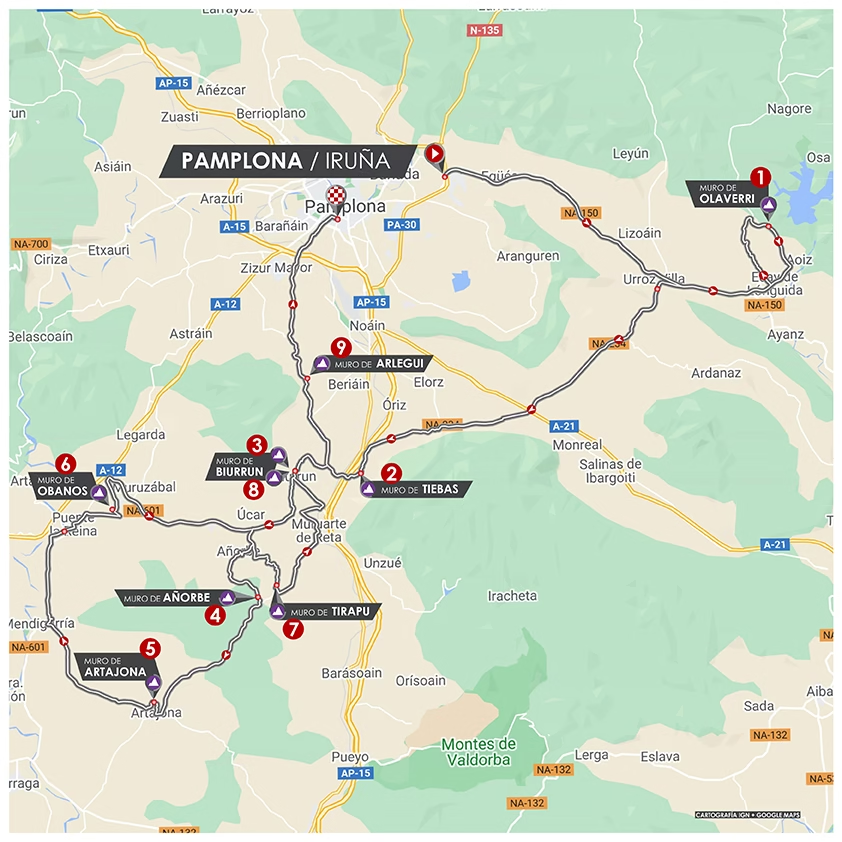
Pamplona remains the anchor of the race
Pamplona gives the race its setting, but also much of its character. This is not a wandering point-to-point event crossing a huge region in one direction. It is a race that uses the roads around the city to create a layered, punchy one-day test.
That local structure matters tactically. Races that start and finish around the same urban centre often have a tighter feel. Teams know the broad shape of the terrain, positioning becomes increasingly important before the late decisive roads, and the organiser can build a route where the hardest or most disruptive sectors arrive at exactly the right moment to break the field apart.
That tends to suit this race very well. The route does not need huge altitude to become selective. It needs enough short climbs, awkward roads and badly timed pressure to make the strongest riders visible by the final third.
The route should still favour late attacks
Even when the full route detail is lighter in public than at the biggest WorldTour races, the identity of Navarra is clear enough. This is a race that usually favours late attacks far more than a calm, organised sprint finish.
That is because the decisive phase often comes through accumulation. Riders are not necessarily waiting for one decisive mountain pass. Instead, the race gets harder in layers. A breakaway goes clear, the bunch chases, the short climbs begin to bite, and eventually the strongest riders sense that the field is fragile enough to move. When that moment comes, the race often opens quickly.
It is exactly the sort of route where the most important move may not be the first major attack, but the one that comes immediately after the field has already been softened. That is why Navarra tends to reward riders who can judge timing as well as effort.
 Photo Credit: Getty
What sort of rider should this route suit?
This is a route for puncheurs, aggressive all-rounders and riders who can handle short, steep efforts at race speed. It is less friendly to pure sprinters unless they can survive repeated climbing, and less tilted towards pure mountain specialists than a much more vertical course would be.
That rider profile is part of what makes the race interesting. A strong finisher can still win here, but only if she survives the repeated pressure first. A more explosive attacker can also take the race, but only if she judges the key moment correctly and commits at a point where the bunch is already close to breaking.
That balance keeps the race tactically rich. It is not simply a test of who climbs best or who sprints fastest. It is usually a test of who can still make the right move after several hours of uneven effort.
Why the mid-May slot matters
The route does not exist in isolation from the date. Navarra lands in a useful part of the season, after the spring Classics block but before the next run of major stage-race goals. That timing helps explain why the race often attracts a field that is stronger and more varied than casual followers might expect.
Some riders arrive with one-day form still sharp from the spring. Others are building towards later stage-race targets and want hard racing in the legs. On a route like Navarra’s, that mix tends to make the race more aggressive. Riders are often strong enough to attack, but not all of them arrive with the same objective, which makes team control less secure.
That is one reason races like this matter so much in the wider calendar. They often produce results that tell you something useful about who is carrying real form rather than just surviving a sequence of big-name events.
-
 Photo Credit: Getty

How the race is likely to unfold
The most likely pattern is an early breakaway, an uneasy chase behind, and then a more serious splitting of the race once the short climbs and repeated efforts begin to take effect. Because the route usually rewards initiative, the key phase is unlikely to be a simple waiting game until the final few hundred metres.
Instead, the race should come alive when the strongest riders decide the terrain has already done enough damage. That may happen through one committed solo attack, or through a small front group forming after repeated pressure. Either way, this does not look like the kind of race where everyone will be happy to wait for a straightforward finish.
That is also why positioning matters so much here. In a route of this type, the real race often begins before the television-friendly move has even happened. Riders too far back on the key ramps can find themselves chasing without ever fully closing the gap.
Route verdict
Clasica Femenina Navarra 2026 looks set to remain what it has become over the last few years, a punchy, selective one-day race around Pamplona that rewards riders who can handle repeated efforts, late pressure and aggressive racing.
That is why the race has become such a useful fixture in the women’s calendar. It is not one of the Monuments, and it does not need to be. What it offers instead is a very reliable route identity: hard enough to matter, open enough to encourage attacks, and well placed in the season to produce a genuinely interesting result.
If the route follows its recent pattern again, expect a race where the pure sprinters begin to disappear before the finish, the strongest puncheurs start to circle each other in the final phase, and the winning move comes when the field is already too tired to organise a clean response. For the wider race background, the beginner’s guide, the history of Clasica Femenina Navarra and the 2025 Navarra Elite Classics race preview all help place this route in its proper context.

