
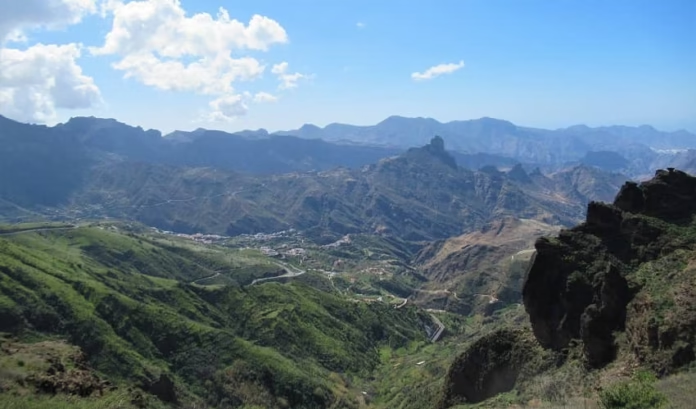
Some cycling destinations impress you before you have even clipped in. Gran Canaria does that from the first morning. The light is cleaner than you expect, the air is softer than it should be for an Atlantic island with proper mountains, and the landscape looks as though someone has folded a continent down into one compact circle of volcanic roads. That alone would make it attractive, especially for riders escaping a northern winter. But Pico de las Nieves deserves a place on your riding list for a deeper reason than sunshine and altitude. It offers contrast, drama and a road experience that feels bigger than one famous climb.
This is not just a training-camp island or a convenient warm-weather option. Gran Canaria gives you a serious mountain ride in a place where the road keeps changing character beneath you. You can start near the coast in dry heat and bright sun, then spend the next few hours riding into pine forest, bare volcanic ridges, ravines and cloud lines that make the island feel as though it is floating. Pico de las Nieves is the best expression of that. It is hard enough to justify the trip, scenic enough to stay in the memory, and varied enough that the climb never feels like a simple grind to a number on a sign.
If you are building out a wider travel shortlist, this sits naturally alongside the broader Travel & Riding Abroad hub, the Cycling in Spain hub and destination pieces such as Cycling Calpe and the Costa Blanca: a long day climbing into the Alicante mountains and Cycling Getaways: Girona.
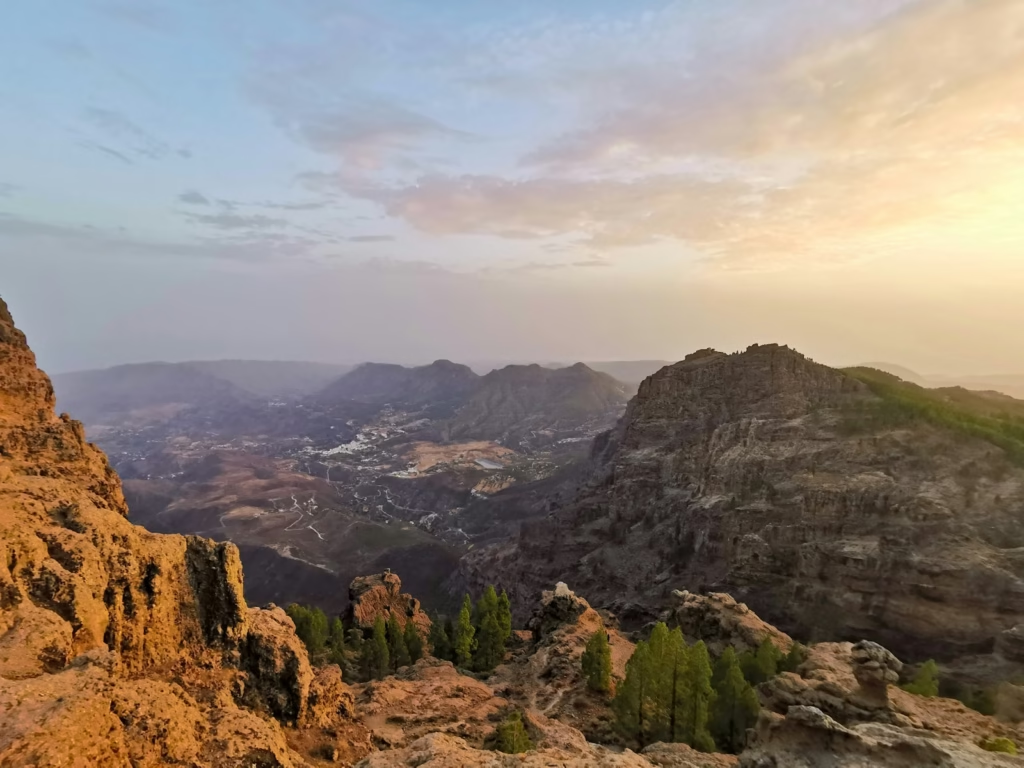
Why Gran Canaria feels bigger than a winter training base
A lot of winter cycling destinations come with a trade-off. You get warmth, but the roads are flat. You get reliable miles, but not much atmosphere. You get training value, but not always much romance.
Gran Canaria does not really make that compromise. The island works because the roads into the interior feel purposeful. They rise properly, bend properly and reward patience. It is not just somewhere to keep the legs moving in January. It is somewhere to ride for the sake of the ride itself.
That is where Pico de las Nieves comes in. It is the climb that best sums up the island’s appeal, not simply because it is one of the hardest roads on Gran Canaria, but because it feels like a journey through several different versions of the same place. You do not just climb. You pass through shifting landscapes, changing temperatures and very different kinds of silence. That is what lifts it from useful to memorable.
It also gives Gran Canaria a slightly different feel from more familiar Spanish cycling bases. Calpe and the Costa Blanca are brilliant for density of riding and long mountain days, while Girona offers route variety and a deep cycling culture. Gran Canaria feels more elemental. The roads are harsher, the scenery is more volcanic, and the sense of riding into a summit landscape is stronger.
Why Pico de las Nieves stands out
The easiest way to misunderstand Pico de las Nieves is to treat it as a box-ticking ascent. Yes, it is one of the island’s best-known climbs. Yes, it is high, hard and dramatic. But the appeal is not just the summit. It is the build-up.
That matters because plenty of famous climbs are really about one brutal segment or one famous hairpin sequence. Pico de las Nieves feels more expansive than that. The road keeps unfolding, the gradients keep shifting and the mood keeps changing. One section asks you to settle into a rhythm. Another forces you out of it. One bend opens to a vast view across the island. The next folds back into pine trees and shade.
That layered experience is why riders talk about it differently from a standard climb. You remember the summit, of course, but you also remember the road getting quieter, the smell of the trees higher up, the sensation of the island dropping away beneath you, and the feeling that the road is somehow taking you not just uphill but into open air.
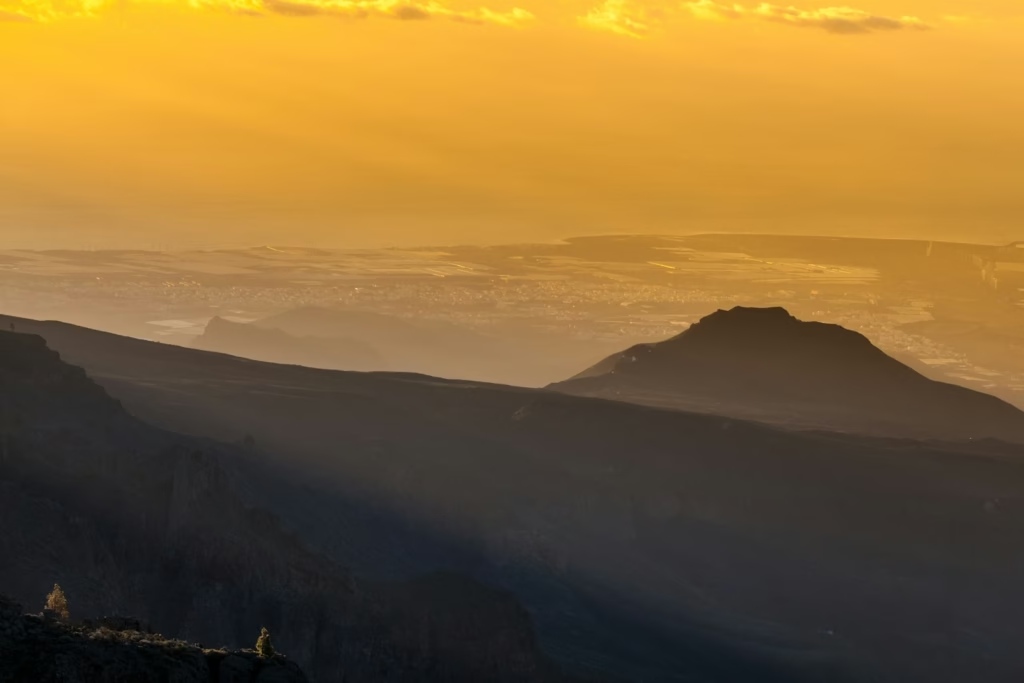
The road is the attraction as much as the view
Some climbs are famous because of the summit photo. Pico de las Nieves earns its reputation through the road itself.
That is what makes it such a good cycling destination. The gradients are serious enough to demand respect, but the ride never becomes dull. You are not locked into one endless, identical effort. The road keeps asking slightly different questions. Can you stay patient here. Can you hold your shape through this steeper ramp. Can you keep turning the pedals when the view starts distracting you.
There is also a pleasure in how honest the climb feels. It does not pretend to be gentle. It tells you early enough what kind of day it is going to be. Yet it also rewards rhythm and commitment rather than brute force alone. For a road rider, that is part of the appeal. It feels like a proper mountain road, not just a climb built around a single dramatic statistic.
Why the scenery changes the ride
Gran Canaria’s interior is what gives Pico de las Nieves its emotional weight. The climb would still be worth doing if it were on a dull island. The fact that it is not makes all the difference.
At lower levels, the land can feel dry, raw and sun-struck. Higher up, the roads become calmer and more enclosed. Then the island opens again, with long views across volcanic ridges and deep valleys. On a good day, that final section has the kind of scale that changes your mood as much as your pace. You stop thinking only about the effort and start thinking about where you are.
That is one of the reasons the ride lingers in the memory. It is not scenic in a decorative way. The scenery affects how the road feels. There are points where the openness lifts you, points where the gradient brings you back down to yourself, and points where the cloud line makes the whole island seem theatrical. That combination is difficult to reproduce elsewhere.
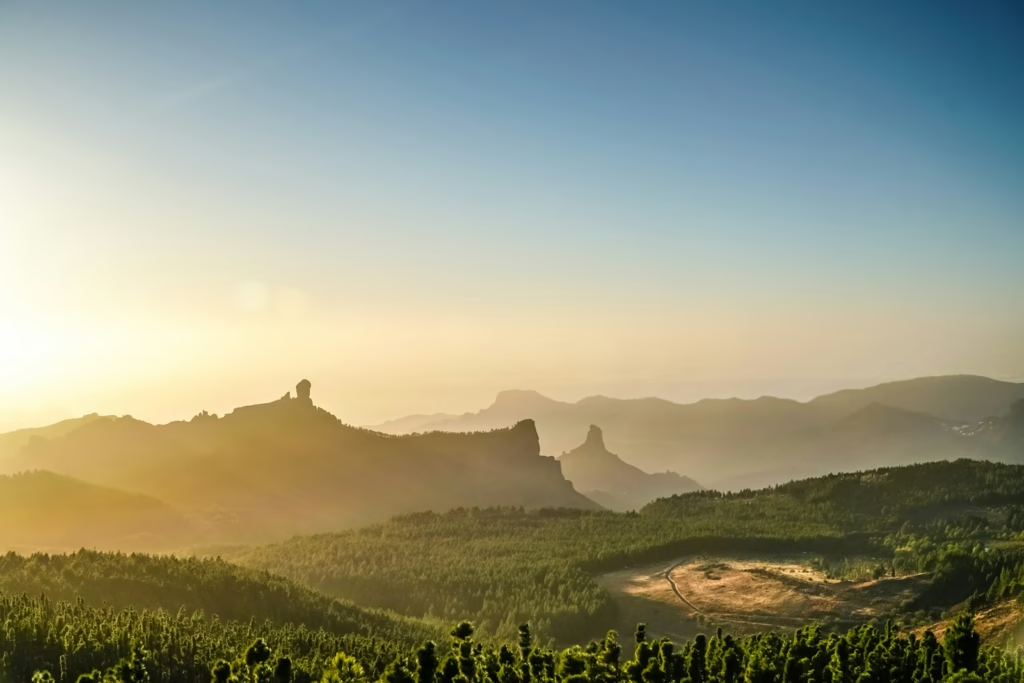
Who this ride suits
It would be easy to frame Pico de las Nieves only as a ride for strong climbers, but that would undersell it.
For ambitious riders, it is an obvious benchmark. The climb is serious enough to ride as a full effort and famous enough to carry a bit of aura. If you want a winter or early-season mountain test that still feels like a proper destination, this is it.
For travelling cyclists, it works as a landscape ride with real drama. You do not need to be chasing numbers to enjoy it. Riding steadily, stopping at viewpoints and treating the whole day as part ride and part exploration makes just as much sense here.
For riders escaping winter, it is also reassuring. Gran Canaria does not force you into the false choice between warm weather and meaningful riding. You get both.
That is part of what makes it such a strong addition to a Spain-focused travel library. It belongs in the same wider conversation as Cycling in Madrid: a guide to an unforgettable adventure and the destination pages grouped through the Spain hub, but it offers a more compact and more dramatic mountain experience than most mainland bases.
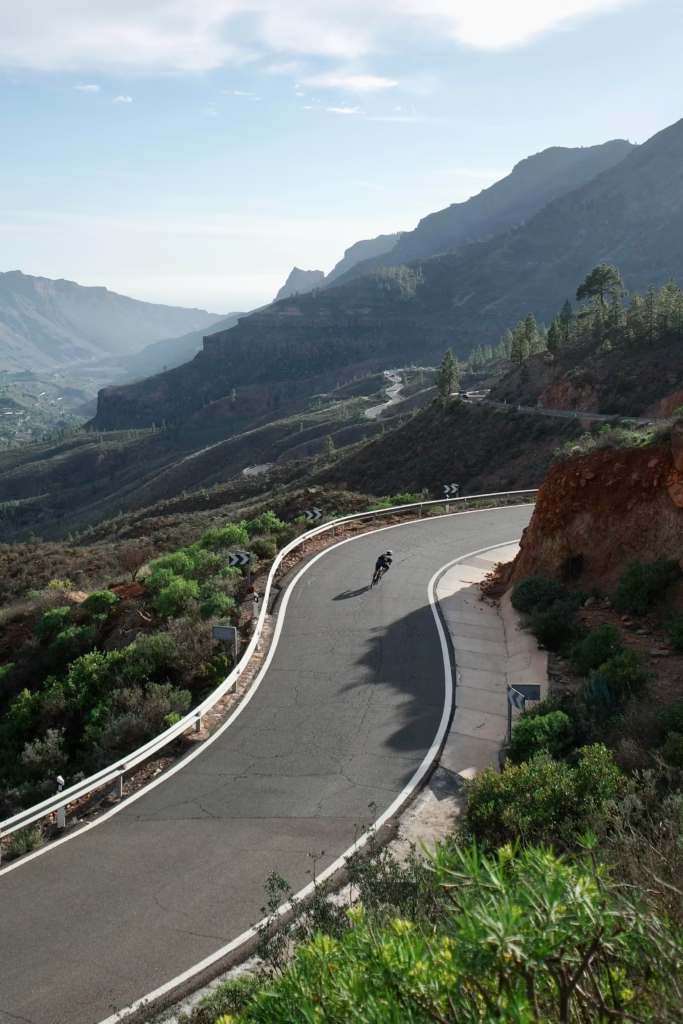
Why Pico de las Nieves deserves a place on your riding list
The simplest answer is that it offers something rounded. The weather helps. The roads help. The views help. The challenge helps. But what really makes the case is how neatly those things fit together.
This is a ride with enough climbing to feel like an objective, enough beauty to feel like travel rather than training, and enough variation to avoid the sterile feeling some destination climbs can have. It is famous without feeling overblown. It is hard without becoming joyless. It is scenic without becoming soft.
That is a rare combination. It is also why Pico de las Nieves deserves a place high on a cyclist’s riding list. Not because it is useful, but because it is the kind of ride that reminds you why you wanted to travel with a bike in the first place.
What makes Gran Canaria especially good for cyclists
Gran Canaria works so well as a cycling destination because the island is compact without feeling small. That means you can stay near the coast, roll out in decent weather, and still find yourself deep in serious climbing country without needing a huge transfer first.
It also means the island gives you options beyond one single ride. Pico de las Nieves may be the headline ascent, but it sits inside a much broader riding landscape of mountain roads, quieter inland routes and enough variation to build several days or even a full trip around. That is important from a travel point of view. A destination becomes far more appealing when the star climb is part of a deeper network rather than a one-off excursion.
If you are developing the broader travel section further, Gran Canaria is exactly the sort of place that justifies follow-up pieces on route options, where to stay and how to structure a week of riding around the island. It would also sit neatly beside more practical articles such as Best bike rental options in Gran Canaria for readers who want to turn inspiration into an actual trip.


Practical information
Location
Pico de las Nieves sits in the mountainous centre of Gran Canaria and is one of the island’s defining summit roads. It rises into the central high ground above the better-known coastal resorts, which is a big part of what makes the ride feel so dramatic.
Riding
There are several approaches, and that is part of the climb’s appeal. The eastern side is the one most often highlighted for its seriousness, with long stretches that demand steady pacing and proper climbing legs. Whichever side you choose, expect a ride built around changing gradients rather than one uniform effort.
When to go
Gran Canaria is especially attractive outside the height of the European summer, particularly through autumn, winter and early spring, when the island offers warmth and stable riding conditions while much of northern Europe does not. That said, altitude and exposure still matter higher up, so it is worth being prepared for cooler conditions near the summit than the coast suggests.
What to expect at the top
The summit area offers the sense of arrival you want from a destination climb. The views are broad, the volcanic terrain gives the place a distinctive look, and on a clear day the island seems to unfold beneath you in layers. It feels like somewhere you have ridden to, not simply somewhere you have passed through.
Final thought
If you only know Gran Canaria by reputation as a winter training base, Pico de las Nieves is the ride that explains why the island means more than that. It is not just practical. It is not just warm. It is a serious mountain road in a place that knows how to make cycling feel dramatic.
That is why it deserves a place on your riding list.

