
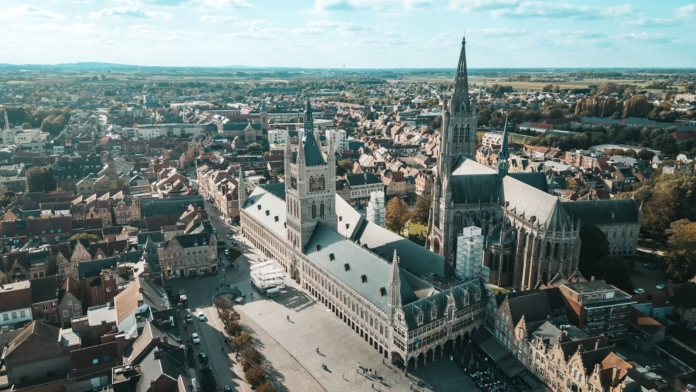
There are cycling places that announce themselves with scale. Alpine passes, Pyrenean cols, long balcony roads cut into cliffs. Heuvelland does something quieter. It waits beyond Ypres in a fold of West Flanders, where the land rises just enough to change the rhythm of the ride, where cobbles appear without ceremony, and where almost every lane seems to carry two histories at once: the racing one and the older, heavier one.
Ypres is the natural base. It gives the trip a centre of gravity before the roads start to tilt south and west into the Heuvelland hills. You can roll out from the rebuilt market square, pass through the edge of a town known across the world for remembrance, and within minutes be on smaller roads heading towards Kemmel, Wijtschate, Dranouter, Mesen, Westouter and the soft green ridge that gives the area its name.
This is not the Flanders of the Ronde’s most famous cobbled walls. It is not the Koppenberg or Paterberg, not the concentrated brutality of the Flemish Ardennes. Heuvelland is wider, quieter and more open, but the riding is never bland. The climbs are short, the gradients can bite, and the wind moves across the fields with a freedom that makes even flat roads feel alive.
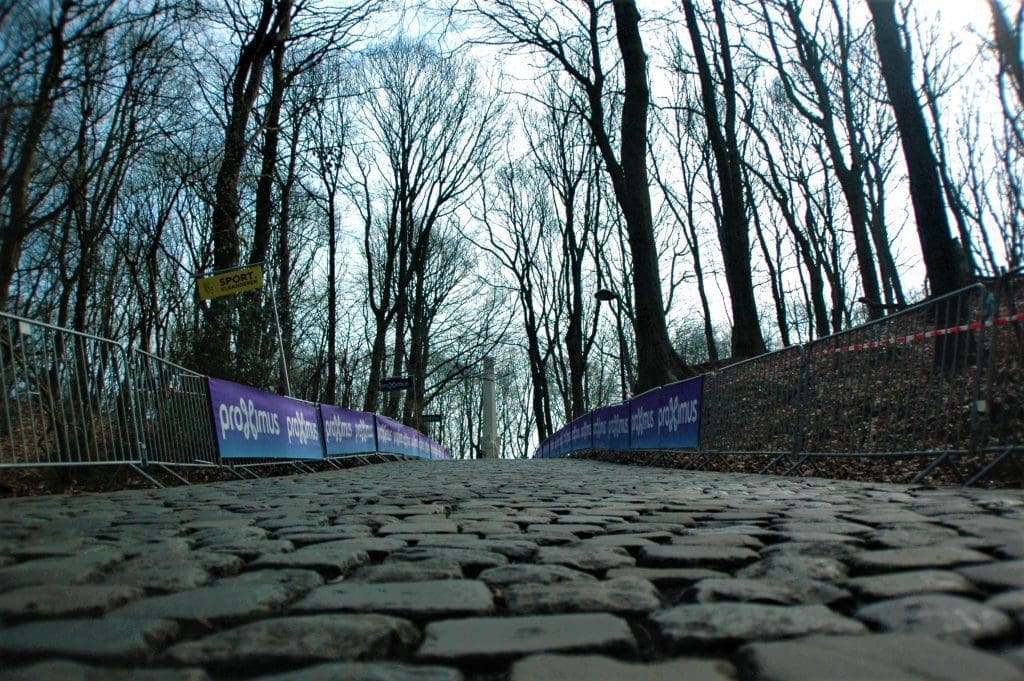
At the centre of it all is the Kemmelberg, a climb that manages to be modest on paper and unforgettable in the legs. It is not high, but it has presence. It is steep, cobbled, wooded, exposed in places and tied to one of the most distinctive races in the Belgian spring. Ride it once and you understand why the race long known as Gent-Wevelgem, now reframed through its In Flanders Fields identity, keeps returning to this landscape.
Why Ypres works as a cycling base
Ypres makes sense before you have even clipped in. It is compact enough to navigate easily, large enough to offer hotels, cafés, restaurants and bike-friendly logistics, and close enough to the Heuvelland climbs that you do not need to spend half the ride escaping traffic.
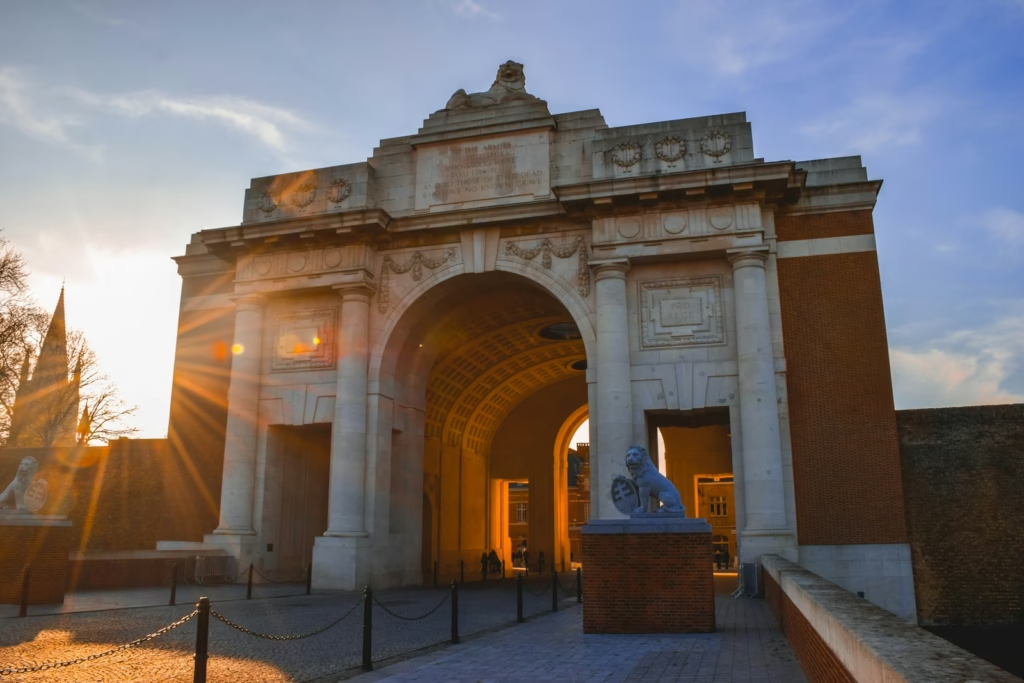
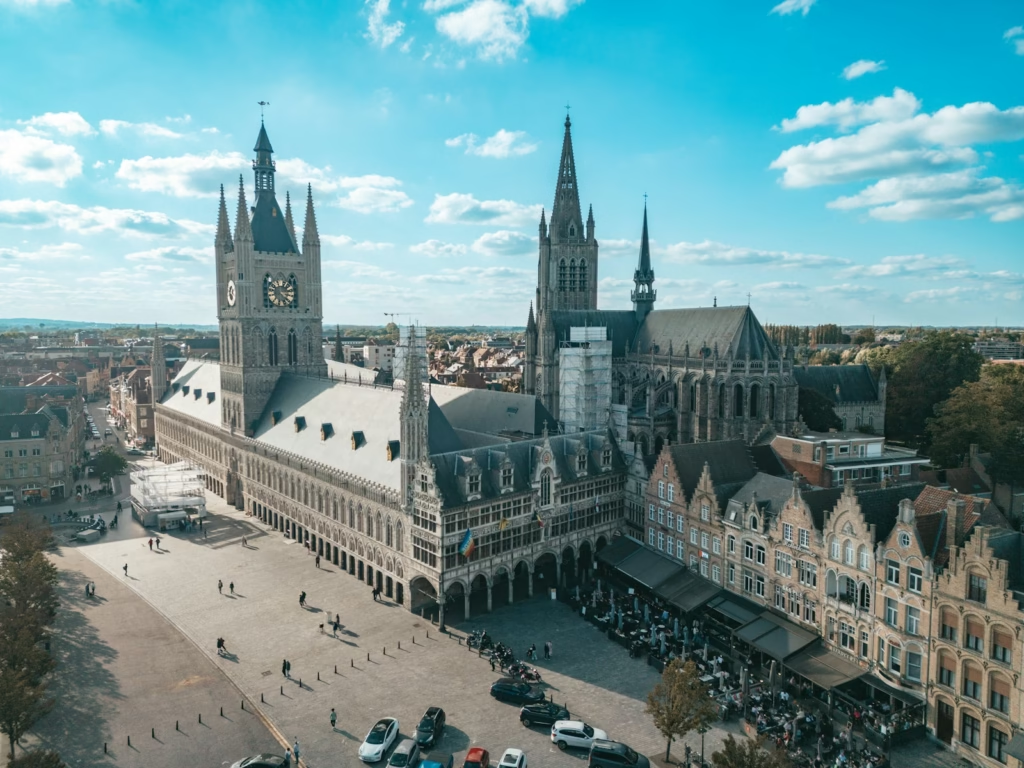
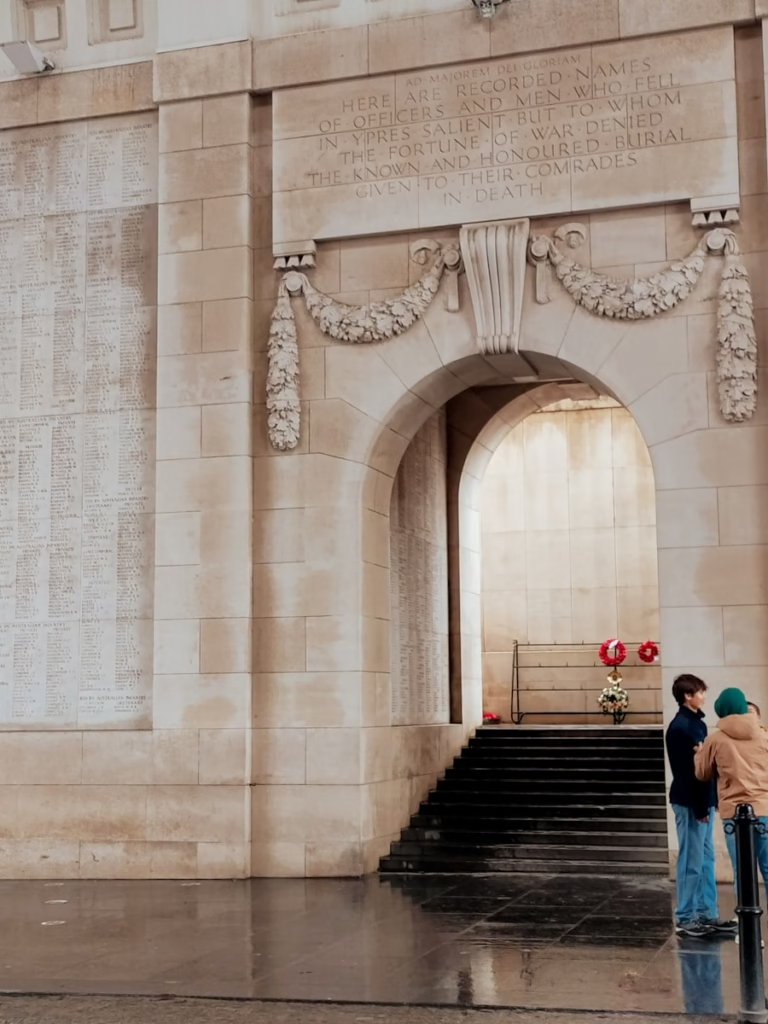
The town also gives the trip something that many cycling destinations lack: a strong evening rhythm. You ride in the day, but Ypres holds you afterwards. The Menin Gate, the Cloth Hall, the surrounding cemeteries and the nightly Last Post ceremony make the place feel different from a simple base town. There is a solemnity here that sits beside the pleasure of riding, not in opposition to it.
Leaving Ypres by bike is also part of the appeal. The roads quickly begin to thin out. The town gives way to fields, small villages, war cemeteries, brick farmhouses and lanes that seem to stretch calmly until the next rise breaks them. The contrast is sharp but natural: stone and memory behind you, low Belgian countryside ahead, the Kemmelberg waiting somewhere beyond the horizon.
For riders used to more obvious cycling destinations, Ypres can feel understated at first. Then the details start to build. The road surface changes. The wind shifts. A church tower appears above a village. A shallow valley opens. A sign points towards Kemmel. The ride becomes less about one climb and more about the slow accumulation of place.
The Kemmelberg is short, steep and hard to forget
The Kemmelberg is the climb most riders come for, and rightly so. It rises to around 154 metres, which sounds almost comically small if you are used to Alpine numbers. But Flemish climbs are not judged only by altitude. They are judged by gradient, surface, position and the damage they do when legs are already tired.
The famous cobbled sides of the Kemmelberg have real bite. The gradient can push towards and beyond 20 per cent on the hardest ramps, and the surface demands attention. Even when dry, the cobbles interrupt rhythm. In the wet, they can become much more serious. You climb with the front wheel searching for a line, the rear wheel threatening to slip if you lose smoothness, and your upper body working harder than expected for a climb that is over so quickly.
What makes the Kemmelberg memorable is the way it compresses effort. There is no long pacing calculation. It is a short argument with gravity, cobbles and your own gear choice. You arrive, shift early if you are sensible, try not to surge too hard at the bottom, and then the climb simply asks whether you have enough left to keep turning the pedals.
At the top, the scale of the hill changes. Suddenly the view opens. West Flanders rolls away in soft, uneven folds. On a clear day, the landscape feels much bigger than the altitude suggests. That is Heuvelland in miniature: small numbers, big impression.
The riding is bigger than one climb
It would be easy to treat the Kemmelberg as the sole reason to ride here, but that would miss the point. The best Heuvelland ride is a loop, not a pilgrimage to one summit. The Kemmelberg is the headline, but the surrounding roads give the area its character.
The Monteberg, Baneberg, Scherpenberg, Rodeberg, Vidaigneberg and other local rises can all be worked into a route. None of them looks enormous in isolation, but together they create the stop-start rhythm that defines riding in this part of Flanders. You are rarely climbing for long, but you are rarely fully settled either. The road dips, turns, rises, narrows, opens and rises again.
That rhythm is what makes the area so good for riders who like Classics terrain. It is tactical riding, even when you are alone. You learn to carry speed into the base of a climb, to shift before the gradient kicks, to stay seated on rougher sections, to choose when to push over the top and when to let the road come back to you.
The lanes also have a different feel from the better-known Flemish Ardennes. There is more space here. The hills sit in a wider landscape, and the villages feel scattered rather than stacked tightly against each other. It makes Heuvelland a good place for riders who want the flavour of Flemish cycling without spending the whole day in a dense network of climbs and traffic. For a contrast with the Flemish Ardennes, the recent guide to cycling in Geraardsbergen and Pajottenland shows how different another corner of Flanders can feel.
Gent-Wevelgem gives the roads their racing identity
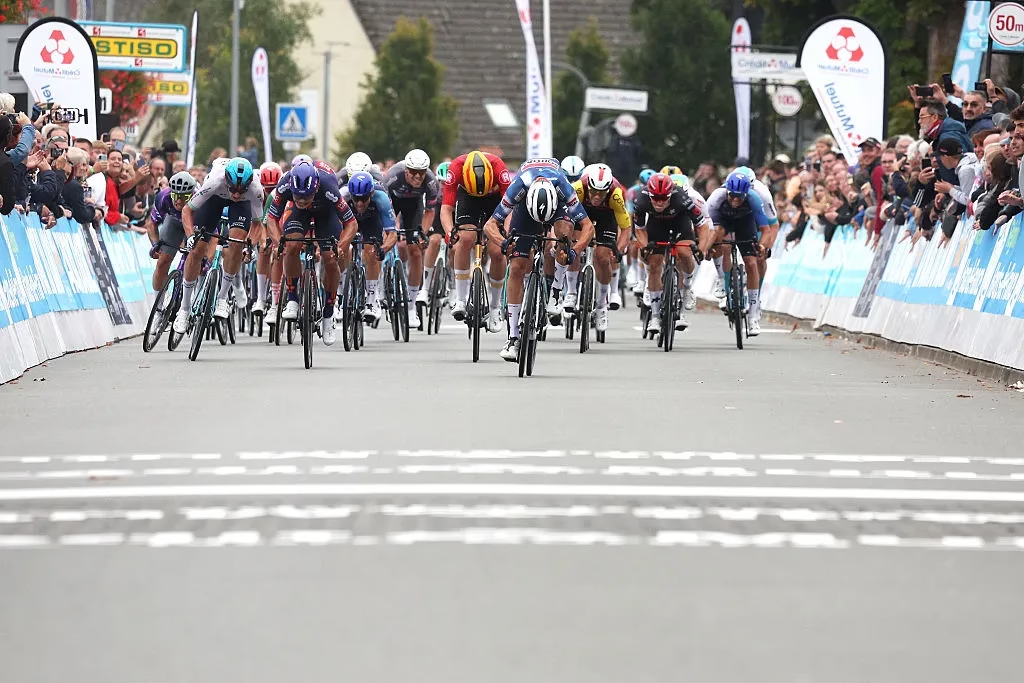
For racing fans, the Kemmelberg is inseparable from Gent-Wevelgem and its modern In Flanders Fields framing. This is where the race often becomes serious. The climb does not usually sit at the finish, but that is precisely why it matters. It is a forcing point, a place where teams apply pressure before the road flattens and the tactical fight towards Wevelgem begins.
Watching the race on television gives the Kemmelberg a particular reputation: chaotic, noisy, fast, sometimes brutal. Riding it yourself makes the race easier to understand. You feel how little time there is to recover once the gradient changes. You see why positioning matters before the cobbles. You understand why one rider can crest with momentum and another can lose contact in a few metres.
The surrounding plugstreets and war roads add another layer to the race’s identity. This is not a Classics landscape built only around cobbles and beer tents. It is a place where the sport’s spring theatre passes through ground marked by the First World War. That gives the race its particular tone, and it gives a ride through Heuvelland a feeling that is difficult to find elsewhere.
You do not need to chase every race segment to enjoy the area. But knowing the race gives the roads a sharper meaning. A bend is no longer just a bend. A climb is no longer just a climb. The whole landscape becomes part of a sporting memory. The men’s In Flanders Fields 2026 route guide and women’s In Flanders Fields 2026 route guide both show how the Kemmelberg, plugstreets and exposed roads still sit at the heart of the race’s identity.
Ypres adds the history that makes the ride different
Cycling in Ypres and Heuvelland is never only about cycling. That is not a line to use lightly, because plenty of riding places have history. Here, though, the history is everywhere and difficult to separate from the roads.
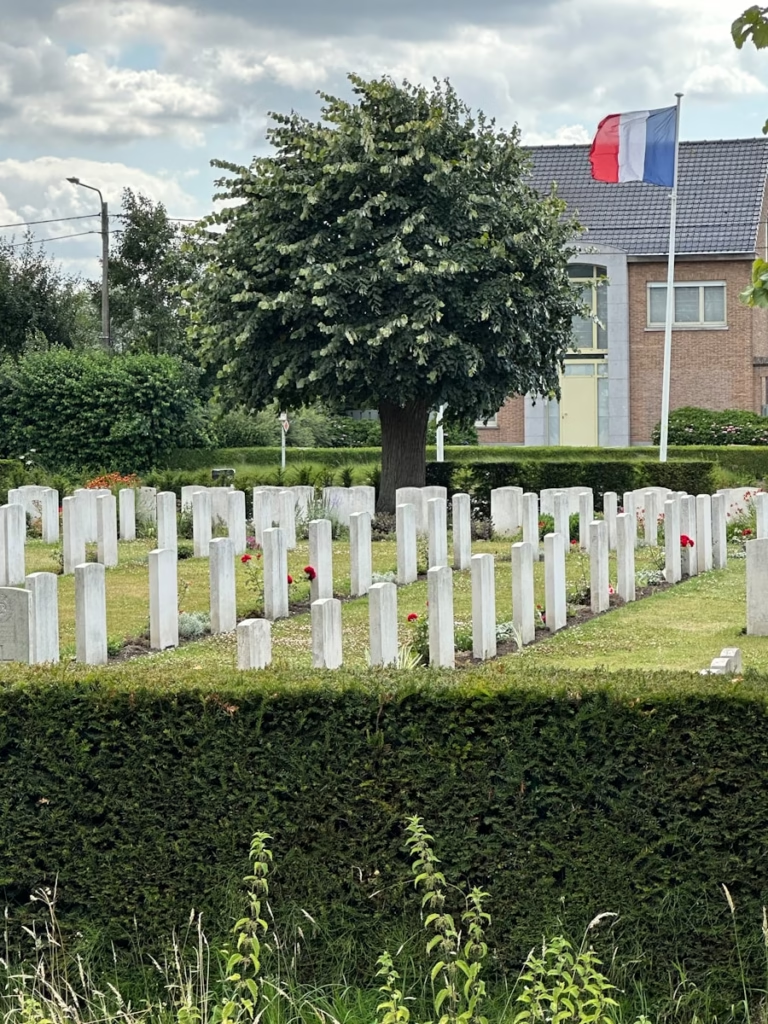
You pass cemeteries with white stones lined in strict order. You ride through villages whose names still carry the weight of the war. You see memorials on quiet junctions, trenches preserved in woodland, craters softened by grass and water, and signs for places that appear in history books as much as on route maps.
The daily Last Post at the Menin Gate gives Ypres its evening anchor. At 8pm, the town stops. Traffic is halted, people gather beneath the arch, and the buglers play. If you have spent the day riding through the fields and hills around Ypres, the ceremony lands differently. The geography becomes less abstract. The roads you have ridden are not just scenic. They are connected to the names, the cemeteries and the silence.
That is part of why this area deserves a place on a cycling list. It offers effort, but also reflection. You can ride hard over the Kemmelberg in the morning and stand quietly at the Menin Gate in the evening. Few cycling destinations hold those two experiences so close together.
What a good Ypres and Heuvelland ride looks like
A strong first ride from Ypres should be long enough to feel like a proper day, but not so packed with climbs that you rush the area. Around 70-90km works well for most road riders, with the option to shorten or extend depending on how many Heuvelland climbs you want to include.
A natural loop heads out of Ypres towards Kemmel, then uses the local hills around the Kemmelberg, Monteberg, Rodeberg and surrounding villages before returning through quieter lanes. You can add Mesen, Wijtschate, Dranouter, Westouter, Loker and Poperinge depending on the shape of the route. The terrain invites variation. It is easy to make the ride harder by adding climbs, or calmer by staying on the lower roads between villages.
The best routes do not rush straight to the Kemmelberg. Let the ride build. Leave Ypres gently, move through the fields, let the first small rises warm the legs, then take on the Kemmelberg when the day has already settled into your body. It feels better that way. The climb becomes part of the rhythm rather than a box ticked too early.
For a more race-inspired day, use the In Flanders Fields route structure as a starting point. Include the Kemmelberg more than once, add the Monteberg, and use the lanes around the plugstreets if you are comfortable with mixed surfaces or have the right tyres. For a steadier travel ride, keep the cobbles to the Kemmelberg and focus on villages, views and rolling roads.
The roads reward patience rather than pure power
Heuvelland is not a place where the strongest rider simply rides away for hours. The climbs are too short for that, the lanes too varied, the surfaces too interruptive. It rewards riders who read the road well.
You need to shift early. You need to keep something back for the second half of a steep ramp. You need to descend with attention because lanes can be narrow, shaded or slightly rough. You need to watch the wind on open sections, especially when the road appears easy on the map.
This is what makes the area satisfying. A ride here has texture. You are not just measuring distance and elevation. You are constantly adjusting. A short climb asks for a seated effort. A cobbled section asks for relaxed hands. A crosswind asks for patience. A village asks you to slow, look around, and let the ride breathe.
For riders who spend too much time chasing numbers, Ypres and Heuvelland are a useful correction. The ride is hard enough to respect, but not so consuming that it blocks out everything else. You can still notice the fields, the brick houses, the smell of damp woodland, the sound of tyres on cobbles, the sudden view from the ridge.
The Kemmelberg is better when you ride it more than once
If you have the legs, ride the Kemmelberg more than once. Not necessarily in a performative, segment-hunting way, but because each side and each approach teaches you something different.
The first ascent is usually about surprise. Even if you know the gradient, the cobbles and the steepness come quickly. The second is usually better paced. You know where the surface bites, where to stay seated, where the climb eases, where not to panic. By the third time, if you are being ambitious, it starts to feel less like a landmark and more like a conversation.
That is part of the appeal of Flemish climbing. The hills are short enough to repeat, but hard enough for each attempt to count. You can build a whole ride around variations: one ascent for the experience, one for the effort, one for the photograph, one because the route has looped back and the climb is simply there again.
In a bigger mountain range, repetition can feel impractical. In Heuvelland, it feels natural. The Kemmelberg is a climb you can learn in an afternoon, but it will still have the last word if you treat it casually.
Food, beer and the soft landing after the ride
One of the pleasures of riding in this part of Belgium is that the day does not end abruptly when the cycling stops. Ypres and the surrounding villages give you the right kind of post-ride recovery: cafés, terraces, bakeries, beer, simple food and enough atmosphere to make the evening feel like part of the trip.
Belgian cycling culture understands hunger. A ride can end with frites, a strong coffee, a local beer, a waffle, a proper meal or some combination of all of them. The region does not need to dress itself up as a cycling resort. It already has what riders need: roads worth riding, places to sit afterwards, and enough local identity to make the memory stick.
Kemmel and the Heuvelland villages are good for a slower stop if you want to stay close to the climbs. Ypres is better for a fuller evening. Time the day well and you can ride in the morning, return to town in the afternoon, eat early, then walk to the Menin Gate for the Last Post.
That kind of day is why cycling travel works. The ride is the structure, but everything around it gives the trip its depth.
Why Ypres and Heuvelland deserve a place on your riding list
Ypres and Heuvelland deserve a place on your riding list because they offer something more layered than a simple cobbled climb. The Kemmelberg is the hook, and it is a good one: steep, famous, awkward, beautiful and tied to one of Belgium’s great spring races. But the wider area is what makes the trip.
You get the history of Ypres, the nightly ritual of remembrance, the rolling lanes of the Westhoek, the short climbs of Heuvelland, the racing identity of In Flanders Fields, the food and beer culture of Flanders, and a landscape that rewards both effort and attention.
It is also a manageable destination. You do not need a week. A long weekend can be enough. One day for the classic Heuvelland loop, one day for a gentler ride towards Poperinge or the wider Westhoek, and one evening in Ypres to understand why the place feels different from almost anywhere else you might take a bike.
The Kemmelberg may not be high, but it has gravity. It pulls racing history, war memory, Flemish cycling culture and personal effort into one short climb. That is why it stays with you. For more wider Belgian riding context, ProCyclingUK’s travel and riding abroad hub and older cycling getaways guide to Flanders both sit naturally alongside a Ypres and Heuvelland trip.
-
 Photo Credit: Cor Vos

Practical information
Location
Ypres, also known as Ieper, sits in West Flanders in Belgium, close to the French border. Heuvelland lies to the south and south-west of the town, with Kemmel, the Kemmelberg, Monteberg and the surrounding hills all close enough to reach easily by bike.
Riding
A good first road ride from Ypres into Heuvelland is around 70-90km, depending on how many climbs you include. Shorter loops of 40-60km are easy to build if you want a lighter day, while stronger riders can push beyond 100km by adding more of the Westhoek, plugstreets or race-inspired loops.
The Kemmelberg is the must-ride climb, but the area works best when you include Monteberg, Rodeberg, Baneberg, Scherpenberg and the lanes around Kemmel, Dranouter, Westouter, Wijtschate and Mesen. Road bikes are ideal, but wider tyres are useful if you plan to include cobbles or unpaved plugstreet-style sections.
Difficulty
The area is moderate to hard rather than mountainous. The climbs are short, but some are steep and the cobbles can make them much harder than the numbers suggest. Wind can also make exposed roads more tiring than expected. Strong beginners can enjoy the region with a sensible route, but the Kemmelberg itself deserves respect.
When to go
Spring is the most atmospheric time, especially around the Classics season, but the roads can be wet, windy and cold. Late spring and early autumn are often the best balance of weather, daylight and quieter roads. Summer brings warmer conditions and easier logistics, though the climbs and towns can be busier.
Where to stay
Ypres is the best base for most riders because it has the strongest mix of accommodation, food, history and access to the Heuvelland roads. Kemmel and nearby villages offer a quieter stay closer to the climbs, but Ypres gives more flexibility if you are travelling with non-riders or want a fuller evening after cycling.
For riders planning a wider Classics trip, the guide to where to stay for the spring Classics in Belgium gives broader context on choosing between Ypres, Wevelgem, Kortrijk, Ghent, Bruges, Oudenaarde and the Flemish Ardennes.
What to take
Bring a road bike with sensible gearing, especially if you plan to climb the cobbled side of the Kemmelberg. Tyres around 28mm are a good minimum for comfort and control, with wider options useful if your frame allows. A lightweight waterproof, gilet, arm warmers and gloves are sensible outside high summer because the weather can change quickly. Load a GPX route in advance, as the small lanes can become confusing once you start linking climbs together.
Off the bike
Leave time for Ypres itself. The Menin Gate and Last Post ceremony are essential parts of the experience, while the In Flanders Fields Museum, nearby cemeteries, preserved trenches and Westhoek villages give the trip its deeper context. This is a cycling destination, but it is also a place to slow down, look carefully and understand the landscape you have just ridden through.

