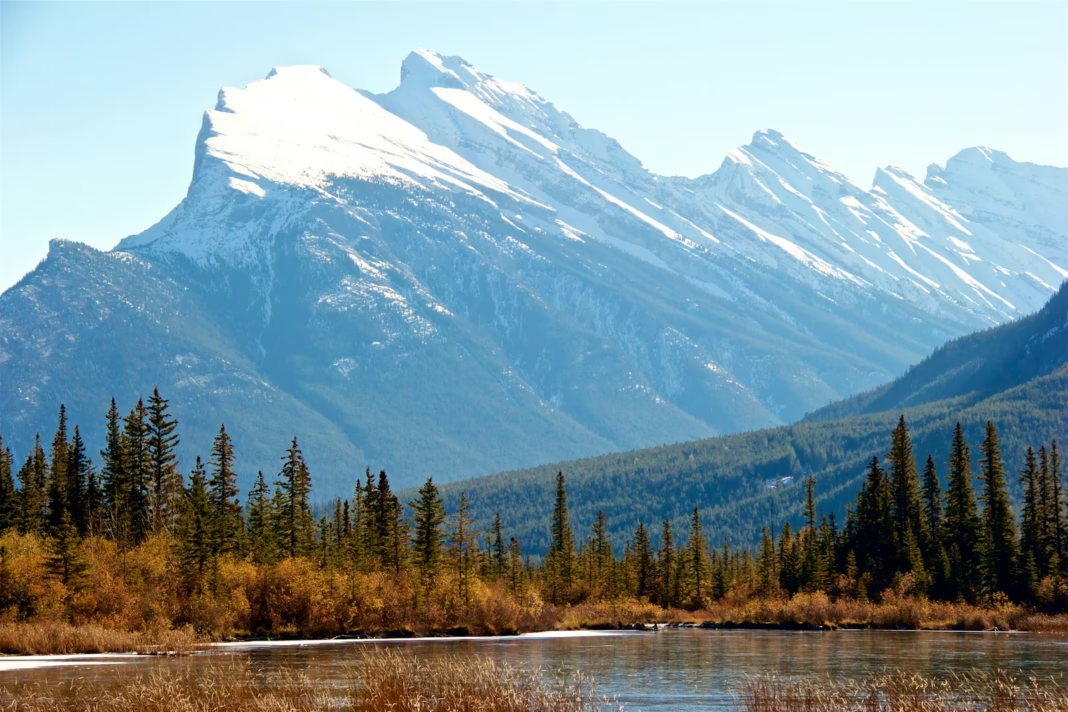
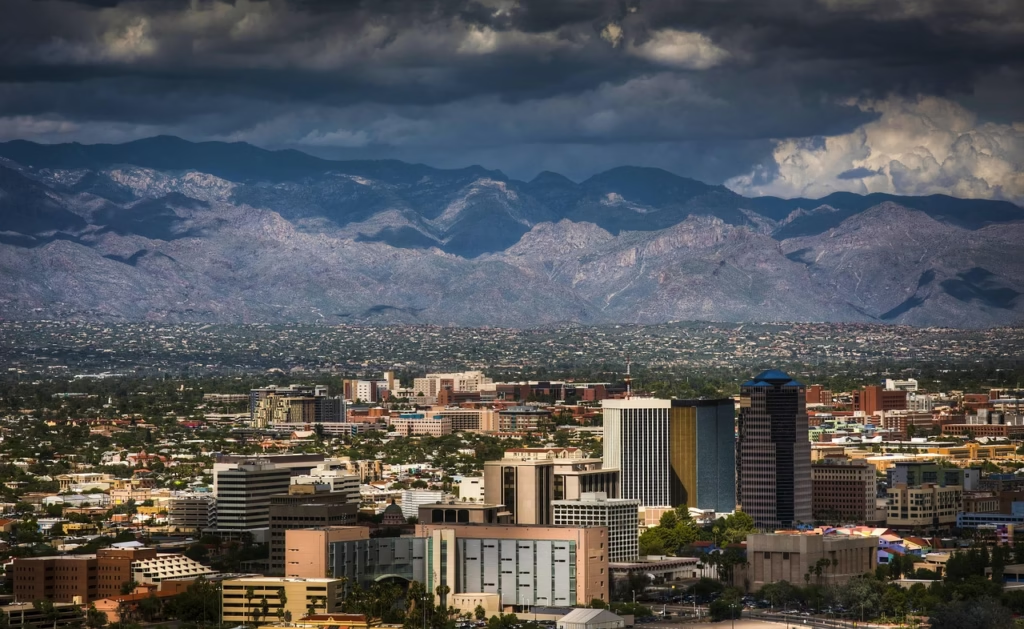
The Sonoran Desert, often perceived as a vast expanse of arid beauty, holds a profound secret for cycling aficionados: Mount Lemmon, Arizona’s crown jewel of climbing. Rising majestically from the desert floor to 9,159 feet (2,791 metres), this isn’t merely a mountain; it’s a pilgrimage for those who seek the ultimate test of endurance and climbing prowess. Tucson serves as the gateway to this remarkable experience, offering a unique blend of desert charm and alpine grandeur that has quietly cultivated a reputation amongst serious road cyclists worldwide.
Mount Lemmon’s legendary status is etched in cycling history, a climb that has tested the mettle of countless professionals and amateurs alike. The sheer elevation gain of over 6,000 feet (1,830 metres) and persistent gradients make it one of North America’s most formidable road climbs, comparable to iconic European ascents but with a uniquely American character.
The Catalina Highway: A Ribbon of Ascending Challenge
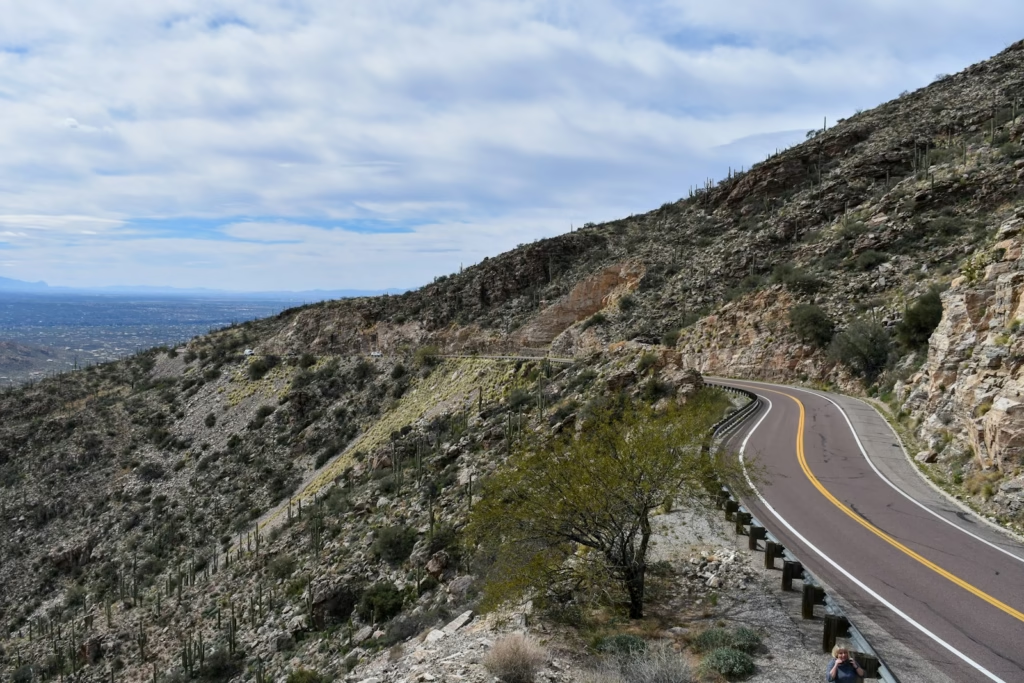
The primary route to the summit is the Catalina Highway, officially designated as State Route 77 (SR-77). This paved artery, stretching approximately 27 miles (43 kilometres) from the desert floor to Summerhaven village near the summit, is a masterpiece of engineering that offers a sustained, relentless climb without many plateaus, forcing riders into a constant rhythm of exertion.
Route Specifics:
- Total distance: 27 miles (43km) from start to Summerhaven
- Elevation gain: 6,200 feet (1,890 metres) from base to top
- Starting elevation: 2,900 feet (884 metres)
- Summit elevation: 9,100 feet (2,774 metres)
- Average gradient: 5.1%
- Maximum sustained gradient: 8-10% in switchback sections
- Temperature variation: 20-30°F (11-17°C) drop from base to summit
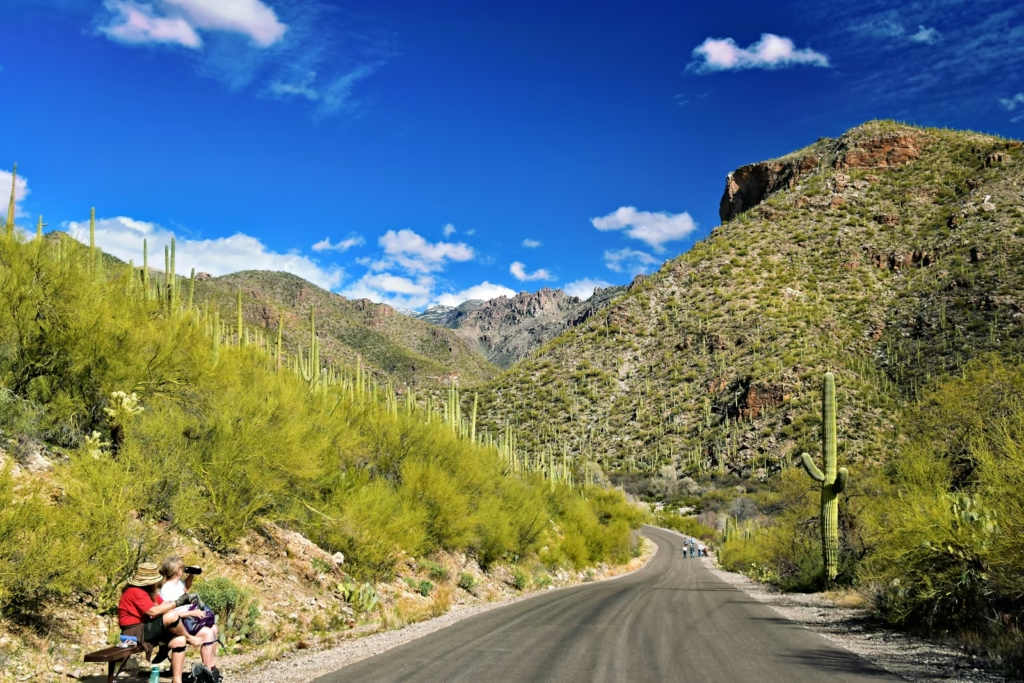
The climb begins in earnest just outside Tucson city limits, where the road begins its relentless ascent through five distinct ecological life zones, from Sonoran Desert scrub through pine forests to alpine conditions at the top. This biological diversity mirrors the physical demands placed on riders as they ascend.
Key Segments of the Mount Lemmon Ascent
Understanding the climb’s distinct phases aids in pacing and mental preparation, transforming an amorphous struggle into a series of manageable battles. Much like tackling long-distance endurance challenges, breaking Mount Lemmon into segments makes the enormous undertaking more approachable.
Miles 0-8: The Desert Floor and Initial Gradients
The early miles from Tucson are deceptively gentle, averaging just 3-4% as the road winds through desert landscape. However, the heat is a formidable adversary from the outset, with temperatures often reaching 95-105°F (35-40°C) at the base during peak season. The scrub and cacti give way slowly to more diverse flora as gradient begins to assert itself more firmly around mile 5.
Key landmarks:
- Milepost 0: Official start near Catalina Highway/Tanque Verde Road junction
- Mile 5: Molino Basin Campground, first significant gradient increase
- Mile 8: Prison Camp, popular turnaround for shorter rides
This section is about finding a sustainable rhythm and managing effort in the heat. Many experienced riders start before 7am to avoid the worst of the desert temperatures.
Miles 8-18: The Switchbacks and Middle Mountain
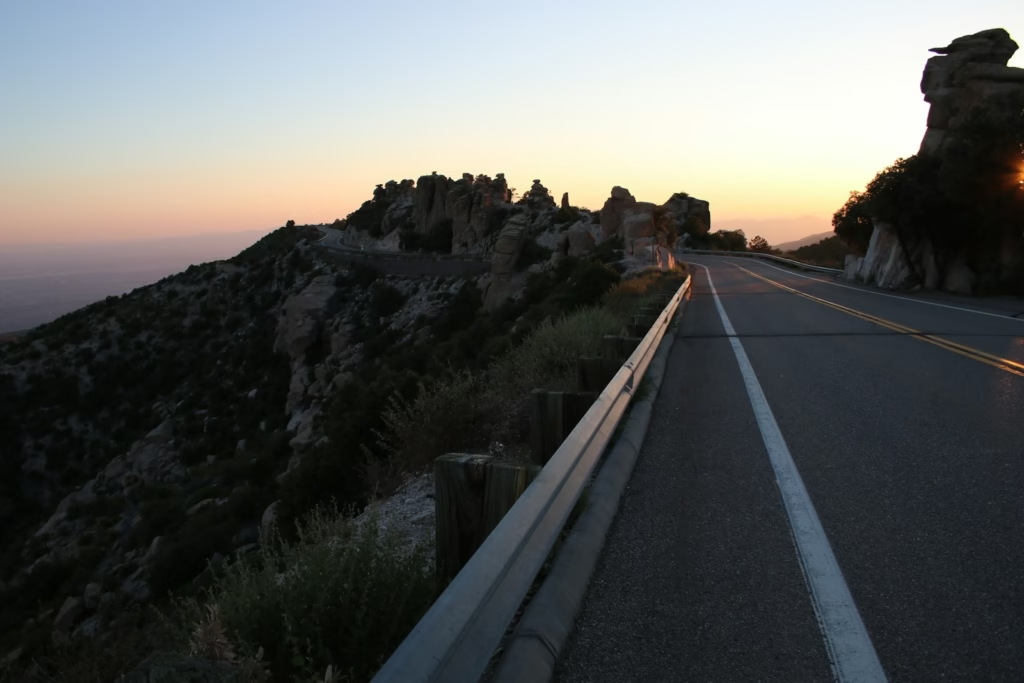
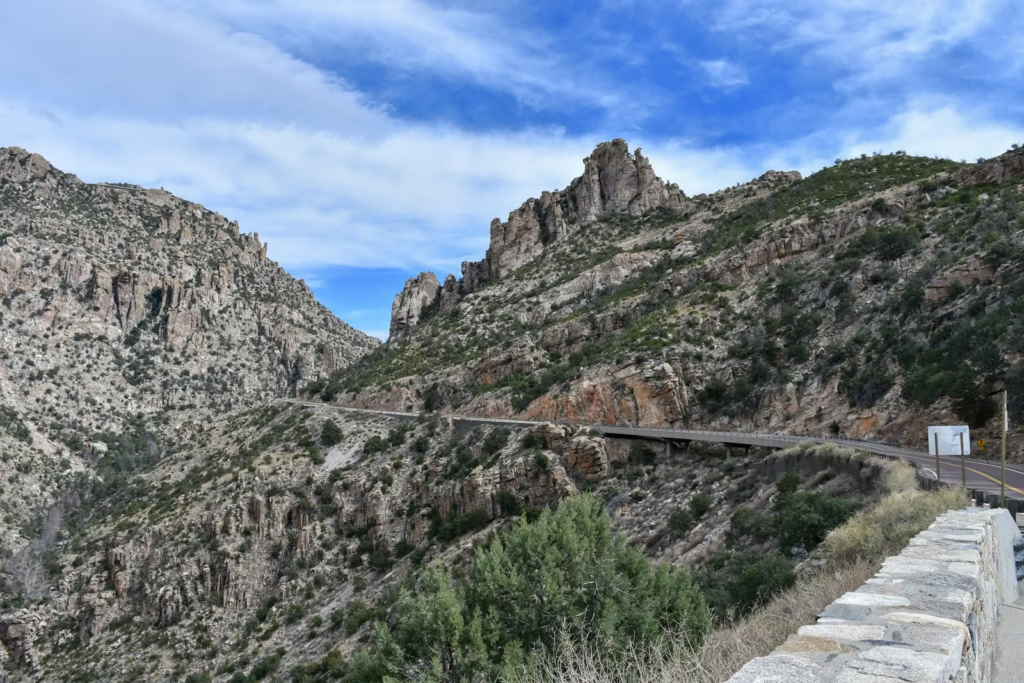
As you enter the higher elevations beyond mile 8, the landscape transforms dramatically. This is where the notorious switchbacks of Mount Lemmon come into play, carved into the mountainside with gradients that often intensify to 7-10%. Each corner turned presents a new, steeper vista, relentlessly reminding you of the altitude yet to be conquered.
Critical sections:
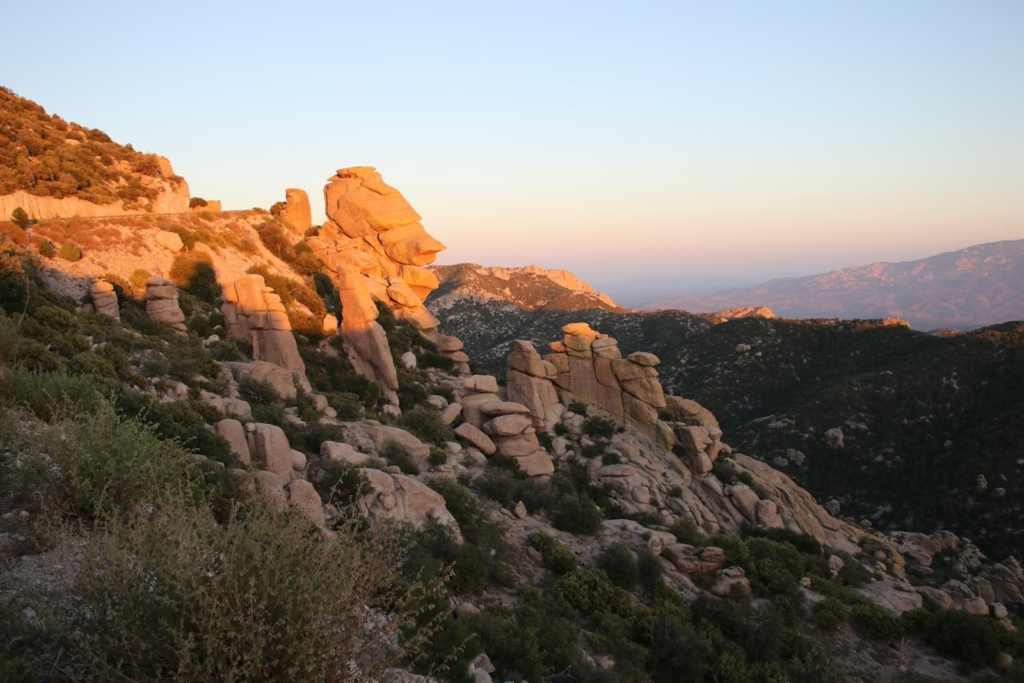
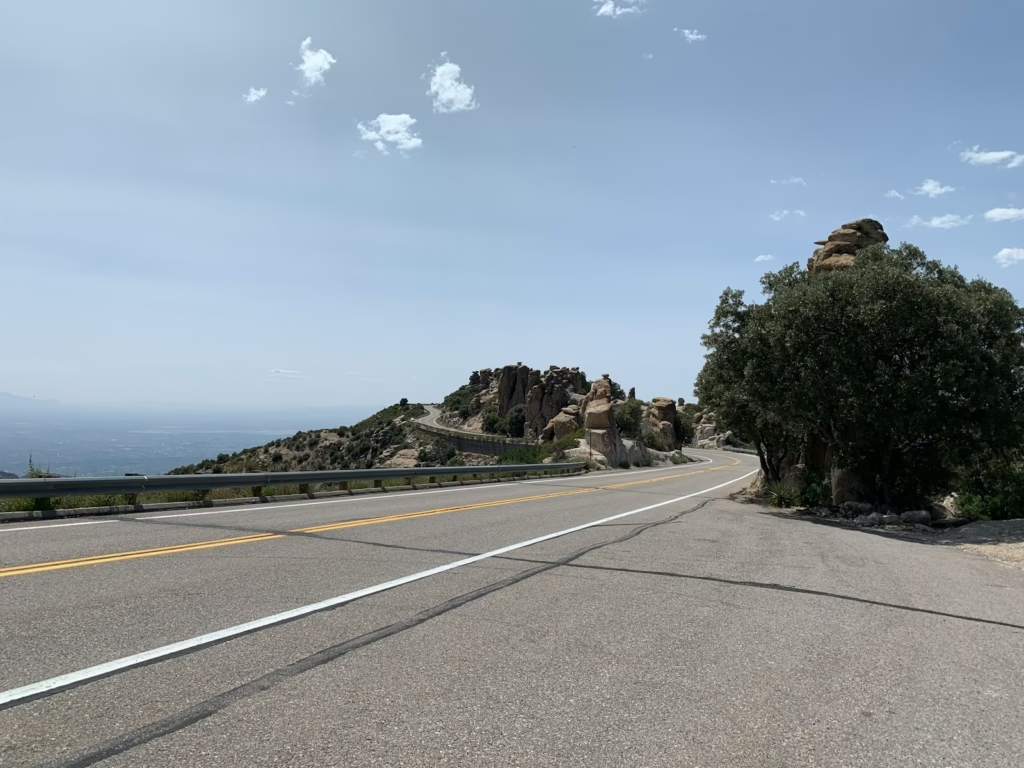
- Mile 12: Windy Point Vista, 5,830 feet elevation, spectacular views
- Mile 13-15: Steepest sustained section, averaging 8%
- Mile 16: San Pedro Vista, halfway point in elevation gain
- Mile 18: Geology Vista, 7,000+ feet, significant cooling begins
The Strava segment “Catalina Highway Climb Full” has over 12,000 recorded attempts, with competitive times ranging from 1:45 (professional level) to 3:30+ hours for strong amateurs. The King of the Mountain (KOM) stands at an astonishing 1:21, set by professional cyclist Joe Dombrowski.
Miles 18-27: The Upper Mountain and Alpine Transition
Beyond mile 18, the character evolves once more. Vegetation shifts from Sonoran Desert flora to Ponderosa pine and eventually Douglas fir forests. The air becomes noticeably cooler and thinner, a welcome relief but also a stark reminder of physiological demands at 7,000+ feet.
Upper section highlights:
- Mile 22: Palisades Visitor Centre, 8,000 feet
- Mile 24: Final significant gradient section
- Mile 26: Summerhaven village
- Mile 27: Mount Lemmon Ski Valley (winter only)
The road may appear to mellow in places, but the relentless upward trajectory and thinning air combine to make these final miles particularly challenging. The summit area offers tangible and glorious reward for the arduous journey, with temperatures 25-30°F cooler than the desert floor.
Historical Significance and Notable Performances
Mount Lemmon has been the proving ground for many professional cyclists. Its consistent presence on training calendars of WorldTour teams during winter training camps attests to its significance. Teams including Education First-EasyPost, Rally Cycling, and numerous development squads have used this climb for altitude training and race preparation.
The annual Mount Lemmon Bicycle Hill Climb, running since the 1980s, typically held in October, is one of Arizona’s most competitive cycling events. The course record of 1:21:34 was set by professional climber Joe Dombrowski, averaging over 20 mph up the entire 27-mile ascent.
Whilst not a regular fixture on professional racing circuits like European grand tours, Mount Lemmon’s demanding profile has drawn comparisons to iconic climbs including Alpe d’Huez and Monte Zoncolan. The sheer persistence and elevation gain offers analogous training benefits, making it a strategic objective for any rider looking to build significant climbing strength.
Tucson: A Cyclist’s Base Camp
Tucson itself transcends its role as a mere staging post for Mount Lemmon. The city embraces its cycling culture with year-round rideable weather (outside peak summer), boasting over 131 miles of paved multi-use path on The Loop, plus hundreds of miles of dedicated bike lanes. The hospitality and infrastructure cater specifically to visiting cyclists, from specialised services to cyclist-friendly accommodation.
Accommodation Options for Cyclists
Selecting the right base is crucial for a successful cycling trip. Whilst luxury resorts offer comfort, practical considerations often lead to strategically located and cyclist-friendly options.
Premium Option: The Westin La Paloma Resort & Spa
For those seeking upscale accommodation, The Westin La Paloma offers excellent amenities positioned in the foothills of the Santa Catalina Mountains, providing convenient access to the Catalina Highway.
Cyclist advantages:
- Secure bike storage facilities
- Multiple pools for recovery
- On-site spa for post-ride massage
- Early breakfast service available
- 16 miles from Tucson International Airport
- 20-minute drive to Catalina Highway start
The resort underwent a $35 million renovation in 2023, featuring 486 newly redesigned rooms with balconies overlooking desert and mountain vistas. Whilst a higher-end option, the recovery amenities and location make it popular with serious training camps.
Mid-Range Properties Near Campbell Avenue
This area provides excellent access to routes leading towards the mountains with a range of cyclist-conscious mid-tier hotels:
- Hotels with bike storage: Several establishments along Campbell Avenue understand cyclist needs, offering secure storage, cleaning stations, and early breakfast options
- Proximity advantage: 15-20 minute drive to Catalina Highway base
- Budget-conscious: $80-150 per night range
- Dining access: Close to numerous restaurants and grocery stores
Properties worth investigating include Hampton Inn & Suites and Homewood Suites, both with positive cyclist reviews.
Vacation Rentals for Groups and Extended Stays
For longer stays or groups, Airbnb and VRBO properties offer advantages:
- Private garage or dedicated bike storage space
- Kitchen facilities for meal preparation and nutrition control
- Often more cost-effective for 7+ day stays
- Popular areas: Catalina Foothills (closest to climb), Sam Hughes neighbourhood (central location)
Critical requirement: Prioritise properties with secure indoor or garage storage and confirm bike accommodation before booking.
Budget-Friendly Options
For truly budget-conscious cyclists, several motels on Tucson’s outskirts provide basic accommodation:
- Rates typically $50-80 per night
- Due diligence regarding bike security is essential
- Consider properties near Prince Road for access to The Loop
Tucson’s Dining Scene and Post-Ride Refuelling
After demanding rides, Tucson offers diverse culinary options for recovery and relaxation. The city’s Mexican heritage heavily influences cuisine, providing hearty, flavourful options perfect for carb-loading.
Mexican and Southwest Cuisine
- El Charro Café: Claiming to be America’s oldest Mexican restaurant in continuous family operation (since 1922), offering authentic regional Sonoran dishes
- Mi Nidito Restaurant: Local favourite known for traditional dishes, generous portions, popular with locals
- Guadalajara Grill: Multiple locations, reliable quality, cyclist-friendly portions
Breweries and Casual Dining
For relaxed post-ride atmosphere, Tucson boasts a growing craft beer scene:
- Borderlands Brewing Company: Popular downtown spot with rotating food trucks
- Pueblo Vida Brewing Company: South Tucson location, strong local following
- 1912 Brewing Company: Multiple locations, good selection of craft beers
Quick Recovery Options
- Beyond Bread: Excellent sandwiches, multiple locations, cyclist-friendly
- Prep & Pastry: Popular breakfast/brunch spot, high-quality ingredients
- Baja Cafe: Known for massive breakfast portions, perfect for pre-ride fuelling
Beyond Mount Lemmon: Diverse Cycling Terrain
Whilst Mount Lemmon dominates conversation, Tucson and its surroundings offer a broader spectrum of cycling experiences. The Sonoran Desert itself provides a unique backdrop for varied riding, from dusty trails to rolling desert roads, making it comparable to exploring diverse cycling destinations worldwide.
Desert Mountain Bike Trails
For mountain bikers, opportunities in and around Tucson are abundant. The dry desert environment creates a unique trail network characterised by packed dirt, rocky sections, and technical challenges.
Premier Trail Systems:
- 50-Year Trail: 7.5 miles of challenging singletrack with rocky technical sections, elevation gain of 1,200 feet
- Fantasy Island: Extensive network of flowing singletrack, consistently rated amongst America’s top urban trail systems
- Sweetwater Preserve: 3,000+ acres with 30+ miles of trails, ranging from beginner to advanced
Paved Roads and Smaller Climbs
Beyond Mount Lemmon’s colossal ascent, Tucson offers numerous paved road routes catering to various fitness levels and preferences.
Popular Road Routes:
- Gates Pass Road: Shorter scenic climb (8 miles, 1,000 feet gain) offering panoramic views of Tucson Mountains, popular for sunset rides
- Old Spanish Trail: Rolling 25-mile loop from east Tucson, mix of open desert and residential areas
- Saguaro National Park East Loop: 8-mile paved loop through iconic saguaro cactus forest, minimal elevation, spectacular scenery
- Reddington Pass: Alternative desert climb, 18 miles one-way, 3,000+ feet elevation gain, quieter than Lemmon
The Loop (Chuck Huckelberry Loop): This 131-mile paved multi-use path circling the greater Tucson metro area is essential for recovery rides, commuting, or easy spinning days. The Loop connects to numerous trailheads and provides car-free riding ideal for warm-ups or cool-downs.
Cycling Resources and Local Community
Tucson’s cycling community is vibrant and supportive, with local bike shops serving as hubs for information, ride organisation, and mechanical support.
Essential Local Bike Shops and Rental Companies
These establishments transcend mere retail, serving as anchors of the local cycling scene:
- Premier road bike rental specialist
- High-end carbon road bikes (Trek, Specialized)
- Rates: $85-135/day depending on specification
- Mount Lemmon-specific gearing recommendations
- Expert wheel builds and custom fitting
- Cannondale Synapse and Pinarello fleet
- Delivery service available
- Popular with El Tour de Tucson participants
- Rates: $75-125/day
- Excellent customer service reputation
Tucson Bike Rentals (Loop specialists)
- Multiple locations along The Loop
- Trek, Specialized, Giant bikes
- Extended hours: 6am-10pm daily
- Road, gravel, mountain, and e-bike options
- Rates: $40-100/day
Arizona Cyclist
- Well-established shop with knowledgeable staff
- Full-service mechanical department
- Group rides are organised weekly
Bicycle Ranch
- Caters to both road and mountain bikers
- Friendly atmosphere, good gear selection
- Regular community rides
Organised Rides and Cycling Events
Tucson hosts several significant cycling events throughout the year, bringing together riders of all levels.
El Tour de Tucson One of the largest cycling events in the United States, attracting 9,000+ participants annually for scenic and challenging road rides. Held in November, it offers distances from 30 to 104 miles. The full 104-mile “Boneshaker Loop” circumnavigates the Tucson basin with approximately 3,500 feet of climbing.
Mount Lemmon Hill Climb Annual timed ascent of the complete Catalina Highway, typically held in October. This is the definitive test for Mount Lemmon specialists, with age-group categories and competitive fields.
24 Hours in the Old Pueblo One of America’s premier 24-hour mountain bike races, held at Catalina State Park in February. Teams and solo riders tackle a 16-mile desert loop course non-stop.
Local Club Rides Many bike shops and local cycling clubs organise regular weekly rides:
- Greater Arizona Bicycling Association (GABA): Multiple weekly rides, various paces
- Southern Arizona Roadrunners: Competitive group rides
- Tucson Mountain Bike Association: Trail rides and advocacy
Check shop websites and social media for current schedules.
When to Visit: Optimising Your Tucson Cycling Experience
The Sonoran Desert’s climate presents distinct seasonality, significantly impacting the cycling experience. Whilst riding is possible year-round, certain periods offer optimal conditions.
Spring (March – May): Peak Season
Widely considered the prime season for cycling in Tucson and tackling Mount Lemmon.
Temperatures:
- Desert base: 75-95°F (24-35°C) daytime
- Mount Lemmon summit: 50-70°F (10-21°C)
- Perfect climbing conditions mid-morning
Advantages:
- Desert wildflower blooms add visual spectacle
- Long daylight hours
- Consistent weather patterns
- Road conditions excellent post-winter
Crowds:
- Popular period, expect more cyclists on Mount Lemmon weekends
- Book accommodation well in advance
Autumn (September – November): Second Peak
Another excellent window offering comfortable conditions.
Temperatures:
- Desert base: 70-90°F (21-32°C)
- Summit: 45-65°F (7-18°C)
- September can still be hot, October-November ideal
Events:
- El Tour de Tucson (November)
- Mount Lemmon Hill Climb (October)
- Makes for busy but exciting cycling atmosphere
Air Quality:
- Generally excellent, contributing to clearer views
- Monsoon storms typically finish by mid-September
Winter (December – February): Escaping Northern Cold
Tucson offers a mild winter, attracting cyclists escaping colder climates.
Temperatures:
- Desert base: 60-70°F (15-21°C) daytime
- Summit: 30-50°F (−1-10°C)
- Cool mornings, pleasant afternoon riding
Considerations:
- Mount Lemmon summit conditions: Can experience snow and ice, potentially closing upper highway sections
- Always check Arizona DOT road conditions before attempting summit
- Lower elevation routes remain excellent
- Professional teams often train in Tucson during this period
Summer (June – August): Extreme Heat Challenge
This season presents most significant challenges due to extreme temperatures.
Temperatures:
- Desert base: 100-110°F+ (38-43°C+) daytime
- Summit: 75-85°F (24-29°C)
- Dangerous heat index during peak hours
Monsoon Season (July-August):
- Dramatic afternoon thunderstorms
- Flash flood risks in washes and canyons
- Brief cooling effect but increased danger
Recommendations if visiting in summer:
- Riding limited to very early mornings (start by 5-6am)
- Mount Lemmon offers respite from intense base heat
- Hydration absolutely critical, 3+ bottles minimum
- Many serious cyclists avoid this period entirely
Training Protocols for Mount Lemmon
Professional teams apply structured protocols to leverage Mount Lemmon’s unique training benefits, similar to altitude training strategies used in other mountain destinations.
Pacing Strategy for First-Time Ascent
Conservative Approach (Recommended):
- Target 2:30-3:00 hours for strong amateur riders
- Maintain conversational pace through mile 15
- Save energy for steeper sections miles 13-18
- Final 9 miles at steady tempo, no heroics
Power-Based Targets:
- First 15 miles: 60-65% of FTP
- Miles 15-22: 70-75% of FTP
- Final push: 75-80% of FTP if feeling strong
Heart Rate Guidance:
- Expect 10-15 bpm increase at equivalent effort due to altitude
- Stay in Zone 2-3 for first half
- Zone 3-4 for middle sections
- Avoid Zone 5 until final miles
Nutrition and Hydration Strategy
Hydration:
- Minimum 3 bottles for full ascent
- Start drinking before feeling thirsty
- Electrolyte supplements essential
- Water fountains available at Molino Basin (mile 5) and Palisades (mile 22)
Fuelling:
- 60-90g carbohydrates per hour
- Begin fuelling at mile 5-8, don’t wait until hungry
- Gels, bars, and easily digestible foods
- Small, frequent intake better than large amounts
Where to Shop:
- Sprouts Farmers Market: Excellent selection of sports nutrition
- Whole Foods: Wide range, convenient locations
- REI: Emergency supplies and last-minute gear
- Local convenience stores: Available but limited sports-specific products
Practical Cycling Considerations
Bike Rental versus Own Bike
Bringing your own bike offers familiarity and precise fit, crucial for a 2.5+ hour climb. However, quality rental options exist.
Rental Advantages:
- Avoid airline fees ($100-200+ each way)
- No risk of travel damage
- Local shops provide Mount Lemmon-specific gearing
- Mechanical support included
Rental Disadvantages:
- Different bike feel and fit
- May not match personal preferences
- Cost: $85-135/day adds up for week-long trips
Gearing Recommendations: For Mount Lemmon, compact or semi-compact chainrings with wide-range cassettes essential:
- 50/34 or 52/36 chainrings
- 11-32 or 11-34 cassette minimum
- Some riders prefer 11-36 for final miles
Safety and Road Considerations
Mount Lemmon’s Catalina Highway is well-maintained but demands respect and awareness.
Key Safety Factors:
- Descents: Speeds easily exceed 50+ mph, check brakes before every descent
- Temperature management: Carry arm warmers and gilet, 25°F+ temperature variation
- Traffic: Weekends see increased traffic after 10am, start early (7-8am optimal)
- Road surface: Generally excellent, watch for gravel on tight switchback corners
- Wildlife: Deer, javelina, and occasional black bears, especially early morning
- Emergency services: Limited mobile coverage above mile 15, inform someone of plans
Local Driving Culture: Most Tucson drivers are cyclist-aware, especially on established routes. The Catalina Highway sees regular cycling traffic, and most motorists give appropriate space. However:
- Tourist drivers less predictable, especially weekends
- Maintain high visibility with lights and bright clothing
- Ride predictably, signal intentions clearly
- Shoulders vary in width, some sections minimal
Comparing Mount Lemmon to Other Climbs
Mount Lemmon occupies unique space amongst world-class cycling climbs:
vs. European Classics:
- Longer than most Alpine climbs (comparable to Alpe d’Huez at 21km)
- Less severe maximum gradients (8-10% vs. 12-15%+)
- Greater total elevation gain than many Tour de France climbs
- More consistent gradient, fewer respites
vs. Other US Climbs:
- Similar to Mount Evans, Colorado (but less altitude)
- Longer than most California climbs (Palomar, Hamilton)
- Better road surface than many western climbs
- More accessible year-round than high-altitude Colorado options
For cyclists exploring cycling destinations in North America, Mount Lemmon represents one of the most accessible world-class climbing experiences.
Conclusion: Mount Lemmon as Your Proving Ground
Mount Lemmon, and the wider Tucson cycling ecosystem, transcends typical North American cycling destinations. Its demanding profile offers genuine world-class climbing challenge, from the relentless 27-mile ascent of the Catalina Highway to technical desert trails and rolling recovery rides along The Loop. For dedicated cyclists, it presents a unique opportunity to test limits, build climbing strength against a backdrop of dramatic ecological transition from desert to alpine forest, and return home fundamentally stronger.
The mountain combines natural beauty with physical demand, a canvas where personal cycling narratives are written in sweat and perseverance. Whether you’re a professional seeking altitude training, an amateur targeting a gran fondo, or passionate cyclist craving iconic climbs, Mount Lemmon delivers an unforgettable experience. The question isn’t whether Teide will test you, but how you’ll measure up to one of North America’s most legendary ascents.
For more cycling travel inspiration beyond Tucson, explore our guides to cycling destinations worldwide and discover what makes each region unique.
Frequently Asked Questions
What is the best time of year for cycling Mount Lemmon in Tucson?
The optimal periods are spring (March to May) and autumn (September to November). Spring offers temperatures of 75-95°F at the base and 50-70°F at the summit, with desert wildflower blooms. Autumn provides similar comfortable conditions with the added excitement of cycling events like El Tour de Tucson in November. Winter is viable but check summit conditions for potential snow and ice. Summer (June-August) is extremely hot at the base (100-110°F+) and best avoided unless riding before 7am.
How challenging is cycling Mount Lemmon?
Mount Lemmon is genuinely challenging and ranks amongst North America’s most difficult road climbs. The full 27-mile ascent involves 6,200 feet of elevation gain, averaging 5.1% gradient with sustained sections of 8-10%. Strong amateur riders typically complete it in 2:30-3:30 hours, whilst competitive times range from 1:45-2:15. The combination of distance, sustained gradient, altitude (topping out at 9,100 feet), and temperature variation demands solid fitness, appropriate gearing (compact chainrings with 11-32+ cassette), and proper pacing strategy.
Are there bike rental options specifically for Mount Lemmon in Tucson?
Yes, several high-quality rental companies cater specifically to Mount Lemmon climbers. Fair Wheel Bikes offers premium carbon road bikes ($85-135/day) with Mount Lemmon-appropriate gearing. Tucson Bicycle Rentals provides Cannondale and Pinarello options ($75-125/day) with delivery service. Tucson Bike Rentals has multiple locations with Trek and Specialized bikes ($40-100/day). All shops understand Mount Lemmon’s demands and provide compact gearing (50/34 or 52/36) with 11-32 or wider cassettes essential for sustained climbing.
What should I bring for safety when cycling Mount Lemmon?
Essential safety items include: layered clothing for 20-30°F temperature variation (arm warmers, gilet, light jacket), minimum 3 water bottles (fountains available at miles 5 and 22), high-SPF sunscreen for intense UV at altitude, bright clothing and lights for visibility, spare tubes and basic tools, nutrition (60-90g carbs/hour), and fully charged phone (though coverage limited above mile 15). Always inform someone of your route and expected return time. Check Arizona DOT road conditions before riding, especially in winter when the summit may have snow/ice.
How does Mount Lemmon compare to other famous cycling climbs?
Mount Lemmon ranks amongst the world’s longest sustained road climbs. At 27 miles and 6,200 feet of elevation gain, it exceeds most European Alpine climbs in distance (comparable length to Alpe d’Huez’s 21km). The average 5.1% gradient is more forgiving than European monsters like Angliru or Monte Zoncolan, but the relentless nature and altitude make it equally challenging. Unlike many Colorado climbs, Mount Lemmon is accessible year-round (weather permitting) and features a superior road surface. The dramatic ecological transition from Sonoran Desert to alpine forest is unique amongst world-class climbs.