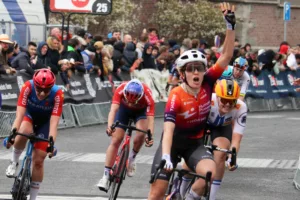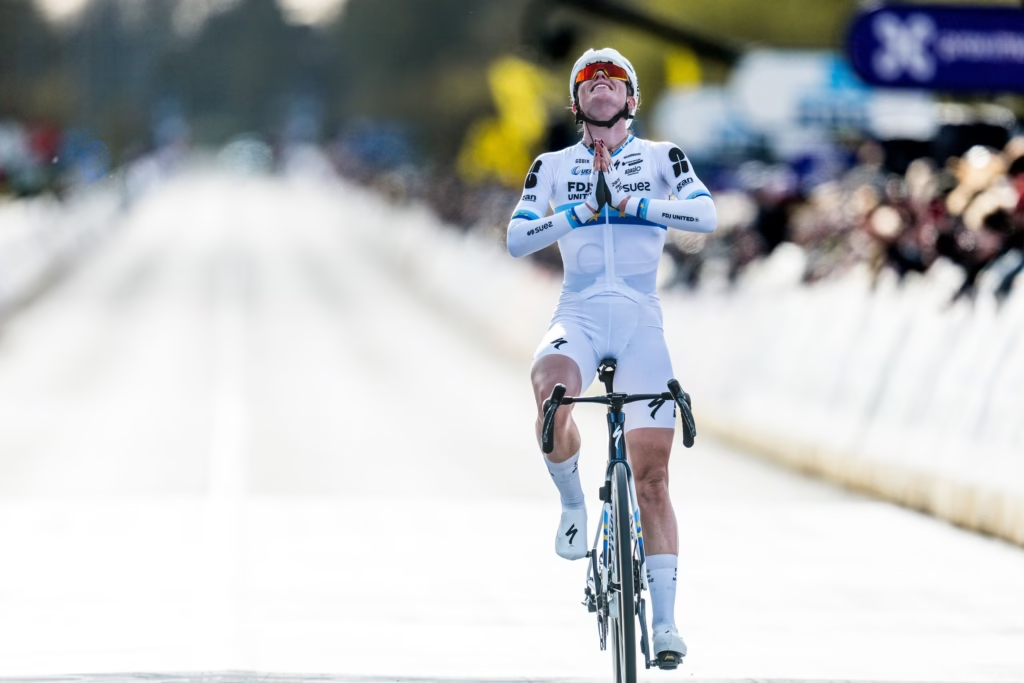
Demi Vollering finally added the Tour of Flanders Women to her palmares on Sunday 5th April, attacking on the Oude Kwaremont and riding alone to victory in Oudenaarde after 164.1km of cobbles, climbs and constant pressure.
The FDJ United-SUEZ rider made the race-winning move on the penultimate climb and never looked in danger after that, holding off Pauline Ferrand-Prevot and Puck Pieterse behind. Ferrand-Prevot took 2nd place for the second year in a row, while Pieterse rounded out the podium after another strong ride in the biggest cobbled Monument of the women’s season.
A race that took time to open up
The opening part of the race had been more open than many expected. A sizeable breakaway was allowed to build a big advantage as the bunch hesitated and the wind made the rhythm difficult to control. For a while, that gave the race an unusual shape, with the gap stretching rather than shrinking as the leaders moved deeper into the course.
That changed once the route returned to the familiar run of sectors and bergs around Oudenaarde. The pressure rose steadily on the approach to the Molenberg, and from that point the race began to look much more like the Tour of Flanders Women usually does, attritional, tense and increasingly selective.
FDJ United-SUEZ shaped the decisive phase
A series of crashes, accelerations and constant fights for position gradually reduced the field. Riders were being distanced not only by the climbs themselves, but by the effort needed to hit each sector in the right place. That was where FDJ United-SUEZ really began to take control.
Franziska Koch, Elise Chabbey and Célia Gery were all central to that shift. They repeatedly drove the pace, forced the bunch into single file and made it much harder for rivals to move up or recover if they lost wheels. The race was not blown apart in one single moment at first. Instead, it was tightened section by section until only the strongest riders remained properly in contention.
That work mattered because by the time the race reached the crucial final climbs, several rivals were already far more isolated than they would have wanted to be. Vollering still had support and still had structure around her, while others were already having to think more defensively.
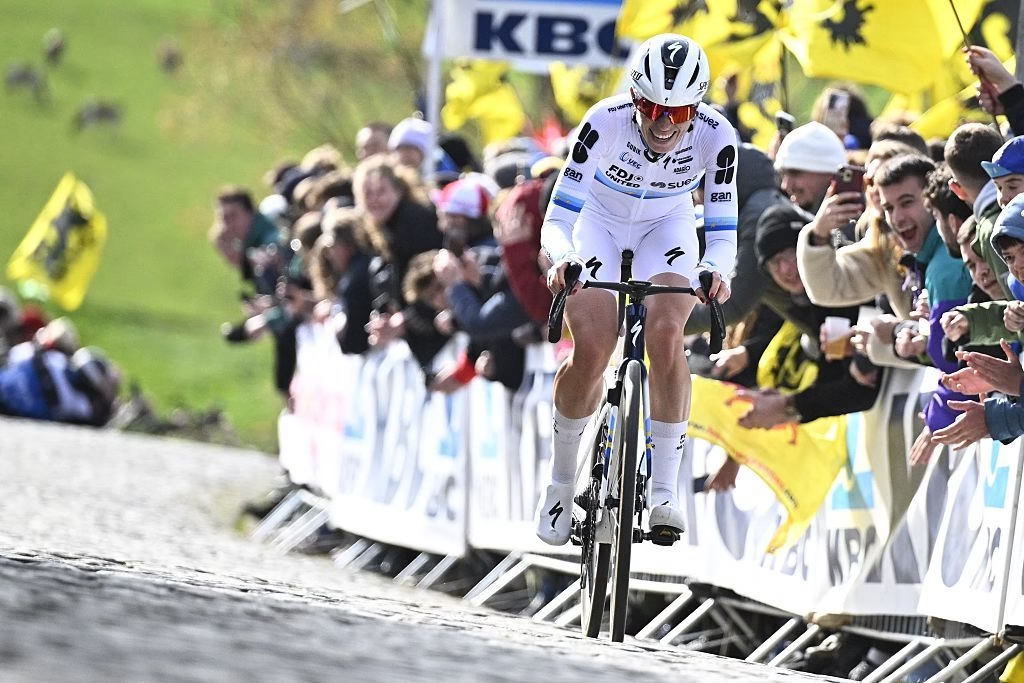 Photo Credit: Getty
The Oude Kwaremont made the difference
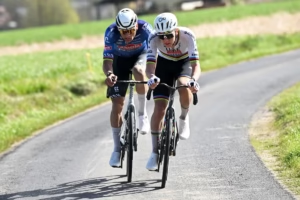
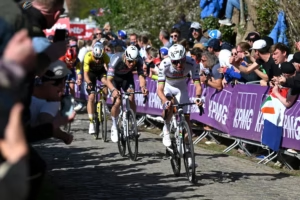
The Oude Kruisberg helped sharpen the front group, but the real turning point came on the Oude Kwaremont. Vollering accelerated hard on the cobbles and immediately put the race under maximum strain. Pauline Ferrand-Prevot was the closest to matching her at first, with Puck Pieterse fighting to stay in touch and Lotte Kopecky trying to limit the damage behind.
That move settled the race. Once Vollering had a gap, the contest stopped being about who still had cards to play and became about whether anyone could physically match her level. No one could.
The significance of the Kwaremont in this edition was not just that the winning attack happened there. It was that the race had been prepared for that moment over the previous hour. FDJ United-SUEZ had worn the race down, and Vollering delivered the final blow when the climb could do the most damage.
The chase never truly came together
Behind Vollering, the chase never found the cohesion needed to bring her back. Ferrand-Prevot and Pieterse both rode excellent races, but neither was able to organise a meaningful comeback once Vollering was gone. Further behind, riders such as Elisa Longo Borghini, Karlijn Swinkels, Silvia Persico, Lotte Kopecky and Zoe Backstedt were left fighting for the next positions rather than mounting a genuine challenge for the win.
That was one of the clearest features of the finale. Vollering was still growing her advantage while the riders behind were still trying to define their own objectives. Once that happens in a race like Tour of Flanders Women, the rider in front usually has the race under control.
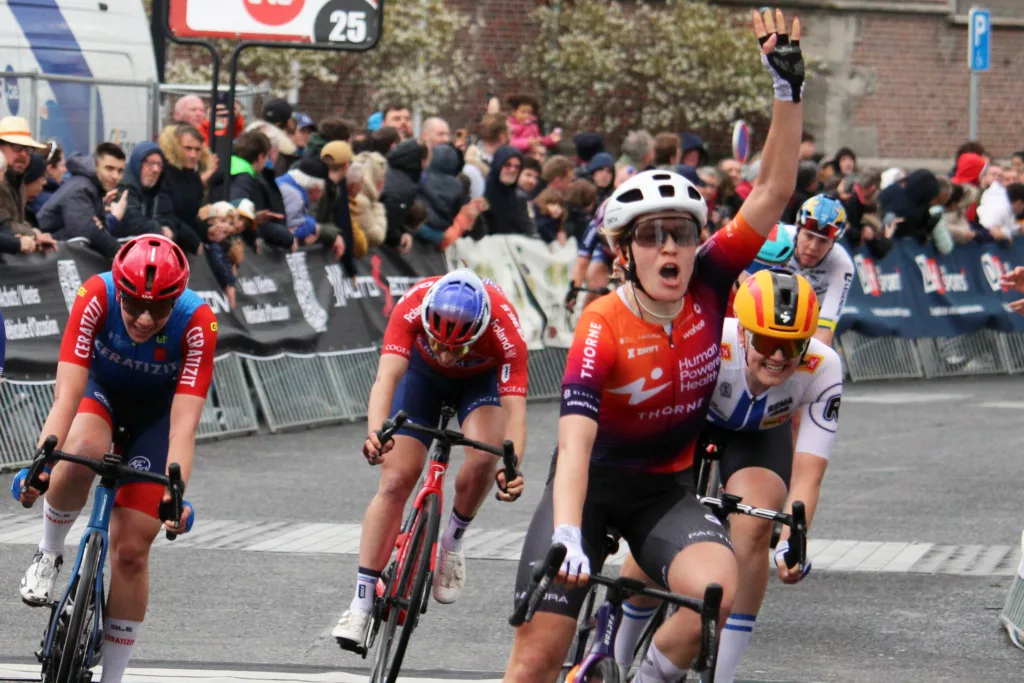
A statement win for Vollering
By the final run back to Oudenaarde, Vollering looked composed rather than desperate. Her pedal stroke remained smooth, the gap continued to grow, and the race increasingly felt settled. What she produced was not a late steal or a tactical surprise, but a clear display of superiority in the decisive part of the race.
For Ferrand-Prevot, another 2nd place underlined both her quality and her frustration. She was once again among the very best in the race, but once again found one rider stronger on the day. Pieterse’s 3rd place also confirmed how naturally she now fits this level of cobbled Monument racing.
Kopecky, chasing a record 4th Tour of Flanders title, had to settle for 4th after being unable to answer the decisive move. Zoe Backstedt’s ride into 5th was another reminder of her growing range in the biggest one-day races.
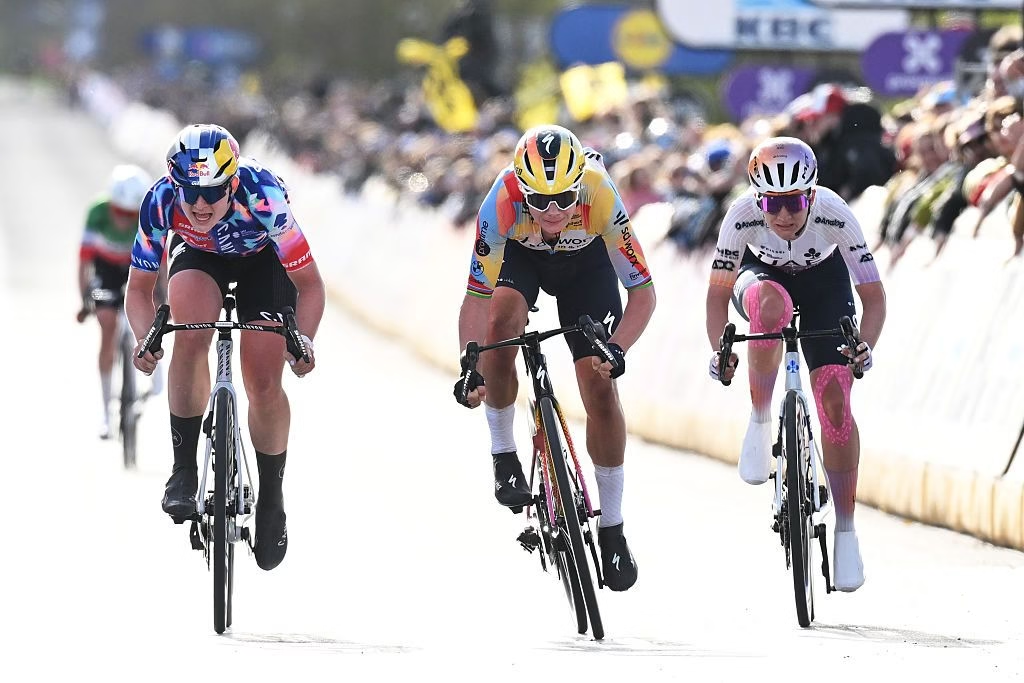 Photo Credit: Getty
Why this Tour of Flanders Women was won before the finish
What made this edition so compelling was the way it built in layers. The breakaway had freedom early, the bunch then began to apply pressure through the middle phase, and by the time the final sequence arrived, the race was already poised to break apart. Vollering’s attack was decisive, but it worked because the race had already been shaped to suit it.
That is often the truth of Tour of Flanders Women. The winning move may come on one famous climb, but the foundations for it are usually laid much earlier. That was exactly the case here. FDJ United-SUEZ controlled the shape of the race, then Vollering finished the job on the Oude Kwaremont.
Tour of Flanders Women 2026 result
Results powered by FirstCycling.com