Garmin’s Edge 550 is an unusual upgrade. It brings a noticeably brighter screen, quicker map handling and a broader collection of training tools to the company’s compact GPS range, but loses much of the battery endurance that made its predecessor attractive. At £379.99, the question is not whether it can record rides and guide a route. It is whether the improvements justify the money and the compromises.
This article contains affiliate links. Check the Garmin Edge 550 at Tredz. This is a research-based assessment of the Edge 550, drawing on Garmin’s published specifications and independent road tests rather than claiming first-hand use. The broad verdict is consistent: excellent mapping and training depth, an impressive display, and controls that feel increasingly awkward in a world of touchscreens.
The Edge 550 replaces the Edge 540 as Garmin’s button-operated performance computer. Its closest sibling is the Edge 850, which adds touch control and other conveniences at a higher price. That makes the 550 a particularly interesting proposition for riders who prefer physical buttons in the rain or while wearing gloves, provided those buttons are actually easy to operate.
What has changed from the Edge 540?
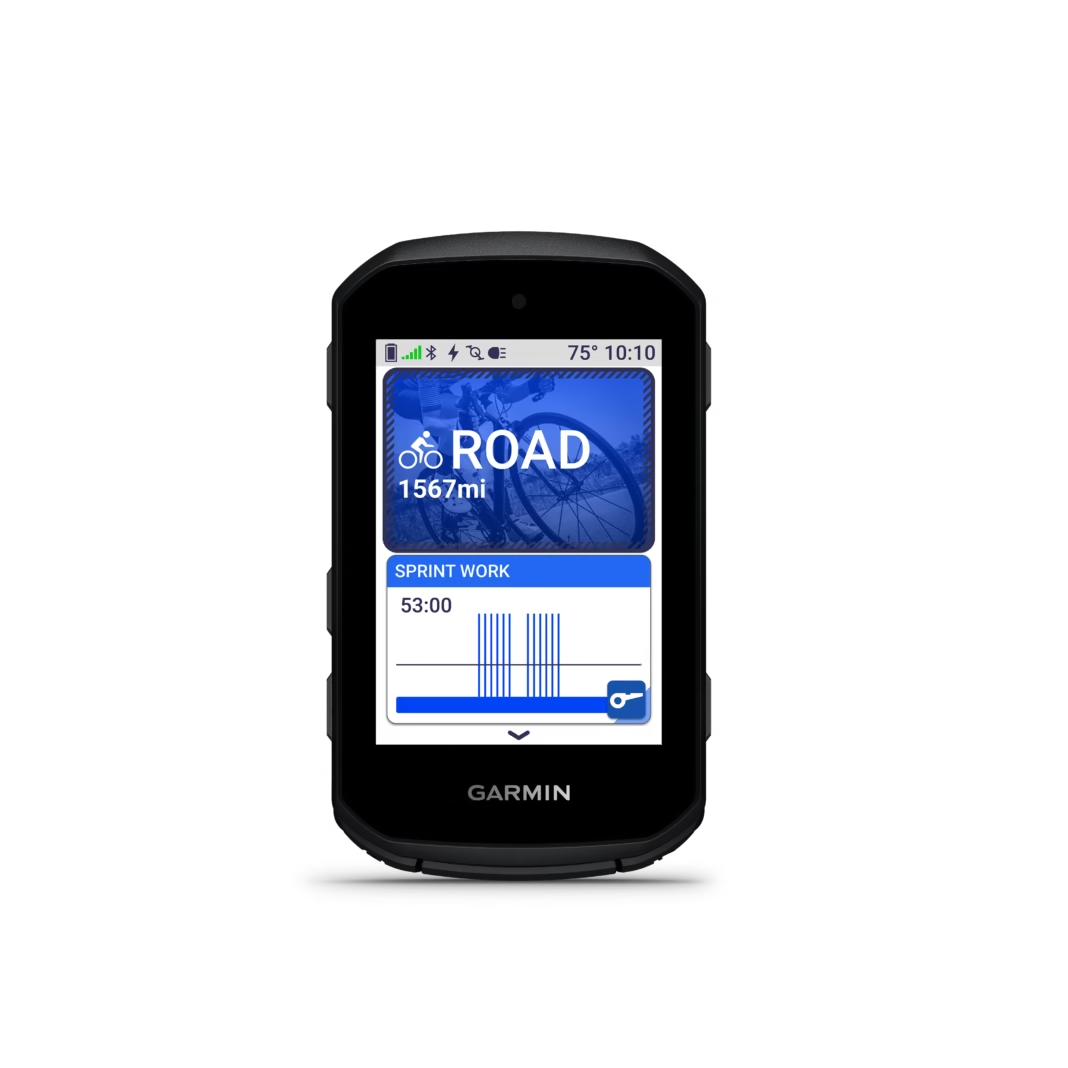
The most obvious upgrade is the 2.7-inch colour display, with a 420 by 600-pixel resolution. Garmin has made it brighter and more detailed, helping map lines, road names and data fields stand out. The casing is more angular and the device weighs about 110g, noticeably more than the Edge 540.
Garmin also claims faster processing and smoother map redraws. Those improvements matter when switching pages, zooming into junctions or recalculating a route. The device retains multi-band satellite positioning, extensive sensor compatibility and the deep Garmin Connect ecosystem.
The cost is battery life. Garmin quotes up to 12 hours under demanding conditions and 36 hours in battery saver mode. The Edge 540’s published endurance was considerably longer. Riders accustomed to charging infrequently, or spending entire days in the saddle with navigation running, should regard that as a substantial trade-off rather than a minor specification change.
Display and controls

The screen is the Edge 550’s clearest selling point. BikeRadar and Cyclingnews both found the brighter panel easier to read than the previous generation, particularly with maps and data-heavy pages. For a small computer mounted in front of the handlebars, legibility is more valuable than a long list of software additions.
Unfortunately, a sharper screen does not make the interface simpler. The Edge 550 relies on seven physical buttons. Independent testers found some of them small or recessed, making repeated presses awkward when riding. Moving around the map, changing settings or selecting less familiar functions can require several steps through nested menus.
There is a reasonable argument for physical controls on a wet ride. A reliable button can be preferable to an unresponsive touchscreen, especially in winter. But button-only design works best when the menu structure is exceptionally clear. The Edge 550 has so many functions that its controls can feel like a bottleneck. Garmin Connect lets riders configure some screens on a phone, reducing the amount of on-device setup needed.
Navigation and mapping
Navigation remains a strength. The Edge 550 supports detailed maps, turn-by-turn guidance, route loading, off-course alerts and rerouting. Multi-band GNSS helps positioning where satellite signals are difficult, although accuracy will still depend on the surroundings and route.
Garmin’s ClimbPro feature can display approaching climbs and break down gradients as a rider progresses. This is particularly useful on hilly sportives and unfamiliar training routes, where pacing matters more than knowing the total distance alone. The computer also supports road hazard reports submitted by other Garmin users, though their usefulness depends on local participation.
Independent testing found route following generally effective, but there were occasional quirks in junction alerts and rerouting decisions. The bigger complaint was interaction: panning or zooming a map with buttons takes more effort than tapping or swiping. Riders who frequently change destinations mid-ride should consider how often they would encounter that limitation.
Training and connected features
Garmin continues to offer one of the richest collections of training metrics on a bike computer. With suitable sensors, the Edge 550 can show power, heart rate, cadence, stamina estimates, training guidance and structured workouts. Some advanced features require a compatible power meter or heart-rate monitor, so not everything works straight out of the box.
Adaptive Garmin Cycling Coach plans, power guidance and smart fuelling prompts add depth for riders preparing for events. Garmin says the nutrition suggestions can take factors such as fitness, route demands and weather into account when the relevant data is available. These are aids to planning, not substitutes for a rider’s own understanding of hydration and energy needs.
GroupRide features can connect compatible Garmin users for shared routes and group information. There are also activity profiles for road, gravel and mountain biking, including higher-frequency GPS recording in supported off-road modes. The software is impressively comprehensive, but buyers should ask whether they will actually use these extras.
Battery life and charging
The claimed 12 hours of demanding use is enough for many training rides and weekend club outings, but less reassuring for all-day events. BikeRadar’s experience suggested Garmin’s estimate was plausible, while other independent assessments also identified the reduction from the Edge 540 as a disappointment.
Battery-saver mode stretches Garmin’s claimed runtime to 36 hours, although the way a rider configures brightness, satellite modes, sensors and navigation affects real-world endurance. The headline figure should not be treated as a guaranteed duration under every combination of settings.
USB-C charging makes topping up straightforward. For riders who charge their computer after each ride, the shorter endurance may be tolerable. For touring, audax or back-to-back long days, it changes the buying decision substantially. The brighter display is useful, but the trade-off is not free.
Specifications
The Edge 550 has a 2.7-inch colour display, 420 by 600-pixel resolution, a weight of approximately 110g, 32GB of internal storage and an IPX7 water-resistance rating. It supports GPS, GLONASS and Galileo with multi-band positioning, plus Bluetooth, ANT+ and Wi-Fi connectivity.
Garmin quotes up to 12 hours in demanding use and 36 hours in battery-saver mode. Charging is via USB-C. See current Edge 550 availability at Tredz. The manufacturer’s UK list price is £379.99, although retailer prices and stock can change. The Edge 550 is button-operated and does not include a touchscreen.
These specifications explain both the appeal and the limitations. The screen and storage capacity are strong for a compact head unit, while the controls and endurance are the areas most likely to divide prospective buyers.
Value against the competition
At £379.99, the Edge 550 is not an entry-level computer. The Wahoo ELEMNT BOLT 3 offers a different interface and a lower list price, making it a serious alternative for riders who prioritise straightforward navigation and easy operation over Garmin’s extensive training ecosystem.
Our Garmin Edge 850 review explores that alternative in more detail. The Edge 850 is worth considering for riders committed to Garmin who expect to explore maps and menus frequently. Its touchscreen can make the additional expense worthwhile, although the 550 remains capable of delivering much of the same underlying training information.
Owners of a working Edge 540 have the hardest decision. The display is better and the processor more responsive, but the loss of battery life and continued reliance on small buttons mean the upgrade is far from essential. For someone buying a first serious Garmin computer, the calculation is more favourable.
Who should buy it?
Check the current Edge 550 price. The Edge 550 suits riders who want Garmin Connect’s training tools, detailed mapping and a bright compact display, and who normally finish rides well within the quoted battery window. It is also attractive to anyone who actively prefers buttons and is willing to learn Garmin’s menu system.
It is less compelling for riders who regularly complete very long events, want to manipulate maps while moving or dislike deep settings menus. Those riders may be better served by a longer-lasting computer or a touchscreen model.
The distinction matters because the Edge 550 is not a poor computer. It is a sophisticated computer with a particular set of compromises. The best purchase depends on which of those compromises a rider notices most often.
Verdict
The Garmin Edge 550 is a technically accomplished bike computer that does not quite make the most of its upgrades. The brighter display and Garmin’s mature navigation and training platform are persuasive, but the fiddly controls and sharply reduced battery endurance make the £379.99 asking price harder to defend.
View the Garmin Edge 550 at Tredz. For riders already invested in Garmin and happy with button navigation, it remains a strong option. For everyone else, compare it carefully with the Edge 850, older Garmin models and the Wahoo BOLT 3 before committing. The Edge 550’s strengths are real, but so are the everyday irritations highlighted by independent reviewers.