

The men’s Giro d’Italia 2026 has the feel of a race built for climbers, but not one where they can ignore the clock. The race runs from Friday, 8th May to Sunday, 31st May, starts with three stages in Bulgaria and finishes in Rome after more than 3,400km of racing. The route includes 49,150 metres of climbing, seven summit finishes and one individual time trial, a 40.2km test on Stage 10 that could reshape the general classification before the final mountain block.
That balance gives this Giro a clear identity. Pure climbers have enough terrain to make the race hard, but the strongest all-rounders have the time trial distance to build or defend a gap before the third week. Blockhaus, Pila, Carì, the Passo Giau and Piancavallo should decide the maglia rosa, but the race will also ask awkward questions long before then. The opening transfer from Bulgaria, the medium-mountain stages and the long race against the clock all create room for mistakes.
For a stage-by-stage breakdown of the course, our men’s Giro d’Italia 2026 full route guide looks at all 21 stages.
Jonas Vingegaard leads the Giro d’Italia 2026 contenders
The biggest name on the start list is Jonas Vingegaard. Team Visma | Lease a Bike bring a serious GC structure around him, with Sepp Kuss, Wilco Kelderman, Davide Piganzoli and Bart Lemmen all giving the team climbing depth across the three weeks. It is a line-up designed for control rather than opportunism, which makes sense when the route includes so much sustained climbing and several summit finishes.
Vingegaard’s case is straightforward. He has the climbing level to distance almost everyone in this field on the hardest summit finishes, and the long Stage 10 time trial should not be a weakness. The key question is not whether the route suits him, but whether he can manage the rhythm of the Giro as cleanly as he has managed the Tour de France in his best seasons. The Giro is often less predictable, with difficult weather, sharper racing and more chaotic transition stages. Still, on paper, he is the rider everyone else has to beat.
Kuss gives Team Visma | Lease a Bike another climbing card if the race becomes unstable. He may start as support, but his presence changes the tactical picture. If Vingegaard is isolated, Kuss can help rebuild control. If rivals hesitate, he is strong enough to slip into the right move and create pressure of his own. Kelderman’s experience also helps, particularly in a race where positioning, pacing and recovery can be as important as raw climbing numbers.
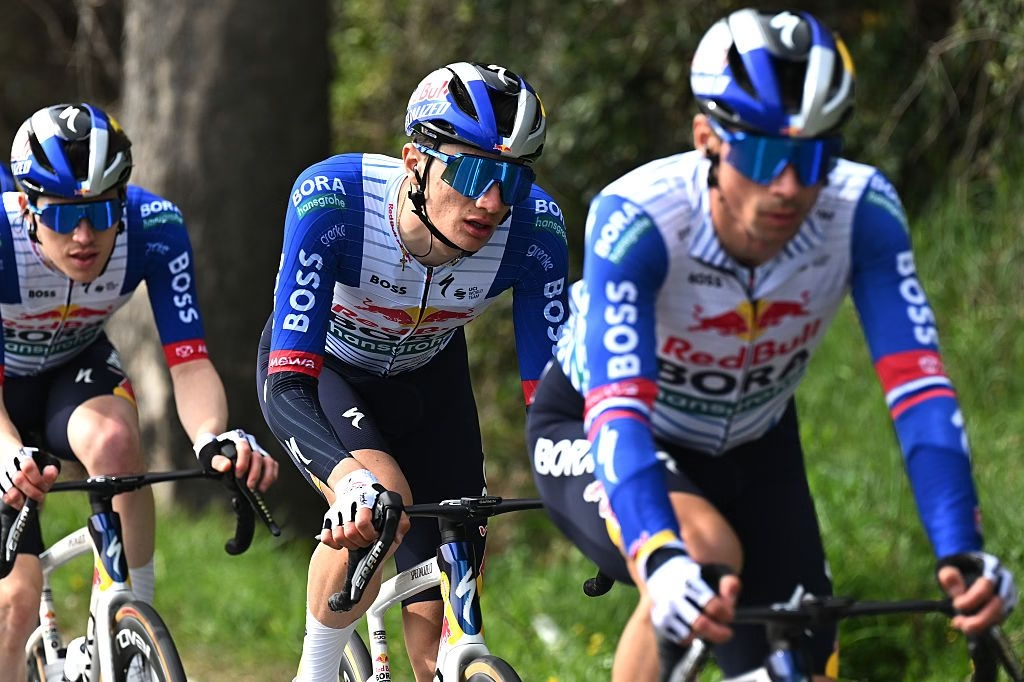
Red Bull-BORA-hansgrohe bring multiple GC options
Jai Hindley returns to the Giro with a strong history in this race. He won the overall in 2022, has twice stood on the podium, and has two Giro stage wins on his record. That experience gives him credibility immediately. Hindley knows how to survive the Giro’s harder weeks, and he has already shown that he can turn the race in the high mountains rather than merely follow.
Red Bull-BORA-hansgrohe have more than one route into the race. Aleksandr Vlasov is another serious GC rider, while Giulio Pellizzari gives the team an Italian climber with upside and freedom. Pellizzari already has a Giro top-10 in his background, and this course gives him obvious chances to test himself on summit finishes where longer, attritional climbing should suit him.
The challenge for Red Bull-BORA-hansgrohe is how they balance those options. Hindley is the proven Grand Tour winner, but Vlasov and Pellizzari give the team flexibility if the race becomes tactical. Against a rider like Vingegaard, that depth may be essential. A straight head-to-head climbing contest could be hard to win. A race with multiple attacks, satellite riders and pressure before the final climb gives them more room to operate.
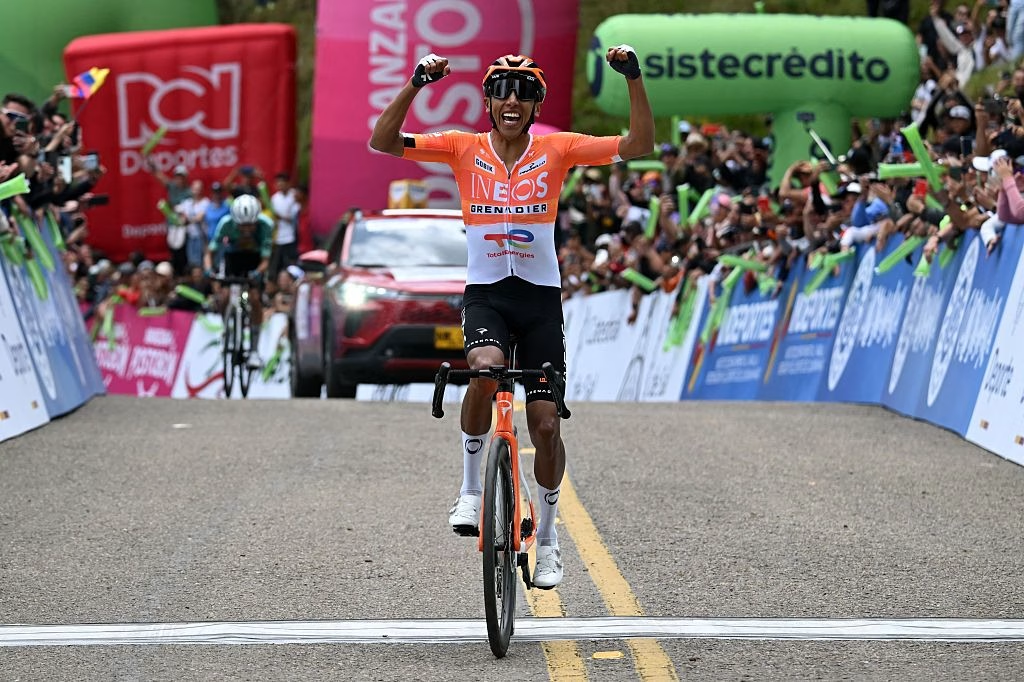
Netcompany INEOS Cycling Team have experience and time trial strength
Egan Bernal is one of the most interesting riders in the race because his Giro history is already significant. He won the race in 2021, has two top-10 finishes from two starts, and has two Giro stage wins. If he is close to his best, this route gives him enough climbing to be a genuine contender again.
The support around him is strong. Thymen Arensman has twice finished in the Giro top-10 and brings the kind of steady three-week climbing that can be vital in a race this hard. Jack Haig adds experience, while Filippo Ganna gives INEOS a major weapon for the time trial and early control on flatter or transitional days. Magnus Sheffield also brings power and versatility, particularly around the long time trial and lumpy stages where positioning could become decisive.
Bernal’s ceiling makes him dangerous, but INEOS may also have to be pragmatic. If he can stay close through the first major summit finish on Blockhaus, the race opens up. If he loses time early, Arensman may become more than a support option. Either way, this is one of the deeper GC groups in the race.
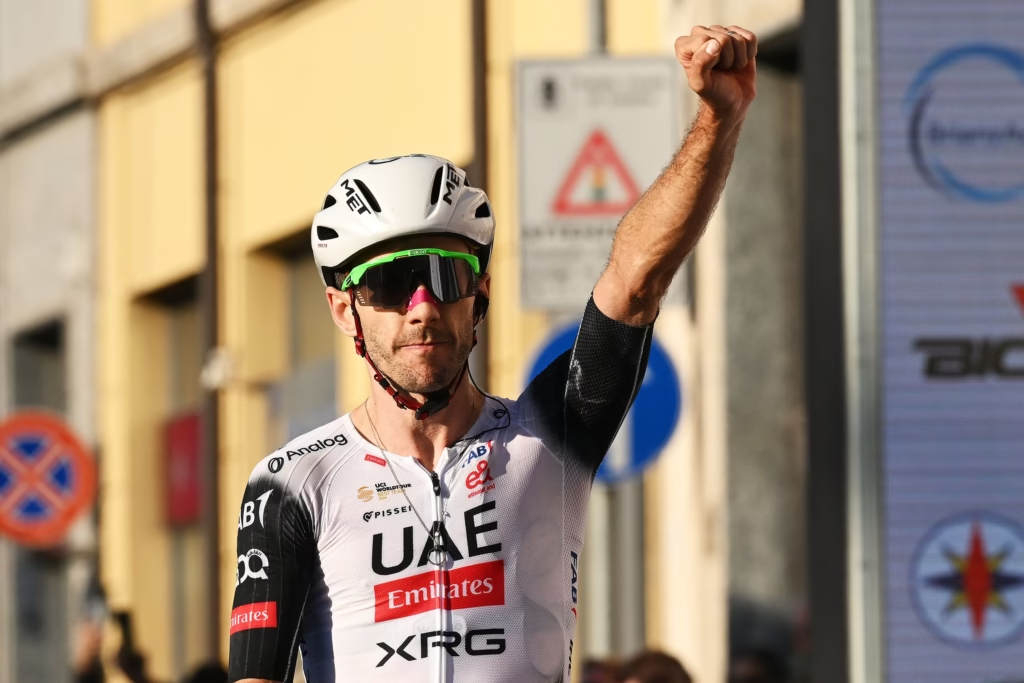
UAE Team Emirates XRG look built for mountain pressure
Adam Yates gives UAE Team Emirates XRG a clear GC leader. His Giro record is lighter than some of the other contenders, but he has already finished in the top-10 here and brings a strong Grand Tour climbing profile. On this route, especially with repeated summit finishes, he should be one of the riders most capable of testing the race before the final few kilometres.
The support is serious. Jay Vine is a strong climber and time triallist, Marc Soler gives them attacking range, and Igor Arrieta and Jan Christen bring depth for selective stages. Jhonatan Narvaez also has Giro stage-winning pedigree, though his value may be more in stage hunting, positioning and difficult medium-mountain days than in the high GC battle.
UAE’s best scenario is an aggressive race. If Vingegaard controls the steepest summit finishes from the front, Yates may need to find time through movement rather than waiting. Soler and Vine make that possible. They can go early, force others to chase, and give Yates tactical cover if the race opens before the final climb.
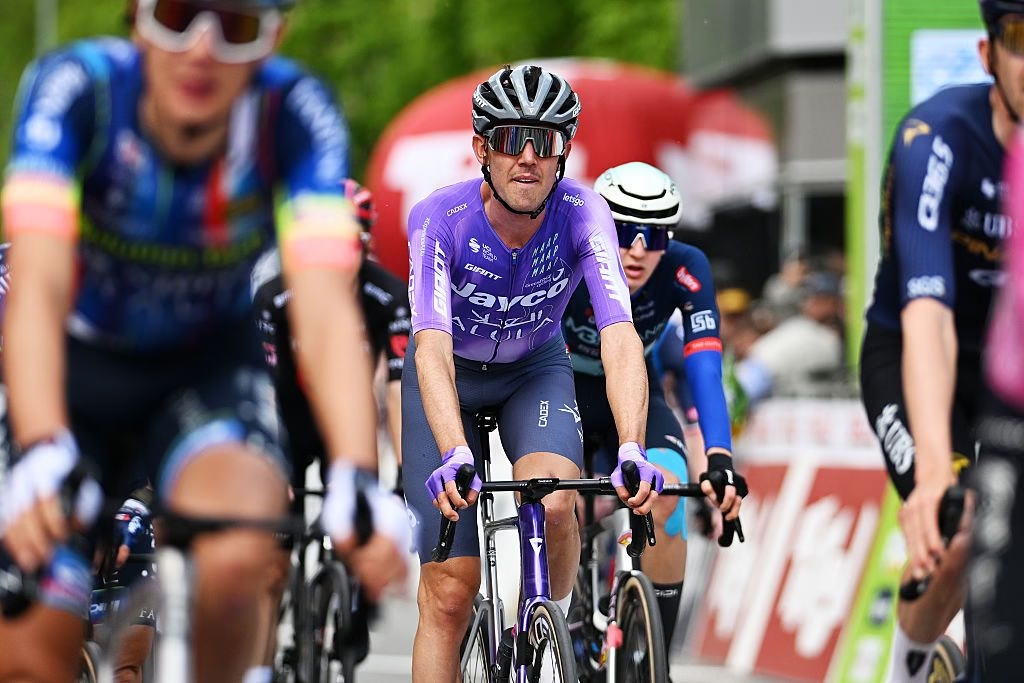
Ben O’Connor gives Team Jayco AlUla a proven Grand Tour leader
Ben O’Connor is a natural contender for a hard Giro. He has one Giro stage win, a previous top-10 finish in the race, and the profile of a rider who can hold a high level across three weeks. He may not start as the headline favourite, but he is exactly the sort of rider who can climb into the podium conversation if others have one bad day.
Team Jayco AlUla also have useful stage-racing support around him. Koen Bouwman and Andrea Vendrame both have Giro stage wins, and Alan Hatherly adds climbing strength. Pascal Ackermann gives the team a sprint option, but for the GC race O’Connor is the centrepiece.
The time trial will be important for him. If he limits losses there, the mountain stages give him enough opportunity to recover ground. His best chance is probably not one explosive attack on the hardest climb, but a consistent race where he keeps surviving, keeps placing, and lets the Giro gradually eliminate others.
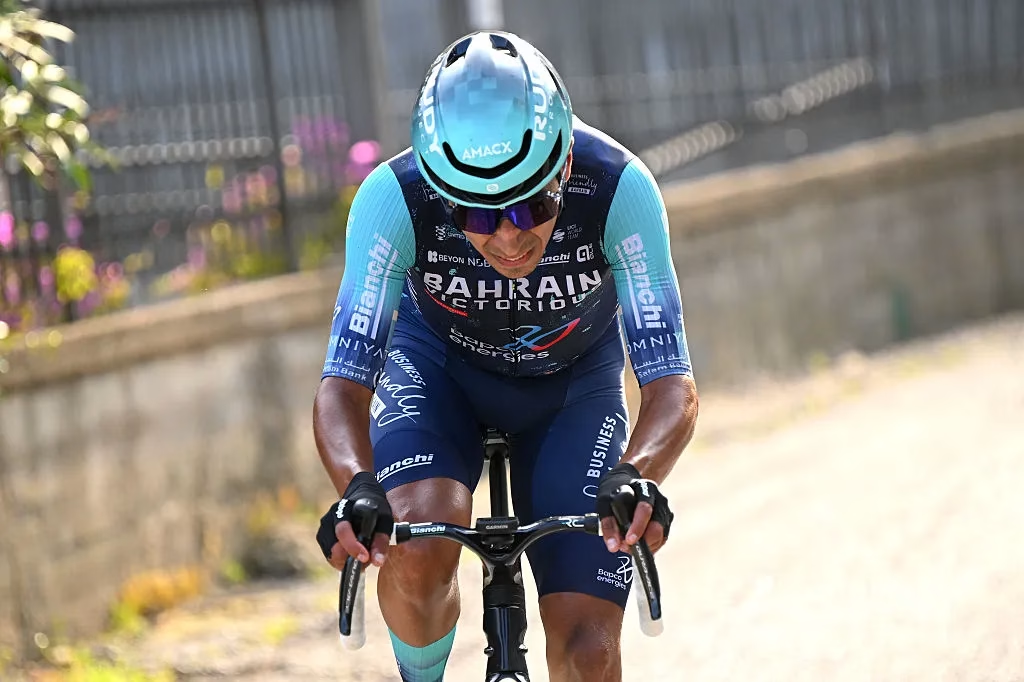
Santiago Buitrago and Damiano Caruso give Bahrain Victorious a strong double act
Santiago Buitrago has already won two Giro stages and remains one of the more dangerous climbing options in the race. His best performances often come when the race is difficult to control, and this route gives him several stages where that could happen. He can climb with the best on his day, but he may also be given more freedom than the top-tier favourites.
Bahrain Victorious also have Damiano Caruso, whose Giro record is hard to ignore. He has finished on the podium before, has four top-10 finishes from eight starts, and brings exactly the sort of calm, experienced presence that helps when the race becomes attritional. Caruso may not have the same explosiveness as some younger rivals, but his ability to manage a Grand Tour remains valuable.
That combination gives Bahrain a useful balance. Buitrago can attack and chase stages. Caruso can ride a steadier GC race. If the team read the race well, they do not have to choose one path too early.
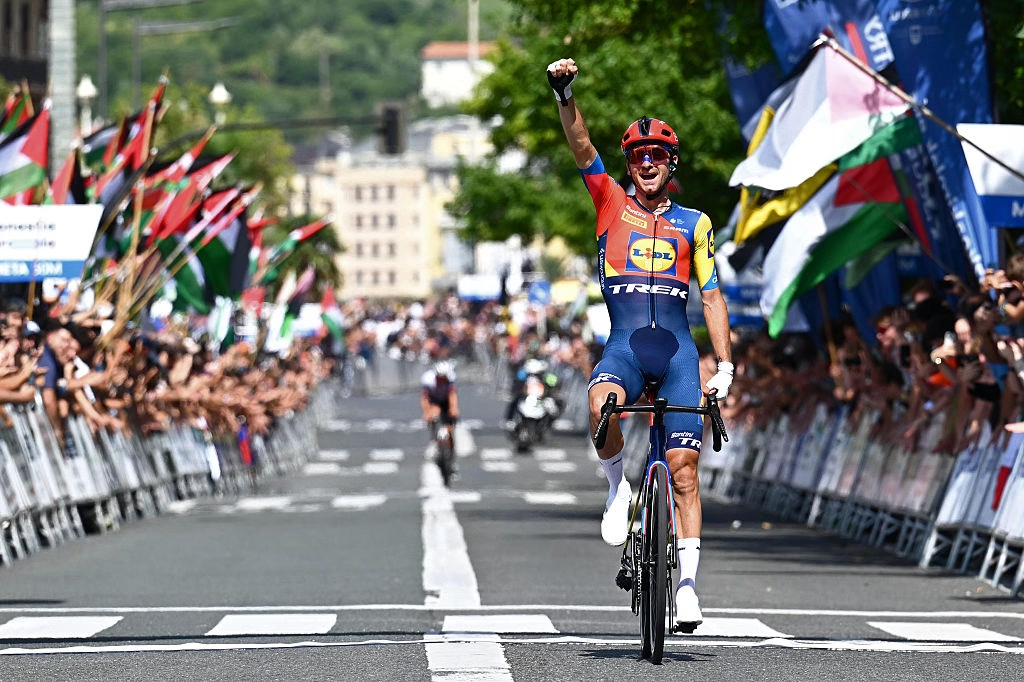
Giulio Ciccone gives Lidl-Trek a home contender with stage-winning pedigree
Giulio Ciccone will inevitably carry Italian interest. He has eight Giro starts, three stage wins, and the attacking instinct that makes him one of the race’s more watchable contenders. The question is whether he is riding primarily for GC, stages, or something in between.
Lidl-Trek have Jonathan Milan as a major sprint card, which means part of the team will be built around the points competition and flat stages. That can make a full GC campaign harder to manage. Still, Ciccone does not need a completely controlled race to be dangerous. In fact, he is often more effective when the race becomes broken and instinctive.
If Ciccone survives the Stage 10 time trial without losing too much, he can be a top-10 contender. If he loses ground, he becomes one of the most obvious mountain stage threats in the race.
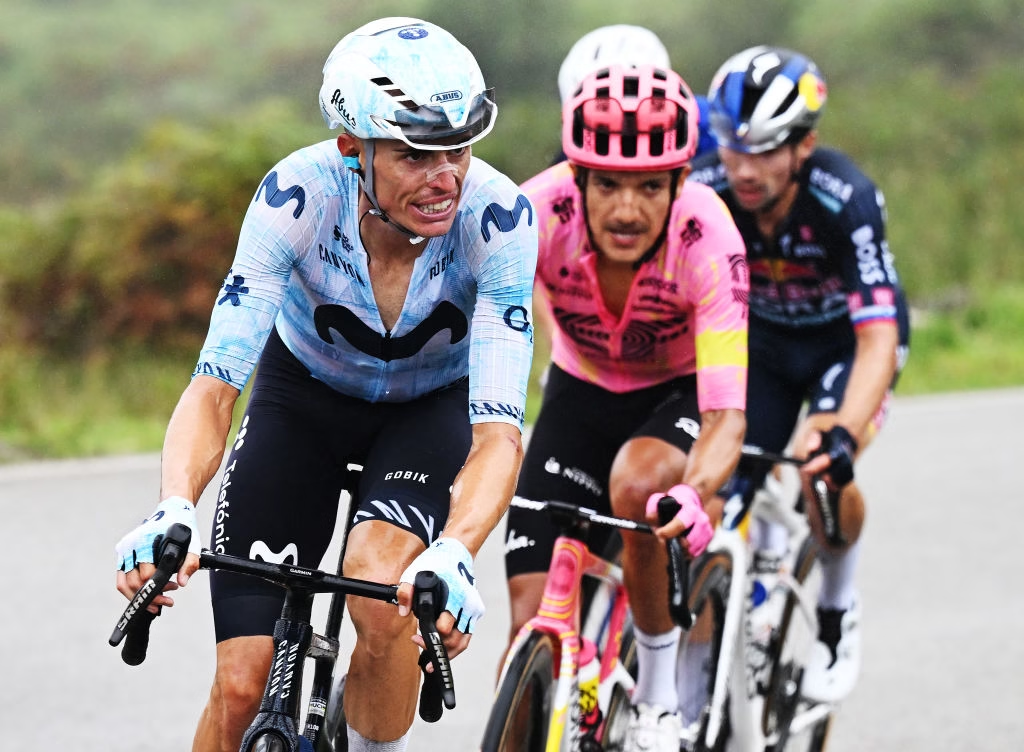
Enric Mas leads Movistar’s GC hopes
Enric Mas brings Grand Tour consistency, even if the Giro has not always been the race most associated with him. Movistar also include Juan Pedro López, Einer Rubio and Javier Romo, which gives the team a useful climbing block and several options for mountain stages.
Mas is likely to be judged against the podium rather than simply the top-10. The route suits his climbing strengths, but the time trial is the obvious pressure point. He cannot afford to concede too much there, especially to riders like Vingegaard, Bernal, Yates and Arensman.
Rubio is another rider to watch. He has a Giro stage win and previous top-10 finishes in the race, which makes him valuable both as support and as a possible stage hunter if Movistar’s GC plan changes.

Felix Gall gives Decathlon CMA CGM Team a climbing route into the race
Felix Gall should enjoy the hardest mountain stages. Decathlon CMA CGM Team arrive with a line-up that looks more balanced than spectacular, but Gall has the climbing level to threaten the GC if he can avoid losses in the time trial and stay out of trouble through the flatter first half of the race.
Johannes Staune-Mittet is also interesting on this route. He gives the team another climbing option, while Gregor Mühlberger adds experience in the mountains. Tobias Lund Andresen and Tord Gudmestad give them faster options for reduced finishes and sprint days, but Gall is the rider who shapes their GC ambitions.
For Gall, the Giro may come down to patience. The Blockhaus stage arrives early, but the final week is where this race should be won. If he is still within range by the time the route reaches the biggest Alpine and Dolomite stages, he can become a serious disruptor.
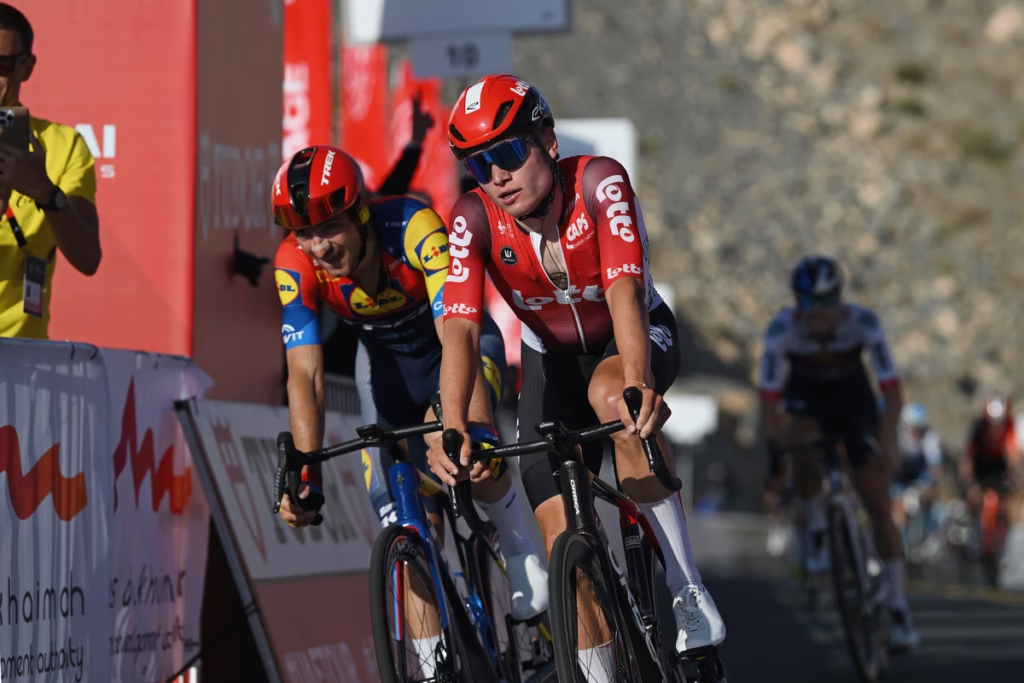
Lennert Van Eetvelt and the next tier of GC riders
Lennert Van Eetvelt is one of the more intriguing younger GC riders on the start list. Lotto Intermarché also bring Arnaud De Lie for sprint and reduced-group opportunities, which means the team will not be solely built around a GC campaign. Even so, Van Eetvelt has the climbing quality to push towards the top-10 if he handles the race’s rhythm.
Michael Storer is another rider who should be suited to a mountain-heavy Giro. Tudor Pro Cycling Team may not be expected to control the race, but Storer has the profile of a rider who can take advantage when the favourites watch each other. He has two previous Giro top-10s and enough climbing pedigree to be dangerous from a breakaway or as a GC outsider.
Chris Harper, Jan Hirt, Warren Barguil, Wout Poels, Diego Ulissi, Christian Scaroni and Andreas Leknessund all sit in the wider group of riders who could shape stages rather than the overall win. Some have Giro stage-winning pedigree, others have top-10 history, and several should be active once the race moves beyond pure GC control.
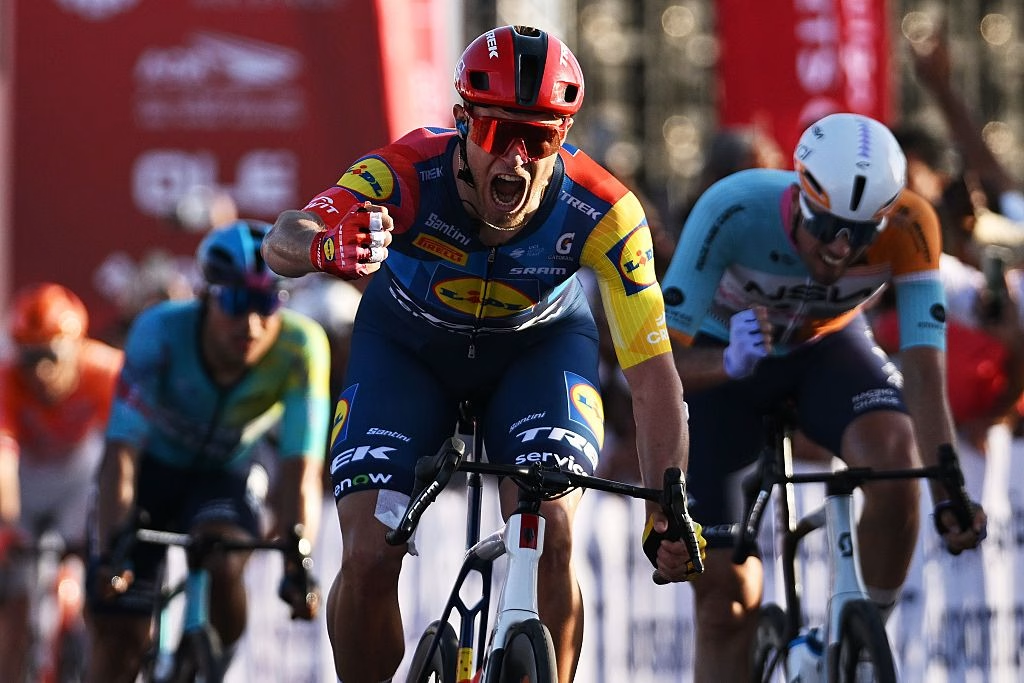 Photo Credit: Getty
The sprint contenders at the Giro d’Italia 2026
The Giro is not only a GC race, and the sprint field is strong. Jonathan Milan is the obvious starting point. He has four Giro stage wins from just two starts and has already shown that this race suits his power, positioning and ability to handle long, messy finales. Lidl-Trek have Max Walscheid, Simone Consonni and Tim Torn Teutenberg around him, giving Milan one of the clearest sprint structures in the race.
Kaden Groves gives Alpecin-Premier Tech another proven Grand Tour sprinter. He already has two Giro stage wins and can handle tougher finishes better than many pure sprinters. On a route where not every sprint day is likely to be clean or simple, that resilience gives him a valuable second route to victory.
Dylan Groenewegen, Pascal Ackermann, Arnaud De Lie, Paul Magnier, Casper van Uden, Enrico Zanoncello, Ethan Vernon and Matteo Malucelli all add depth to the sprint picture. De Lie is especially interesting because Lotto Intermarché can use him on harder finishes as well as flatter days, while Magnier gives Soudal Quick-Step a fast finisher who should be watched if the sprint field thins out.
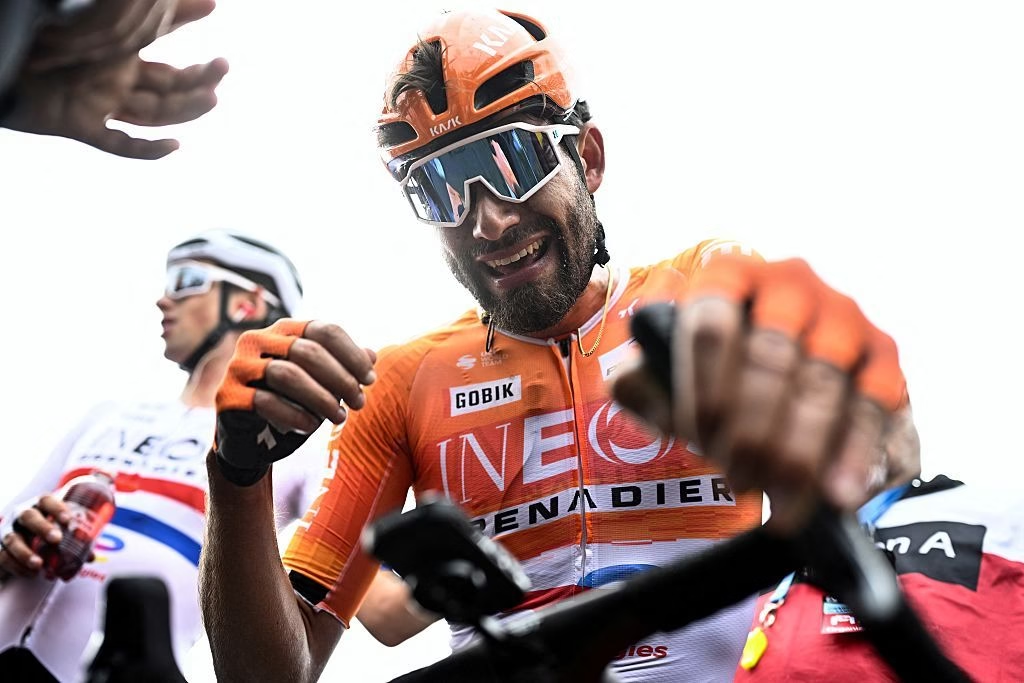 Photo Credit: Getty
The time trial and stage-hunting threats
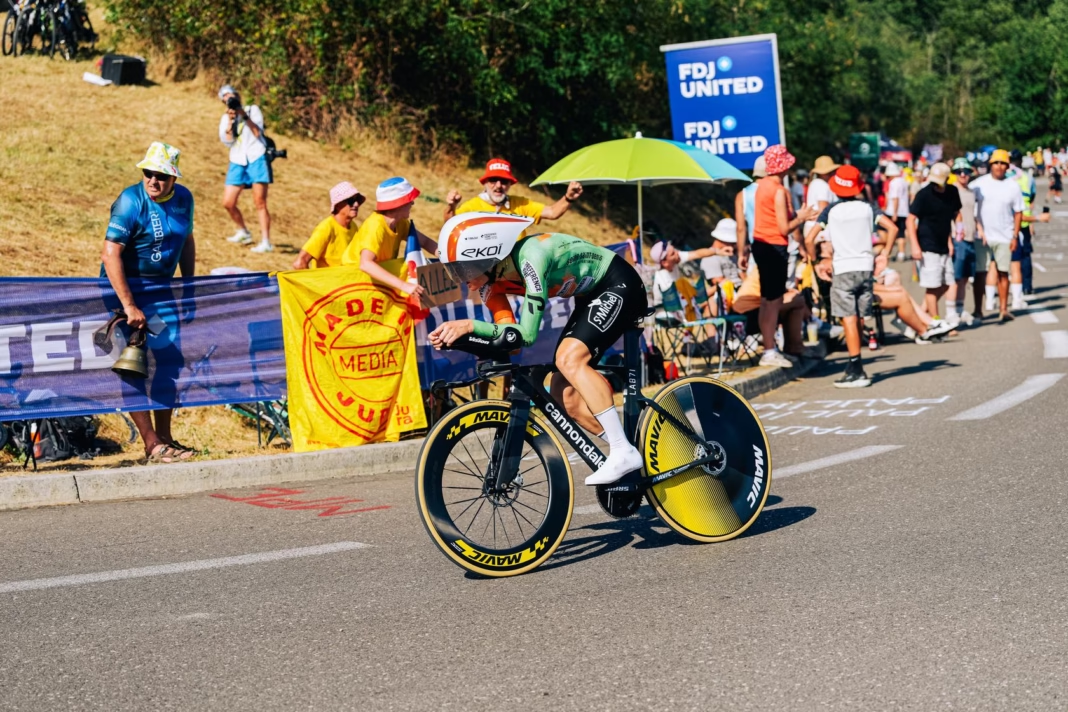
Filippo Ganna will be the reference point for the Stage 10 time trial. He has seven Giro stage wins and remains one of the most important riders in the race whenever the clock is involved. The 40.2km course should suit his engine, and it could also give INEOS a major day if Bernal or Arensman are still well placed overall.
Matteo Sobrero, Mikkel Bjerg, Alec Segaert, Rémi Cavagna, Nelson Oliveira and Magnus Sheffield should also be watched against the clock. The time trial is long enough for specialists to target the stage, but it is also too important for the GC riders to treat it as a damage-limitation exercise only.
For breakaways, the list is deep. Diego Ulissi has eight Giro stage wins and knows exactly how to read a medium-mountain day. Andrea Vendrame, Jhonatan Narvaez, Alberto Bettiol, Christian Scaroni, Victor Campenaerts, Koen Bouwman, Filippo Zana and Einer Rubio all have Giro stage-winning pedigree. On a route with several hilly and medium-mountain stages, those riders may become central to the race narrative even if they are not fighting for pink.
-
 Photo Credit: A.S.O./Gaëtan Flamme
Giro d’Italia 2026 prediction
Vingegaard starts as the clear favourite because the route gives him repeated chances to use his climbing superiority, while the long time trial should not expose him. Hindley looks like the most proven Giro-specific challenger, with Bernal carrying the highest emotional and sporting upside if he is close to his old level. Yates, O’Connor, Buitrago, Gall and Arensman all have realistic podium routes, especially if the race becomes more open than expected.
The key is whether anyone can put Team Visma | Lease a Bike under pressure before the final climbs. If the race becomes a controlled climbing contest, Vingegaard is difficult to look past. If it becomes a more chaotic Giro, with early attacks, weather, tactical splits and GC riders isolated before summit finishes, the door opens for Hindley, Yates, Bernal and Buitrago to make it far less predictable.

