
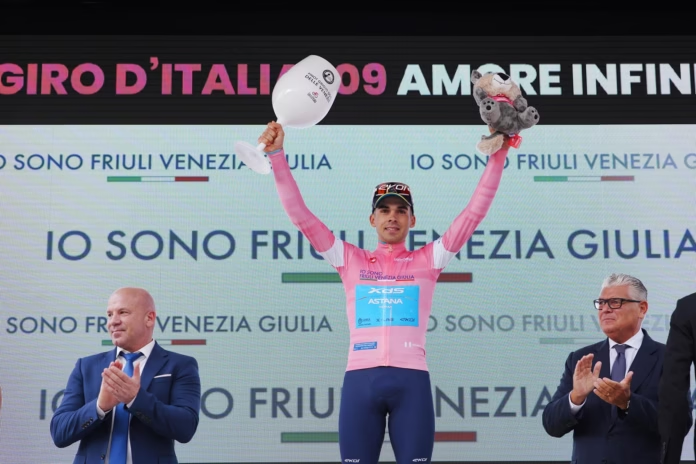
The Giro d’Italia 2026 reaches its first rest day with the general classification still tightly packed, but not untouched. The race has not yet reached the mountains, and none of the main favourites has made a proper move, but the opening three stages in Bulgaria have already shaped the early picture.
Guillermo Thomas Silva is in pink. Florian Stork and Egan Bernal are only four seconds back. Thymen Arensman and Giulio Ciccone sit at six seconds. A large group of overall contenders, including Jonas Vingegaard, Jan Christen, Enric Mas and Lennert van Eetvelt, remain close at 10 seconds.
That means the Giro has not yet become a GC race in the full sense. It has become a race of positioning, caution and early damage limitation. For some riders, that is exactly where they wanted to be. For others, most notably UAE Team Emirates-XRG after Adam Yates’ abandon, the race has already changed completely.
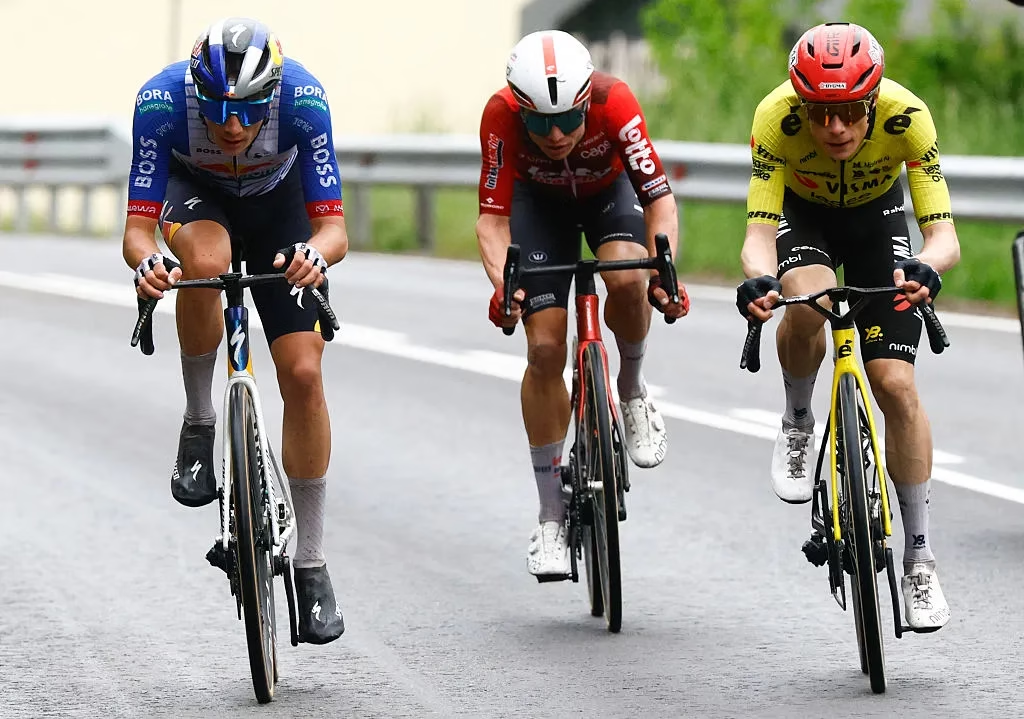 Photo Credit: Getty
Giro d’Italia 2026 general classification after stage 3
The first rest day standings are still shaped by bonus seconds, sprint-stage caution and the surprise result on stage 2. Silva leads after his historic victory in Veliko Tarnovo, but the time gaps behind him remain small enough that the race can change quickly once the terrain becomes more demanding.
- Guillermo Thomas Silva, XDS Astana Team – 13:10:05
- Florian Stork, Tudor Pro Cycling Team – +4 seconds
- Egan Bernal, Netcompany Ineos – +4 seconds
- Thymen Arensman, Netcompany Ineos – +6 seconds
- Giulio Ciccone, Lidl-Trek – +6 seconds
- Jan Christen, UAE Team Emirates-XRG – +10 seconds
- Martin Tjøtta, Uno-X Mobility – +10 seconds
- Johannes Kulset, Uno-X Mobility – +10 seconds
- Enric Mas, Movistar Team – +10 seconds
- Lennert van Eetvelt, Lotto Intermarché – +10 seconds
The wider picture is more important than the exact order at this stage. Many of the serious GC names are still within touching distance of pink. The race has not yet created a hierarchy through climbing strength, time trialling or repeated mountain days. It has created a temporary order.
That distinction matters. The pink jersey is valuable, but the Giro is still waiting for its first real GC selection.
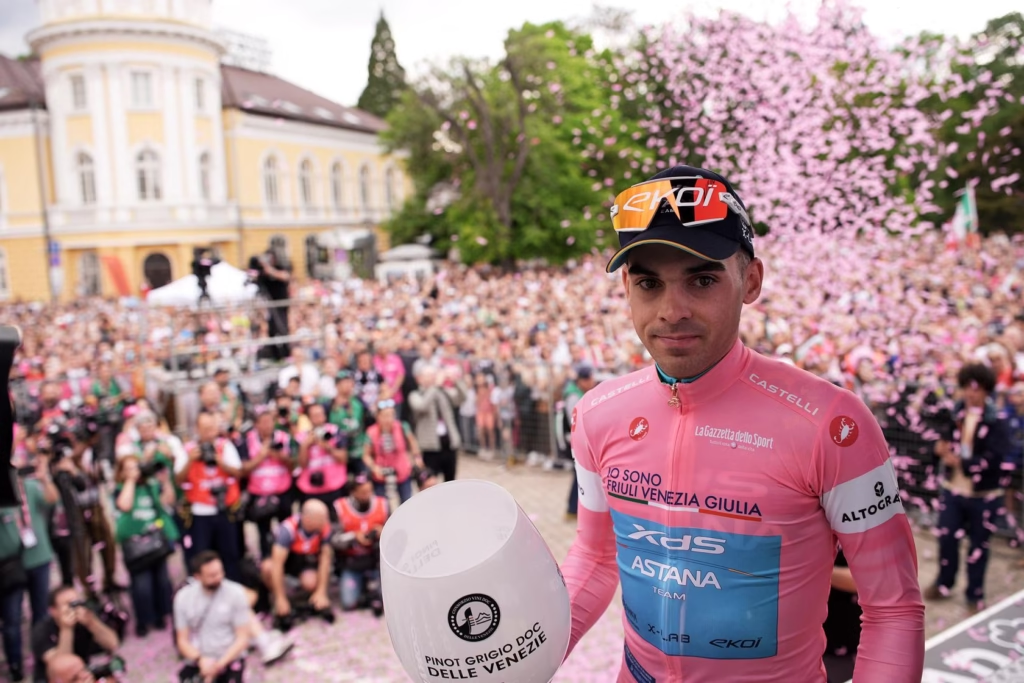
Guillermo Thomas Silva gives the race an unexpected leader
Silva is the story of the first rest day because he is the rider wearing pink, and because very few would have built the opening Giro narrative around him before the race began.
His stage 2 win was not only historic for Uruguayan cycling, it also changed the mood of the race. Instead of a predictable early maglia rosa battle between sprinters and bonus-second hunters, the Giro now moves to Italy with a surprise leader from XDS Astana Team. That gives the opening Italian stages an extra tactical layer.
The question is how long Silva can realistically defend. His four-second lead over Stork and Bernal is narrow, and the more selective the race becomes, the harder it will be for Astana to control. But the first rest day is still a success point. Silva has won a stage, taken pink, stayed safe through stage 3, and forced the rest of the race to respond to his presence.
For Astana, the issue now is balance. Defending pink too aggressively could burn energy before the Giro becomes properly hard. Defending too passively risks losing the jersey without making the most of a rare opportunity. The team does not need to control like a Tour favourite’s squad. It needs to protect Silva, stay organised, and make others decide how badly they want pink before the major climbs arrive.
Egan Bernal and Thymen Arensman give Netcompany Ineos options
Netcompany Ineos have reached the first rest day in one of the strongest GC positions in the race. Bernal sits third overall at four seconds, while Arensman is fourth at six seconds. That gives the team two riders close to pink without having had to spend the opening block on the front for long periods.
Bernal’s position is particularly interesting. He has not needed to attack, but he is already near the top of the standings. At this point in the Giro, that is a useful place to be. He has avoided damage, stayed visible enough, and given himself a platform before the climbs arrive.
Arensman adds depth and tactical flexibility. If he remains close, Netcompany Ineos can avoid being locked into a single-leader structure too early. They can follow moves with one rider, protect the other, and let the road decide which option becomes stronger once the race becomes more selective.
The key is whether both can carry that position into the first true mountain tests. For now, they have done what a GC team wants from the opening block: stay close, avoid chaos, and arrive in Italy with choices.
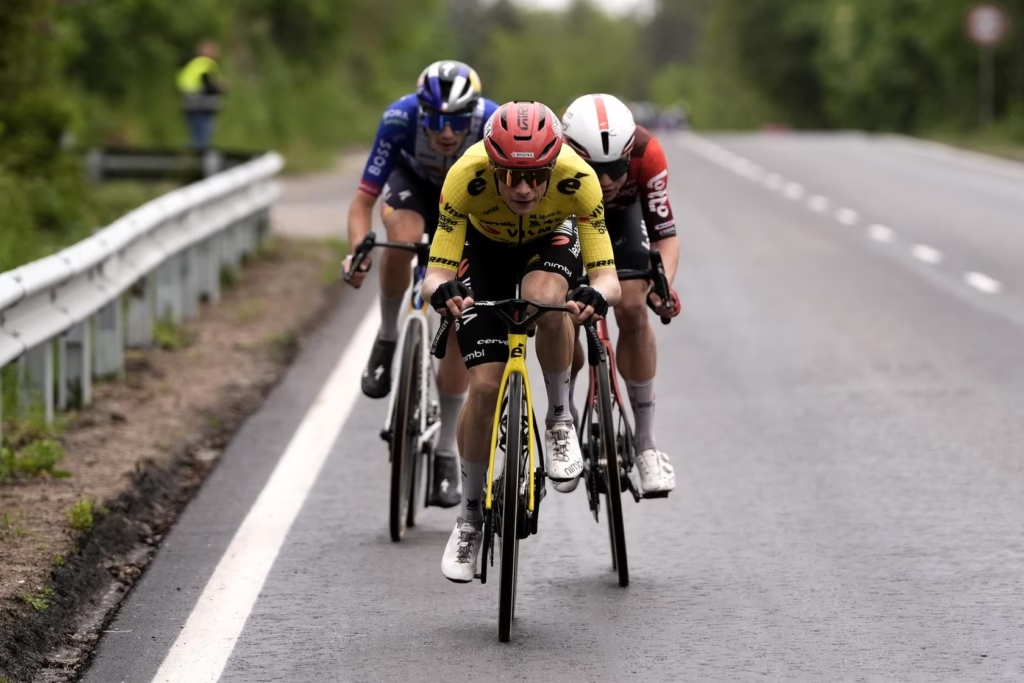 Photo Credit: RCS
Jonas Vingegaard has stayed exactly where he needs to be
Jonas Vingegaard’s Giro has been quiet so far, which is probably a positive. Team Visma | Lease a Bike did not need him to win seconds in Bulgaria, and they certainly did not need him exposed in crash-heavy sprint finales.
He reaches the rest day in the 10-second group, safely placed and under no immediate pressure. For a rider of Vingegaard’s calibre, that is more important than being slightly higher in the standings. The Giro will not be decided by four or six seconds gained in the opening sprint-heavy block. It could, however, be damaged by a crash, split or badly handled nervous finale.
The lack of early drama around Vingegaard also keeps the race open psychologically. He has not revealed much. He has not had to chase. He has not been forced into a public test against Bernal, Ciccone, Hindley or any of the other GC riders. That suits him.
The first Italian stages may still be largely about control rather than attack, but they will begin to ask more of his team. The closer the race moves towards real climbing, the more Team Visma | Lease a Bike will need to decide whether to keep waiting or begin shaping the race around him.
Giulio Ciccone is close enough to become dangerous
Ciccone sits fifth overall, only six seconds down, and that is a useful position for a rider who can thrive once the route becomes more irregular. He is not an obvious passive GC rider. He can attack, follow sharper moves, contest punchier finishes and make use of stages that sit between sprint days and full mountain stages.
That makes the early Italian roads interesting. Ciccone does not need to take pink immediately, and Lidl-Trek may still be managing Jonathan Milan’s sprint ambitions, but he is close enough that any small move could change the top of the standings.
His challenge is the long view. Ciccone can be dangerous on hilly and medium mountain stages, but the full Giro demands consistency over three weeks. At this point, his position is strong because he has lost nothing and is already within reach of pink. The next question is whether he uses that position actively, or whether Lidl-Trek prefer to keep him patient until the GC days become more obvious.
Either way, he is one of the riders who makes the compressed GC picture more awkward for the favourites. If the bigger names look at each other, Ciccone is the kind of rider who can exploit hesitation.
 Photo Credit: Getty
UAE Team Emirates-XRG must rethink after Adam Yates’ abandon
The biggest GC shift of the opening three days is the loss of Adam Yates. His abandon after the stage 2 crash removes one of the key pre-race contenders and forces UAE Team Emirates-XRG into an early reset.
Yates was not just another GC option. He was a proven Grand Tour rider, a strong climber, and a leader capable of putting pressure on the favourites deep into the race. Losing him before the Giro reaches Italy changes both the team’s tactical plan and the wider shape of the race.
Jan Christen now becomes more prominent. He is set to wear the white jersey on the road because Silva leads both the overall and young rider standings, and he sits in the 10-second group with several other young riders. That gives UAE visibility and a reason to stay invested in the GC picture, but it is not the same as having Yates as a protected leader.
The team now has three possible routes. It can protect Christen and see how far he can go. It can race more aggressively for stage wins. Or it can use its riders to disrupt rather than control. The loss of Yates may actually give some riders more freedom, but it also removes one of the strongest climbing cards from the race.
For the rest of the GC field, that is significant. One fewer major contender can make the race easier to control, but it can also remove a team that might have helped drive mountain stages. UAE’s response will be one of the most important subplots of the first Italian week.
Enric Mas and Lennert van Eetvelt are quietly placed
Enric Mas and Lennert van Eetvelt both sit at 10 seconds, close enough that their opening block can be considered clean. Neither has needed to show much yet, which is sensible. The race has not offered the sort of terrain where either rider should be expected to make a serious GC statement.
For Mas, the priority is usually accumulation rather than spectacle. He needs to arrive in the mountain stages without losing avoidable time, then use the harder terrain to move up. So far, he has done that. There is no early panic, no major deficit and no need for Movistar Team to chase the race before it properly begins.
Van Eetvelt’s situation is slightly different. He has more to prove across a full Grand Tour, but his early position is promising. The Belgian is close on GC, sits among the better-placed younger riders, and should welcome more selective terrain. If the race becomes aggressive in the medium mountains, he could be one of the riders willing to test the favourites before the biggest names fully commit.
Both riders remain in the category that matters most after the first rest day: close enough to matter, not yet tested enough to judge.
 Photo Credit: Getty
Jai Hindley, Ben O’Connor and the others remain hidden
The first three stages have not told us enough about riders such as Jai Hindley, Ben O’Connor, Damiano Caruso and Einer Rubio. That is not a criticism. In many ways, it is exactly how a Grand Tour opening should look for riders who are more interested in the third week than the first three days.
Their job in Bulgaria was to avoid problems. Stay near the front when needed, keep out of crashes, avoid splits, and do not spend energy chasing seconds that may become irrelevant once the climbs arrive. On that basis, most of the GC group has done its work.
The downside is that the race remains hard to read. We do not yet know who has arrived with climbing form sharp enough to challenge Vingegaard. We do not know whether Bernal is ready to push deep into the Giro. We do not know whether Ciccone can turn his position into a sustained GC campaign. We do not know which riders are quietly confident and which are already relieved to have escaped the opening block.
That uncertainty is useful for the race. The first rest day has preserved tension rather than removing it.
What the first Italian stages could change
The first Italian stage from Catanzaro to Cosenza is not expected to be a full GC day, but it is exactly the kind of stage that can begin to disturb the order. It is short, awkward and includes the long Cozzo Tunno climb before a slightly uphill finish.
The climb should not create major gaps among the favourites, but it could increase stress. Teams will have to position well, protect leaders over the climb, manage the descent and avoid being caught out if the sprint teams become disorganised. This is where time losses can come from hesitation rather than weakness.
For Silva, stage 4 is the first test of what defending pink in Italy looks like. For the favourites, it is another day where the main objective is to stay close while avoiding unnecessary work. For riders like Ciccone, Van Eetvelt or Christen, it could be a day where the route invites opportunism if the race becomes messy.
The Giro often begins to shift through stages like this. Not with a decisive GC attack, but with pressure, fatigue and small errors. The first Italian stages may not decide the race, but they can begin to reveal which teams are comfortable and which are already stretched.
-
 Photo Credit: A.S.O./Gaëtan Flamme
Who is best placed after the first rest day?
If the question is purely about the standings, Silva is best placed because he is in pink. If the question is about long-term GC position, Bernal, Arensman and Vingegaard all have reason to be satisfied.
Bernal and Arensman are close to the lead and give Netcompany Ineos tactical depth. Vingegaard is safely positioned without having had to show anything. Ciccone is close enough to threaten if the race becomes punchy. Mas, Van Eetvelt and the rest of the 10-second group are exactly where they need to be.
The only major negative among the pre-race GC structure is Yates’ abandon. That loss is already permanent. Everyone else still has time.
That makes the first rest day less about ranking the contenders and more about sorting them into categories. Silva has the jersey. Netcompany Ineos have numbers. Vingegaard has calm. Ciccone has opportunity. UAE have a problem to solve. The rest are waiting for terrain that will make the standings more honest.
The Giro GC battle has not started properly yet
The important thing to remember is that the Giro’s general classification has not yet been seriously stress-tested. The current order is interesting, but it is not definitive. The first three stages have produced a surprise leader, an early abandon and a compressed field, but they have not separated the strongest climbers from the rest.
That is why the first rest day feels more like a holding point than a conclusion. The race has a shape, but not yet a hierarchy. Silva’s pink jersey gives the Giro a fresh storyline. Bernal and Arensman give Netcompany Ineos an excellent platform. Vingegaard has stayed quiet. Ciccone is close. UAE are already rewriting their race after losing Yates.
The next phase should begin to change the tone. Once the Giro reaches more selective Italian terrain, the favourites will have less room to hide. For now, the GC picture is still compressed, still cautious, and still waiting for the first serious move.

