
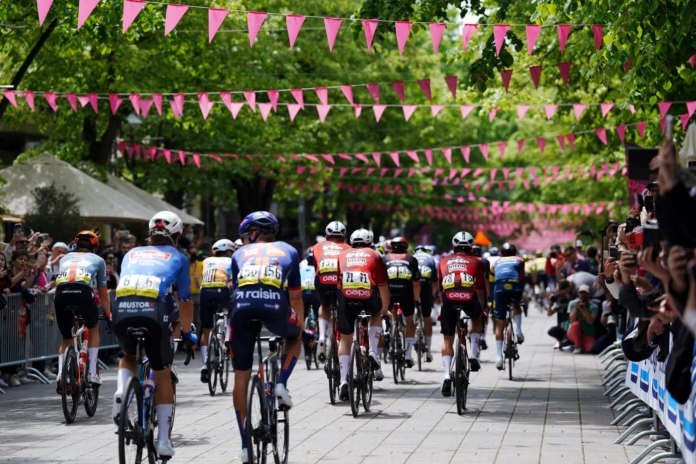
The Giro d’Italia 2026 reaches Italian roads on Tuesday, 12th May, with stage 4 taking the race from Catanzaro to Cosenza. After three days in Bulgaria, a rest day and a long transfer, this is the first chance for the peloton to reset into the rhythm of the Italian part of the race.
At 138km, it is not a long stage, but it is more awkward than a standard sprint day. The route starts in Catanzaro, heads towards Lamezia Terme, follows the Tyrrhenian coast, then turns inland after San Lucido for the main obstacle of the day. That climb, Cozzo Tunno, is long rather than brutal, but it comes late enough to create doubt.
The sprinters will still look at Cosenza as a possible opportunity. The problem is that the route gives the puncheurs, breakaway riders and stronger fast men a reason to believe as well. The latest market also reflects that uncertainty, with Tobias Lund Andresen ahead of Corbin Strong and Paul Magnier among the favourites, suggesting this is being treated less like a pure bunch sprint and more like a reduced, strength-based finish.
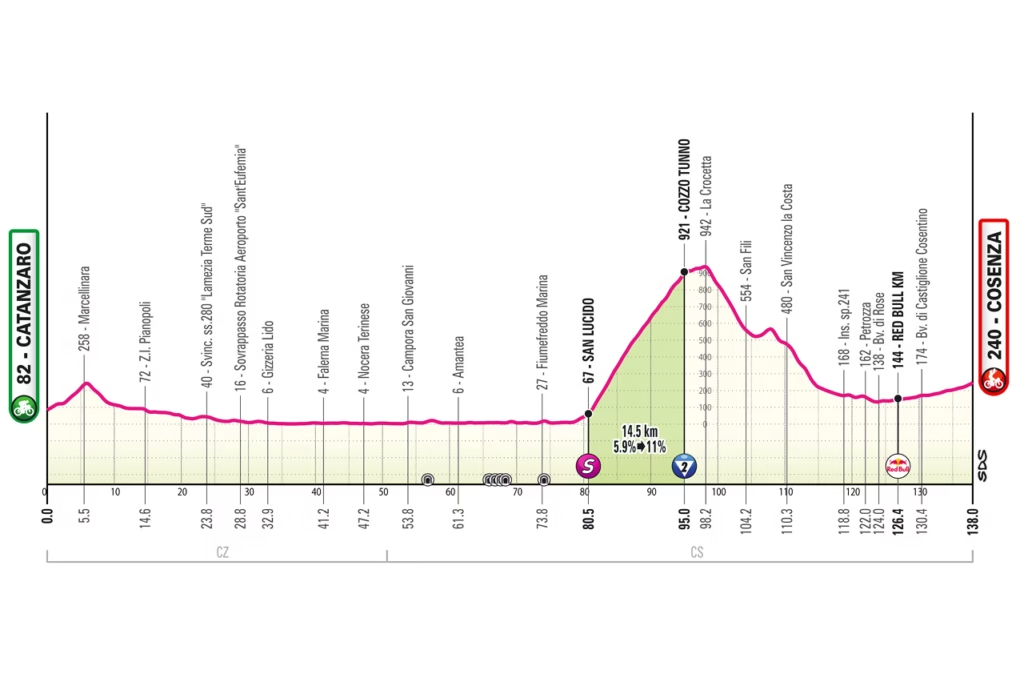
Giro d’Italia 2026 stage 4 route
Stage 4 runs 138km from Catanzaro to Cosenza, with 1,800m of climbing. On paper, that sounds modest by Giro standards, especially compared with what is coming later in the race, but the distribution of the climbing is what makes the day interesting.
The opening section should be quick. There are no major early difficulties, and the roads towards Lamezia Terme and along the coast are wide enough for the bunch to settle into a controlled pattern. That should help the sprint teams early on, particularly if the breakaway is small and easy to monitor.
The stage changes after San Lucido, where the climb of Cozzo Tunno begins. It is almost 15km long, but without major gradients, so it is unlikely to become a full GC battleground. That said, it is more than enough to test pure sprinters if the pace is high. A team with a strong uphill sprinter could decide to make the climb uncomfortable rather than simply ride it defensively.
After the summit, the race drops towards the Crati plain before a slight uphill approach to Cosenza. The finale is urban, with some bends inside the final 3km, a bridge over the Crati, wide curves, and then a 450m finishing straight at 3.7 per cent.
That final drag matters. It is not steep enough to turn the stage into a pure puncheur’s finish, but it does favour a sprinter with strength left in the legs rather than one who wants a completely flat, high-speed launch.
What time does Giro d’Italia stage 4 start?
Stage 4 starts at 13:40 local time in Italy, which is 12:40 in the UK.
The finish is scheduled for around 17:03 local time, or 16:03 UK time, although that will depend on the speed of the race. With the main climb coming in the second half of the stage, the key tactical phase should come well before the final sprint.
Key stage details:
- Date: Tuesday, 12th May
- Route: Catanzaro to Cosenza
- Distance: 138km
- Altitude gain: 1,800m
- Main climb: Cozzo Tunno
- Stage start: 12:40 UK time
- Expected finish: around 16:03 UK time
- Current race leader: Guillermo Thomas Silva
How stage 3 changed the race
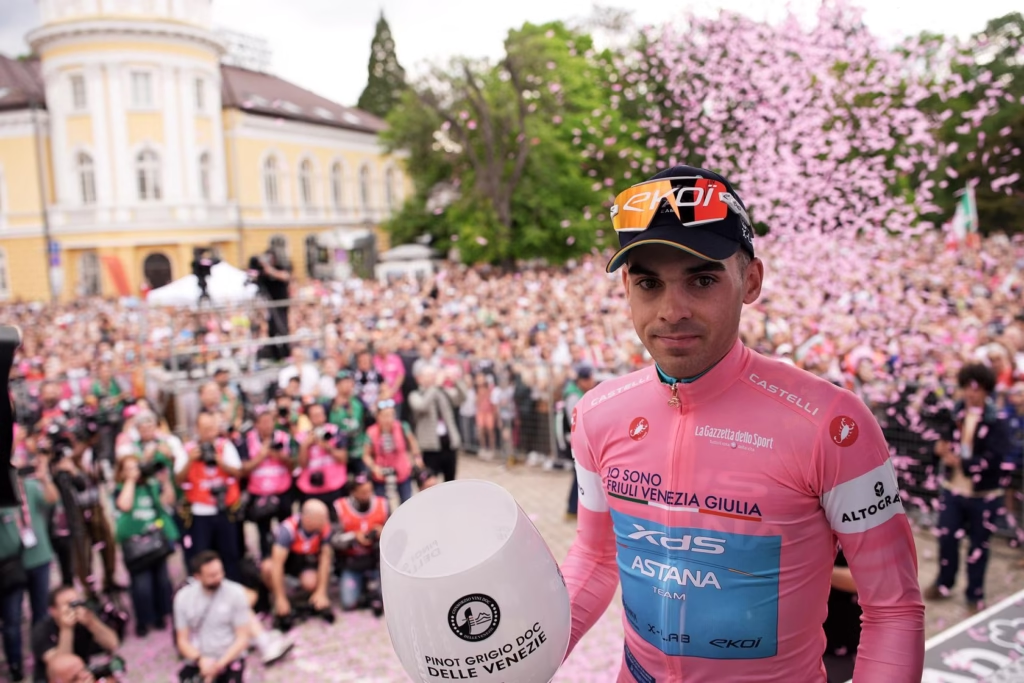
The Giro leaves Bulgaria with Guillermo Thomas Silva still in the maglia rosa after his stage 2 victory in Veliko Tarnovo. Stage 3 did not change the top of the general classification, but it did reinforce Paul Magnier’s status as the form sprinter of the race after he took his second win in three days in Sofia.
That sets up stage 4 with two parallel stories. Silva and XDS Astana Team need to keep the pink jersey safe on the first Italian stage, while the sprint teams need to decide whether the climb is manageable enough to chase all day.
For Magnier, this is another opportunity, but not as clean as stages 1 or 3. The uphill finish could suit him, yet the long climb beforehand gives rivals a route into the race. Jonathan Milan and Dylan Groenewegen will also want another chance after finishing second and third in Sofia, but both will need strong support over the middle section if the pace lifts.
The change is that this stage does not look like a simple continuation of the Bulgarian sprint pattern. Magnier has the momentum, but Lund Andresen, Strong, Ben Turner and Jonathan Narvaez all fit the awkward shape of the day. That makes the first Italian finish more open than it initially appears.
Why the Cozzo Tunno climb matters
Cozzo Tunno is not the sort of climb that should panic the GC favourites. It is long, steady and without severe gradients, making it more of a sorting point than a decisive mountain test.
For the sprinters, however, it is a different issue. The question is not whether they can survive the climb at a steady tempo. It is whether they can survive it if rival teams make it hard. A 15km climb ridden defensively is manageable. A 15km climb ridden by teams trying to drop Milan, Groenewegen or other heavier fast men becomes a very different race.
This is where the stage could become tactical. Soudal Quick-Step may want control for Magnier, but they may also welcome a harder climb if it removes some sprint rivals. Lidl-Trek will need to judge Milan’s condition carefully. If he feels good, they chase. If he struggles, the stage may open up for a reduced group or late attack.
The same applies to the teams around Tobias Lund Andresen and Corbin Strong. They do not need to blow the race apart. They only need to make it hard enough to dull the pure sprinters, reduce the lead-outs, and create a finish where punch and resilience count for more than a perfectly organised train.
The descent also matters. A reduced peloton could regroup quickly, but if the climb has stretched the race, there may be a period of uncertainty before the final run into Cosenza. That is where breakaway riders and late attackers will sense an opportunity.
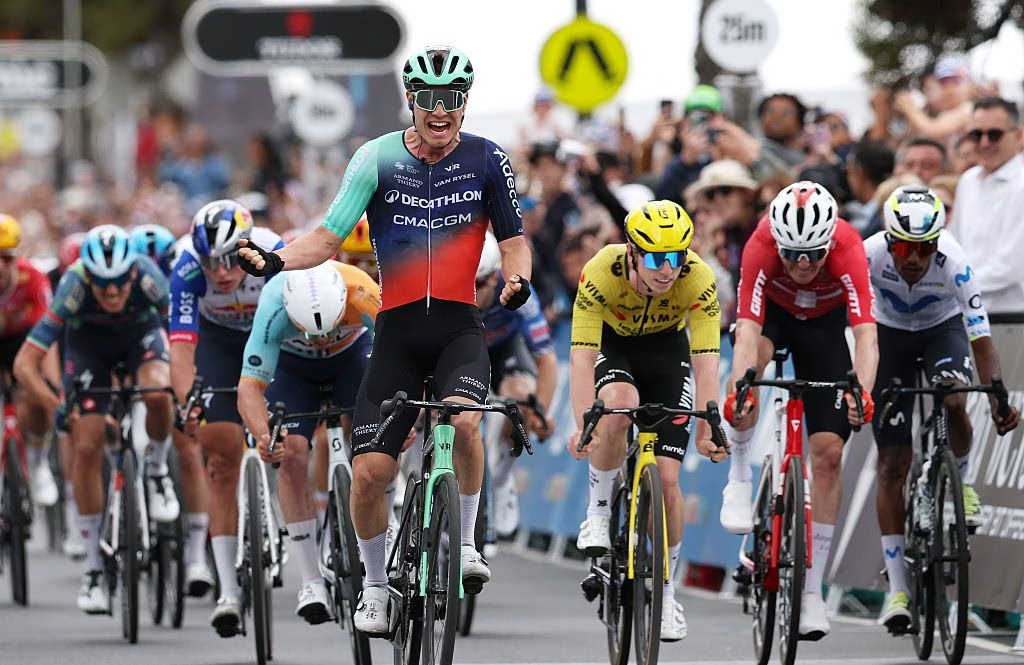 Photo Credit: Getty
Who are the favourites for stage 4?
Tobias Lund Andresen now looks like the standout favourite for this type of finish. He has already shown speed in the opening stages, but the more selective nature of stage 4 may suit him even better than a completely flat sprint. The long Cozzo Tunno climb should not be severe enough to remove the strongest fast finishers, yet it could take the edge off the heavier sprinters. If the finish in Cosenza comes down to a reduced group, Lund Andresen has the blend of punch, positioning and sprint speed to make full use of the slightly rising final straight.
Corbin Strong is another rider whose profile fits the stage well. He is not relying on a perfectly controlled flat sprint, and that makes him dangerous on a day where the final hour could become awkward. If the climb is ridden hard, the descent stretches the bunch, and the sprint trains lose structure, Strong becomes one of the riders most likely to benefit. This is exactly the kind of finish where being durable over the climb can matter as much as outright speed in the last 200 metres.
Paul Magnier cannot be ignored after winning two of the opening three stages. His confidence is high, his timing has been excellent, and the uphill drag to the line should not be a problem. The difference is that stage 4 is less straightforward than the earlier sprint opportunities. Soudal Quick-Step may need to control the race over a long climb, protect him through the descent, and still leave him with enough support for the final run through Cosenza. If they manage that, he can absolutely win again, but the stage is more vulnerable to disruption.
Ben Turner is an interesting option because this is not a pure sprinter’s route. If the race becomes harder and more selective over Cozzo Tunno, he has the strength to survive well and the finishing kick to be dangerous from a smaller group. He may also benefit if the sprint teams start looking at each other after the descent rather than committing early to a full chase.
Jonathan Narvaez also makes sense as a contender if the race tilts away from a conventional sprint. He has the punch for a rising finish and the ability to race aggressively if the group is reduced. A late attack or a move in the final kilometres would suit him more than waiting for a clean sprint against the faster finishers.
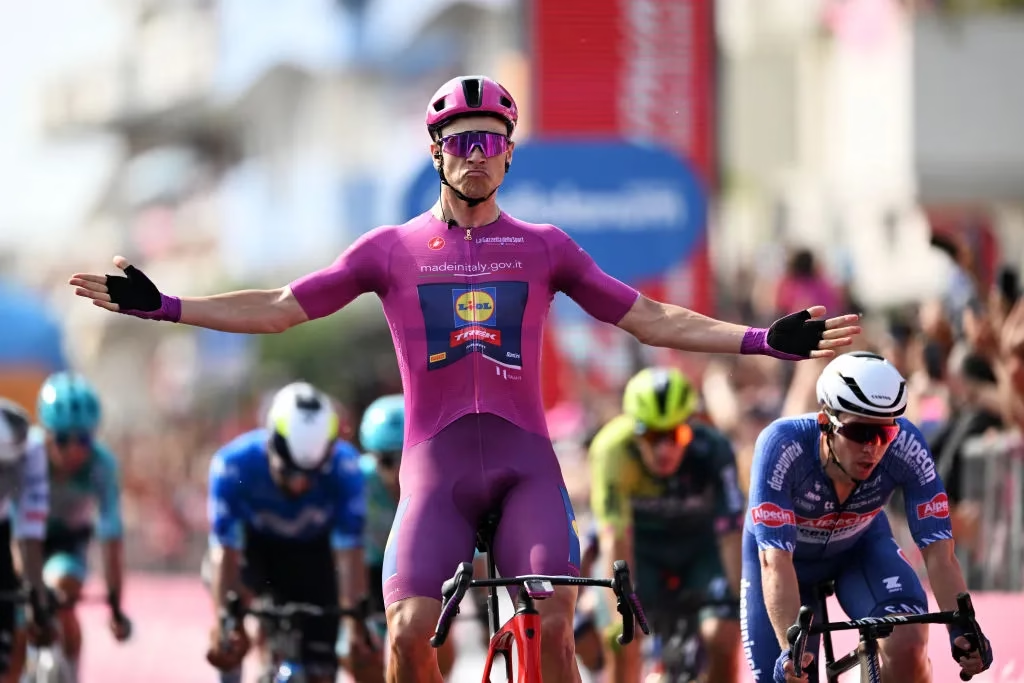 Photo Credit: Getty
Which sprinters can still win?
Jonathan Milan has been close without winning so far. Stage 4 gives him another chance, but the climb and uphill final straight make it less straightforward than Sofia. If Lidl-Trek keep him sheltered and bring him into Cosenza with enough support, he has the speed to win. If the race becomes messy, it becomes a more difficult day for him.
Dylan Groenewegen remains part of the sprint conversation after his stage 3 podium, although this is not an ideal stage for him. He can win if the race comes back together and the final approach is controlled, but the Cozzo Tunno climb is exactly the sort of obstacle that can leave a pure sprinter short of support even if he personally survives.
Kaden Groves is a more natural fit for a tougher sprint stage. He has the durability to handle a harder run-in, and the slightly uphill finish should not be a negative. If the final group is still large but the pure sprint trains have been thinned out, Groves could be one of the main beneficiaries.
Madis Mihkels is another rider to watch if the finale becomes more attritional. He has been consistent enough to move up the points classification, and this stage looks like the sort of day where positioning, freshness and resilience could matter as much as pure top-end speed.
Antonio Morgado and Michael Valgren both sit in that dangerous middle ground between sprinter, puncheur and opportunist. Neither needs the stage to be fully controlled. Both become more interesting if the climb creates a reduced group and the final kilometres become stop-start rather than a straight sprint build-up.
Could a late attack work?
There is definitely space for a late attacker. The final descent, the slightly rising run-in and the urban bends in Cosenza all create the possibility of hesitation behind. If the sprint teams are reduced or disorganised, a rider who goes inside the final 5km could make the chase uncomfortable.
Filippo Ganna is one of the most obvious names in that scenario. If the race pauses after the descent or if the sprint teams begin watching one another, he has the power to turn a small gap into something difficult to close. It would require the right moment rather than brute force alone, but stage 4 gives him more room than a flat, fully controlled sprint stage.
Giulio Ciccone, Lennert van Eetvelt, Jan Christen and Jasper Stuyven all become more interesting if the race breaks away from the sprint teams. Ciccone and Van Eetvelt are more likely to profit from a hard, late selection, while Christen could benefit from a sharper, more aggressive finale. Stuyven is dangerous if the final kilometres become tactical, particularly if the faster sprinters are isolated and nobody wants to take full responsibility for the chase.
There is also the maglia rosa factor. Guillermo Thomas Silva is listed among the outside contenders, and while his main job is to stay safe, his opening three days have already shown that he cannot be treated as a passive race leader. The likely outcome is still a sprint or reduced sprint, but if the race becomes messy, the pink jersey group will need to stay alert.
-
 Photo Credit: A.S.O./Gaëtan Flamme
What will the GC teams do?
The GC teams should not want a fight here. The first proper mountain selection is still ahead, and stage 4 looks more like a risk-management day than a day for major attacks.
That does not mean it will be easy. The combination of a long climb, descent, urban finale and slightly uphill sprint is exactly the sort of stage where positioning becomes stressful. The main favourites will want to stay near the front without using unnecessary energy.
For Jonas Vingegaard, Egan Bernal, Giulio Ciccone, Thymen Arensman and the rest of the GC group, the priority is simple: avoid crashes, avoid splits, and reach Cosenza safely. The same applies to Silva in pink, although his team will also have the added responsibility of defending the jersey on Italian soil for the first time.
The one complication is that some GC-adjacent riders may not see this only as a defensive day. If the race becomes selective without becoming a full mountain stage, riders such as Ciccone, Van Eetvelt, Christen or Narvaez may have enough freedom to test the sprint teams. The overall favourites will not want to spend energy chasing every move, which could open a brief tactical window late on.
Giro d’Italia 2026 stage 4 prediction
The odds point towards this being more than a routine sprint stage. Tobias Lund Andresen being clear favourite suggests the market expects a finish where climbing durability and sprint speed meet, rather than a flat-out drag race between the pure fast men.
That feels right for the route. Cozzo Tunno is not hard enough to create a GC day, but it is long enough to soften the sprinters and strip away some lead-out depth. The 450m finishing straight at 3.7 per cent also changes the finish slightly. It rewards a rider who can hold speed uphill after a complicated final hour.
Paul Magnier is still the form sprinter of the race, and a third stage win is entirely possible if Soudal Quick-Step control the day. Yet this stage looks better suited to Tobias Lund Andresen. If Decathlon CMA CGM Team can keep him protected over the climb and position him well into the final kilometre, he has the strongest all-round profile for the first Italian finish of this Giro.
Prediction: Tobias Lund Andresen to win stage 4 in Cosenza.

