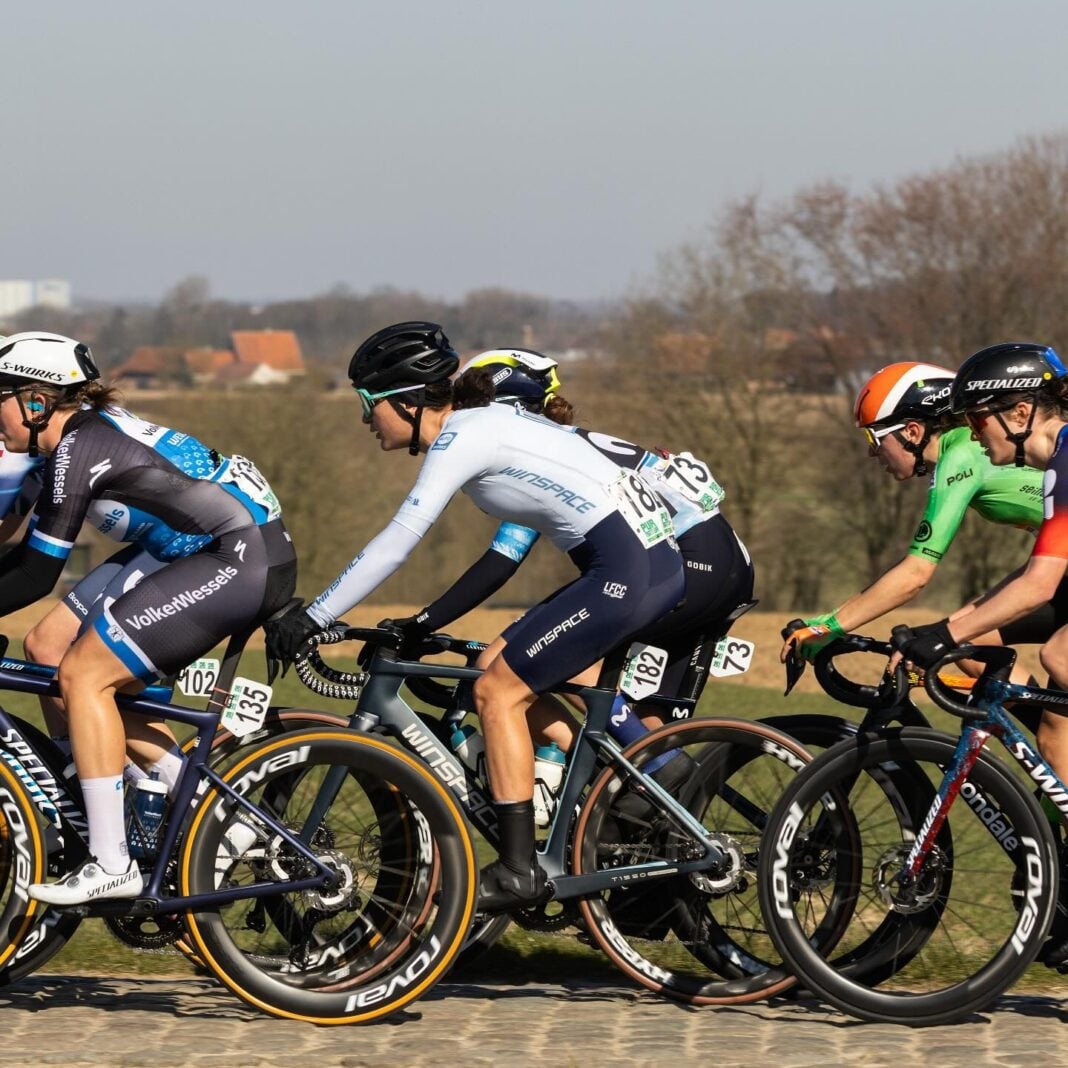
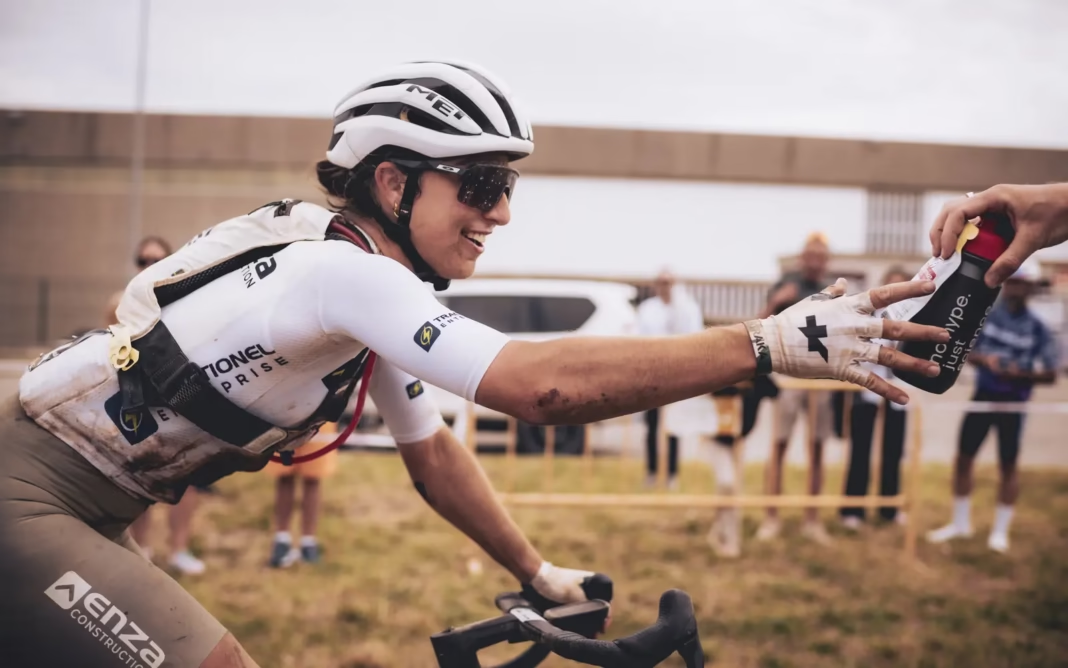
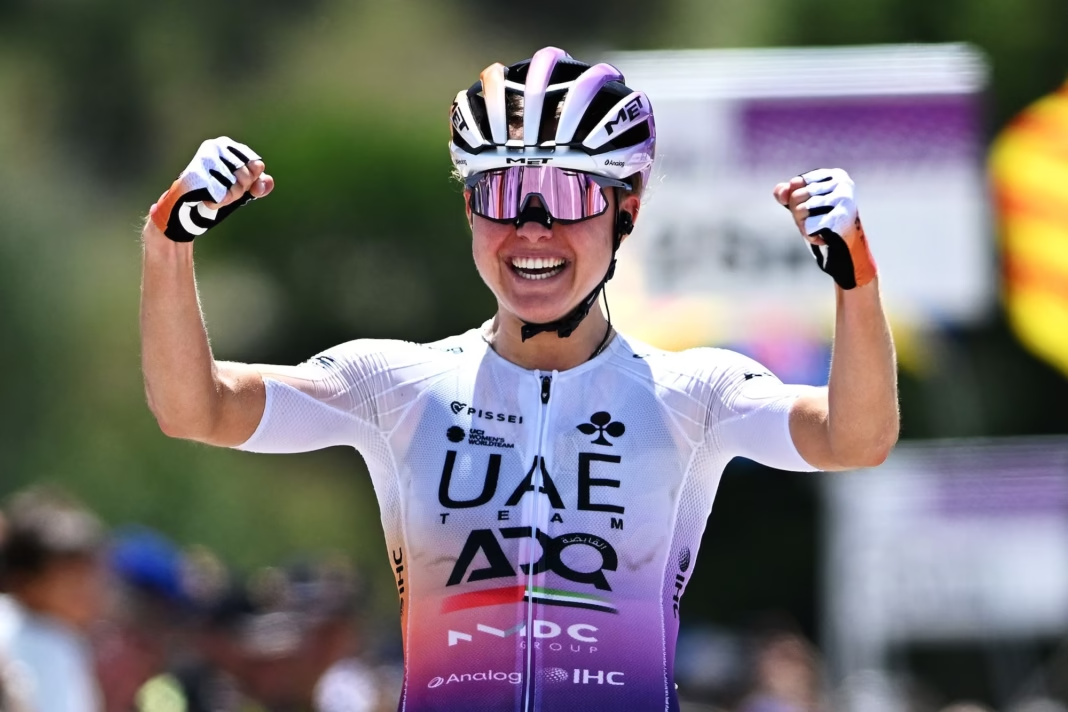
Grace Brown arrived late to road cycling by the standards of the elite women’s peloton, but she did not arrive politely. She came into the sport with the kind of engine that likes a long drag into the wind, a sharp sense of timing and a patience that suits hard, lumpy roads more than podium chat. For years she looked like a rider still being revealed to herself. Then the results started to stack up: time trials, one-day races, stage races, climbs ridden at threshold, and an unmistakable habit of making difficult courses feel like her terrain.
Brown is one of the defining all-rounders of her generation because she did not specialise herself into a corner. She could drag a race apart on the flat, survive long climbs, win against the stopwatch and, when the road turned abrasive and the finale became a matter of nerve, she was rarely out of place. In a decade when women’s racing has become faster, longer and more exacting, Brown became the sort of rider teams build plans around. For a wider look at riders who shaped the sport, see the women’s cycling history hub.

From late starter to elite rider
Grace Brown’s route into professional cycling was not the conventional one. She did not come through the sport as a child with a shelf of junior titles. She arrived later, after excelling in triathlon, and that background shows in the way she rides. The power is there, but so is a calm tolerance for long efforts and a coolness that often looks like detachment until the decisive moment comes. She turned professional in road cycling with a relatively small bank of experience, yet rapidly closed the gap to riders who had spent most of their lives in the sport’s orbit.
That late start matters because it shaped the whole arc of her career. Brown had to learn race craft quickly: where to sit in a crosswind, when to spend energy and when to trust the road to do the sorting, how to read a bunch in motion rather than a controlled triathlon field. The fact that she made those adjustments so effectively is part of what makes her important. She represents the modern rider who can come from outside the traditional pathway and still reach the top through adaptability, discipline and a good sense of timing.
Built for brute-force roads
Brown’s strengths were never limited to one discipline. She was a time-trialist who could settle into a hard rhythm and stay there, but unlike many riders who excel in the race against the clock, she also had the acceleration to survive the violent final kilometres of a one-day race. She could read an exposed finishing circuit, hold her position on rolling roads and keep enough in reserve to finish what she had started. That made her especially effective on courses with no obvious answer, where repeated changes in gradient and weather can decide the race as much as pure climbing.
The results that defined her career
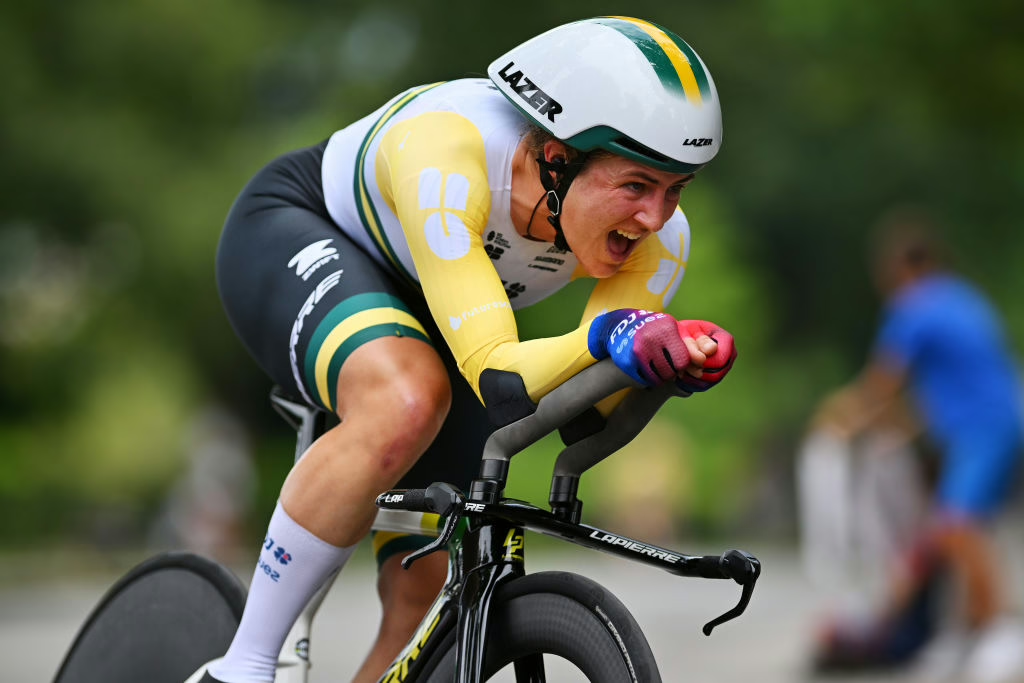
Brown’s palmarès grew in a way that reflected her range. She won major time trials, delivered in stage races and proved she could target the biggest one-day events. Her breakthrough at the highest level came in the discipline that best matched the way she likes to race: a long, controlled effort against the clock. One of the most significant markers was her victory in the individual time trial at the 2024 UCI Road World Championships in Zürich, a result that confirmed her status as one of the best in the world. On a wet, technical course that demanded commitment as much as power, she rode with a kind of exactness that left little room for doubt.
Before that, Brown had already built a reputation through victories and podiums in demanding races across Europe and Australia. She won stage races, time trials and one-day events that required not just power but intelligence. Her triumph at Liège-Bastogne-Liège Femmes in 2023 was a landmark. The route, with its succession of Ardennes climbs and a finale that punishes any lapse in concentration, suited her ability to ride a hard, sustained tempo and then produce one more effort at the end. To win there is to be able to absorb the race, not merely survive it.
She also captured respect in the time trial on a consistent basis, often turning up on courses where pacing, aerodynamics and raw power had to be fused into one calm effort. Brown was the rider teams could trust when an objective needed precision. That is a rarer trait than it might sound. Plenty of riders can win when the race breaks their way neatly. Fewer can create the shape of the race themselves, especially when it is all about measured suffering.

How she raced
Brown was not a rider of theatrical gestures. Her style was economical, almost severe at times, and it suited her. She tended to sit low and firm, shoulders quiet, face unreadable until the line approached. In breakaways she was rarely flashy, but she was often the most dangerous rider in the move because she could stay honest for longer than others expected. On hard days she was exceptionally good at making the race feel heavier for everyone else.
That composure made her useful in several roles. She could be a leader on a specific objective, a protected rider in the mountains or a key support rider in stage races where positioning before climbs and in crosswinds mattered as much as final wattage. Her value was not just in what she won, but in how many different kinds of races she could shape. In modern women’s cycling, where the calendar increasingly mixes one-day depth with stage-race intensity, that versatility is gold.
Teams and development
Brown rode for teams that gave her room to grow into those roles, including FDJ-SUEZ and later Fenix-Deceuninck, before moving to further opportunities at the top level. The progression makes sense when you look at her career as a whole. She needed a structure that could handle both the learning curve and the ambition. As she matured, so did the expectation around her. She became not only a rider who could win but one who could be planned around in races that demanded discipline from kilometre zero.
Why she is important in cycling history
Grace Brown belongs in the history of the women’s peloton because she widened the template of what a late entrant could become. She is part of a generation that has made women’s road racing faster, more international and more demanding, but she also stands out for the precision with which she reached the top. In an era when opportunities broadened, she showed what could happen when talent, resilience and an analytical mind met a sport that rewards all three.
She is also important because her strongest results came in races that define a rider’s standing in the modern peloton. Winning Liège-Bastogne-Liège Femmes and the world time trial title is not a matter of collecting nice statistics. Those are races that reveal a rider’s range and nerve. Brown’s success in both confirms her as one of the sharpest all-rounders of her generation, a rider who did not need a tailor-made profile to matter at the highest level.
Character, temperament and the way she carried herself
Brown came across as measured and serious without being remote. Her interviews often reflected the same practical intelligence that marked her riding: no excess, no illusion that form alone wins races, no false drama. That personality suited a career built on preparation and timing. She looked like someone who understood that road cycling is often decided long before the cameras arrive, in the small choices about position, effort and patience.
There was a steadiness to her that felt earned. Late starters often carry a certain freedom because they have not spent their whole life under the same kind of pressure as riders who have been treated as prospects from childhood. Brown seemed to use that perspective well. She did not race as if she needed to prove a theory. She raced as if she knew exactly what she could do, and more importantly, what the road required.

What she is doing now
Brown announced that the 2024 season would be her final year in professional cycling, and she left the sport on a high. After a career that rose steadily and then sharpened into world-class consistency, she stepped away having secured one of the most coveted titles in the sport. Her post-career plans include leading the Cyclists’ Alliance as President, launching her own “Sun Motion” sunscreen line, and working as a cycling commentator for SBS TV. She is also active as a mentor for women’s cycling and a Cadel Evans Great Ocean Road Race ambassador.
Why Grace Brown is worth remembering
Grace Brown is worth noting because she embodied a modern kind of excellence. She arrived late, learned fast and reached the very top in events that expose weakness immediately. She was not a rider who depended on chaos. She was a rider who could impose order on it. That is a different kind of power, and one that helps explain why her name will remain in the story of women’s road cycling for a long time.
Her career is a reminder that the best riders are not always the loudest or the earliest. Sometimes they are the ones who keep finding cleaner lines through the same hard landscape, until the result looks inevitable in retrospect. Grace Brown made that look almost simple. It wasn’t.
-
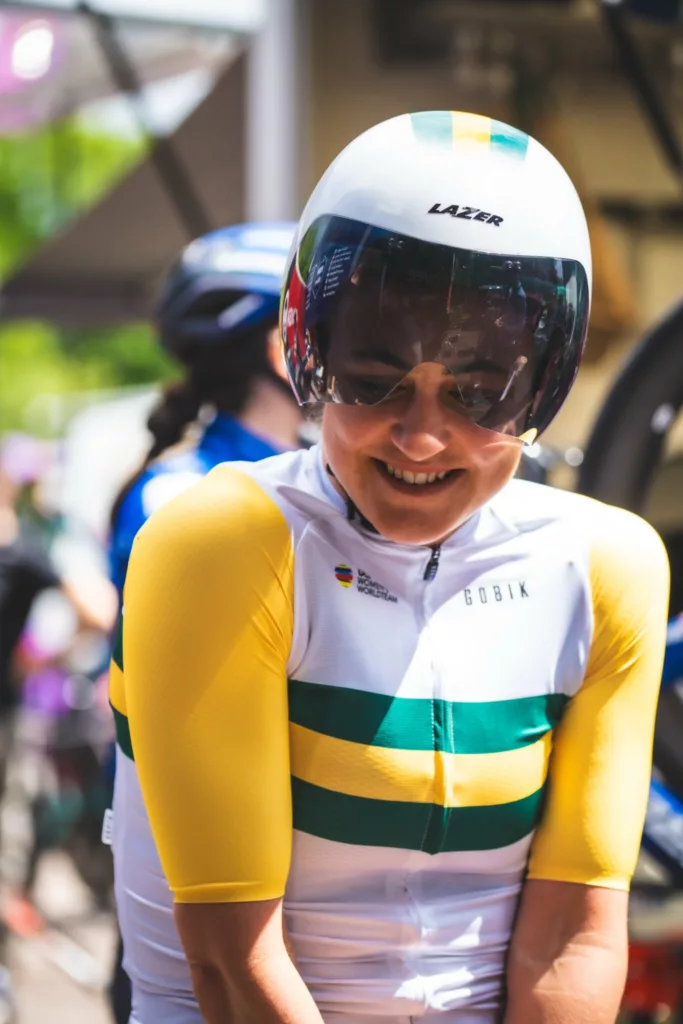
 Photo Credit: quentinphotographiebe
 -
 Photo Credit: Getty