
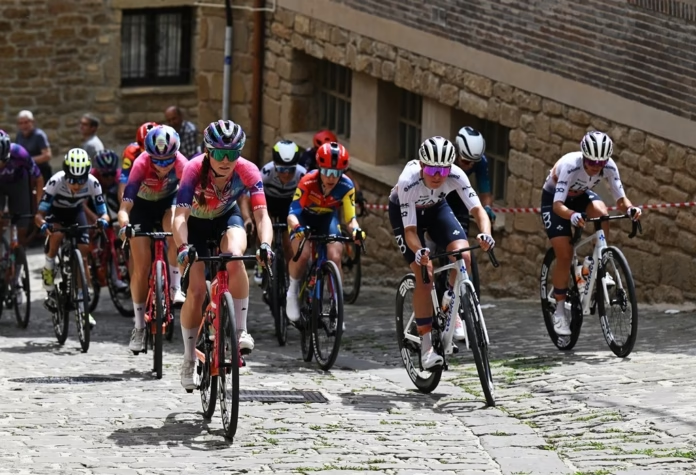
Clasica Femenina Navarra 2026 takes place on Wednesday, 13th May, with a 133.4km route starting and finishing in Pamplona/Iruña. The race sits at UCI 1.Pro level, giving it a strong place in the women’s calendar just below Women’s WorldTour status, and it arrives in the middle of a busy Spanish racing block between La Vuelta Femenina and Itzulia Women.
The start list reflects that position. There are five Women’s WorldTeams confirmed for the 2026 race, with Movistar Team, Lidl-Trek, Liv AlUla Jayco, EF Education-Oatly and Team Picnic PostNL all listed among the headline squads. They are joined by Laboral Kutxa – Fundación Euskadi, one of the most important teams in the race, given the Basque and Navarre context, as well as a mix of ProTeams, Continental squads and the Spanish national selection.
The race is unlikely to be decided by a simple sprint. With almost 2,000 metres of climbing, repeated steep ramps and a route that passes through 20 towns across Navarra, Clasica Femenina Navarra usually rewards riders who can handle constant changes of rhythm. The climbs are not long enough to make it a pure mountain race, but they are sharp enough to reduce the field and make positioning difficult before the run back into Pamplona.
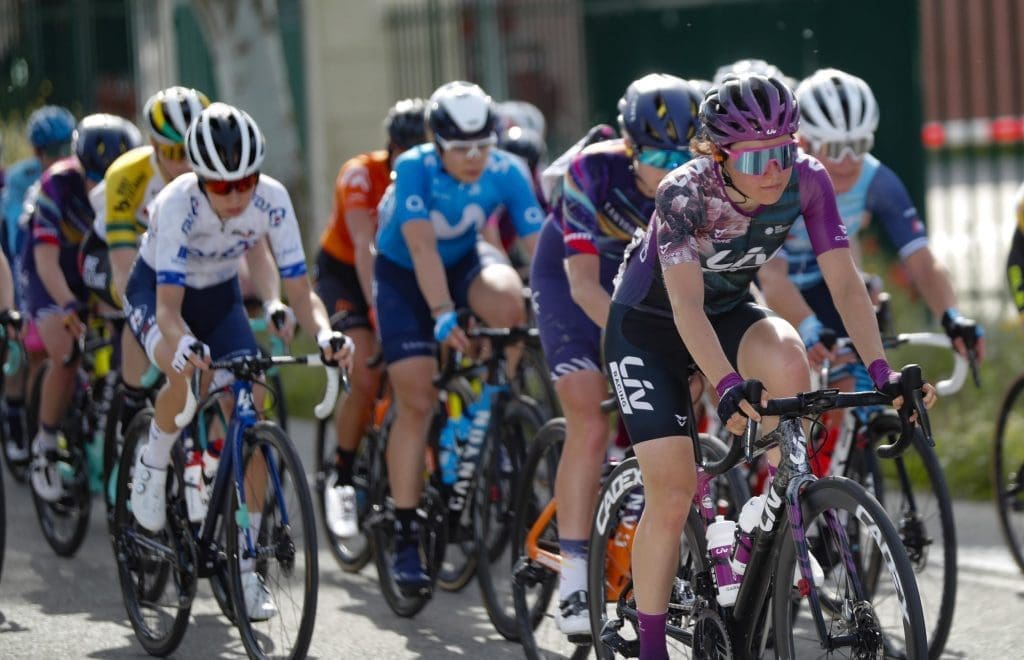
Which teams are racing Clasica Femenina Navarra 2026?
The 2026 edition includes a strong mix of WorldTour depth, Spanish interest and developing squads. Movistar Team should naturally be one of the most watched teams on home roads, while Lidl-Trek, Liv AlUla Jayco, EF Education-Oatly and Team Picnic PostNL bring higher-level depth to a race that often produces an aggressive final hour.
Laboral Kutxa – Fundación Euskadi are also central to the race’s identity. This part of the calendar is important for Spanish and Basque racing, and a selective route around Pamplona gives the team a valuable platform against WorldTour opposition. The Spanish national selection also adds another home-racing element, particularly for riders looking to show themselves in a high-level international field.
There is also a strong second line of teams, including Ma Petite Entreprise, UAE Development Team, Hitec Products-Fluid Control, Team Amani, DAS-Hutchinson, Vini Fantini – BePink, Aromitalia Vaiano, Team Mendelspeck E-Work and Team Abadie Magnan. That range of teams should help shape the early breakaway and make the race less predictable once the climbs begin to bite.
Clasica Femenina Navarra 2026 start list
Data powered by FirstCycling.com
What kind of rider can win Clasica Femenina Navarra?
Clasica Femenina Navarra tends to suit riders who sit between climber, puncheur and Classics specialist. The route has enough climbing to remove pure sprinters, but not enough long mountain terrain to make it a straightforward contest between the best high-altitude climbers.
That creates a broad contender profile. A rider with a fast finish from a reduced group can win here. So can a rider willing to attack on the steeper ramps and commit before the final kilometres. The repeated climbs around Navarra make recovery difficult, so the winner usually needs more than one strong acceleration. They need to handle the whole rhythm of the race.
That is why this start list is worth watching beyond the biggest team names. A WorldTour leader may take control, but this is also the kind of race where a developing rider, home contender or breakaway specialist can force the favourites to react earlier than they would like.
-
 Photo Credit: Unipublic/Cxcling/Aritz Arambarri
 -
 Photo Credit: Cor Vos


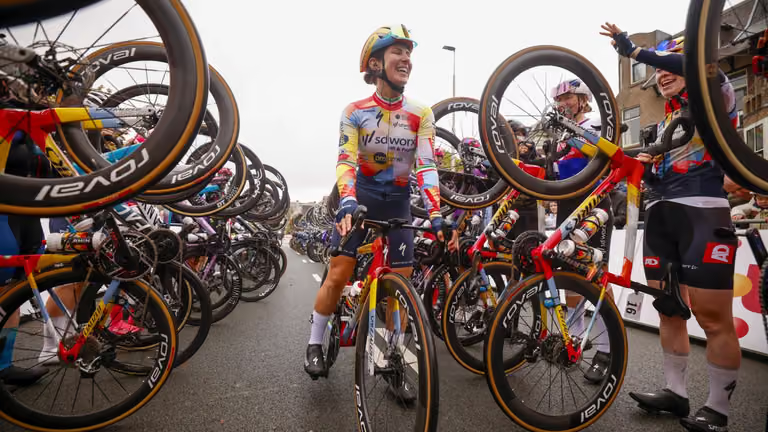
Why the start list matters before Itzulia Women
Clasica Femenina Navarra is also important because of what comes next. Itzulia Women follows later in the week, and many riders use the Navarra race as both a target and a form check before the harder stage-race structure of the Basque Country.
That makes the start list more revealing than a normal midweek one-day race. Riders coming out of La Vuelta Femenina may still have strong climbing form, but fatigue could also be a factor. Others may arrive fresher, using Navarra as the first serious test of their Spanish block. Teams with several cards can use the race to test hierarchy before Itzulia, while smaller squads can race more aggressively knowing the route gives them chances to disrupt WorldTour control.
The climbs around Pamplona should make the final hour selective. If the strongest teams race early, the front group could be reduced well before the finish. If the race stays together longer, the final climbs should still make it difficult for a large group to contest victory. Either way, the full start list gives the race enough depth to be more than a simple warm-up.

