
The Giro d’Italia 2026 reaches its first rest day with a race that already looks very different from the one many expected before the Grande Partenza in Bulgaria. Three stages have not decided the Giro, or even properly opened the GC fight, but they have given the race a sharper early identity than a standard sprint-heavy start.
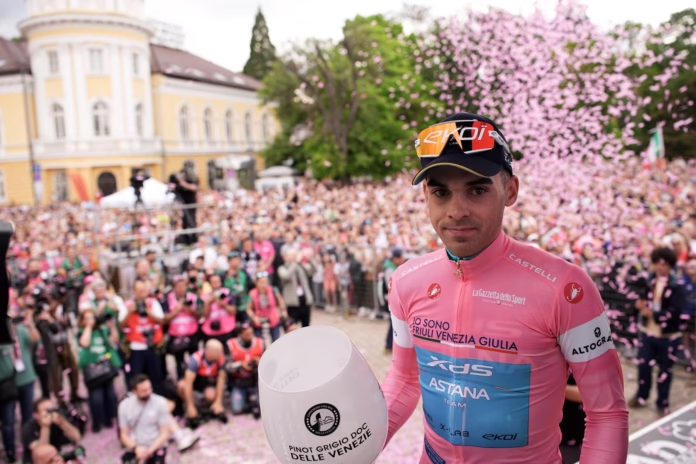
Guillermo Thomas Silva is in the maglia rosa. Paul Magnier has won two of the opening three stages. Diego Pablo Sevilla has made the mountains jersey his personal project. Adam Yates is already out of the race. The main GC favourites, meanwhile, are still tightly packed, watching each other rather than attacking each other.
That gives the Giro a strange but interesting first rest day. The race has not yet become a mountain contest, but it has already created storylines with real consequences. The transfer to Italy now gives the peloton a reset, but not a clean one. Some riders arrive with momentum, some with pressure, and some simply with relief that the opening block did not cost them more.
Guillermo Thomas Silva has changed the opening story
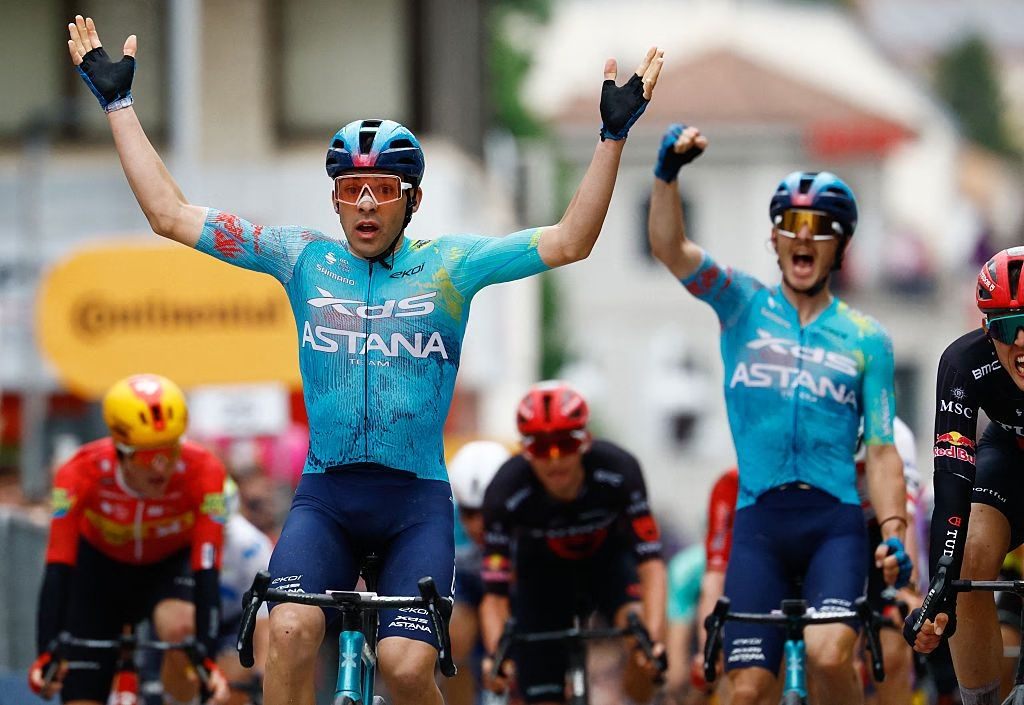
The most unexpected image of the first three days is Guillermo Thomas Silva in the maglia rosa. His stage 2 victory in Veliko Tarnovo was already historic, making him the first Uruguayan rider to win a Grand Tour stage, but holding the jersey into the first rest day has made the achievement feel bigger.
Silva did not take pink through a ceremonial breakaway or a technicality. He won a chaotic, wet and difficult stage, then survived the following day without incident. That gave XDS Astana Team the kind of early Giro presence few would have predicted before the race began.
The lead itself is narrow. Silva is only four seconds ahead of Florian Stork and Egan Bernal, with Thymen Arensman and Giulio Ciccone close behind. Once the Giro reaches more selective terrain, defending the jersey will become much harder. But that does not reduce what Silva has already done. For a rider and team outside the obvious pre-race narrative, the opening block has been close to perfect.
It also changes the feeling of the race. Instead of a predictable early pink jersey scenario shaped only by sprint bonuses and GC caution, the Giro now carries a surprise leader into Italy. That gives the first Italian stages a different tone. Silva’s team will need to defend, the GC contenders will need to judge whether taking pink early is worth the effort, and every intermediate day becomes slightly more tactical.
Paul Magnier has been the standout sprinter
If Silva has been the surprise story, Paul Magnier has been the dominant one. Two wins in the opening three stages is a major statement, especially at a Giro where the sprint field includes bigger, more established names.
Magnier won stage 1 in Burgas, lost the maglia rosa on stage 2, then responded by winning again in Sofia. That is the sort of start that changes a rider’s race immediately. He is no longer simply one of the sprint options. He is the rider everyone else now has to beat.
The points classification already reflects that. Magnier has built a strong early advantage over Jonathan Milan, Tobias Lund Andresen and the other fast men, and his route to the maglia ciclamino looks very real if he can keep scoring. Milan has been close, but close is not enough when another sprinter is already turning opportunities into wins.
The interesting part is what happens next. The Giro does not offer endless flat sprint stages, and stage 4 into Cosenza is already more complicated than the Bulgarian finishes. There is a long climb, a slightly uphill final straight and the possibility of a reduced group. Magnier may still be strong enough to win there too, but the race will start asking different questions.
For now, though, he has been the most convincing rider of the race. Not because he has spoken loudly, but because his sprinting has.
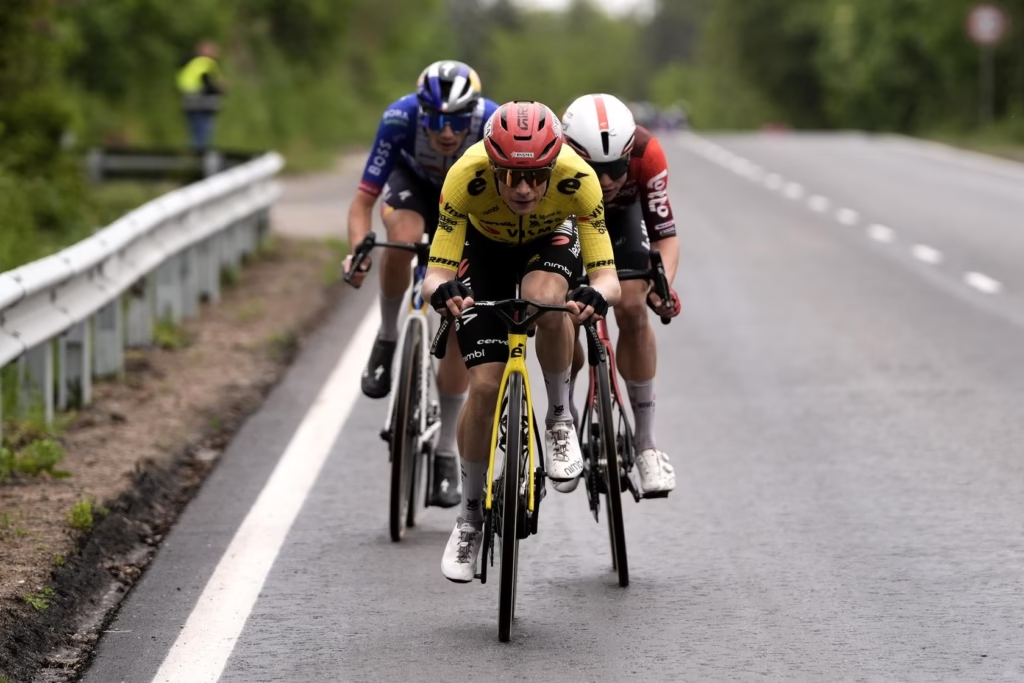 Photo Credit: RCS
The GC favourites are still waiting
After three stages, the main GC picture remains compressed. That is not unusual at this point in a Grand Tour, but it is still worth noting because the opening block had enough nervousness to create problems. Wet roads, crashes, positioning fights and sprint finales can all damage a GC campaign before the mountains even begin.
Jonas Vingegaard has reached the first rest day safely. So have Egan Bernal, Thymen Arensman, Giulio Ciccone, Jai Hindley, Ben O’Connor, Damiano Caruso and several other overall contenders. The time gaps are still small enough that nobody has gained decisive control and nobody among the main names has yet been pushed out of the contest.
That suits some riders more than others. Vingegaard does not need to prove anything in the first three stages of the Giro. A quiet opening is useful for Team Visma | Lease a Bike, especially when the race has already produced crashes and uncertainty elsewhere. Bernal and Arensman are well placed too, giving Netcompany Ineos two riders near the top without having had to expose themselves.
Ciccone’s position is also interesting. He sits close to the race lead, has already shown sharpness, and will be more comfortable once the race becomes hillier. The question is whether he treats the early Italian stages as a chance to move closer to pink, or whether Lidl-Trek keep their focus split between his GC position and Milan’s sprint ambitions.
The first rest day answer is simple: the Giro has not yet shown us who is strongest overall. It has only shown us who has avoided early damage.
Adam Yates’ abandon changes UAE Team Emirates-XRG
The biggest GC loss of the opening block is Adam Yates. His abandon after the stage 2 crash removes one of the major pre-race contenders before the Giro has even reached Italy, and it changes the structure of UAE Team Emirates-XRG’s race.
That is a heavy blow. Yates brought proven Grand Tour quality, climbing consistency and leadership experience. Losing him so early leaves the team needing to reshape its ambitions almost immediately.
Jan Christen’s position in the young rider classification now feels more prominent. He is set to wear the white jersey on the road because Silva leads both the overall and youth standings, and that gives UAE a visible role despite the loss of Yates. But wearing white and carrying a Grand Tour GC leadership burden are very different things.
The team now has choices. It can protect Christen and see how far his race can go. It can shift towards stage wins. It can use its depth more aggressively rather than trying to control a leader’s race. What it cannot do is simply pretend nothing has changed.
For the wider GC battle, Yates’ exit removes a rider who could have pressured Vingegaard and the other favourites in the mountains. It also reduces one of the race’s strongest collective climbing blocks. That may become more noticeable later, especially if the high-mountain stages become less controlled and more open to alliances of convenience.
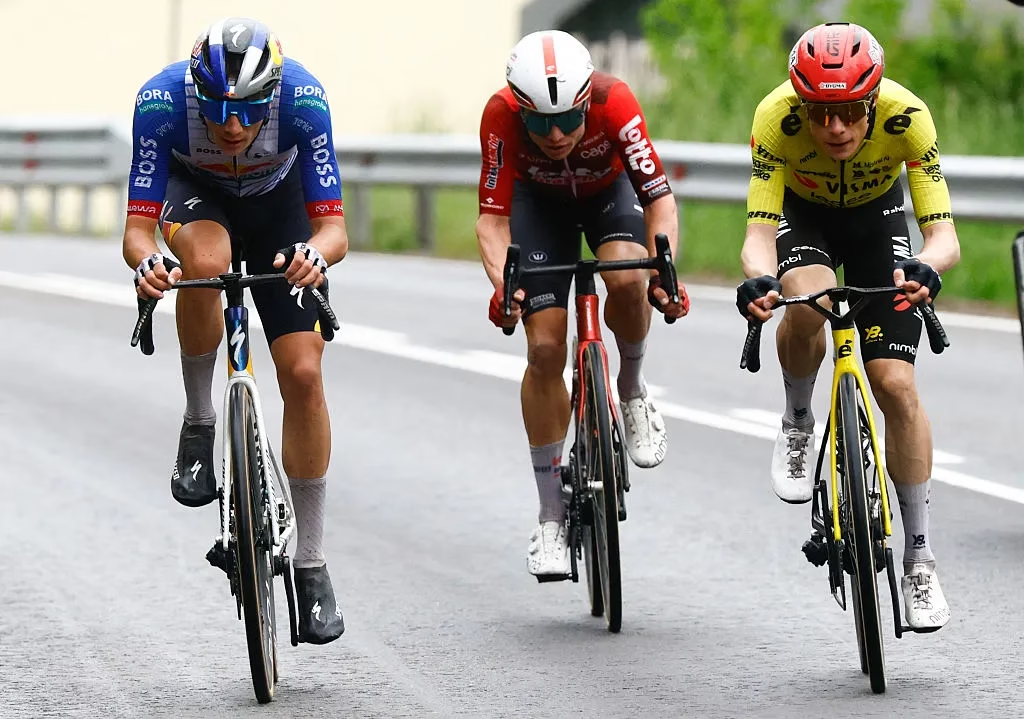 Photo Credit: Getty
XDS Astana Team have made the most of the opening block
Grand Tours are not only about final podium contenders. They are also about teams taking moments when the race gives them an opening. XDS Astana Team have done that better than anyone in the first three stages.
Silva’s stage 2 victory gave them the maglia rosa, but the team’s success is broader than one result. They leave Bulgaria with the race lead, a share of attention, and the team classification advantage after a start that has placed them at the centre of the Giro.
That is valuable. For teams outside the absolute top tier of GC expectation, the first week of a Grand Tour can be a chance to shape the story before the favourites take over. Astana have done exactly that. They have not waited for the race to come to them. They have taken control of a moment and turned it into something visible.
The challenge now is how long they can hold it. Defending pink in Italy will be harder than surviving one sprint stage in Sofia. The terrain becomes more varied, the pressure increases, and teams with deeper GC ambitions may start testing them. But even if Silva’s time in pink is limited, the opening block has already given Astana one of the race’s defining early stories.
Diego Pablo Sevilla has owned the mountains jersey battle
Diego Pablo Sevilla has been one of the most active riders of the race so far, making the breakaway on all three stages and turning that aggression into the maglia azzurra. It is easy to dismiss early mountains points before the real climbs arrive, but Sevilla’s race has still been intelligently built.
He has understood the opportunity. The Bulgarian stages offered points, visibility and a way to define his Giro before the GC contenders and pure climbers begin to dominate the classification. By repeatedly going up the road, he has created a strong early cushion in the mountains standings and given Team Polti VisitMalta useful exposure.
The jersey will become harder to defend once the race reaches longer climbs, but Sevilla’s start means he has options. He can continue targeting breakaways, force rivals to chase points earlier than they might want, and remain relevant in the classification beyond the opening novelty of the race.
There is also something refreshing about a rider committing so clearly to an early objective. Grand Tours need this type of racing. Not every storyline has to come from the yellow, pink or red jersey contenders. A rider repeatedly choosing the hard route into the break can give the opening week texture, and Sevilla has done exactly that.
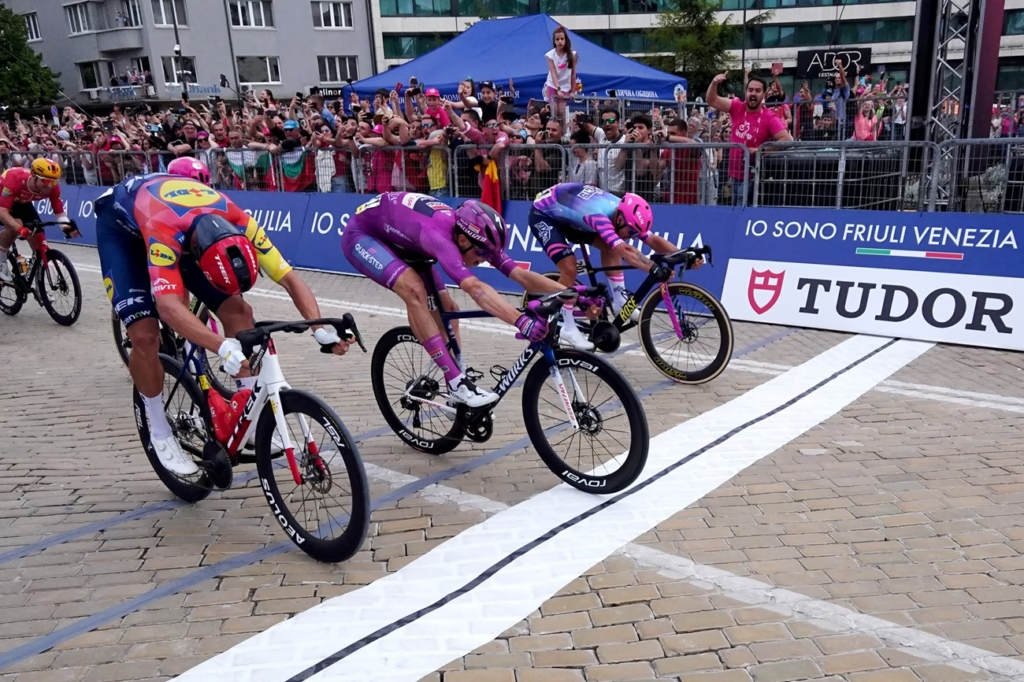 Photo Credit: RCS
Jonathan Milan needs a response
Jonathan Milan has not had a bad start to the Giro, but the problem is that Magnier has had an excellent one. Milan has been close, including second in Sofia, yet he reaches the first rest day without the stage win that would have changed the tone of his opening week.
That creates pressure. Milan remains one of the most powerful sprinters in the race, and Lidl-Trek have enough quality to put him in position. But sprint momentum can shift quickly in a Grand Tour. If one rider starts winning repeatedly, everyone else begins racing against both the road and the narrative.
Milan does not need to panic. There should still be opportunities, and the points classification is not over. But he does need a win soon if he wants to stop Magnier turning the ciclamino battle into a controlled campaign rather than an open contest.
Stage 4 is complicated for Milan. The climb before Cosenza and the uphill finish make it less ideal than a pure flat sprint. But that may also make it a useful test. If he can get over the climb well, stay supported and contest the finish, it would show that his Giro is not going to depend only on the flattest days.
The first Italian stages should change the rhythm
The transfer from Bulgaria to Italy is more than a geographical shift. It should change the texture of the race. The opening block had sprint days, rain, crashes and a surprise pink jersey, but it did not yet bring the Giro into its more familiar terrain.
Stage 4 from Catanzaro to Cosenza is a useful reintroduction. It is short, awkward and not as simple as it may first look. The Cozzo Tunno climb is unlikely to trouble the main GC favourites, but it could make life difficult for the heavier sprinters and open the door to a reduced sprint, late attack or messy final hour.
That is exactly the kind of stage where the Giro often begins to shift. Not with a full GC explosion, but with stress. Teams are coming off a rest day and transfer. The roads are different. The climbs arrive late enough to influence the finale. The finish is slightly uphill. It is not a mountain stage, but it is a stage that can expose poor positioning or tired legs.
The first rest day therefore comes with a sense of pause rather than conclusion. The race has produced stories, but not answers. Italy should begin changing that.
-
 Photo Credit: A.S.O./Gaëtan Flamme
What have we really learned so far?
The main lesson from the first three stages is that the Giro can still surprise early, even when the route appears to favour sprint control. Silva in pink, Magnier with two wins, Sevilla in the mountains jersey and Yates out of the race is not a quiet opening.
What we have not learned yet is who will win the Giro. The GC favourites have mostly kept themselves hidden, and that is sensible. Grand Tours are not won by making statements every day. Sometimes the strongest riders are the ones who pass through the dangerous early stages without giving anything away.
Still, the race is already better for the stories it has gathered. Silva gives the maglia rosa a human surprise. Magnier gives the sprints a clear reference point. Sevilla gives the breakaways purpose. Yates’ abandon gives the GC race an early absence to measure.
The Giro now moves into Italy with the main battle still waiting, but not with a blank slate. The first three stages have given the race character. The next question is which of those early stories can survive once the terrain becomes harder and the favourites start racing for more than position.

