
The 2026 Giro d’Italia resumes after its first rest day on Tuesday, 19th May with one of the most important stages of the race so far: a 42km individual time trial from Viareggio to Massa. After a first week shaped by Blockhaus, Fermo and Corno alle Scale, the maglia rosa battle now moves from the mountains to the Tuscan coast.
Afonso Eulálio starts the day still in pink, but Jonas Vingegaard has cut his lead to 2:24 after winning both major summit finishes so far. That makes stage 10 much more than a specialist’s time trial. It is a direct GC test, and potentially the day when Vingegaard moves close enough to change the whole tone of the second week.
For UK viewers, this is an early-afternoon-to-late-afternoon watch. The first Giro d’Italia rider is scheduled to start at 12:15pm BST, with the final finish expected around 4:14pm BST. The final riders will be the ones to watch most closely, with the general classification contenders heading out late in the order.
When does Giro d’Italia 2026 stage 10 start?
Stage 10 takes place on Tuesday, 19th May.
The first rider is due to roll down the start ramp in Viareggio at 12:15pm BST. The final riders will start much later in the afternoon, with the stage expected to finish at around 4:14pm BST in Massa. The start order is based on the general classification, so the maglia rosa, Afonso Eulálio, will be the last rider to start.
For most UK viewers, the best viewing window depends on what they want from the stage. The early part should show the first specialist benchmarks, but the decisive GC action will come later, when Vingegaard, Eulálio, Felix Gall, Jai Hindley, Thymen Arensman and the other overall contenders are on the road.
How to watch Giro d’Italia 2026 stage 10 in the UK
UK viewers can watch the Giro d’Italia live through TNT Sports and HBO Max. HBO Max is the main streaming platform for live cycling coverage in the UK, while TNT Sports carries the race through its usual TV and subscription routes.
The official Giro race centre will also provide live timing, text updates and race information throughout the stage. That is particularly useful on a time trial day, where intermediate checks can tell the story before the riders reach the finish.
Free live streams are available in some territories, including Italy, Australia and Switzerland, but those services are territory-based. For UK viewers, TNT Sports and HBO Max remain the proper live coverage route.
What time should UK viewers tune in?
The first useful viewing point is from around 12:15pm BST, when the early starters begin setting the first benchmarks. On a long time trial, those early times matter because they give the rest of the field a clear target and reveal whether wind or road conditions are affecting the course.
The most important GC window should come from around 3:15pm BST onwards. That should bring the leading overall contenders onto the course and allow viewers to follow the intermediate splits between Eulálio, Vingegaard, Gall, Hindley, Arensman and O’Connor.
The final hour is the essential watch. By then, the stage-winning time should already be clear, and the focus will shift fully towards the maglia rosa battle. If Vingegaard is taking large chunks out of Eulálio at the first checkpoint, the final kilometres into Massa could become one of the most important moments of the Giro so far.
The stage 10 route
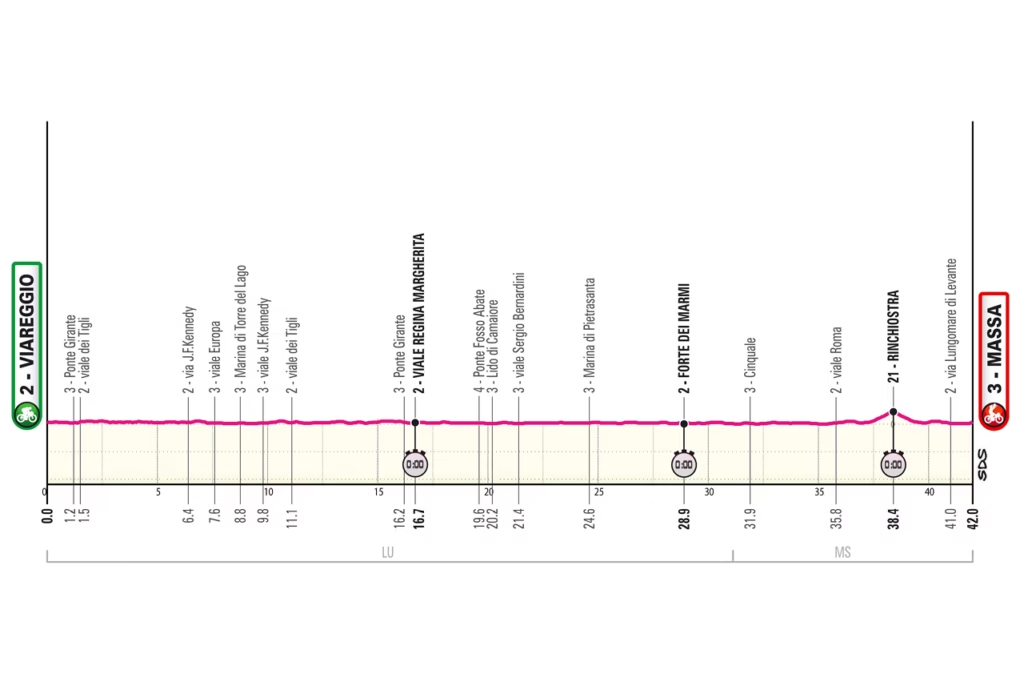
Stage 10 runs from Viareggio to Massa over 42km, giving the race a long and largely power-based individual time trial along the Tuscan coast. The distance alone makes it significant. This is not a short effort where GC riders can simply limit small losses. Over 42km, pacing, position and time trial ability can create gaps measured in minutes rather than seconds.
The route is not a mountain time trial. It should favour big engines, time trial specialists and GC riders who can hold an aerodynamic position for close to an hour. There are road changes and a coastal setting to manage, but the main test is sustained power.
The broad shape makes it one of the clearest opportunities in the whole race for the specialists to take a stage win and for the GC riders to rearrange the top 10. After the climbing tests of stage 9 to Corno alle Scale, the Giro now asks a very different question.
Why stage 10 matters for the GC
The first week has already created a proper GC hierarchy. Eulálio still leads, but Vingegaard has been the strongest climber whenever the road has properly gone uphill. He won on Blockhaus, then won again on Corno alle Scale, cutting the gap to the Portuguese leader to 2:24 before the rest day.
That margin is useful, but not secure against a rider of Vingegaard’s quality in a 42km time trial. The Dane does not need to take the jersey on stage 10 for the day to be a success. If he gains a minute, the race becomes much tighter. If he gains closer to two minutes, the Giro moves into a completely different phase.
Eulálio’s task is equally clear. He does not need to beat Vingegaard. He needs to avoid a major collapse. A controlled, even ride that keeps the gap above a minute would be a strong defence. A poor ride would undo much of the work he has done to keep pink through the mountains.
Behind them, the podium fight could also change sharply. Felix Gall is third overall but is more vulnerable against the clock than some of the stronger all-rounders behind him. Jai Hindley, Thymen Arensman, Ben O’Connor and others will see the stage as a chance to move up or at least close the gaps before the race returns to hillier roads.
Filippo Ganna and the stage win battle
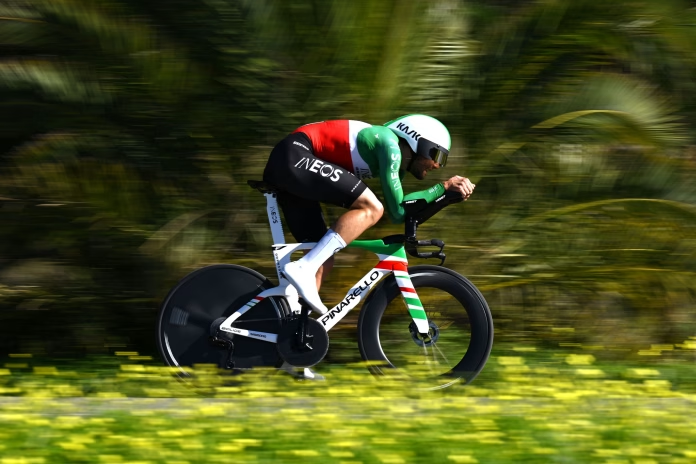
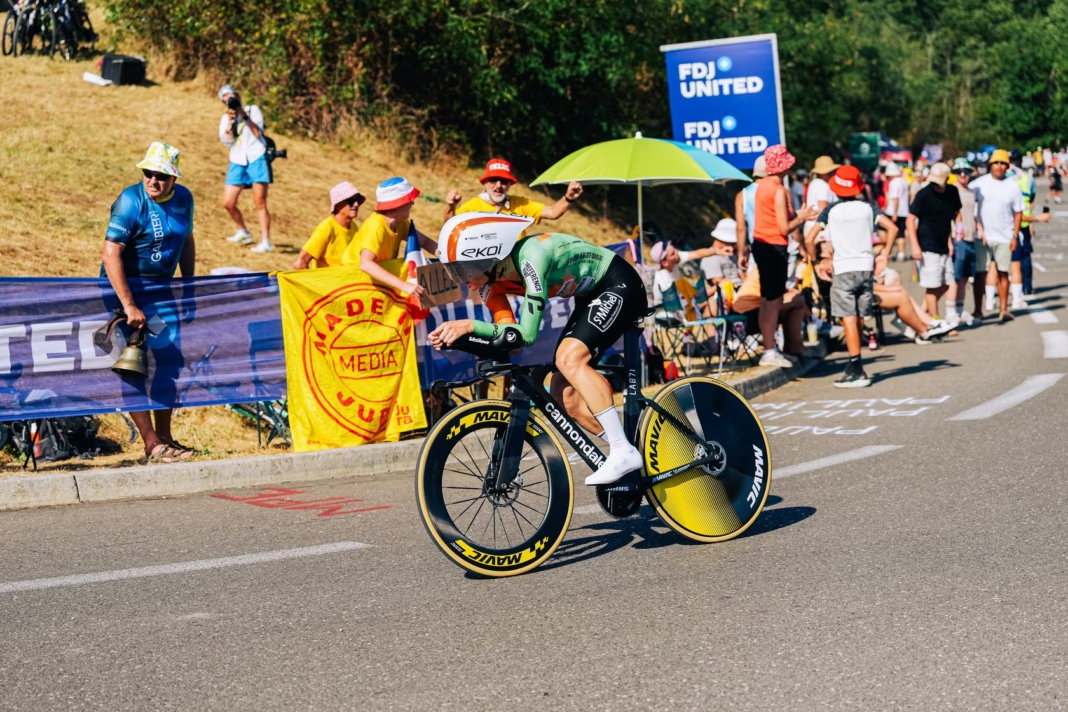
Filippo Ganna is the obvious favourite for the stage. The length and likely rhythm suit him, and the absence of a major climb makes this one of his clearest opportunities of the Giro. A 42km time trial gives him enough road to use his biggest strength: holding a huge, controlled effort for a long time.
The challenge for the rest is to get close to his benchmark. Alec Segaert, Magnus Sheffield, Mikkel Bjerg, Lorenzo Milesi, Johan Price-Pejtersen and Niklas Larsen are all riders who can place strongly if they judge the effort well. Thymen Arensman also sits in an interesting space between stage contender and GC rider, because a strong time trial could improve his overall position as well as put him near the stage podium.
The weather could still shape the contest. A coastal time trial always leaves room for wind to influence pacing and bike handling, while any rain would increase the risk on corners and road markings. If conditions change through the afternoon, start times could matter more than usual.
-
 Photo Credit: A.S.O./Gaëtan Flamme
What Vingegaard needs from the day
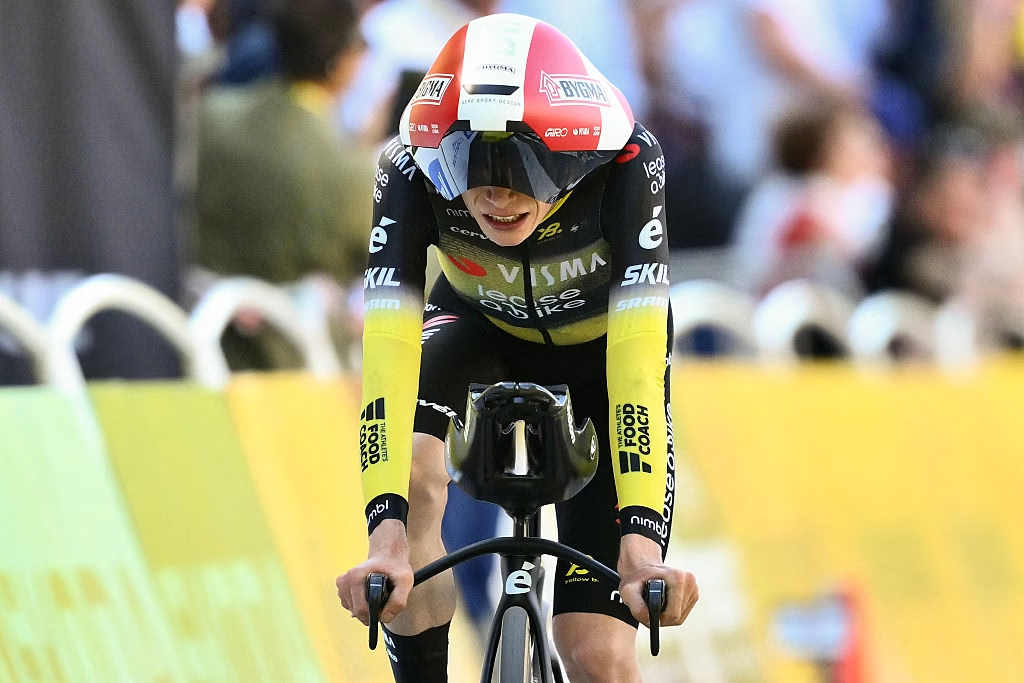
Vingegaard’s stage is not about beating Ganna. It is about Eulálio. He starts 2:24 behind the maglia rosa, and this time trial gives him a chance to take time without needing mountain tactics, team pressure or a late attack.
The key number is probably one minute. If Vingegaard takes that much, Eulálio still keeps pink but the race tightens significantly. If the gain is closer to two minutes, the Giro becomes extremely fragile for the Portuguese rider. If Vingegaard somehow overturns the full gap, the pink jersey changes hands before the second week properly begins.
The most important thing for Vingegaard will be pacing. A steady start, strong middle section and powerful final 10km could put Eulálio under pressure long before the finish. The intermediate splits will tell viewers whether this is becoming a jersey-threatening ride.
What Eulálio must avoid
Eulálio’s danger is not one bad corner or one slow split in isolation. It is a gradual fade across the final third of the time trial. In the mountains, he has been able to limit losses by finding rhythm and staying composed. In a time trial, there is nowhere to hide.
If he starts too quickly, the final 10km could become very expensive. If he starts too cautiously, the gap to Vingegaard may already look worrying at the first checkpoint. The ideal ride is calm and conservative without being passive.
The pressure of riding last is also part of the test. Eulálio will know the time gaps as he rides, but that can work both ways. Good information helps pacing. Bad information can force overreaction. His best chance is to ride his own time trial, accept that Vingegaard may gain time, and make sure the loss stays manageable.
-
Photo Credit: A.S.O./Gaëtan Flamme
Why the final 10km could decide the day
A 42km time trial is long enough for early aggression to backfire. The final 10km will reveal who has paced the day correctly. Specialists like Ganna should be able to hold their position and power late. GC riders who overextend early could suddenly start losing large chunks of time.
That is why the intermediate checks need careful reading. A rider who is slightly down at the first split but strong at the second may be building properly. A rider who is fast early but fading later may already have spent too much.
For the GC, the final 10km into Massa could decide whether stage 10 is a controlled reshuffle or a major turning point. If Vingegaard is still gaining late, Eulálio’s pink jersey could come under real pressure. If Eulálio stabilises in the final section, he can leave the time trial still leading the Giro and with a psychological boost before the race resumes on the road.
Prediction
Stage 10 looks tailor-made for Filippo Ganna. The route is long, power-based and free of the sort of major climb that would blunt his advantage. If he rides to his level, the rest of the field will be chasing second place.
The GC race may be even more important than the stage win. Vingegaard should gain time on Eulálio, but the size of that gain will define the rest of the Giro. Eulálio has a 2:24 buffer, which gives him room to survive, but not enough to relax.
Prediction: Filippo Ganna to win stage 10 in Massa, with Jonas Vingegaard taking a significant amount of time from Afonso Eulálio and tightening the maglia rosa battle before the second week resumes.

