
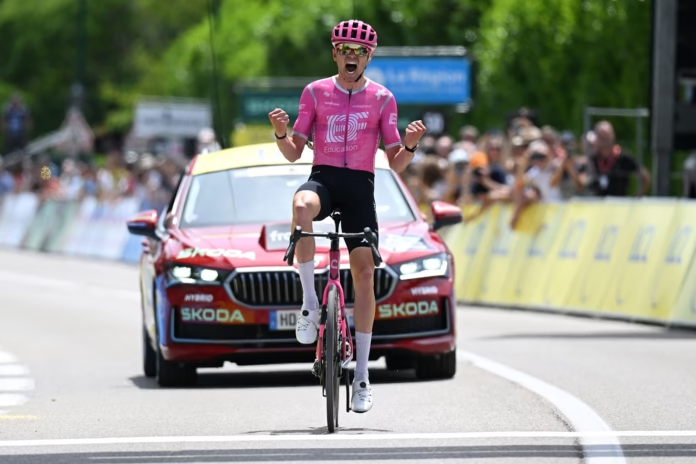
The Tour Auvergne – Rhône-Alpes 2026 continues on Monday, 8th June, with the longest stage of the race. Stage 2 runs from Saint-Martin-le-Vinoux to Le Puy-en-Velay over 234.3km, taking the peloton through a long, rolling and increasingly wearing day before the race reaches its first major time trial checkpoint on stage 3.
After the sharp opening stage to Saint-Ismier, this is a different kind of test. Stage 2 is not built around one decisive mountain finish, but the distance changes the entire feel of the day. More than 230km in the saddle, repeated rolling climbs and a finish that is not completely flat make this a stage where fatigue, positioning and team judgement should matter as much as pure climbing strength.
The GC contenders do not need to win here, but they cannot switch off. The 28.4km team time trial in Perreux comes next, and any rider who loses energy or time on stage 2 will carry that problem directly into one of the most important early tests of the week.
For wider context, our Tour Auvergne – Rhône-Alpes 2026 full route guide breaks down the complete eight-stage route, while our Tour Auvergne – Rhône-Alpes 2026 stage 1 preview explains why the race began with a much harder opening day than usual.
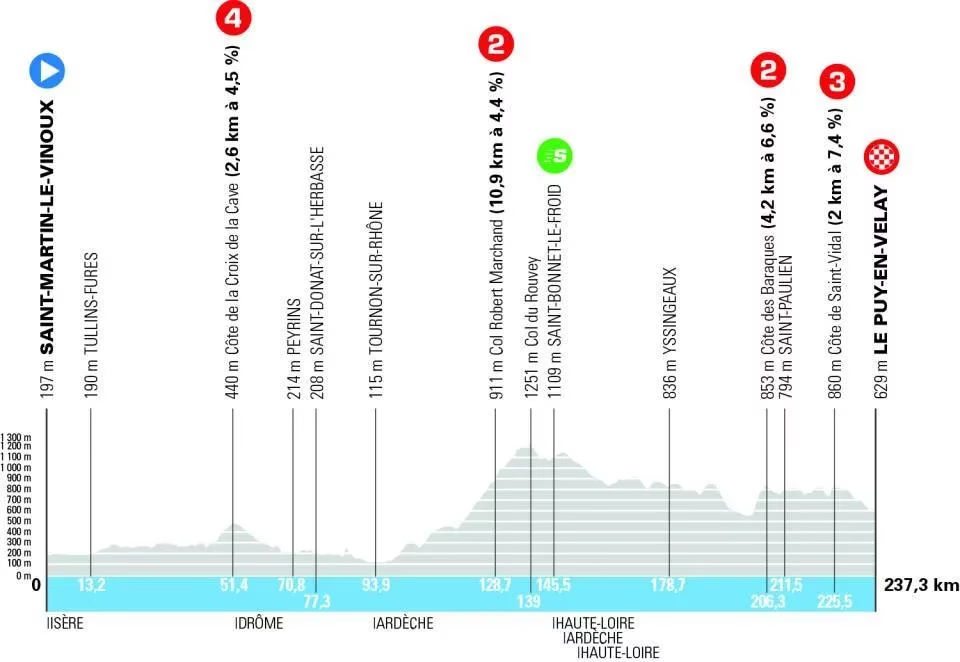
What is the route for Tour Auvergne – Rhône-Alpes 2026 stage 2?
Stage 2 starts in Saint-Martin-le-Vinoux and finishes in Le Puy-en-Velay after 234.3km. It is the longest stage of the race and one of the most physically demanding on paper, even if it is not the biggest mountain day.
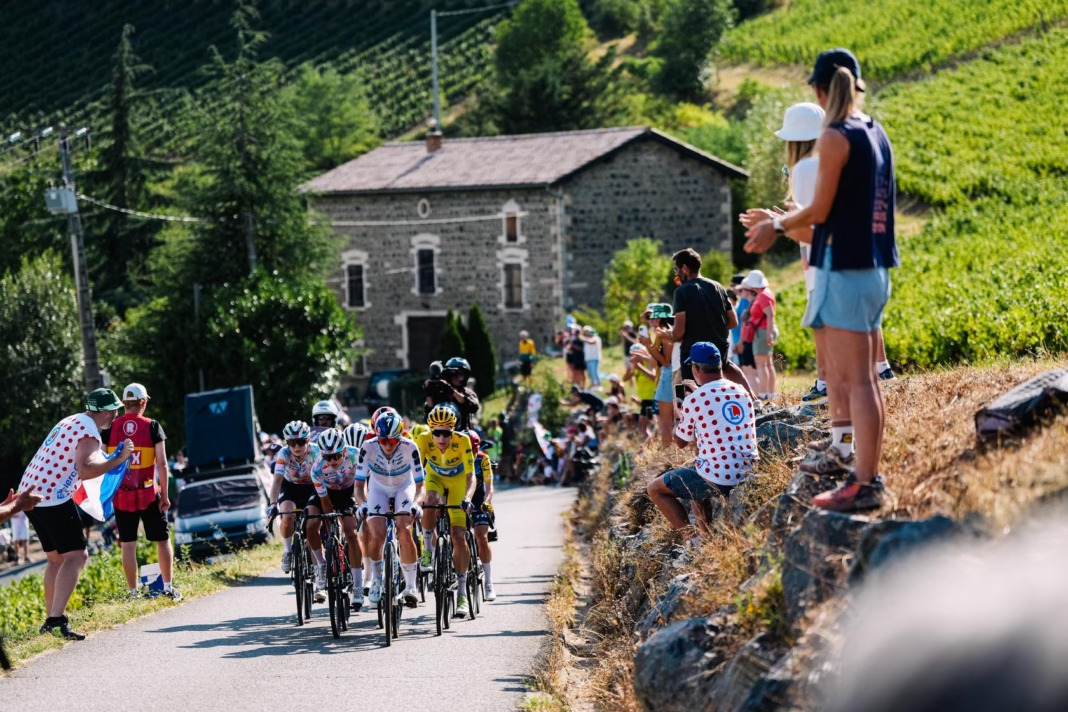
The profile is hilly rather than mountainous, with a succession of rolling ascents spread across the route. None carries the same obvious danger as the summit finishes later in the week, but the accumulation is the point. Long stages like this rarely need one brutal climb to become selective. The distance does the first part of the work, then the final climbs and the run-in decide who still has enough left.
Le Puy-en-Velay is also not a neutral finish for tired legs. The final kilometres rise gently enough to reward riders who can keep the pressure on after a long day, which makes the finish more open than a pure bunch sprint. A reduced group, a late attacker or a strong breakaway all look plausible.
Why stage 2 is harder than it looks
The stage is difficult because it combines length with attrition. A 234.3km road stage on the second day of a WorldTour race is demanding even before the climbs are counted. Add repeated rolling terrain, an early June race rhythm and the pressure of the coming team time trial, and the day becomes much more complicated.
The opening stage will already have exposed who has arrived sharp and who is still riding into form. Stage 2 then asks riders to back that up with a long day where there is little chance to relax. It is the kind of stage that can slowly drain domestiques, force teams to use riders earlier than planned and make the final hour harder to control.
It also comes before stage 3’s team time trial. GC teams will want to conserve riders for Perreux, but they cannot allow stage 2 to become too chaotic. If a dangerous group gets clear, or if crosswinds or climbs split the peloton, the race can become expensive very quickly.
Could the sprinters survive?
Some sprinters will look at stage 2 and see a chance, but it is not a simple one. The stage is long enough and lumpy enough to make survival the first requirement. A pure sprinter without climbing support may struggle if the pace rises on the later climbs or if teams decide to make the day hard.
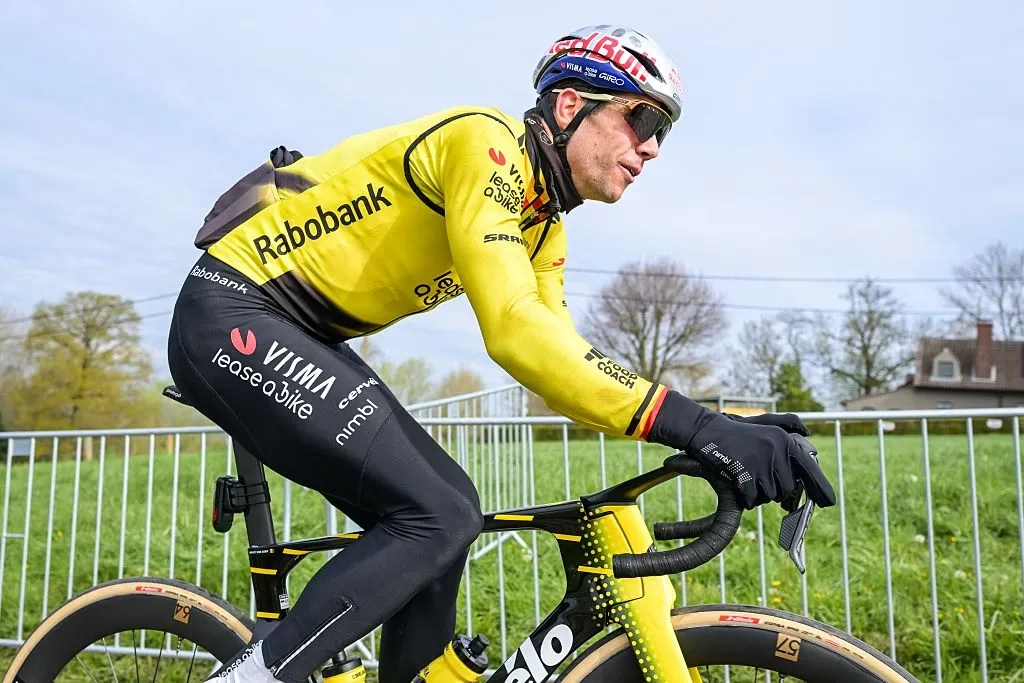
The best chance belongs to the fast finishers who can handle distance and rolling terrain. Wout van Aert and Michael Matthews are the obvious types for this kind of stage if the race comes back together. They can survive climbing that removes faster but less durable sprinters, and both would be very dangerous in a reduced finish.
The question is whether enough sprint-oriented teams still have the strength to chase after more than 200km. If the front of the race is controlled, a reduced sprint is possible. If the chase becomes fragmented, the stage starts to lean much more towards attackers.
Why the breakaway has a real chance
Stage 2 looks like one of the more realistic breakaway opportunities in the opening half of the race. The distance is long, the terrain is awkward, and the GC teams may not want to spend the day chasing before the team time trial.
A strong early move with riders far enough down on GC could be hard to bring back. The peloton will have to decide how much responsibility it wants to take. Sprint teams may believe they can win, but they will need to commit riders for a very long chase. GC teams may prefer to manage the race rather than burn through support on a day that is not supposed to decide the overall.
The ideal breakaway winner would be a strong rouleur-climber, someone who can handle repeated climbs, still work deep into the stage and finish quickly from a small group. A loose, unthreatening break may be controlled easily. A committed group with the right mix could become a serious problem.
What will the GC teams do?
The GC teams will want a controlled day, but not necessarily a closed one. Their priority is to protect leaders, avoid crashes, stay out of splits and reach the team time trial with their squads intact.
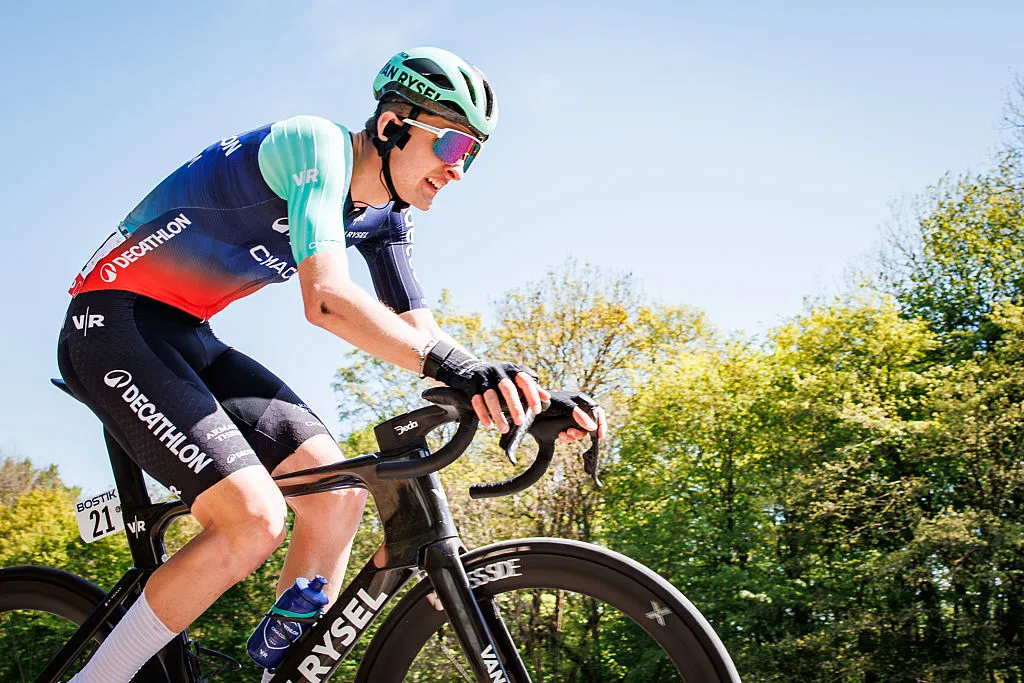
That should mean careful management rather than all-out aggression. UAE Team Emirates-XRG, Lidl-Trek, Team Visma | Lease a Bike, Netcompany INEOS, Bahrain Victorious and the other GC squads will not want to lose time through carelessness, but they may also be happy to let a non-dangerous break fight for the stage if that keeps the peloton calmer.
The danger is that stage 2’s length creates fatigue before the decisive moments. A rider who looks comfortable for five hours can suddenly be in trouble on the final climbs. GC contenders such as Paul Seixas, Isaac del Toro, João Almeida, Juan Ayuso, Matteo Jorgenson, Oscar Onley, Carlos Rodríguez and Santiago Buitrago all need to stay alert without spending more than necessary.
Wout van Aert and Team Visma | Lease a Bike have options
Wout van Aert is one of the most interesting riders for stage 2 because the route sits in his range. It is long, rolling, not too mountainous, and likely to reward a rider who can survive attrition before finishing from a reduced group.
Team Visma | Lease a Bike also have Matteo Jorgenson to protect for the general classification, which gives them a tactical balance to manage. They do not have to chase the whole day for Van Aert, but if the race comes back together and he is still near the front, he becomes one of the most dangerous riders in Le Puy-en-Velay.
That dual role can work well on a stage like this. Van Aert gives the team a stage-winning option, while Jorgenson gives them GC structure. The key is not wasting support too early. If the team still has numbers after the final climbs, they can influence both the stage result and GC positioning.
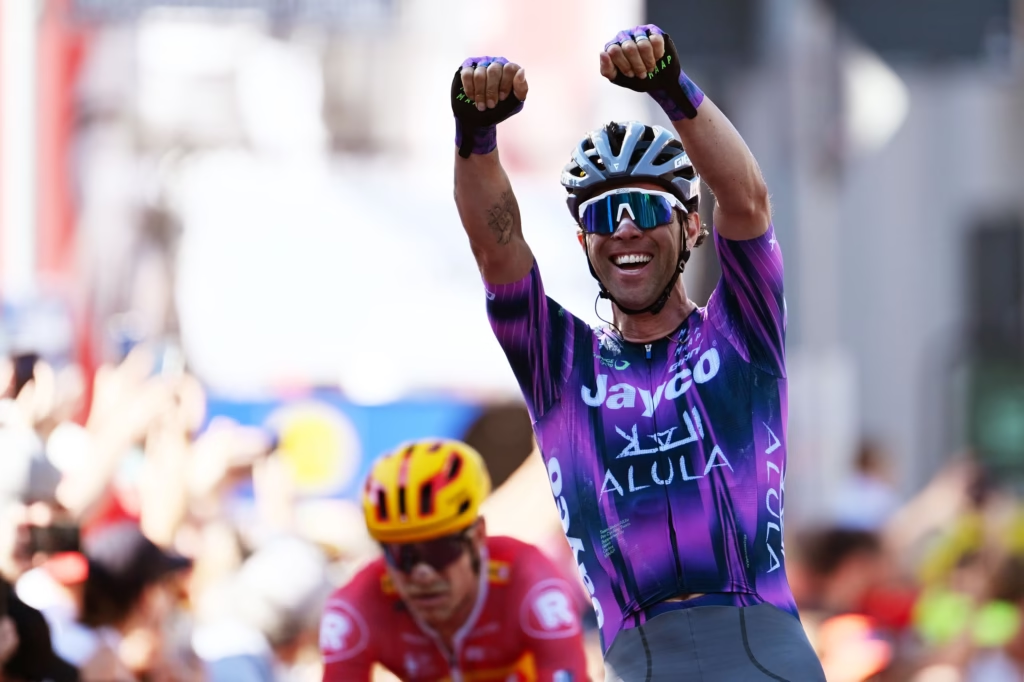
Why Michael Matthews fits the stage
Michael Matthews is another rider who should like this route. He is not a pure sprinter, and that is exactly why stage 2 could suit him. The distance and rolling terrain should remove some faster rivals, while the finish should still be quick enough for a reduced sprint.
Team Jayco-AlUla can approach the day with Matthews as a clear stage option, while Luke Plapp gives them another rider who can influence harder racing if the stage becomes more selective. That flexibility matters because stage 2 may not follow one simple pattern.
If the breakaway is caught late and a group of 40 or 50 riders reaches Le Puy-en-Velay, Matthews becomes a major contender. If the race opens earlier, he will need to stay close enough to the front to avoid being forced into a long chase.
Ben Healy, Toms Skujiņš and Julian Alaphilippe can make the race messy
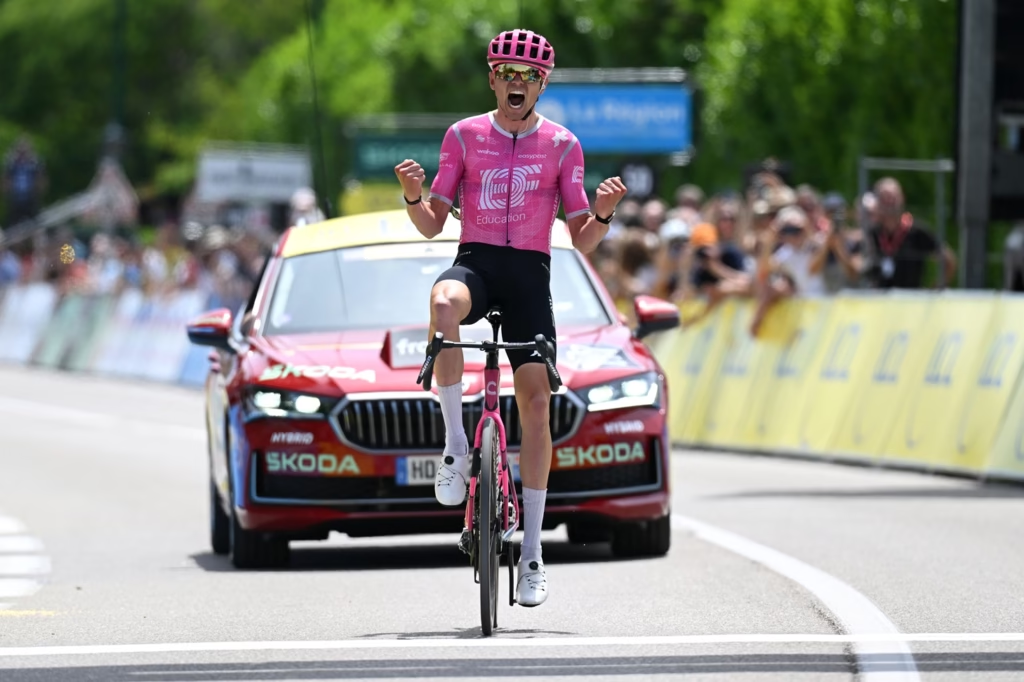
Stage 2 also suits riders who prefer disorder. Ben Healy, Toms Skujiņš and Julian Alaphilippe all have the kind of profile that can turn a long rolling day into an attacking race.
Healy is especially dangerous if the peloton hesitates. He does not need a summit finish to make a difference, and a long stage with repeated climbs gives him room to attack before the obvious sprint teams are fully organised.
Skujiņš is another rider who thrives when the route is hard to categorise. He can climb, work in a small group, read a finale and finish strongly enough to punish hesitation. Alaphilippe, meanwhile, remains a threat on any stage where the final hour rewards timing and aggression more than pure speed.
These riders may not wait for the final kilometre. Their best chance is to make the race awkward before the fastest finishers can settle into a lead-out.
Could Paul Seixas or Isaac del Toro attack?
Paul Seixas and Isaac del Toro do not need to attack on stage 2, but both are worth watching if the race becomes selective. The stage is long enough to create tired mistakes, and both riders have the sharpness to respond if a dangerous move forms late.
Seixas will have attention on him as one of the major French storylines of the race. Stage 2 is not an obvious GC launchpad, but a strong ride here would reinforce the sense that he is ready for the week. Del Toro, meanwhile, gives UAE Team Emirates-XRG a rider who can follow accelerations and exploit tactical gaps if the finale becomes messy.
João Almeida, Juan Ayuso, Jorgenson, Onley, Rodríguez and Buitrago are more likely to stay controlled, but they still have to be close to the front. On a stage this long, poor positioning can become a GC problem very quickly.
Where will stage 2 be decided?
Stage 2 should be decided in the final 50km, but the groundwork will be laid much earlier. The breakaway composition, the size of the gap and the willingness of the sprint teams to chase will determine what kind of race reaches Le Puy-en-Velay.
The final rolling climbs are where the day can tilt away from the sprinters. If the pace is high, the peloton may shrink quickly. If teams hesitate, the breakaway could hold enough of an advantage to fight for the stage. If everything comes back together, the final kilometres should favour riders who can still produce a sprint after more than 230km.
The finish itself should not be treated like a flat bunch gallop. The final rise is enough to make timing important. A rider who launches too early may fade, while a rider boxed in too late may never find room.
-
 Photo Credit: A.S.O./Billy Ceusters
What comes next after stage 2?
Stage 3 brings the 28.4km team time trial around Perreux, one of the most important early GC checkpoints of the race. That stage will test depth, organisation and time trial equipment before the route moves towards more conventional road stages and the final mountain block.
The timing of the team time trial affects stage 2. GC teams will not want to spend unnecessary energy the day before a collective race against the clock, but they also cannot let stage 2 become dangerous. Protecting riders for Perreux while still staying alert in the finale will be a delicate balance.
After stage 3, the race still has hilly terrain, sprint opportunities and three major mountain stages to come. Stage 2 may not decide the Tour Auvergne – Rhône-Alpes, but it can create fatigue that shapes the rest of the week.
Tour Auvergne – Rhône-Alpes 2026 stage 2 prediction
Stage 2 is hard to control. The distance, rolling climbs and timing before the team time trial all make it a strong breakaway opportunity, but the finish also suits durable fast riders if the race comes back together.
Van Aert and Matthews look like the clearest options from a reduced group. Healy, Skujiņš and Alaphilippe are dangerous if the race becomes more aggressive. The GC favourites should stay close, but they are unlikely to want a full battle before the Perreux team time trial.
Prediction: Wout van Aert to win in Le Puy-en-Velay from a reduced group, after the long stage removes the pure sprinters and leaves the strongest all-rounders to fight for the first major road-stage opportunity of the week.

