
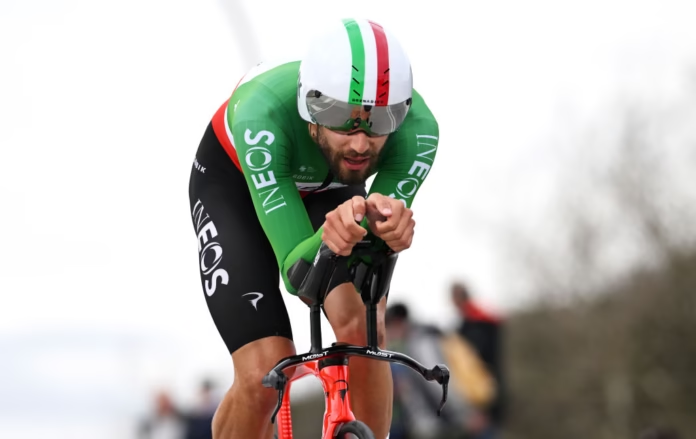
The 2026 Giro d’Italia returns from its first rest day with a stage that could be just as important as the summit finishes that shaped the opening week. Stage 10 is a 42km individual time trial from Viareggio to Massa, and after Jonas Vingegaard’s victories on Blockhaus and Corno alle Scale, it arrives at exactly the point where Afonso Eulálio’s maglia rosa faces a completely different kind of pressure.
The first week ended with Eulálio still in pink, but with his advantage reduced to 2:24 over Vingegaard. Felix Gall sits third at 2:59, Jai Hindley is fourth at 4:32, Christian Scaroni fifth at 4:43, and a tight group containing Thymen Arensman, Mathys Rondel, Ben O’Connor, Giulio Pellizzari and Michael Storer follows behind. The race has not yet escaped Eulálio, but it now moves towards terrain where the strongest all-rounders can begin to reshape the order.
This is not a short technical prologue or a late-race time trial where riders simply try to survive. At 42km, stage 10 is long enough to create meaningful gaps. It should reward sustained power, pacing discipline and the ability to settle quickly back into race rhythm after the rest day. For some, it is a chance to gain minutes. For others, it is a day that has to be managed carefully to avoid undoing all the climbing work of the first nine stages.
The route
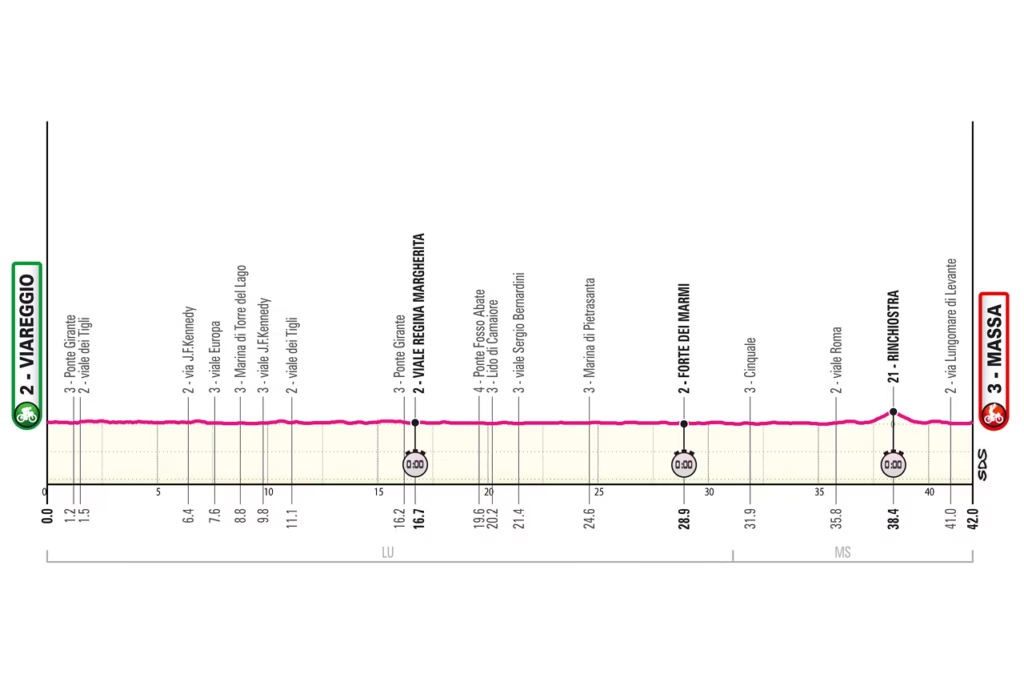
Stage 10 runs along the Tuscan coast from Viareggio to Massa, giving the Giro one of its clearest tests against the clock. The distance alone makes it serious. A 42km time trial is long enough for specialists to make a real difference and long enough for GC riders to be exposed if they cannot hold a consistent position and effort.
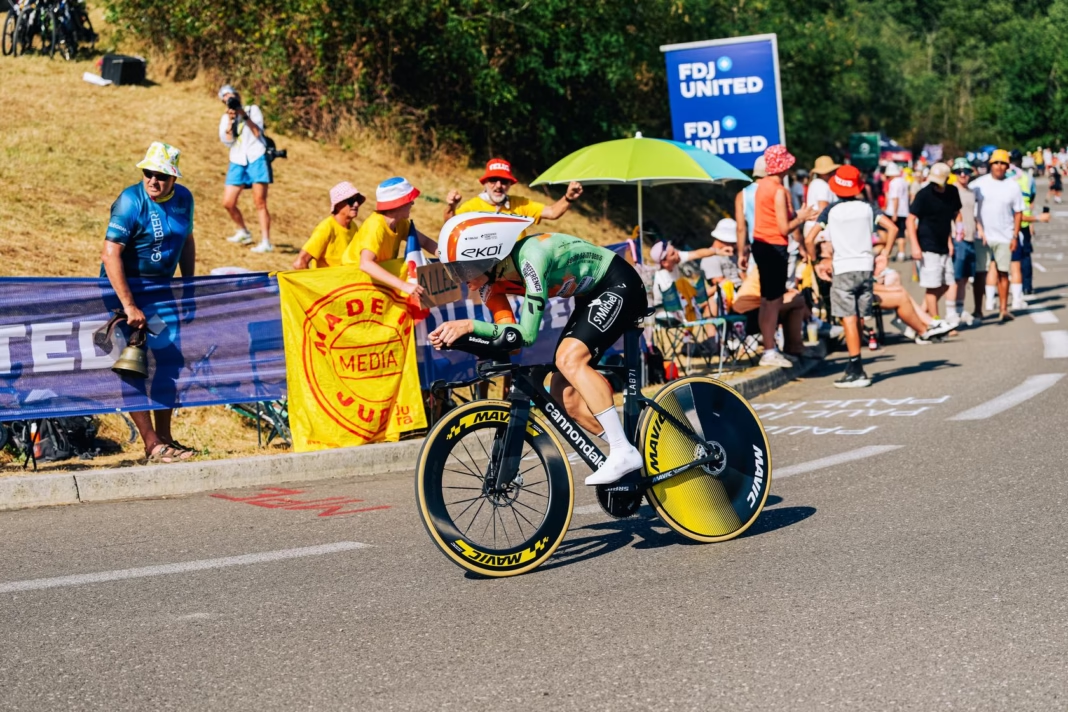
The route should favour the big engines. There is no major climb to turn it into a hybrid mountain time trial, and there is no indication that it should become a highly technical urban course. That places the emphasis on pure time trial quality: aerodynamics, pacing, position, power and the ability to keep the effort high for close to an hour.
The coastal setting adds one obvious variable. Wind direction could matter. On a flatter time trial near the sea, riders can gain or lose time depending on how exposed the road is and whether crosswinds create instability in the aero bars. That will be something teams monitor closely before their riders roll down the start ramp.
The long distance also changes the pacing challenge. A rider who starts too aggressively can lose heavily in the final 10km. A rider who builds steadily through the first half can still make gains late, especially against climbers who are trying to limit losses rather than chase the stage win.
What’s on offer
- Stage: 10
- Date: Tuesday, 19th May
- Route: Viareggio to Massa
- Distance: 42km
- Discipline: individual time trial
- Likely winner type: specialist time triallist
- Main GC danger: large gaps between pure climbers and stronger all-rounders
- Tactical focus: pacing after the rest day, wind exposure and the final 10km
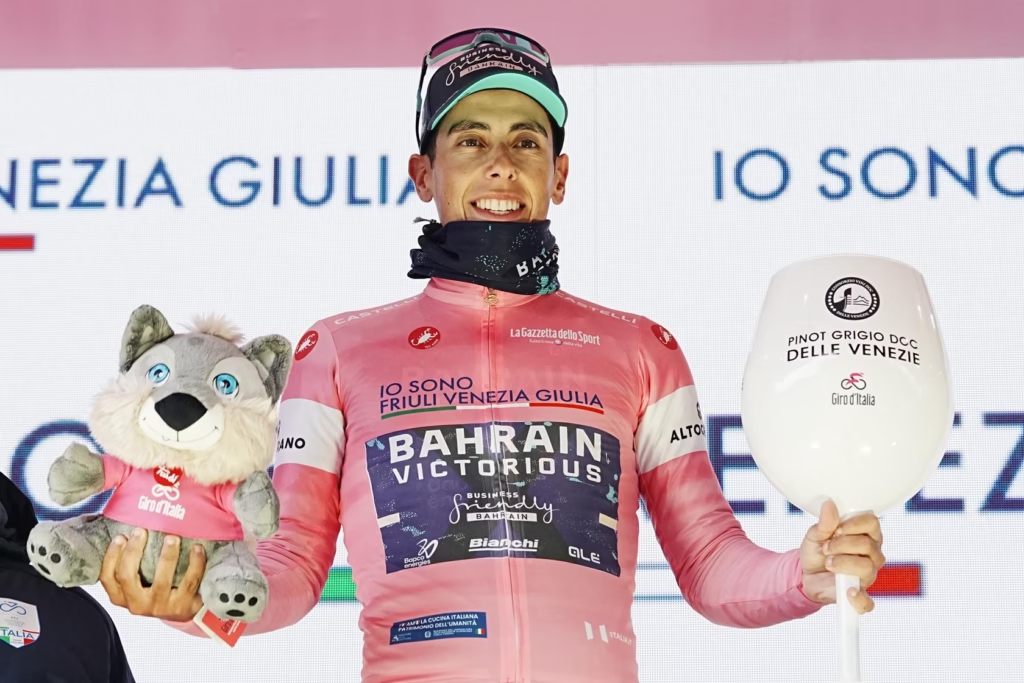 Photo Credit: RCS
Why this stage matters for the GC
The opening week gave the Giro its first climbing hierarchy. Vingegaard has looked like the strongest rider in the mountains, winning on Blockhaus and Corno alle Scale. Eulálio has kept pink, but his lead has gradually been reduced. Gall has emerged as the closest climbing challenger, while Hindley, Arensman, O’Connor, Pellizzari and others are still fighting for the podium and top 10.
Stage 10 changes the terms of the race. The question is no longer simply who can follow on the final climb. It becomes who can transfer their condition into a long, flat effort and avoid losing control of the Giro on a discipline that will not suit everyone equally.
For Eulálio, this is the biggest examination of his race lead so far. He has a useful gap, but not a huge one against Vingegaard, who has both momentum and Grand Tour experience. The Portuguese rider does not need to win the time trial, but he cannot afford a poor day. Losing close to a minute would keep him in pink. Losing two or more could change the entire race.
Vingegaard’s task is more aggressive. He has already taken time uphill, and the time trial gives him another route towards the jersey without needing to attack. Even if he does not win the stage, he can make serious progress if he rides a clean, controlled effort and Eulálio struggles.
Behind them, the podium fight could shift even more sharply. Gall has been excellent uphill, but this is a different test. Hindley, Arensman and O’Connor will all see an opportunity to either close on him or protect their own GC positions. Pellizzari and Rondel, both young riders high on GC, also face a significant test of consistency.
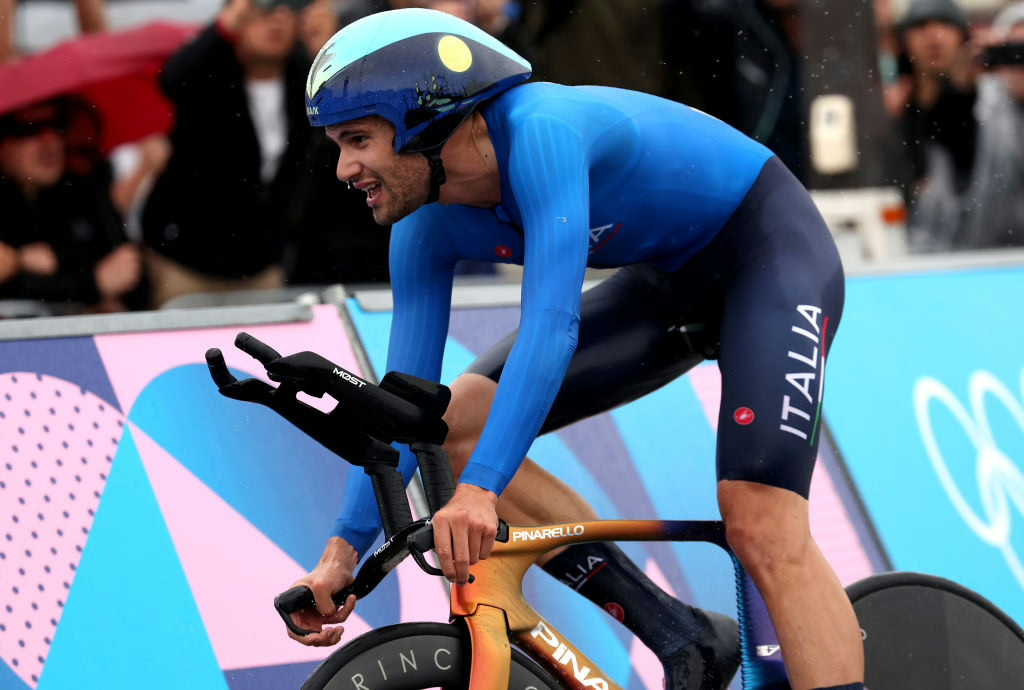
Filippo Ganna is the clear favourite
Filippo Ganna starts as the obvious favourite. The stage profile, distance and likely emphasis on sustained power all suit him. A 42km time trial gives him enough road to apply his biggest strength: holding a huge, stable effort for longer than almost anyone else in the race.
He is also priced like the race expects him to win. The current win-only odds have Ganna as the heavy favourite, well ahead of every other specialist. That is not surprising. On a flat or rolling time trial of this length, with no major climb to blunt his advantage, he is the rider everyone else is measured against.
The key for Ganna is execution. He does not need a chaotic race or tactical help. He needs clean conditions, a disciplined start and a strong second half. If he finds his rhythm early, the stage should be his to lose.
The other time trial contenders
Niklas Larsen is one of the more interesting names among the specialists. He has the profile of a rider who can hold a strong effort over this distance and, with the GC favourites focused on their own race, could become one of the main threats to the podium on the day. He may not have Ganna’s top-end reputation in this discipline, but he is clearly viewed as a serious contender.
Thymen Arensman carries two different incentives. He is a stage contender in his own right, but he also has GC ambitions to protect. Sitting sixth overall at 5:00, he has a chance to move up if he produces a strong ride. A long time trial is one of the better opportunities for him to put time into some of the more climbing-focused riders around him.
Alec Segaert is another specialist to watch. His power and time trial pedigree make him a natural fit for a 42km course, and he does not carry the same GC burden as the riders near the top of the overall standings. That freedom can matter. He can ride purely for the stage, without having to worry about pacing conservatively to protect a classification position.
Lorenzo Milesi and Jonas Vingegaard sit in a similar odds bracket, but their objectives are different. Milesi is a stage contender who can target the day directly. Vingegaard is racing the Giro. If he ends up near the top of the stage standings, it will be because his GC ride is strong enough to overlap with stage-winning territory.
Johan Price-Pejtersen and Mikkel Bjerg are both capable of strong performances over this type of course. Neither should be dismissed, especially if conditions vary through the day and the earlier starters get the better weather. Magnus Sheffield is also an outside contender, with the power and style to place highly if everything comes together.
What Vingegaard needs from the stage
Vingegaard does not necessarily need to beat Ganna. His real target is Eulálio. After stage 9, he is 2:24 behind the maglia rosa, and the time trial gives him a chance to reduce that without exposing himself to the uncertainties of mountain tactics.
The key question is whether he can take a minute or more. If he does, the Giro looks very different heading into the second week. Eulálio would still potentially hold pink depending on the size of the gap, but the margin would become fragile. If Vingegaard takes closer to two minutes, the maglia rosa could be under immediate threat.
There is also a psychological layer. Vingegaard has already been the strongest climber. If he now takes a major chunk of time in the time trial, the Giro begins to tilt heavily in his direction. That does not mean the race is over, but it changes how everyone else has to race.
Team Visma | Lease a Bike also has Piganzoli high in the young rider standings and Sepp Kuss still present as a mountain support option. A strong Vingegaard time trial would reinforce the sense that the team has taken control of the race after a first week where Eulálio carried the jersey but Visma increasingly dictated the pressure.
The danger for Eulálio
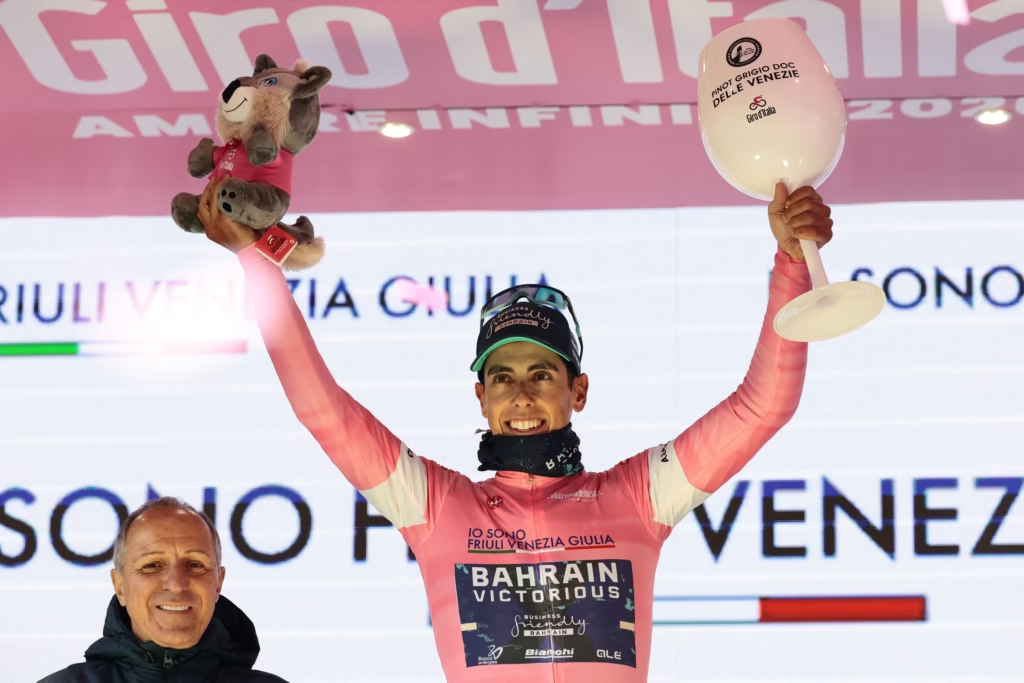
Eulálio has already done more than simply survive. He has kept the pink jersey through two summit finishes and a punchy stage into Fermo. That deserves credit. The problem is that stage 10 may be the least forgiving stage of his Giro so far.
In the mountains, a rider can sometimes manage damage by finding a group, settling into a rhythm or using the road to limit losses. In a long time trial, the weakness is exposed directly. There is no wheel to follow. There is no team structure once the rider has started. Every second lost is his alone.
The first half will be important for him. If he starts too hard and fades, the final 10km could become damaging. If he starts too cautiously, he may already be losing heavily by the intermediate checks. The ideal ride is controlled, calm and efficient, even if it means conceding some time to the specialists.
His goal is simple: keep pink and avoid giving Vingegaard a clear psychological advantage before the second week. A loss of under a minute would be a strong result. A loss near two minutes would leave the Giro finely balanced. Anything worse would risk changing the leadership of the race entirely.
Riders who could gain on GC
Arensman is the most obvious GC rider who could benefit. A strong stage 10 could move him closer to the top five and potentially ahead of riders who are less comfortable against the clock. He starts the day sixth overall, only 17 seconds behind Scaroni and 28 seconds behind Hindley. That is a realistic gap to close over 42km.
O’Connor also has the chance to improve his position. He is eighth overall at 5:03, just three seconds behind Arensman and 31 seconds behind Hindley. The Australian has the engine to put together a strong ride, and this stage may suit him better than the explosive uphill finishes of the first week.
Hindley’s goal will be defensive as much as offensive. He can ride a solid time trial, but he will not want to concede heavily to Arensman or O’Connor. His podium hopes depend on limiting losses here before the race returns to more mountainous terrain.
Gall is in the most delicate position among the podium contenders. He has looked excellent on the climbs, but a long time trial could expose him against stronger rouleurs. With Vingegaard only 35 seconds ahead and Hindley 1:33 behind, Gall has to defend in both directions: trying not to lose touch with second, while avoiding giving too much back to the chasing pack.
Pellizzari and Rondel are also worth watching in the white jersey battle. Eulálio leads that competition clearly, but both riders are close enough to make the classification more interesting if the maglia rosa has a bad day. Piganzoli’s strong ride on Corno alle Scale also brought him closer, although the time trial will be another test of his all-round development.
-
 Photo Credit: A.S.O./Gaëtan Flamme
How the stage could unfold
The early starters will establish the first real benchmarks, especially if one of the specialists is placed early in the running order. On a course like this, time checks will matter. A rider who is up at the first split but fading by the second may have gone too hard. A rider who builds gradually could become more dangerous in the final third.
Ganna’s ride will define the stage. If he starts fast and sustains it, the rest of the field will be chasing a mark that may be out of reach. His pacing will also provide a reference for the other specialists, particularly Larsen, Segaert, Milesi, Bjerg and Sheffield.
The GC battle will come later in the day. By then, everyone will know the stage-winning benchmark, but the more important comparisons will be between Eulálio, Vingegaard, Gall, Hindley, Arensman and O’Connor. The intermediate checks could tell the story before the finish. If Vingegaard is taking large chunks out of Eulálio early, the maglia rosa will be under pressure long before Massa.
The final 10km should be decisive. That is where pacing choices become clear and where riders who overcommitted early can suddenly lose time quickly. On a 42km course, the stage is not won in the opening sector, but it can certainly be lost there.
Prediction
Stage 10 looks like Filippo Ganna’s day. The course is long enough to reward his sustained power, flat enough to favour a specialist, and important enough that he will treat it as one of the clearest stage-winning opportunities of his Giro.
Behind him, the GC race could be the more significant story. Vingegaard has the chance to cut deeply into Eulálio’s lead, while Arensman and O’Connor could both move closer to the top five. Gall has to defend his podium place, and Hindley needs a controlled ride to avoid being squeezed by the time triallists behind him.
Prediction: Filippo Ganna to win stage 10, with Jonas Vingegaard gaining meaningful time on Afonso Eulálio and tightening the maglia rosa battle before the road turns back towards the mountains.

