After the long Viareggio to Massa time trial, the 2026 Giro d’Italia moves into a very different kind of test on stage 11. This is not a pure sprint stage, not a summit finish, and not a simple day for the breakaway either. Porcari to Chiavari is a 195km route that starts steadily, then becomes increasingly difficult as the race crosses towards Liguria and the Cinque Terre.
It is exactly the kind of stage that can look secondary beside the time trial and the major mountain finishes, but still carry real consequences. The general classification riders will have to recover quickly after a full-gas effort against the clock. The sprinters will look at the flat finish in Chiavari and wonder if they can survive long enough to contest it. The puncheurs and breakaway riders will see the climbs in the second half and sense a chance to make the race too hard for a controlled bunch finish.
The result may depend as much on attitude as terrain. If the sprint teams believe they can bring the race back, the final kilometre in Chiavari gives them a proper target. If they hesitate, or if the climbing through the second half removes too many workers, the breakaway could have one of its better chances of the second week.
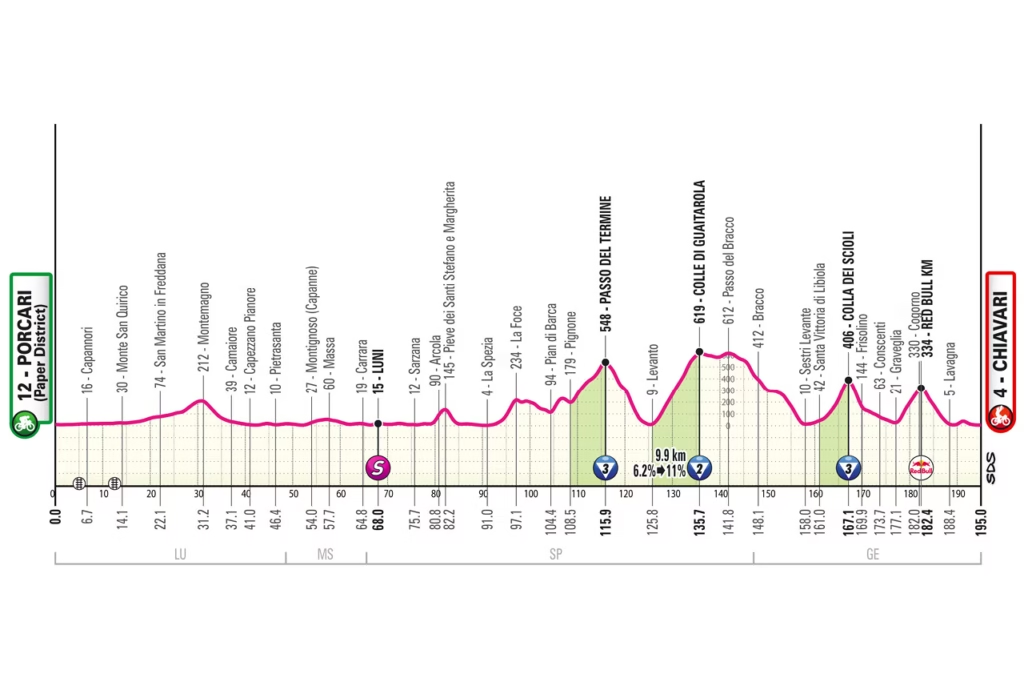
The route
Stage 11 begins in Porcari, in Tuscany’s paper district, before heading towards the Ligurian coast and finishing in Chiavari. The official distance is 195km, with around 2,850 metres of altitude gain, which immediately tells us this is more than a routine transition stage.
The opening part is the least selective. The race starts almost flat, although the roads between Lucca and Camaiore are technical enough to keep teams attentive. From there, the route joins the Via Aurelia for a long coastal section, which should allow the peloton to settle into a more controlled rhythm if the breakaway has already gone.
The character changes before and after La Spezia. A short climb before the city begins the process of breaking the stage’s early rhythm, and then the race takes on its most important section. Passo del Termine and Colle di Guaitarola carry the peloton through the Cinque Terre area, adding climbing, descending and road complexity at the point where fatigue has already started to build.
After Sestri Levante, the route still has two sharp obstacles before the finish. Colla dei Scioli and Cogorno are short, steep climbs that arrive late enough to shape the outcome. They are not long mountain passes, but at this point in the day they could decide whether the sprinters survive, whether the breakaway stays clear, or whether a late attacking group forms before Chiavari.
The final 5km are not flat from the start. There is a short climb, followed by a descent into town, before the race straightens out for the final kilometre. The last 400 metres are flat and straight, which means a group that arrives together should produce a sprint. The question is how many riders are left by then.
What’s on offer
- Stage: 11
- Date: Wednesday, 20th May
- Route: Porcari to Chiavari
- Distance: 195km
- Altitude gain: around 2,850 metres
- Start time: around 11:30am BST
- Expected finish: around 4:15pm BST
- Main climbs: Passo del Termine, Colle di Guaitarola, Colla dei Scioli and Cogorno
- Likely winner type: breakaway rider, puncheur or resilient sprinter
- Main tactical point: the late climbs after Sestri Levante
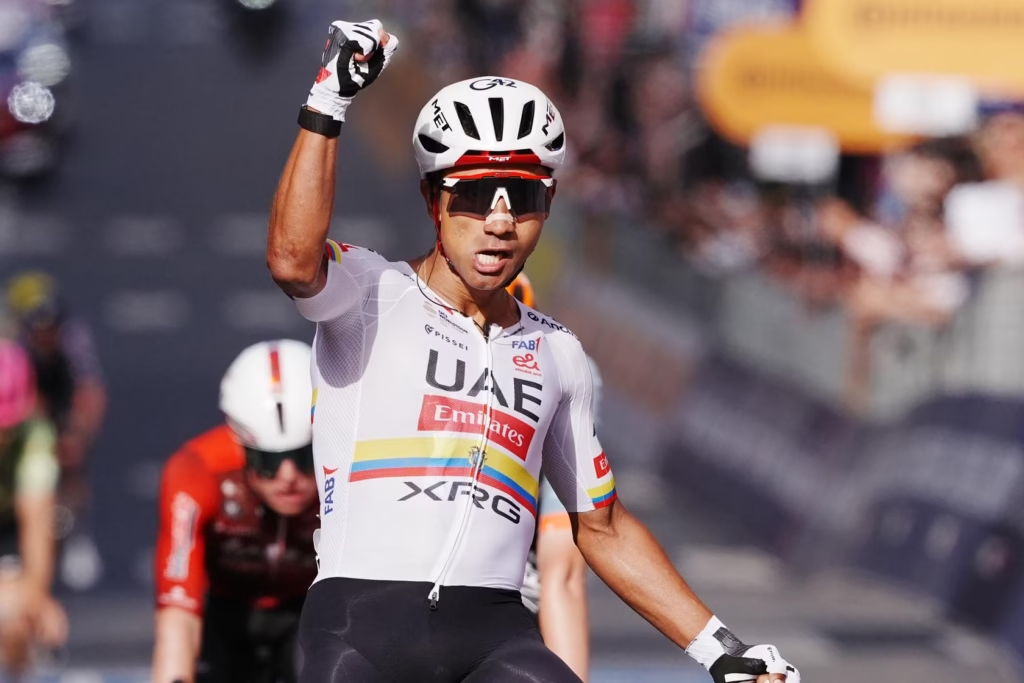 Photo Credit: RCS
Why stage 11 is difficult to classify
The finish in Chiavari is flat enough for a sprint, but the route before it makes a full bunch finish far from guaranteed. That is the tension of stage 11. It offers hope to several different rider types without clearly favouring one.
For the pure sprinters, the stage is awkward. The distance is long, the climbing is concentrated in the second half, and the late short climbs could remove lead-out riders even if the sprinter survives. A rider such as Paul Magnier or Jonathan Milan might still see a possible opportunity, but their teams would need to control a complicated stage and then still have enough numbers left for the final kilometres.
For the breakaway, the route is promising but not perfect. The opening kilometres may make it difficult to form a decisive move with the right composition, and the flat sections could allow the peloton to manage the gap. But if a strong group goes clear and the sprint teams cannot organise through the Cinque Terre climbs, the break could become very hard to catch.
For the puncheurs, this may be the best reading of the stage. The climbs late in the route are not long enough for pure climbers to dominate, but they are hard enough for aggressive riders to attack. The final flat straight means they will not want to carry a faster sprinter to the line, so the most dangerous moves may come before the descent into Chiavari.
The GC context
Stage 11 comes immediately after the 42km individual time trial from Viareggio to Massa, which means the general classification may already have shifted before the peloton reaches Porcari. Afonso Eulálio went into the rest day still in pink after stage 9, while Jonas Vingegaard had been steadily cutting into his lead after winning on Blockhaus and Corno alle Scale. The time trial itself was always set to be another major reference point in the GC battle, and its effects will shape how cautious the favourites are on this road to Chiavari.
Whatever the exact post-time trial gaps, stage 11 is unlikely to be a planned GC attack day. The climbs are not hard enough to force a direct battle between the main favourites, and the final kilometre is not selective enough to guarantee time gaps among the top riders.
That does not make the stage safe. After a time trial, some riders will be carrying fatigue in a different way. The roads through Liguria can be technical, and the late climbs and descents mean positioning will matter. A split near the top of Colla dei Scioli or Cogorno would not need to be large to create stress in the final kilometres.
For the GC teams, this is probably a protection day rather than an opportunity day. Keep the leader near the front, avoid crashes, cover any dangerous move containing a rider close on the overall, and do not waste unnecessary energy before the race moves deeper into the second week.
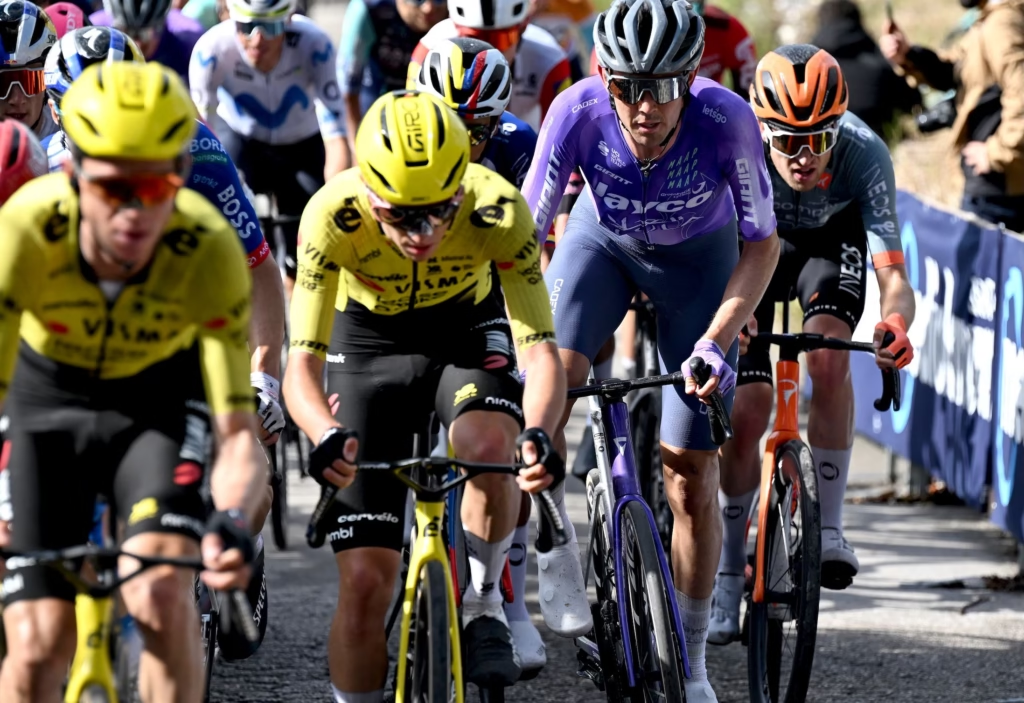
How the stage could unfold
The early breakaway should form before the race reaches the more technical terrain. Because the start is not mountainous, it may take time for the right group to go. Sprint teams will not want to let too many strong riders up the road, while teams without a sprint option will be determined to put someone into the move.
Once the break is established, the peloton’s attitude will decide the stage. If teams such as Soudal Quick-Step, Lidl-Trek or other sprint-focused squads believe their fast men can survive, they may keep the gap manageable. If not, the breakaway could be given enough space to start believing in the win before the race reaches La Spezia.
The second half is where the stage should properly begin. Passo del Termine and Colle di Guaitarola will thin the bunch and make the chase harder to organise. This is where teams that want a reduced finish can increase the pace, while breakaway riders can begin attacking each other if the gap is still healthy.
After Sestri Levante, Colla dei Scioli and Cogorno become the key launchpads. A rider with punch can attack there, especially if the peloton or breakaway group has already been reduced. The descent into Chiavari then creates another test, because a small gap over the top could survive if the chase behind is disorganised.
If a reduced group reaches the final kilometre together, the flat straight finish should produce a sprint. But getting to that final kilometre with a full lead-out still intact will be difficult.
Riders to watch
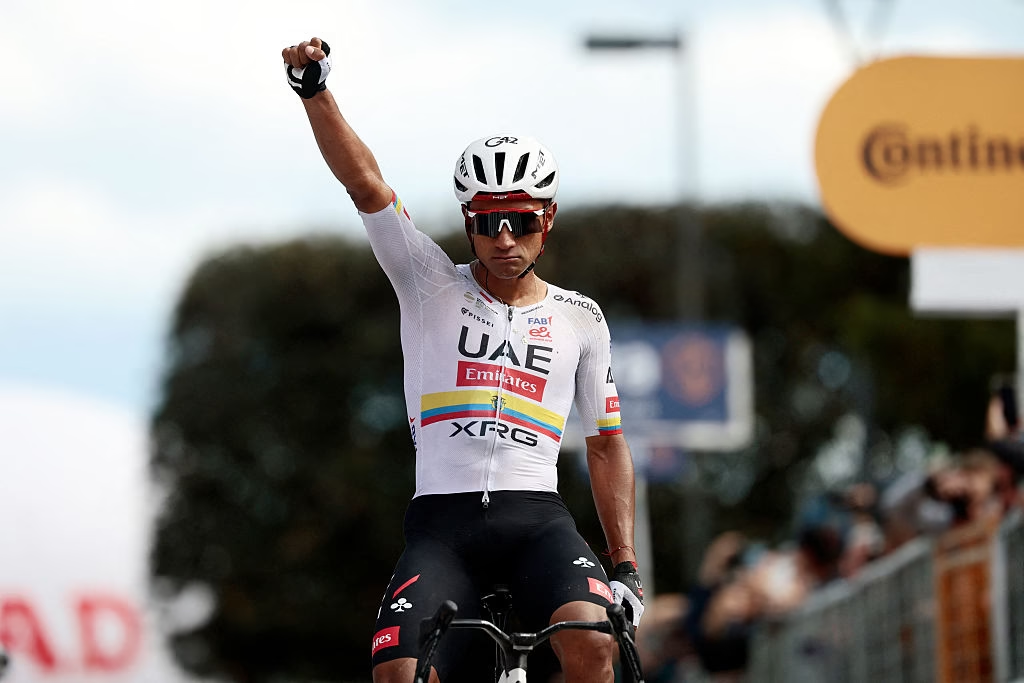
Jhonatan Narváez is one of the most natural fits for this stage if he has recovered from his earlier efforts. He has already shown in this Giro that he can win from hard, chaotic days, including his stage 8 victory in Fermo. Stage 11’s mix of climbing, descending and flat finishing suits that kind of rider. He may be watched closely, but that is now part of the cost of his success.
Giulio Ciccone is another obvious danger if he is fully committed to stage hunting after losing time on GC. The late climbs are not long enough to guarantee him a selection, but they are sharp enough for him to attack. His challenge is the flat finish. He would probably need to arrive alone or in a very small group without faster riders.
Filippo Zana also fits the profile. He can handle hilly terrain, has the durability for a long stage and can finish from a reduced group. If the breakaway goes, he is exactly the kind of rider who could turn the final 30km into a tactical battle.
For the sprinters, Paul Magnier’s points jersey ambitions make him important. If he survives the climbs, he will be dangerous in Chiavari, but his team will need to judge the chase carefully. Jonathan Milan may see the stage as a chance if the pace is not too severe, although the late climbs could make it hard for him to reach the final with support.
Davide Ballerini is an interesting option on a stage that sits between sprint and Classics terrain. He can cope with harder roads than many pure sprinters and has the finishing speed to win if the front group is reduced but not tiny.
Among the GC riders, Vingegaard, Eulálio, Felix Gall, Jai Hindley, Thymen Arensman and Ben O’Connor should not be expected to chase the stage win. Their job is to stay safe and avoid being caught behind late splits. That sounds simple, but on a stage like this, it can still require attention all day.
Why the breakaway has a real chance
Stage 11 comes at a useful moment for attackers. The peloton has just come through a long time trial, the main GC riders may prefer a quieter day, and the sprinters cannot look at the route with complete confidence.
The deciding factor will be the composition of the move. A weak breakaway will be controlled. A break with too many riders close on GC will be chased immediately. But a strong group of stage hunters, sitting far enough down overall and containing riders who can climb and finish, could be extremely difficult to bring back.
The late climbs also help the breakaway because they make the chase less predictable. A flat run-in allows sprint teams to calculate the gap more comfortably. A route with short climbs and descents forces the peloton to chase in bursts, often with fewer domestiques available each time the road rises.
If the break reaches the final 40km with a meaningful advantage, it could become the favourite scenario.
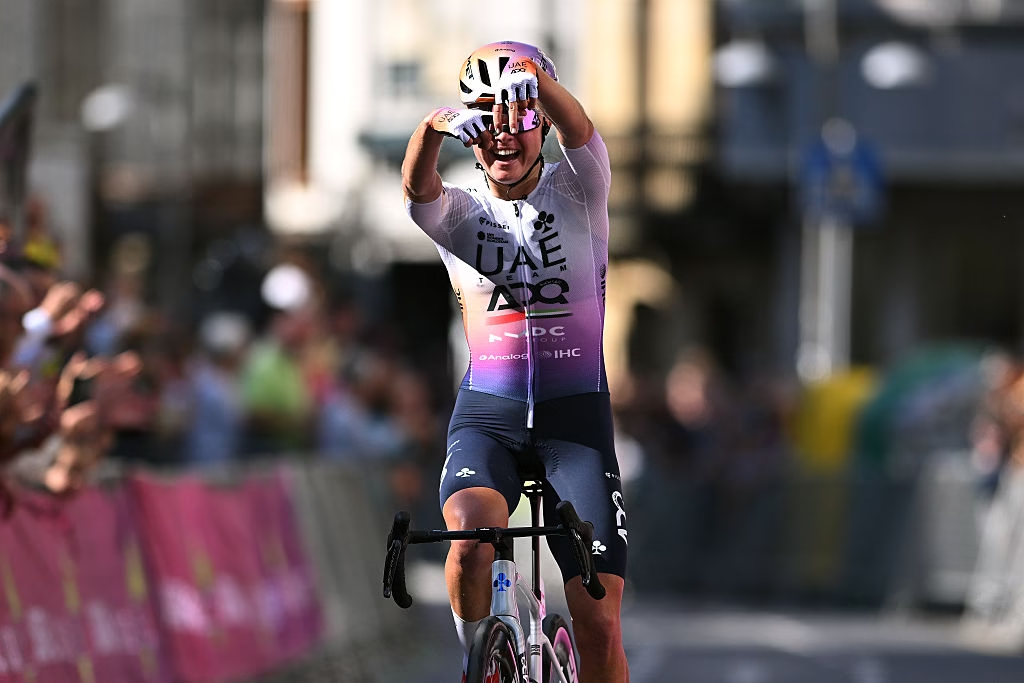
The final into Chiavari
The finale is more complicated than the finishing straight suggests. The final kilometre is flat and straight, with a wide enough road for a proper sprint, but the approach includes a short climb and descent into town. That means the selection may happen before the final kilometre rather than inside it.
Positioning before the final short climb will be vital. A rider caught too far back could lose contact before the descent. A rider who attacks over the top may force the others to chase at exactly the point where everyone is tired and reluctant to work for a faster finisher.
The final 400 metres are straightforward enough that a sprint should be clean if a group arrives together. That suits resilient fast men, but only if they have survived the real work beforehand.
Prediction
Stage 11 looks like one of those Giro days where the breakaway has a strong chance because the route is too hard for a normal sprint chase and not hard enough for the GC teams to take full responsibility. The climbs through the second half should gradually reduce the peloton, and the late ramps after Sestri Levante give attackers a clear platform before Chiavari.
If the sprinters survive and their teams still have numbers, Magnier and Milan become serious contenders. But the more likely outcome is that a strong breakaway gets enough room, then breaks apart on the late climbs before a small group or solo rider reaches Chiavari.
Prediction: Jhonatan Narváez to win again from a reduced breakaway, using the late climbs to split the front group before the flat finish in Chiavari.