
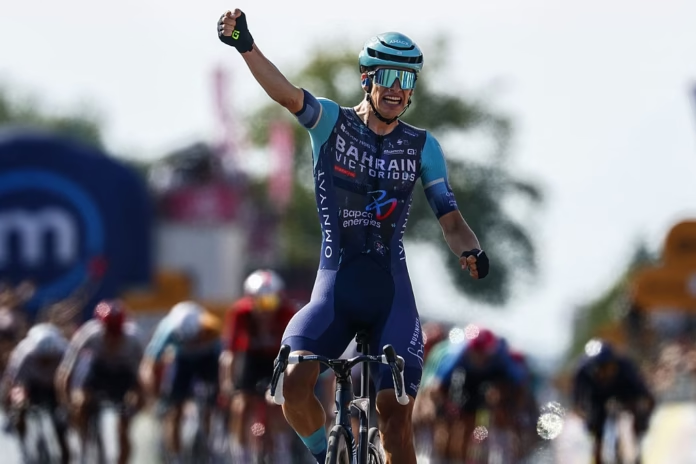
Alec Segaert produced a brilliantly timed late attack to win stage 12 of the Giro d’Italia 2026, holding off the reduced peloton after a tense finale into Novi Ligure. The Bahrain Victorious rider launched with around 3 kilometres remaining, found immediate hesitation behind, and carried enough of a gap into the final kilometre to take the biggest victory of his career so far.
Toon Aerts won the sprint for second, a surprise but valuable result for Lotto-Intermarché after the abandonment of Lennert Van Eetvelt earlier in the race. Guillermo Thomas Silva finished third, while several sprint teams who had worked hard to shape the day were left frustrated behind.
The 175-kilometre stage from Imperia to Novi Ligure always looked finely balanced between a breakaway and a reduced sprint. In the end, it became both. There were early attacks, mid-stage reshuffles, a hard chase from the sprinters’ teams, aggressive climbing from Movistar, dropped favourites, chase groups and then one decisive late move from Segaert that caught the remaining fast finishers at exactly the wrong moment.
Early breakaway sets up a restless stage
The stage began with attacks almost immediately after the official start, with Johan Jacobs among the first riders to go clear. Several moves followed before the day’s first settled break formed with Mattia Bais, Juan Pedro López, Jonas Geens, Jardi Christiaan van der Lee and Manuele Tarozzi.
The peloton never gave that group much freedom. Soudal Quick-Step and Unibet Tietema Rockets were among the teams keeping the margin tight, despite a route that still carried enough climbing to complicate the day for the heavier sprinters. The gap stayed modest and dropped close to a minute long before the race reached its decisive terrain.
That created an unusual tactical phase. The bunch slowed to avoid catching the break too early, while the escapees also eased, almost daring the peloton to bring them back and reopen the race. New attacks followed soon after, with riders including Jacobs, Jonas Rutsch and Fredrik Dversnes Lavik involved as the original move fragmented and reformed.
By the time the race began to settle again, the shape of the break had changed, but the central tension remained the same. The sprint teams wanted control, but the parcours always had enough bite to punish the riders who needed a flatter run to Novi Ligure.
Movistar put the sprinters under pressure
The race sharpened properly on the climbs in the final 80 kilometres. Movistar moved to the front with clear intent, using Enric Mas, Einer Rubio and Lorenzo Milesi to raise the pace and put pressure on the pure sprinters. It was a deliberate attempt to set up Orluis Aular by removing faster rivals before the finish.
The plan quickly began to work. Dylan Groenewegen was dropped with teammates around him, while other fast men also started to suffer. Jonathan Milan and Paul Magnier initially survived but were then distanced on the Colle Giovo, where the pace proved too much near the summit.
Van der Lee took the KOM points after attacking from the break, but the more important story was behind him. The peloton had been reduced, and several of the most obvious sprint favourites were now chasing rather than controlling. Milan and Magnier briefly regained contact or came close to doing so, only to be distanced again on the following climb to Bric Berton as Movistar and NSN continued to press on.
Magnier and Milan eventually found themselves together in pursuit, turning from sprint rivals into short-term allies. Yet the gap held around a minute and then grew again inside the final 25 kilometres. Their chance of contesting the stage disappeared, and with it the complexion of the finale changed completely.
Eulálio takes bonus seconds before the finale resets
Afonso Eulálio continued his assured spell in the maglia rosa, taking six bonus seconds at the Red Bull Kilometre. Ben O’Connor followed him for four seconds, limiting the damage, but Eulálio’s aggression showed confidence rather than caution on a stage where the general classification contenders could easily have stayed hidden.
There was further disruption inside the final 20 kilometres when Ben Turner suffered a mechanical and had to chase back with Jack Haig. Turner eventually returned to the reduced peloton, but the effort appeared costly. He was later dropped inside the final kilometres as the pace lifted again.
With Milan and Magnier out of contention, the sprint picture had changed. Ethan Vernon remained present for NSN, Madis Mihkels was still there for EF Education-EasyPost, and Aular still had Movistar support after the work done earlier. Jhonatan Narváez also remained a possible threat, especially with the points classification tightening behind Magnier.
The final small climb brought one more move from Giulio Ciccone, with Igor Arrieta immediately following. EF helped bring them back, and as the race entered the final 5 kilometres, the reduced peloton looked set for a sprint from a far smaller and more unpredictable group.
-
 Photo Credit: A.S.O./Gaëtan Flamme
Segaert attacks at the perfect moment
Instead, Segaert chose the moment that decided the stage. With around 3 kilometres remaining, the Belgian attacked and quickly opened a gap. Behind him, there was hesitation. Team Visma | Lease a Bike rode tempo, but no full chase immediately formed, and that delay gave Segaert exactly the space he needed.
Uno-X Mobility later moved to the front, while Jenno Berckmoes Van Den Bossche tried to bridge across, but the catch never came. Segaert still had a useful advantage under the flamme rouge, and by then it was clear he had a real chance of holding on.
The reduced peloton closed late, but not enough. Segaert crossed the line a few seconds clear, celebrating a victory that rewarded timing, courage and a sharp reading of a messy finale. After coming close with similar moves earlier in the season, including at Nokere Koerse, this was a major step up.
Behind him, Aerts sprinted to second and Silva finished third. Vernon, Aular and Mihkels were among those left to reflect on what might have been after their teams had spent so much energy shaping the stage.
Eulálio keeps pink as points battle tightens
Eulálio’s day in pink was another strong one. He stayed alert, took bonus seconds and avoided the chaos that shaped the reduced sprint battle. With the Giro now moving towards another tricky stage, his leadership continues to look composed.
The points classification also took another turn. Magnier remains in the ciclamino jersey, but Narváez reduced the gap after Magnier was distanced and failed to contest the finish. With Magnier on 130 points and Narváez now close behind on 119, that competition could become much more open if Narváez continues to score on hilly and reduced-finish days.
For Segaert, though, stage 12 belonged to the late attack. On a day when the sprinters’ teams worked, the climbers disrupted and the favourites hesitated, one rider made the decisive choice. He went, and nobody brought him back.
Giro d’Italia 2026 stage 12 result
| Position | Rider | Team | Time/gap |
|---|---|---|---|
| 1 | Alec Segaert | Bahrain Victorious | 3:53:00 |
| 2 | Toon Aerts | Lotto Intermarché | +0:03 |
| 3 | Guillermo Silva | XDS Astana Team | +0:03 |
| 4 | Ethan Vernon | NSN Cycling Team | +0:03 |
| 5 | Jasper Stuyven | Soudal Quick-Step | +0:03 |
| 6 | Orluis Aular | Movistar Team | +0:03 |
| 7 | Madis Mihkels | EF Education-EasyPost | +0:03 |
| 8 | Jhonatan Narváez | UAE Team Emirates XRG | +0:03 |
| 9 | Edoardo Zambanini | Bahrain Victorious | +0:03 |
| 10 | Sakarias Koller Løland | Uno-X Mobility | +0:03 |
Main photo credit: Getty

