
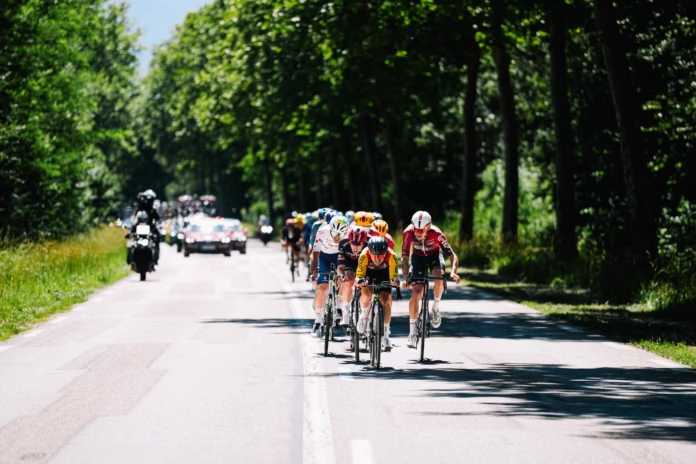
The Tour Auvergne – Rhône-Alpes 2026 reaches the Grand Colombier on Saturday, 13th June, with stage 7 taking the riders from La Bridoire to one of the hardest summit finishes of the race. After the breakaway ambush on stage 6 changed the overall classification, this is no longer a straightforward mountain test. It is now a chase stage.
Luke Tuckwell starts the day in the yellow and blue jersey after moving into the race lead at Crest-Voland. His advantage is significant, but not safe. Paul Seixas sits 3:06 behind, Juan Ayuso is at 3:15, Isaac del Toro and Jørgen Nordhagen are both at 3:22, and Kévin Vauquelin is 3:50 down. With Grand Colombier on stage 7 and Plateau de Solaison still to come on stage 8, the final weekend remains wide open.
Stage 7 is shorter than stage 6, but it may be sharper and harder to control. The 133.6km route finishes on the Grand Colombier, with the last climb listed at 8.4km at 10.2 per cent. Before that, the riders also face the Lacets du Grand Colombier and Col de Richemond, making this a compact mountain stage with enough climbing to isolate the yellow jersey before the final ascent.
For wider race context, see our Tour Auvergne – Rhône-Alpes 2026 full route guide, Tour Auvergne – Rhône-Alpes 2026 contenders preview, Tour Auvergne – Rhône-Alpes 2026 team-by-team guide, GC and jerseys after Tour Auvergne – Rhône-Alpes 2026 stage 6 and how to watch Tour Auvergne – Rhône-Alpes 2026 in the UK.
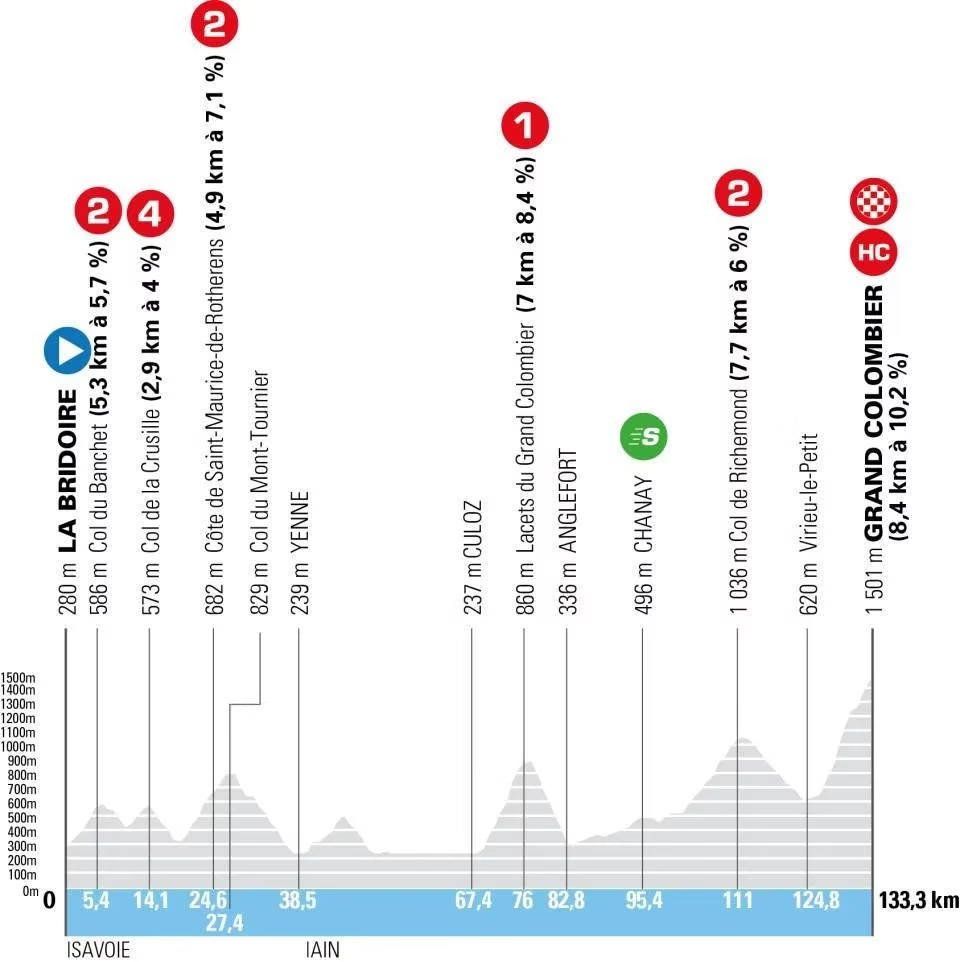
Tour Auvergne – Rhône-Alpes 2026 stage 7 route
Stage 7 runs from La Bridoire to Grand Colombier over 133.6km. It is short enough to encourage aggressive racing, but hard enough to create proper GC gaps. The profile is built around repeated climbing before a steep summit finish, giving the stage a very different feel from the longer, more open day to Crest-Voland.
The key climbs are:
- Lacets du Grand Colombier
- Col de Richemond
- Grand Colombier summit finish
The final climb is the decisive feature. At 8.4km at 10.2 per cent, Grand Colombier is steep enough to turn the race into a pure climbing test. The gradient is severe, and because the stage is relatively short, riders may arrive at the base with less accumulated distance than on stage 6 but with more intensity already in the legs.
The climbs before the finish matter because they can reduce team support. If the race is hard over the Lacets du Grand Colombier and Col de Richemond, Tuckwell may find himself with fewer teammates by the final ascent. That is the opening his rivals need.
Why Grand Colombier changes the tactical picture
Stage 6 changed the GC through a breakaway. Stage 7 should be more direct. The favourites cannot afford to let another large move go clear with dangerous riders, and Red Bull-BORA-hansgrohe now have the responsibility of defending yellow.
That should make the stage more controlled early, but only to a point. The chasing teams have clear reasons to make the race hard. Decathlon CMA CGM Team have Paul Seixas sitting 2nd overall. Lidl-Trek have Juan Ayuso at 3:15. UAE Team Emirates-XRG have Isaac del Toro at 3:22. Team Visma | Lease a Bike have Jørgen Nordhagen on the same gap. Netcompany INEOS Cycling Team still have Kévin Vauquelin within range, but he needs to recover time.
Grand Colombier is ideal terrain for that kind of response. It is steep enough for individual strength to matter more than team structure in the final kilometres. If the main climbers wait until the last climb, they still have enough road to gain time. If they attack before it, they can put Red Bull-BORA-hansgrohe under pressure before the steepest section.
This is not a stage for passive racing. Tuckwell’s rivals now have a target, and Grand Colombier gives them the road to attack it.
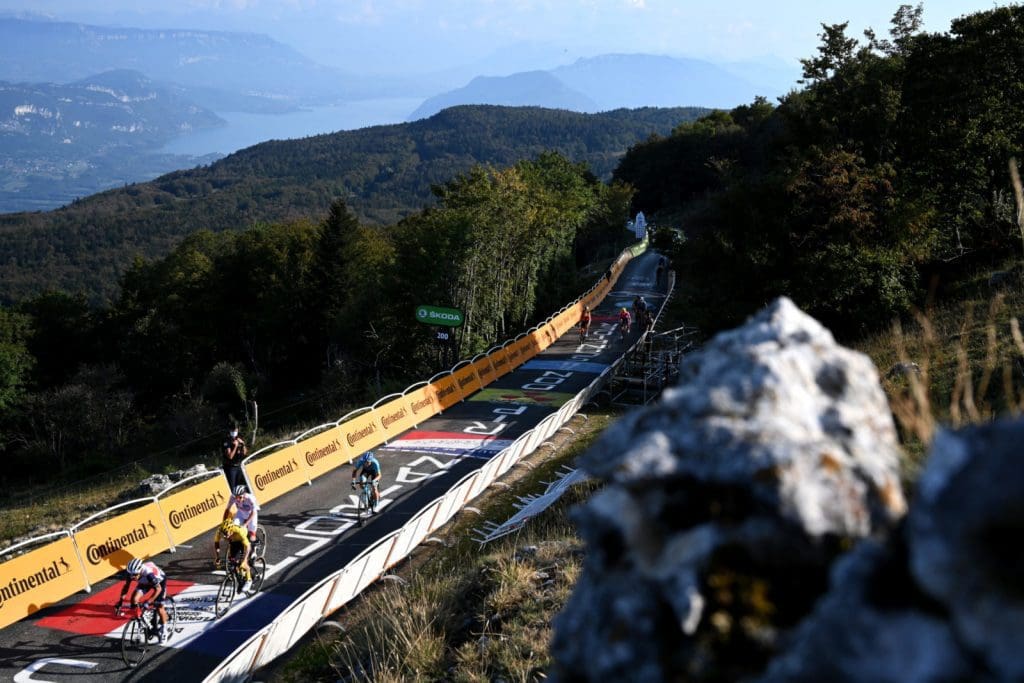
GC situation before stage 7
Luke Tuckwell leads the race after finishing 3rd on stage 6. His move into yellow was the product of both strength and tactical opportunity. Now he has to prove he can defend it on one of the hardest climbs of the race.
General classification before stage 7:
| Position | Rider | Team | Time / gap |
|---|---|---|---|
| 1 | Luke Tuckwell | Red Bull-BORA-hansgrohe | 22:14:55 |
| 2 | Paul Seixas | Decathlon CMA CGM Team | +3:06 |
| 3 | Juan Ayuso | Lidl-Trek | +3:15 |
| 4 | Isaac del Toro | UAE Team Emirates-XRG | +3:22 |
| 5 | Jørgen Nordhagen | Team Visma | Lease a Bike | +3:22 |
| 6 | Sam Maisonobe | Cofidis | +3:35 |
| 7 | Alex Baudin | EF Education-EasyPost | +3:38 |
| 8 | Kévin Vauquelin | Netcompany INEOS Cycling Team | +3:50 |
| 9 | Cian Uijtdebroeks | Movistar Team | +4:09 |
| 10 | Léo Bisiaux | Decathlon CMA CGM Team | +4:17 |
The gaps are large enough to give Tuckwell room, but not large enough to make him comfortable. A steep climb like Grand Colombier can create minutes if a rider cracks. It can also create smaller but meaningful differences if the favourites attack in sequence.
Tuckwell does not need to follow every move immediately, but he cannot afford to let the strongest climbers ride away together. If Seixas, Ayuso, del Toro or Nordhagen go clear in a small group, Red Bull-BORA-hansgrohe will have to react.
Luke Tuckwell
Luke Tuckwell begins stage 7 in the yellow and blue jersey, and this will be the most important test of his race so far. Stage 6 was a brilliant ride, but defending a three-minute lead on Grand Colombier is a different problem.
The good news for Tuckwell is that he has a cushion. He can lose some time and still keep the race alive. The bad news is that the final climb is steep enough to turn a difficult day into a collapse if he cannot match the best climbers.
Red Bull-BORA-hansgrohe must now shift from attacking to defending. That is not always easy after a stage like Crest-Voland, where the team gained time through aggression rather than control. They need to manage the early breakaway, keep Tuckwell sheltered, and make sure he reaches Grand Colombier with enough support and energy.
His task is not necessarily to win the stage. It is to avoid one bad climb becoming the loss of the race.
 Photo Credit: Getty
Paul Seixas
Paul Seixas is now the closest challenger. At 3:06 down, he has a clear target and a climb that suits him. Decathlon CMA CGM Team also have Léo Bisiaux inside the top 10, which gives them tactical flexibility.
Seixas has been one of the main French storylines of the race, and stage 7 gives him a chance to turn promise into a real overall challenge. Grand Colombier should suit his climbing profile because the final gradient is severe and sustained. If he has the legs, he does not need a complicated plan. He can simply make the climb hard and see who follows.
The key question is timing. If Seixas attacks too early, he risks dragging others with him and helping Ayuso or del Toro. If he waits too long, Tuckwell may limit the damage. Decathlon CMA CGM Team need to use their numbers before the final climb, then let Seixas race directly when the road steepens.
He is the nearest rider to yellow, and that makes him one of the obvious stage favourites.
Juan Ayuso
Juan Ayuso sits 3rd overall at 3:15 and now has to race more aggressively. Before stage 6, he could afford to measure himself against the other pre-race favourites. After stage 6, he has to take time from Tuckwell as well.
Grand Colombier is a good climb for Ayuso if he is close to his best. It is steep enough for his acceleration to matter, but long enough that he cannot rely on one short attack. He will need to sustain pressure and possibly go more than once if Tuckwell or Seixas can respond initially.
Lidl-Trek have Mattias Skjelmose further back on GC, which gives them another rider who can be used tactically, but Ayuso is the clear rider for the overall battle now. If Lidl-Trek want to win this race, stage 7 is where they need to start taking time back.
Ayuso does not have to overturn the entire deficit on Grand Colombier, but he cannot leave everything to Plateau de Solaison.
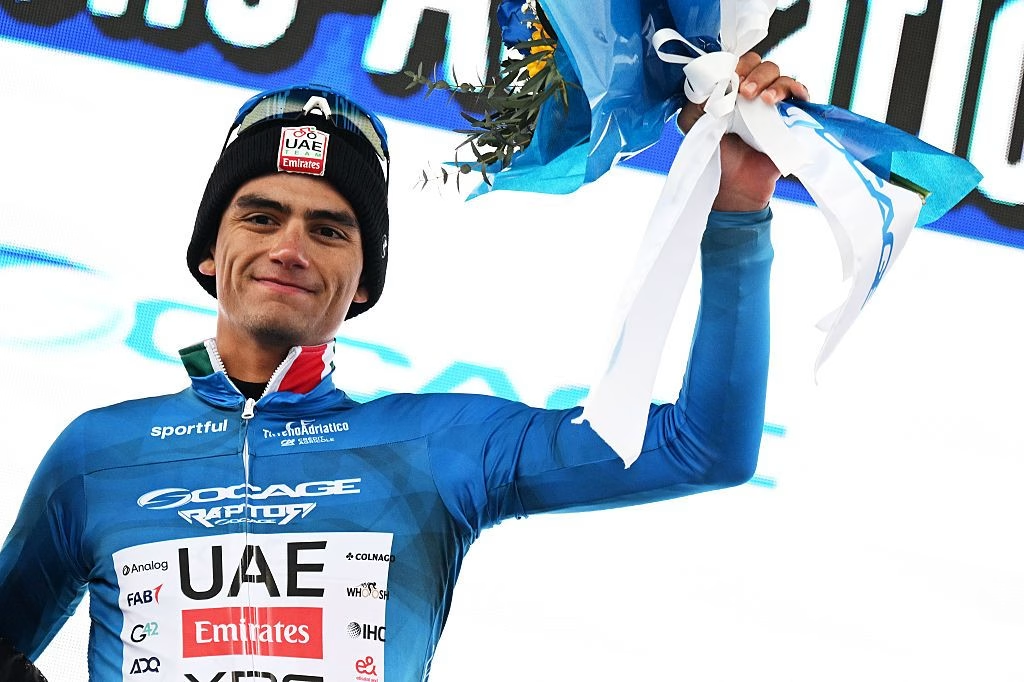 Photo Credit: Getty
Isaac del Toro
Isaac del Toro is level with Jørgen Nordhagen at 3:22 and remains one of the most dangerous riders in the race. Stage 6 did not put him into control, but stage 7 gives UAE Team Emirates-XRG a clearer platform.
Del Toro’s appeal is that he can win stages and change GC momentum at the same time. He has the punch to attack on steep gradients and the confidence to race without waiting for permission. Grand Colombier gives him a climb where hesitation will be punished, which could suit his instinctive style.
UAE Team Emirates-XRG will need to decide how early to make the race hard. If they wait until the final 4km, the gaps may be smaller. If they apply pressure on the earlier climbs, they can make the final ascent far more selective.
Del Toro is one of the riders most likely to force the issue if the others start watching each other.
Jørgen Nordhagen
Jørgen Nordhagen is still firmly in the race at 3:22. Team Visma | Lease a Bike lost the chance to control the race on stage 6, but Nordhagen remains close enough to turn the final weekend into a major result.
Grand Colombier is a significant test for him. It is steep, sustained and unforgiving, exactly the kind of climb that reveals whether a young GC rider can handle senior WorldTour pressure deep into a stage race.
Team Visma | Lease a Bike may have to race differently now. Rather than defending position, they need to use Nordhagen’s climbing ability to take time. That could mean sending support up the road, pushing the pace before the final climb, or simply backing him to follow the main attacks and then move late.
Nordhagen may not need to be the first rider to attack. If he can stay with Seixas, Ayuso and del Toro, he will remain a major threat for the final stage.
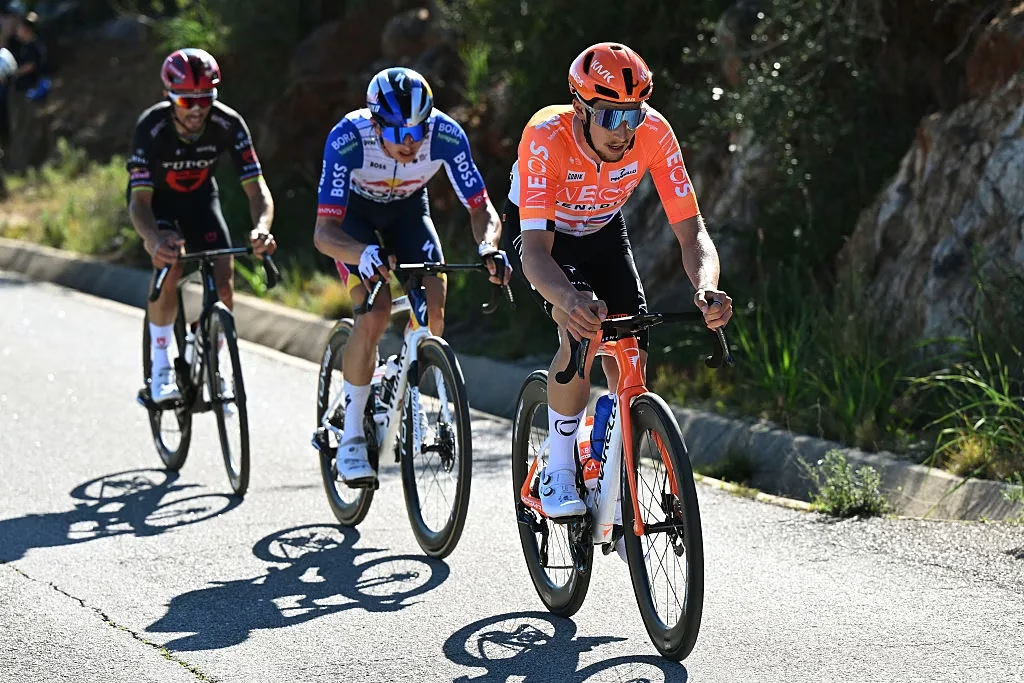 Photo Credit: Getty
Kévin Vauquelin
Kévin Vauquelin is 8th overall at 3:50 after losing ground in the stage 6 reshuffle. That gap is not race-ending, but it changes what he needs to do. Netcompany INEOS Cycling Team can no longer rely on small time gains or tactical control. They need to put the race under pressure.
Vauquelin still has enough quality to move back towards the podium, especially if the final climb becomes a selective test rather than a waiting game. His challenge is that several riders are now between him and yellow. He cannot only focus on Tuckwell. He also has to jump Seixas, Ayuso, del Toro, Nordhagen, Maisonobe and Baudin.
That may make Netcompany INEOS Cycling Team one of the squads most likely to animate the stage early. If they wait for the final kilometre, the podium may slip further away. If they make the race hard over the earlier climbs, they can test whether Tuckwell and some of the young riders can cope with repeated pressure.
Vauquelin needs stage 7 to become difficult before Grand Colombier itself.
Alex Baudin
Alex Baudin lost the yellow jersey on stage 6 but remains 7th overall at 3:38. His race is not over, although the situation has changed sharply. He is no longer defending. He is chasing.
That may suit him in some ways. Baudin has already shown he can seize opportunity in this race, and without the immediate burden of yellow, EF Education-EasyPost can ride more freely. The problem is that Grand Colombier is less about opportunism and more about pure climbing level.
Baudin’s realistic goal may be to stay close, defend a high overall place and look for chances if the favourites start marking each other. Regaining yellow on stage 7 would require both a major ride from him and weakness from several riders ahead.
Still, he has been one of the defining figures of the race so far. Grand Colombier will show whether his GC challenge has another phase left.
Cian Uijtdebroeks and the top-10 fight
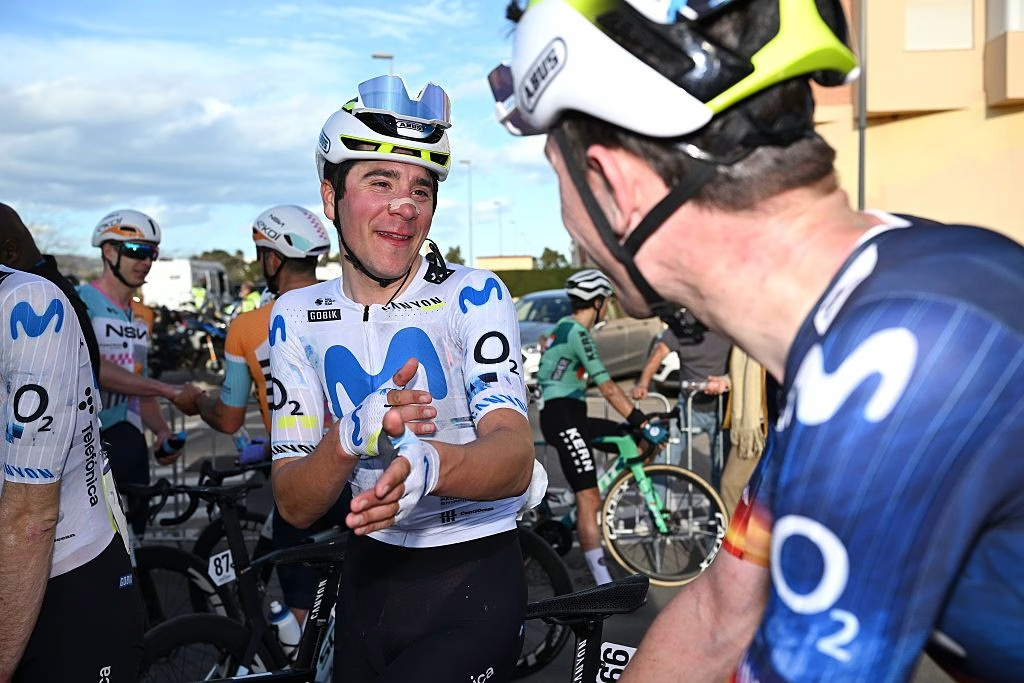
Cian Uijtdebroeks sits 9th overall at 4:09 and is still within range of moving higher if the race becomes selective. Movistar Team also had Raul Garcia Pierna high on stage 6, showing the team can still influence the mountain stages.
Uijtdebroeks is unlikely to be the main favourite for the stage win, but Grand Colombier is the kind of climb where he can move up through consistency. If some riders ahead crack, he may not need a spectacular attack to gain places. A steady, controlled climb could be enough.
Léo Bisiaux is also well placed in 10th overall at 4:17, giving Decathlon CMA CGM Team another card behind Seixas. That could matter if the team want to pressure Red Bull-BORA-hansgrohe before the final climb.
The podium fight is still open, but so is the battle for the lower top 10. Stage 7 could separate the riders who merely survived stage 6 from those who can still climb at the end of the week.
Can the breakaway win again?
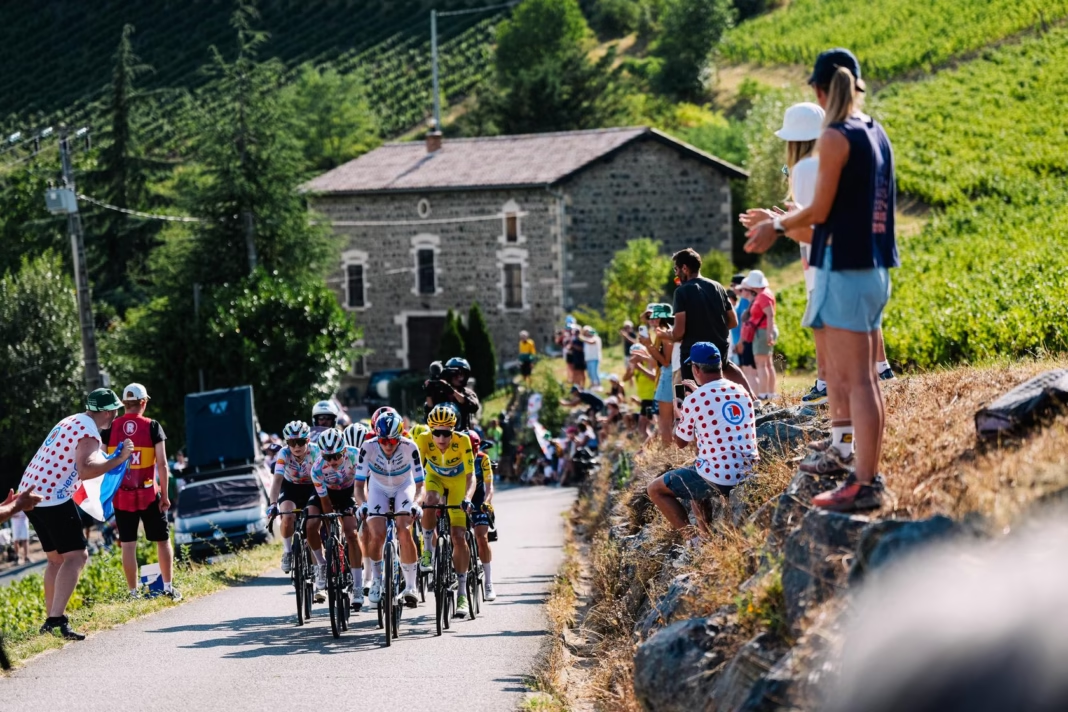
A breakaway can win, but it should be much harder than on stage 6. The GC teams were punished heavily at Crest-Voland for allowing the move too much space. They are unlikely to make the same mistake with Grand Colombier and Plateau de Solaison still ahead.
That does not mean the breakaway will be weak. Many riders are now far enough down on GC to be given room, and the route is short enough that attackers will be tempted. The mountains classification also gives Clément Braz Afonso and others a reason to go early.
The difference is that Red Bull-BORA-hansgrohe now have to defend yellow, while the chasing teams have no reason to let a dangerous group build a huge margin. If the breakaway wins, it will probably be because it contains no GC threat and the favourites focus entirely on each other behind.
The more likely scenario is that the breakaway shapes the early climbing, before the GC favourites take over on the final ascent.
Stage 7 tactics
Red Bull-BORA-hansgrohe have the hardest job. They need to defend Tuckwell without overcommitting too early, especially with Plateau de Solaison still to come. Their ideal stage is controlled but not frantic, with Tuckwell reaching the final climb protected and then riding at his own pace.
Decathlon CMA CGM Team should be one of the main aggressors. Seixas is closest to yellow, and Bisiaux gives them another high-placed rider. They have a reason to make the race hard before Grand Colombier.
Lidl-Trek and UAE Team Emirates-XRG need to recover time with Ayuso and del Toro. Both teams have enough climbing quality to animate the stage, and both may regret leaving the whole fight until the final climb.
Team Visma | Lease a Bike can race through Nordhagen, while Netcompany INEOS Cycling Team need Vauquelin to regain time after stage 6. Those teams may not have the same immediate proximity to yellow as Seixas, but they cannot afford another controlled day where Tuckwell survives.
The tactical balance is simple: Tuckwell wants control, everyone else needs damage.
-
 Photo Credit: A.S.O./Billy Ceusters
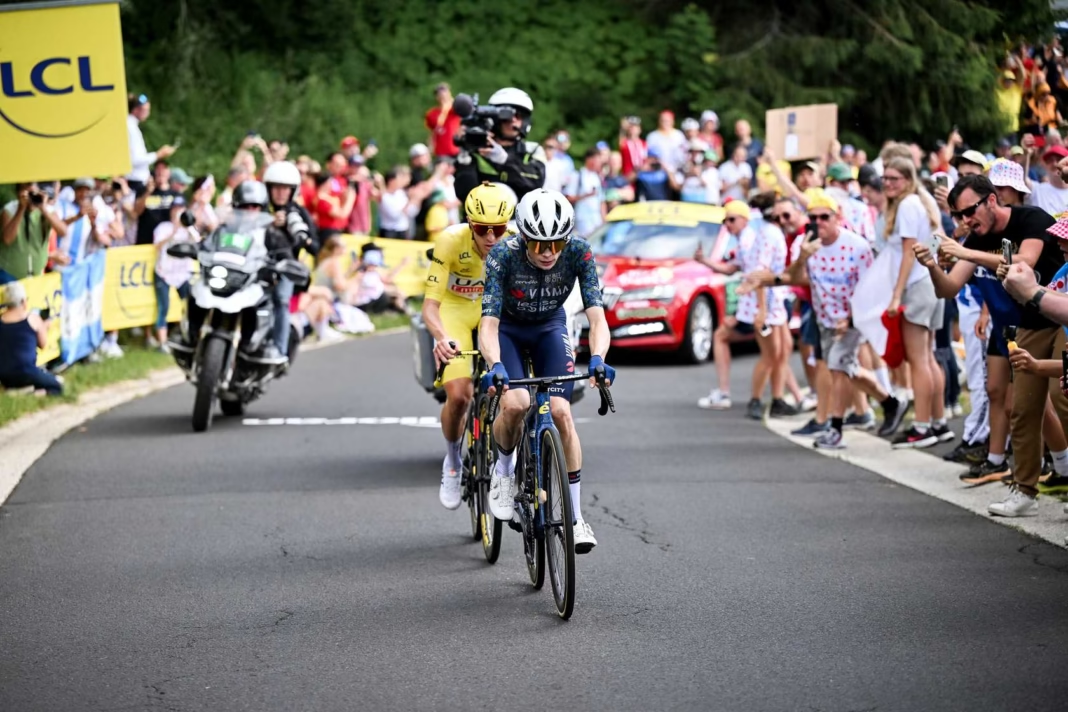
Stage 7 favourites
Paul Seixas has the combination of GC position, climbing ability and motivation to be one of the main favourites. He is closest to yellow and should see Grand Colombier as a chance to put Tuckwell under direct pressure.
Juan Ayuso is another obvious contender. The climb suits a rider who can accelerate on steep gradients and sustain pressure once the group has been reduced. If he is going to win the overall, this is a stage where he needs to show it.
Isaac del Toro may be the most unpredictable threat. He can attack sharply, race instinctively and turn a steep finish into a stage-winning move. UAE Team Emirates-XRG will expect him to be central on a climb like this.
Jørgen Nordhagen has the climbing quality to stay with the best, while Kévin Vauquelin needs to race with more urgency after losing time. Cian Uijtdebroeks, Léo Bisiaux, Alex Baudin, Sam Maisonobe and Tobias Halland Johannessen also belong in the wider conversation if the stage becomes a war of attrition.
Tuckwell himself should not be ignored. He is in yellow because he was strong enough on stage 6, not only because the breakaway gained time. If he can follow the favourites on Grand Colombier, the race may start to look very different.
Stage 7 prediction
Stage 7 should bring the direct GC confrontation that many expected on stage 6. The breakaway may still play a role, but after the Crest-Voland ambush, the favourites’ teams should keep the race much tighter.
Grand Colombier is steep enough to expose weakness and short enough in the final climb for repeated attacks. Tuckwell has a useful lead, but Seixas, Ayuso, del Toro, Nordhagen and Vauquelin cannot afford to wait until Sunday. The pressure has to start here.
Prediction: Paul Seixas to win stage 7 on Grand Colombier and cut into Luke Tuckwell’s overall lead, with Ayuso, del Toro and Nordhagen close behind. Tuckwell can still keep yellow, but the gap should come down before the final stage to Plateau de Solaison.

