The Giro d’Italia 2026 continues on Thursday, 14th May, with stage 6 taking the peloton from Paestum to Napoli. After the long, climbing-heavy stage to Potenza, this looks like a very different kind of test: short, mostly flat, coastal at first, then increasingly urban and technical as the race heads towards Naples.
On paper, the stage is one for the sprinters. It is 142km long, with only 500 metres of altitude gain, and the only categorised climb comes early enough that it should not remove the fast men. But the Giro rarely gives sprinters a completely stress-free day, and this stage has two complications: the final 70km run through near-continuous built-up roads, and a tricky finish along the port in Napoli.
The final kilometre includes stone slabs, a slight uphill section at 4 per cent, two late right-hand bends and an 8-metre-wide cobbled finishing straight. That does not make the stage hard in the climbing sense, but it does make positioning, timing and lead-out control absolutely crucial.
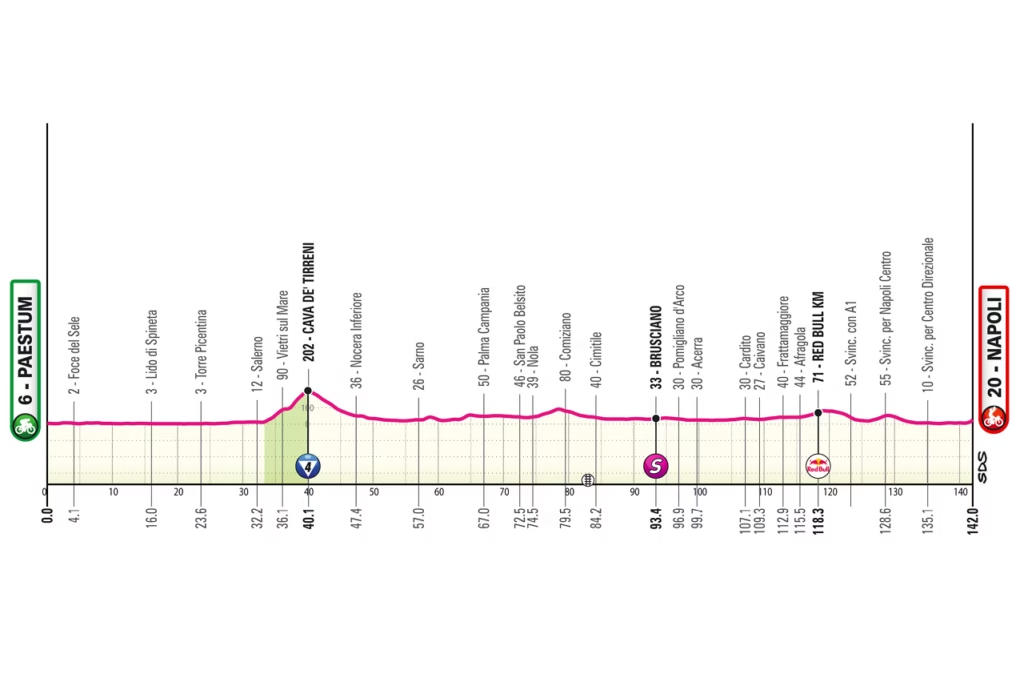
Giro d’Italia 2026 stage 6 route
Stage 6 runs 142km from Paestum to Napoli, with 500 metres of climbing. It starts near one of southern Italy’s most important archaeological sites before heading north along the Tyrrhenian coast towards Salerno.
The early part of the stage should allow the breakaway to form, but the sprinters’ teams will be watching closely. The only categorised climb of the day comes at Cava de’ Tirreni, after the route leaves the coast and rises away from Salerno. It is not the kind of climb that should decide the stage, but it does add a little stress and could test any sprinters still feeling the effects of the opening week.
After that, the route enters the plain around Mount Vesuvius before Nola. From there, the final 70km are almost entirely urban. That is the detail that stops this being a simple sprint day. Built-up roads mean roundabouts, traffic islands, narrowing sections, road furniture and constant demands on concentration.
The run into Naples should be fast, but not relaxed. Around 20km before the finish, the race uses a dual carriageway before entering the city. The final kilometres are on wide paved roads along the port, but the surface and layout still make the sprint more complicated than a straight drag race.
What time does Giro d’Italia stage 6 start?
Stage 6 starts at 12:45 local time in Italy, which is 11:45 in the UK.
The finish is expected at around 17:04 local time, or 16:04 UK time. With a flatter route than stage 5, the stage should be easier to control, although the final urban run-in could make the last hour nervous.
Key stage details:
- Date: Thursday, 14th May
- Route: Paestum to Napoli
- Distance: 142km
- Altitude gain: 500 metres
- Main climb: Cava de’ Tirreni
- Stage start: 11:45 UK time
- Expected finish: around 16:04 UK time
- Likely outcome: sprint or reduced sprint
Why this is more than a normal sprint stage
The profile says sprint stage. The road book says something more awkward.
The final 70km through built-up areas are likely to make the peloton nervous. GC teams will want their leaders near the front to avoid splits or crashes. Sprint teams will want to control position for the final. Breakaway riders may try to use the constant road furniture and rhythm changes to disrupt the chase. That is a lot of competing interests on roads where moving up may not always be simple.
The final kilometre adds another layer. At 650 metres to go, a left-hand bend leads onto the slight uphill of Via Acton, where the road rises at around 4 per cent on stone slabs. At 400 metres to go, two right-hand bends lead onto the final straight, which is on 8-metre-wide cobbles.
That is a finish where being first into the key bends could matter almost as much as pure top speed. A sprinter who is badly positioned with 650 metres to go may not have enough road left to recover. The cobbled finishing straight also rewards a rider who can keep power down on a rougher surface after a messy lead-in.
How stage 5 could affect the race
Stage 5 to Potenza is the hardest day of the Giro so far, with more than 4,000 metres of climbing. Even if stage 6 looks flatter, the sprinters will not arrive fresh. Riders who struggled over the climbs or spent too much energy in the breakaway fight may find the Naples finish more difficult than the profile suggests.
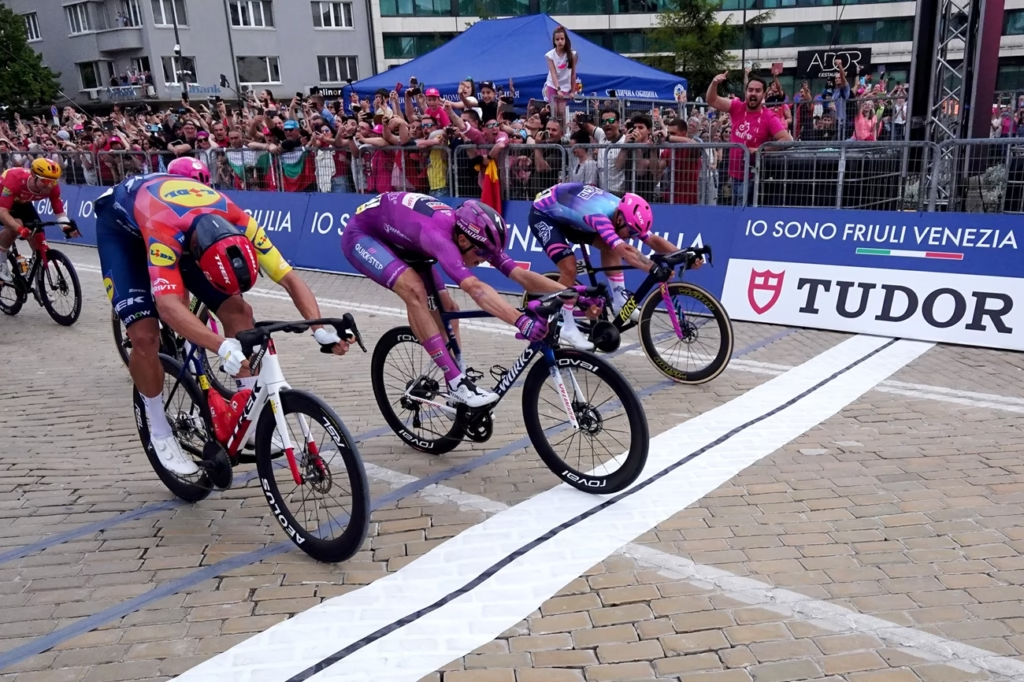
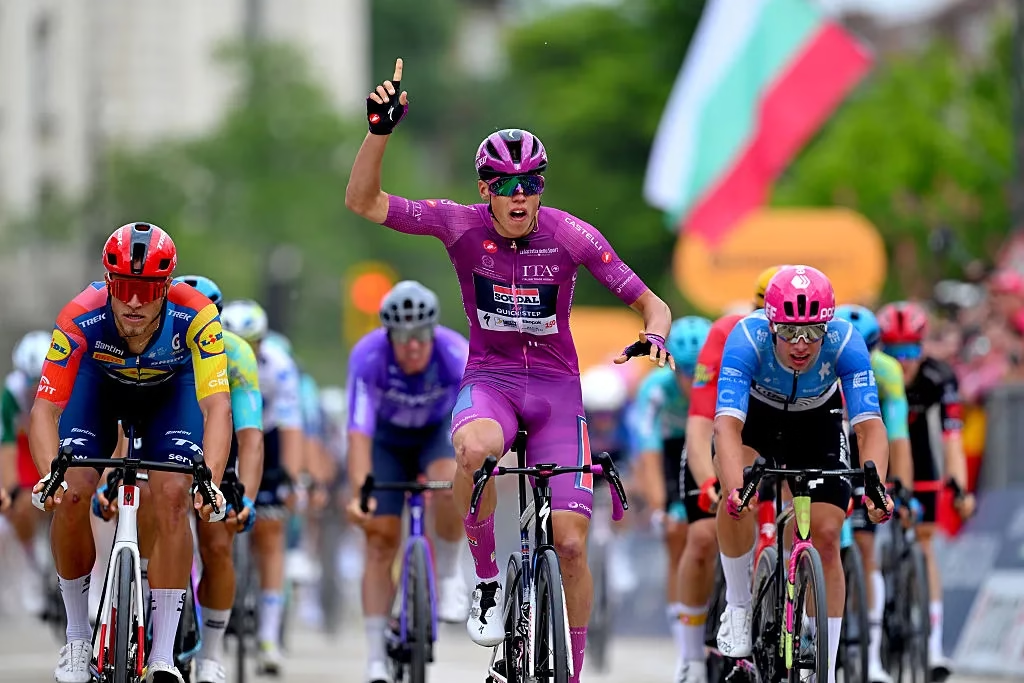
That is especially important because the Giro has already been rough on the sprint field. Paul Magnier dominated the opening sprint days, but stage 4 in Cosenza showed that the race can quickly move away from a pure sprint pattern. Jonathan Milan has been close without winning, while several fast men have already lost opportunities through crashes, positioning or tougher terrain.
Stage 6 should bring the sprinters back into the centre of the race. But after Potenza, it may favour the riders with the best recovery as much as the fastest top-end speed.
Who are the stage 6 contenders?
Jonathan Milan starts as the leading favourite. He has been close already in this Giro, and this is the sort of stage where Lidl-Trek need to convert their sprint strength into a win. The final is not a clean, open boulevard, but the slight uphill and cobbled finishing straight could suit Milan’s raw power if he is delivered near the front. The danger is positioning. If he is too far back before the two late right-hand bends, even his speed may not be enough.
Tobias Lund Andresen is another top-tier contender. He has already shown his sprint form in the opening stages, and this finish should suit a rider who can handle a slightly messy, technical run-in. He may not need the most textbook lead-out if he is well placed through the final kilometre, and the rising finish should not be a problem.
Paul Magnier remains a major threat after winning two of the first three stages and taking control of the maglia ciclamino. Soudal Quick-Step have every reason to chase, and Magnier’s confidence is obvious. The only reason to place him slightly behind Milan here is the nature of the finish. The cobbled, power-based final could bring Milan’s strengths back into play, but Magnier has been the sharper finisher so far in this Giro.
Dylan Groenewegen will want a cleaner sprint than some of the earlier finishes. The route should be manageable for him, but the final bends and cobbles make the lead-out especially important. If he is too far back entering the final 650 metres, it may be difficult to come around the sharper finishers.
Madis Mihkels also fits the rougher version of the stage. He has been consistent in the points competition and could benefit if the sprint becomes chaotic. A technical finale where timing matters more than a perfect train could bring him into the top five.
Ethan Vernon is another sprinter who deserves attention. He has the speed to challenge if he is positioned well, and the shorter stage should suit him. The issue is whether his team can put him into the right place before the late bends. In this finale, speed alone is not enough.
Orluis Aular is interesting after his strong ride in Cosenza. This is a flatter stage than stage 4, but the uphill, technical finish gives him a way into the contest if the pure sprint trains are disrupted. He may not be the fastest in a completely clean sprint, but this finale is unlikely to be completely clean.
Pascal Ackermann, Luca Mozzato, Erlend Blikra and Matteo Malucelli sit in the outsider group. All need something to go slightly wrong for the top-tier sprinters, whether that is poor positioning, a disrupted lead-out or hesitation before the final bends. Of that group, Mozzato may be especially interesting if the sprint becomes more about survival and timing than pure speed.
Kaden Groves would normally be a rider for this kind of finish, but after abandoning earlier in the race, Alpecin-Premier Tech have to look elsewhere for opportunities.
What will the GC teams do?
The GC teams will want a quiet day, but that may be easier said than done. Stage 6 is not hard enough to invite serious attacks, yet the urban finale means the overall contenders cannot simply drift through the bunch.
The main favourites will want to stay near the front through the final 20km, especially once the race enters Naples. That includes Giulio Ciccone in pink, Jan Christen, Egan Bernal, Thymen Arensman, Jonas Vingegaard, Lennert van Eetvelt, Enric Mas and the other riders clustered near the top of the standings.
This kind of stage is not about gaining time for the GC riders. It is about avoiding the wrong kind of loss. A crash, split or badly timed mechanical in an urban finale can undo several days of careful riding. Expect the GC teams to be visible near the front before the sprint teams take over fully in the final kilometres.
Can the breakaway survive?
It is unlikely, but the breakaway will still try.
The short distance and flatter profile make this one of the clearer sprint chances in the opening week, and Soudal Quick-Step, Lidl-Trek and the other sprint teams should have enough interest to control the gap. The early Cava de’ Tirreni climb may help form a more committed move, but it is not hard enough or late enough to tilt the stage decisively away from the bunch.
The breakaway’s best hope is disruption. If the urban roads make the chase awkward, if the peloton becomes nervous, or if the sprint teams misjudge the gap, there is a chance for late resistance. But on a stage finishing in Naples, with points and sprint prestige available, the bunch should bring it back.
Giro d’Italia 2026 stage 6 prediction
Stage 6 should end in a sprint, but not necessarily a simple one. The final 70km through urban roads will demand concentration, while the final kilometre adds a late positioning battle on stone slabs, a slight uphill, two right-hand bends and cobbles.
That makes the lead-out crucial. The fastest rider may not win if he is out of position before the Via Acton rise. A sprinter who enters the final 650 metres near the front and can hold speed over the cobbled finishing straight should have the advantage.
Milan feels like the right pick here. Magnier has been the sharper sprinter so far in this Giro, but the Naples finish looks more power-based and less clean than the earlier sprint days. If Lidl-Trek deliver Milan into position before the final bends, this is the stage where he can finally turn his near-misses into a win.
Prediction: Jonathan Milan to win stage 6 in Napoli.