
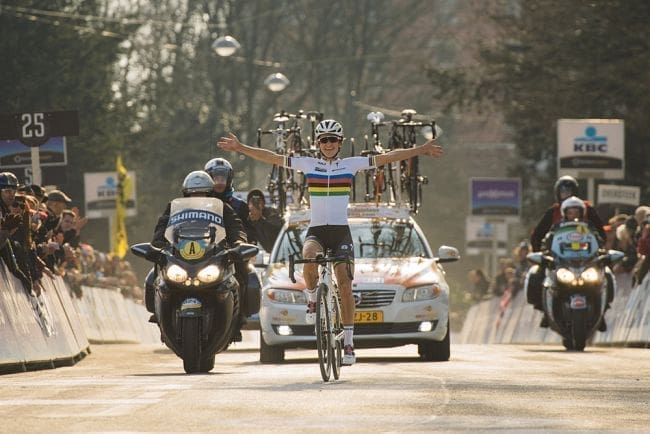
Omloop Het Nieuwsblad Women has become the true opening note of the spring Classics season. Like the men’s race, it sets the tone for everything that follows. Cobbles, climbs, positioning stress and the first real confrontation between the peloton’s Classics leaders all arrive here, which is why the race has steadily grown from an early-season supporting event into one of the most meaningful one-day races on the women’s calendar.
That is what gives the race its weight. Omloop Het Nieuwsblad Women is not quite the hardest of the spring cobbled races, and it is not always the most selective, but it is often one of the most revealing. Riders arrive with winter form still only partly tested, team hierarchies are not always fully settled, and the race has a long history of rewarding those who are ready to be aggressive before everyone else has fully adjusted to the rhythm of Belgian racing.
How Omloop Het Nieuwsblad Women began
The race first took place in 2006, with Suzanne de Goede winning the inaugural edition. In those earlier years, the event had not yet fully found the harder identity it now carries. The route could still allow larger groups to stay together late into the day, and the finish, often in Gent, left more room for the stronger sprinters to come back into contention after the final climbs.
That start is still important, though, because it gave the women’s spring calendar a proper curtain-raiser in Belgium. When the race began running on the same day as the men’s event from 2009, and with much of the same sporting identity, that connection only became stronger. The women’s season suddenly had a more recognisable opening point, one tied to the same roads, weather and atmosphere that give the men’s cobbled spring its distinctive feel.
-
 Photo Credit: quentinphotographiebe
 -
 Photo Credit: Getty
How the race evolved
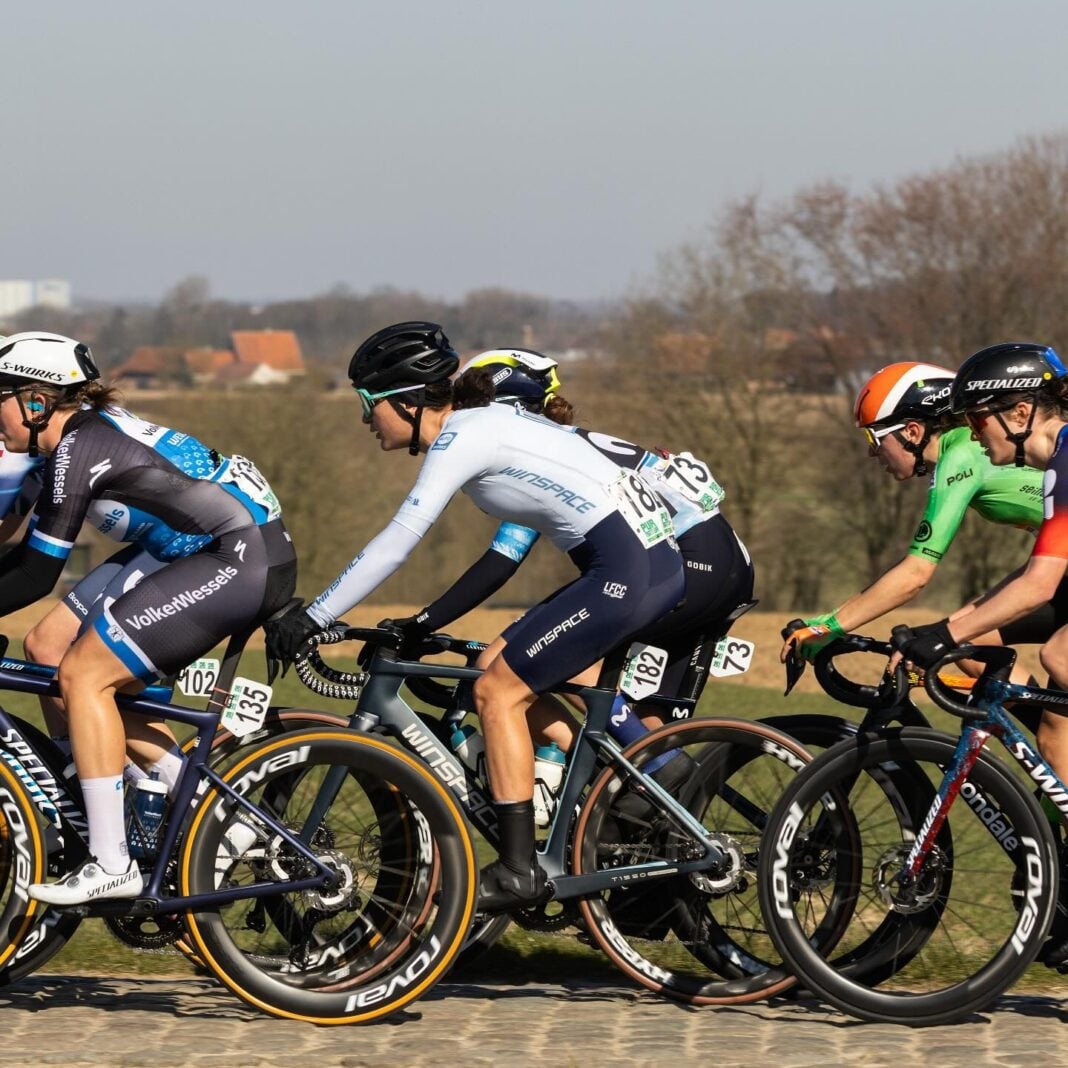
The early editions tended to lean more towards bunch or larger-group finishes. The route was hard enough to expose weaker riders but not always selective enough to guarantee a small front group by the line. That changed over time, particularly as the race developed its own clearer relationship with the key climbs and cobbled sectors of the Flemish Ardennes.
A major turning point came in 2018 when the finish moved from Gent to Ninove, mirroring the men’s race more closely. That change tightened the race’s identity and made the final sequence feel more recognisable within the broader opening-weekend narrative. Even then, the race still kept some unpredictability. Christina Siggaard’s surprise 2018 win came from a larger group sprint, while the next two years swung back sharply towards long solo victories by Chantal van den Broek-Blaak and Annemiek van Vleuten.
By 2026, the route had evolved again, with new late climbs added before the Muur and Bosberg. That matters because Omloop Het Nieuwsblad Women has increasingly become a race where the organisers are trying to create a more decisive finale without stripping away the uncertainty that makes the event so compelling. It is still a race where a solo attacker, a tiny elite group or a reduced sprint can all remain plausible surprisingly late.
The riders who shaped Omloop Het Nieuwsblad Women history
Suzanne de Goede was the race’s first repeat winner, taking victory in both 2006 and 2009. Emma Johansson then matched that by winning in 2010 and 2011. For a long time, that pair of double winners helped define the early history of the race, and there was a sense that no rider was fully able to dominate it across eras.
What has happened since gives the race a richer shape. Loes Gunnewijk won in 2012, Tiffany Cromwell in 2013, Amy Pieters in 2014 and Anna van der Breggen in 2015, a run that reflected how open the race could be in the years before the Ninove finish. Lizzie Deignan, Lucinda Brand and Christina Siggaard followed, each winning a very different kind of edition.
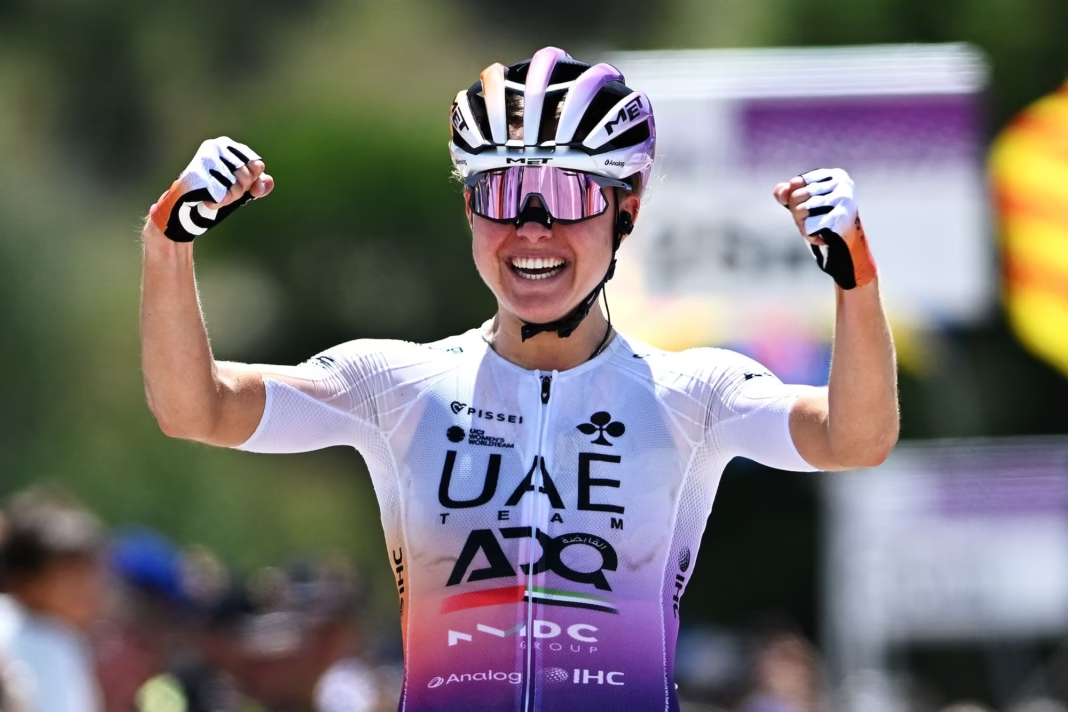
Then the race moved into a phase where major stars used it to stamp their authority on the opening weekend. Chantal van den Broek-Blaak and Annemiek van Vleuten both won with big solo rides. Anna van der Breggen added a second win in 2021, Van Vleuten did the same in 2022, Lotte Kopecky won in 2023, Marianne Vos in 2024, Lotte Claes produced a shock win from the break in 2025, and Demi Vollering added her first victory in 2026. That sequence says a lot about the race. It has become a place where the biggest names can win, but only if they judge the race correctly.

The greatest Omloop Het Nieuwsblad Women edition
There is still a strong case for 2012 as one of the defining editions of the race.
That year, the 120km race really came alive on the Côte de Trieu, where an elite group of 12 riders went clear. GreenEDGE-AIS had several riders represented, while Hitec also had strong numbers in the move. It was the kind of split that immediately gave the race a sharper, more tactical shape than the earlier sprint-friendly editions often produced.
The decisive move came later on the flat cobbles of the Paddestraat. Loes Gunnewijk attacked and only Ellen van Dijk could go with her. Because both riders had teammates in the small chase behind, they gained not only a physical advantage but a tactical one too. That combination is often what makes the best Omloop editions memorable: strong legs, yes, but also the intelligence to make the numbers behind work in your favour.
By the time they reached the outskirts of Gent, the pair had a huge advantage. Van Dijk led out the sprint, Gunnewijk opened first, Van Dijk came back around, then faded on the rise to the line and was passed again. It was a dramatic, slightly messy and deeply human finish, which suits Omloop Het Nieuwsblad Women rather well. The race often looks clean on paper, but in reality it is usually won by riders making decisions under a lot of pressure and fatigue.
The defining section of Omloop Het Nieuwsblad Women
The race has several candidates for its defining road, but the Côte de Trieu deserves special mention because of how often it has acted as the launch point for serious racing. It is not the most famous climb in the race, and it is not as iconic in image terms as the Muur van Geraardsbergen, but it has a habit of splitting the field at exactly the moment when teams begin to realise the race is no longer under control.
That said, modern Omloop Het Nieuwsblad Women is still most closely associated with the Muur and Bosberg sequence. The Muur carries all the symbolism and crowd energy that comes with its place in Belgian cycling, while the Bosberg gives attackers one last real chance to confirm the damage. Together, they turn the race from a long day of positioning and attrition into a genuine finale.
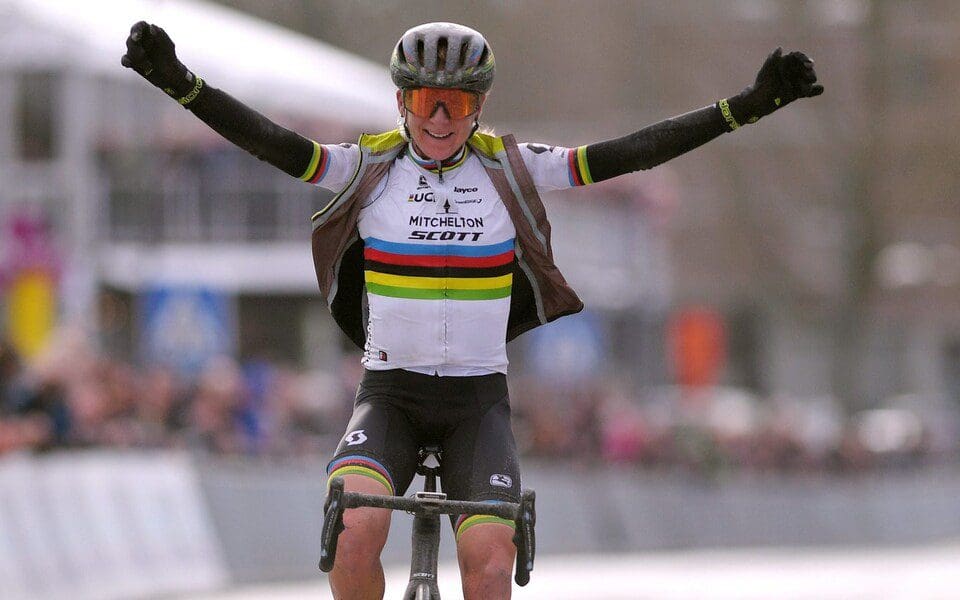
What makes the race especially interesting now is that the roads before those climbs have become more important again. By 2026, with extra late climbs added before Geraardsbergen, the finale had become a little more layered. That gives the strongest riders more ways to shape the race before the Muur itself, which is exactly what a race like this should want.
Omloop Het Nieuwsblad Women previous winners
- 2006 – Suzanne de Goede
- 2007 – Mie Lacota
- 2008 – Kirsten Wild
- 2009 – Suzanne de Goede
- 2010 – Emma Johansson
- 2011 – Emma Johansson
- 2012 – Loes Gunnewijk
- 2013 – Tiffany Cromwell
- 2014 – Amy Pieters
- 2015 – Anna van der Breggen
- 2016 – Lizzie Deignan
- 2017 – Lucinda Brand
- 2018 – Christina Siggaard
- 2019 – Chantal van den Broek-Blaak
- 2020 – Annemiek van Vleuten
- 2021 – Anna van der Breggen
- 2022 – Annemiek van Vleuten
- 2023 – Lotte Kopecky
- 2024 – Marianne Vos
- 2025 – Lotte Claes
- 2026 – Demi Vollering
 Photo Credit: Getty
Who has won Omloop Het Nieuwsblad Women the most times?
As of 2026, no rider has won Omloop Het Nieuwsblad Women more than twice. Suzanne de Goede, Emma Johansson, Anna van der Breggen and Annemiek van Vleuten all share the record with two victories each. That in itself tells you something about the race. Even in an era of dominant riders and dominant teams, Omloop Het Nieuwsblad Women has remained difficult to control across multiple seasons.
Why Omloop Het Nieuwsblad Women matters so much
Omloop Het Nieuwsblad Women matters because it is where the spring first feels real. Other races may come earlier in the calendar, but this is where the cobbles, climbs, tactics and status of the Classics season come fully into view. Riders cannot hide behind preparation or potential for long here. They either have the legs and judgement for Belgian one-day racing, or they do not.
That is why the race continues to matter so much. It is not only the first major test of the spring, it is also one of the races that best captures what the rest of the cobbled campaign is about. A hard route, a long tactical build-up, and then a finale where timing matters almost as much as strength. Omloop Het Nieuwsblad Women opens the Classics season, but it also explains it.

