
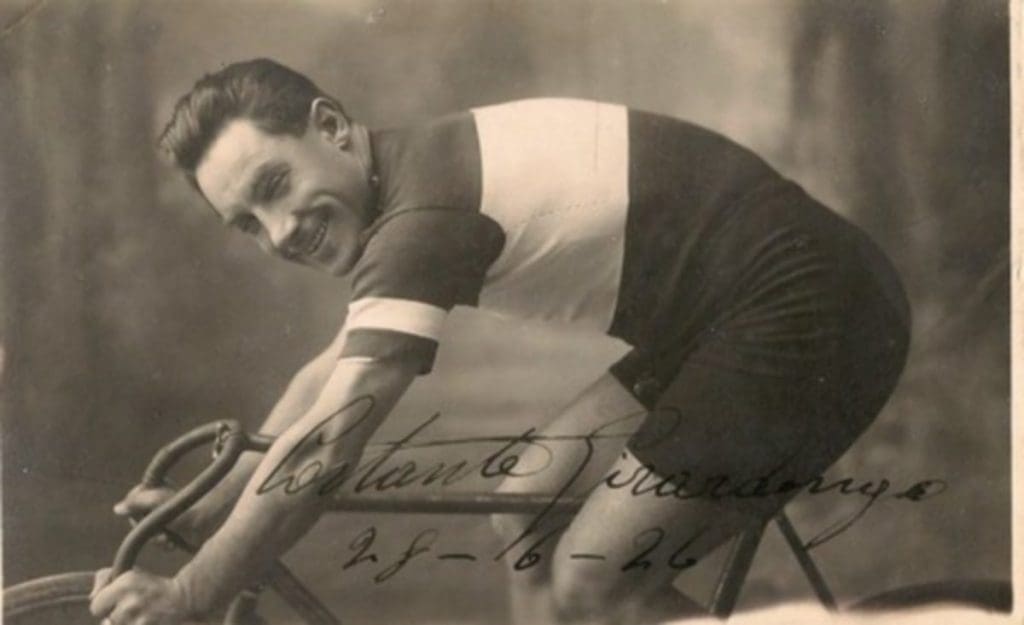
Costante Girardengo is one of those riders who does not fit neatly into a modern category. Calling him an Italian specialist only tells part of the story when he won Milan-San Remo, the Giro d’Italia and Il Lombardia in an era when the biggest champions were expected to master almost everything. He became one of the defining figures of early 20th-century cycling and, for many, the first true campionissimo of Italian racing.
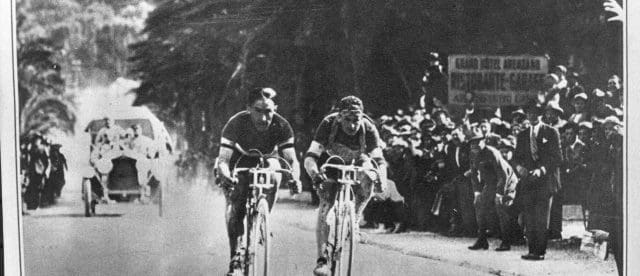
Rider history
Girardengo’s rise began before the First World War interrupted the sport. By 1913, he had already won a stage of the Giro d’Italia and claimed the Italian national road title, then repeated both feats in 1914. In 1915, he crossed the line first at Milan-San Remo, only to be disqualified after taking the wrong course. It remains one of the stranger near-misses in the history of the race and denied him what would likely have been an even earlier place in the record books.
The war years cut across the momentum of his career, yet Girardengo still remarkably returned to the top. He also had to recover from Spanish flu before resuming his dominance, but by 1918, he was back to his best and finally secured his first official Milan-San Remo victory. That success marked the start of an extraordinary relationship with the race.
Across his career, Girardengo won Milan-San Remo six times, in 1918, 1921, 1923, 1925, 1926 and 1928. For decades, that stood as the record until Eddy Merckx later surpassed it. He was not simply a repeat winner either. Girardengo was a constant presence at the sharp end of the race, finishing on the podium 11 times between 1917 and 1928. That level of consistency helps explain why he became such a towering figure in Italian cycling.
His achievements stretched well beyond Sanremo. Girardengo won the Giro d’Italia overall in 1919 and 1923, taking 30 Giro stage wins across his career. He also won Il Lombardia three times and claimed the Italian national title nine times, a staggering return even allowing for the more domestic nature of the calendar in that era. While many of his biggest victories came in Italy, he did venture abroad as well, including attempts at Paris-Roubaix, though without the same success he enjoyed closer to home.
Another important result came in 1927 when Girardengo finished runner-up at the inaugural UCI Road World Championships. His last major victory arrived with his sixth Milan-San Remo title in 1928, though he continued racing until 1936. After retirement, he remained influential within the sport and later worked in a coaching role, including helping guide Gino Bartali in the years around Bartali’s 1938 Tour de France victory.
Girardengo died in 1978 at the age of 84. By then, his place in cycling history had long been secured. He was one of the first great stars of the sport in Italy and one of the earliest riders whose reputation extended beyond results into something closer to national sporting folklore.
Greatest race victory
1918 Milan-San Remo
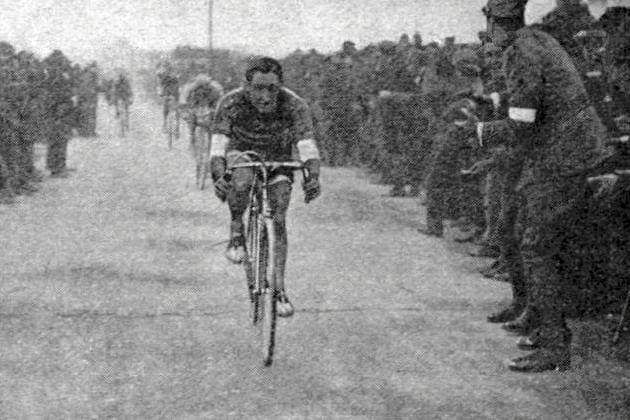
If one ride best captures Girardengo’s authority, it is the 1918 Milan-San Remo. After the frustration of his disqualification in 1915, he returned to win the race in devastating style in the first post-war edition.
Girardengo attacked with around 180 kilometres still remaining, going clear near Rivalta Scrivia. On the rough roads of the time, that was not simply a show of strength. It was also a practical move, giving him a cleaner line through damaged surfaces and reducing the risk of a puncture in an era when mechanical trouble could end a rider’s chances immediately.
Once he was away, nobody could match him. The roads used in Milan-San Remo at that time were still far removed from the tarmac-heavy route familiar today, and the combination of distance, poor surfaces and limited support made solo rides especially punishing. Girardengo handled all of it with ease. He reached Sanremo 13 minutes ahead of Tano Belloni, with only Ugo Agostoni in third finishing within an hour of him.
It was more than a victory. It was a ride that showed just how overwhelming Girardengo could be at his peak. It also gave him the Milan-San Remo title that had eluded him three years earlier and laid the foundation for his long hold over the race. Of his six wins there, this remains the one that best captures the scale of his talent.
-
 Photo Credit: Getty
 -
 Photo Credit: Cs-wolves / Wikimedia Commons, CC BY-SA 4.0

Spring Classics palmarès
Monuments
Milan-San Remo
1918, 1921, 1923, 1925, 1926, 1928
Il Lombardia
1919, 1921, 1922

