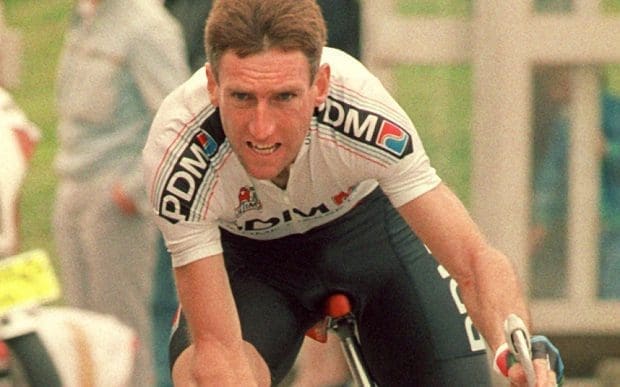
Sean Kelly sits comfortably among the greatest one-day riders the sport has produced. Describing him as a Classics all-rounder is the right starting point, but it still does not quite capture the scale of what he achieved. He had the toughness for cobbles, the engine for long and difficult stage races, the speed to finish reduced-group sprints and the consistency to dominate across whole springs. In the 1980s, very few riders matched his range. His record of nine Monument wins, seven straight Paris-Nice titles and a Vuelta a España overall victory explains why he remains one of the defining figures in men’s cycling history.
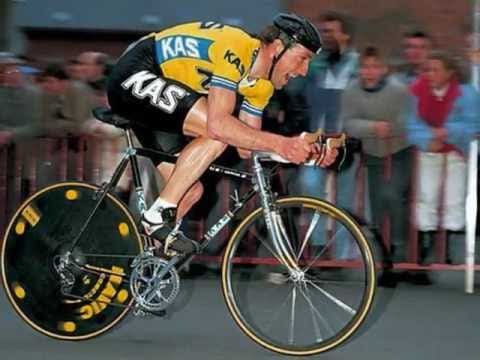
Rider history
Kelly’s career took an unusual turn before it had really begun. In late 1975, he rode in apartheid-era South Africa under a false name as part of his preparation for the 1976 Olympic Games. The consequences were serious. He received a suspension, and he and the McQuaid brothers were then barred from the Montreal Olympics. That setback pushed him towards France, where he joined VC Metz and began the move that would shape the rest of his career. He had already shown his promise by winning the junior Il Lombardia in 1975, but the real breakthrough came once he committed fully to racing on the continent.
His first major professional successes arrived quickly. Kelly won the Tour de Romandie in 1978 and took Tour de France stages, showing straight away that he was much more than a pure sprinter. In 1980 he finished 4th overall at the Vuelta a España while also winning the points classification. Over time, he collected eight Grand Tour points jerseys in total, including four at the Tour de France. Yet his development did not stop there. Encouraged to lose weight and broaden his range, Kelly became one of the most effective stage-race and Classics hybrids the sport has seen.
That transformation is best captured by Paris-Nice. Kelly won the race seven years in a row from 1982 to 1988, a record that remains one of the most extraordinary streaks in professional cycling. He also won the Tour de Suisse twice, the Tour of the Basque Country four times, the Volta a Catalunya twice and the Vuelta a España in 1988. Those results matter because they show how far beyond the standard mould of a one-day specialist he had moved. Kelly could dominate week-long stage races while still being one of the sport’s most feared Monument riders.
His Spring Classics record is exceptional. Kelly won Il Lombardia three times, Milan-San Remo twice, Liège-Bastogne-Liège twice and Paris-Roubaix twice. The only Monument he never won was the Tour of Flanders, where he finished 2nd three times, in 1984, 1986 and 1987. That near-miss only sharpens the outline of his greatness. He came closer than almost anyone to completing the full Monument set without actually doing it.
Kelly retired in 1994. His final race, the Christmas hamper race in Carrick-on-Suir, drew an enormous turnout. It was a fitting end for a rider who had long since become much bigger than his results alone in Irish cycling. He had started as an outsider forcing his way into the European scene, and finished as one of the most complete racers of his era.
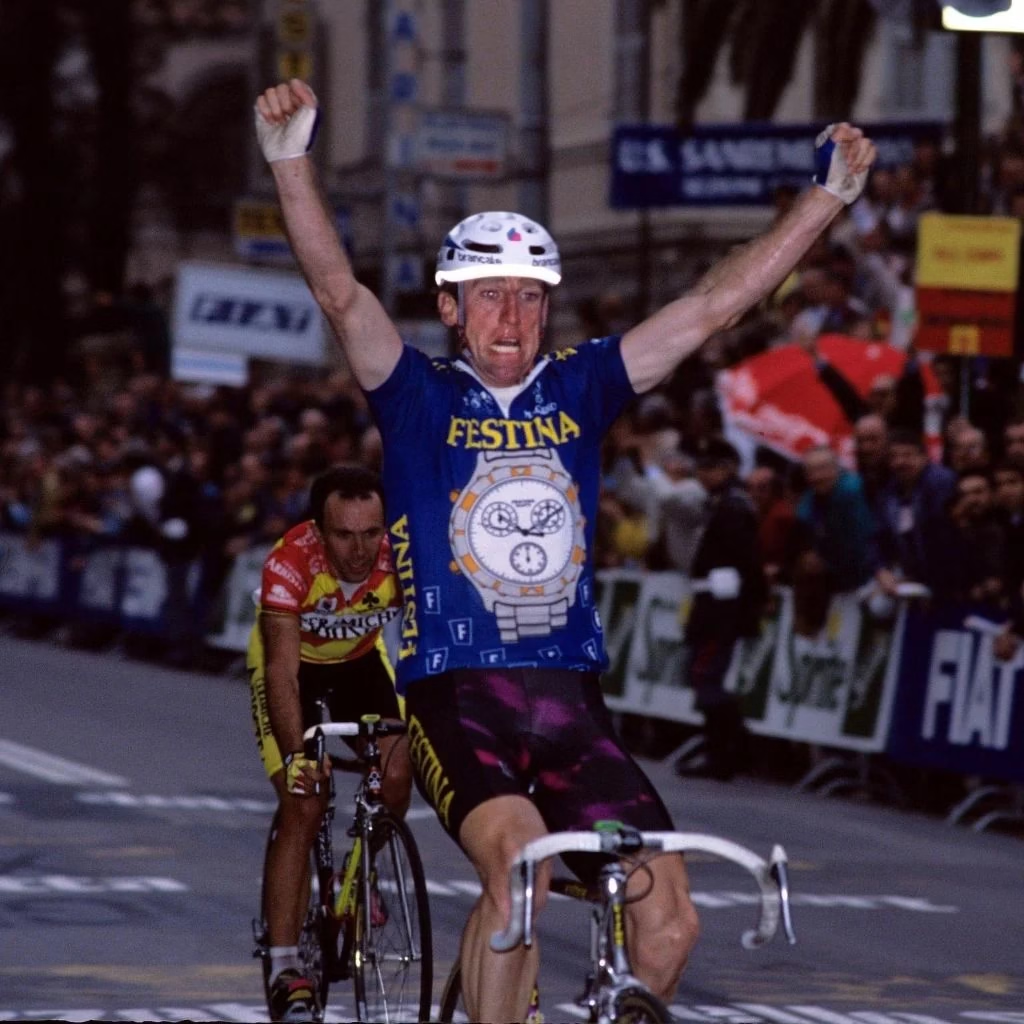
Greatest race victory
1992 Milan-San Remo
There are several races that could make the case here, but the 1992 edition of Milan-San Remo is hard to look past because of the timing, the execution and the quality of the finale. Kelly was already 35 and close to the end of his career, yet he still found a way to beat two of the finest Italian riders of the day in a race that normally punishes even the smallest hesitation. It was also his final Monument victory, which gives it an extra layer of weight.
The race followed a familiar Sanremo pattern. The field held together deep into the finale before the Poggio became the launch point for the decisive moves. Moreno Argentin attacked first and opened a gap. Maurizio Fondriest tried to get across but did not fully close it, and Kelly then used his descending skill to bridge the remaining distance on the technical run off the Poggio. By the time the road flattened, Kelly had made contact with Argentin and transformed the race from a likely Italian victory into a tactical duel.
What came next showed Kelly’s experience as much as his strength. He forced Argentin to take up the sprint first while the bunch was only a few seconds behind. Then, at exactly the right moment, he came around him to win by roughly a bike length. Johan Museeuw took 3rd just behind them as the peloton closed rapidly. It was not a long-range demolition job or a power display in the Eddy Merckx mould. It was a win built on positioning, descending, timing and absolute calm under pressure. That feels like a perfect summary of Kelly as a rider.
Spring Classics palmarès
Monuments
Liège-Bastogne-Liège
1984, 1989
Paris-Roubaix
1984, 1986
Milan-San Remo
1986, 1992
Il Lombardia
1983, 1985, 1991
Classics
Gent-Wevelgem
1988