Cycling calorie burn depends mainly on how hard you work and how long you ride. Body size also affects estimates, but there is no single hourly figure that fits a gentle commute, a hard indoor session and a hilly club ride. For a 75kg rider, an illustrative one-hour estimate can range from roughly 300 calories at an easy effort to more than 700 at a vigorous one.
Treat calorie figures as estimates rather than measurements of exactly what your body used. Wind, drafting, stops, fitness, bike setup and the method used by your watch or app can all change the result. A ride’s average speed is particularly poor at showing how much work you did.
An example calorie table
The examples below use standardised activity intensities of 4, 8 and 10 METs, where a MET expresses an activity’s energy demand relative to a resting reference. They are illustrative gross calories for one hour, rounded to the nearest 10. They are not personal targets or a prediction based simply on how hard a ride feels.
| Example intensity | 60kg rider | 75kg rider | 90kg rider |
|---|---|---|---|
| 4 METs: easy cycling example | 250 kcal | 320 kcal | 380 kcal |
| 8 METs: moderate-to-hard cycling example | 500 kcal | 630 kcal | 760 kcal |
| 10 METs: vigorous cycling example | 630 kcal | 790 kcal | 950 kcal |
The calculation is: calories = METs × 3.5 × body weight in kilograms ÷ 200 × minutes. For a 75kg rider at 8 METs for 60 minutes, that gives 630 kcal. Half an hour at the same intensity gives roughly half the total; an hour containing long stops should not be treated as an hour at riding intensity.
Total calories versus active calories
Gross or total exercise calories include the energy you would have used at rest during that time. Active or net calories aim to show the additional amount attributable to the activity. Apps do not all display these terms in the same way, which is one reason two devices can disagree.
Using the same standardised calculation, a 75kg rider’s resting allowance is about 79 kcal per hour. The 630 kcal gross example would therefore be approximately 551 active kcal. That distinction matters when comparing exercise totals or combining an activity app with another daily-energy estimate.
Why speed does not tell the whole story
A rider sheltered in a group may travel faster while doing less work than a solo rider facing a headwind. Climbing slows you down while increasing the work needed to gain height, whereas descending can produce high speed with little pedalling. Tyres, surface and riding position affect the relationship too.
This is why “calories per mile” is an unreliable universal rule. Even the same route can produce different demands on different days. Our guide to professional cycling speeds explains how context changes an average.
What a power meter adds
A power meter measures mechanical work more directly than a speed-based estimate. Average power in watts multiplied by riding time in seconds and divided by 1,000 gives work in kilojoules. For example, averaging 150 watts over a full hour produces 540kJ of mechanical work.
Mechanical work is not the same as food energy used by the body. Converting between them requires an assumption about efficiency, so even a power-based calorie estimate retains uncertainty. Use average power including zero-power periods for the stated duration, not normalised power, which is a different training metric.
Are indoor cycling and e-bikes different?
Indoor cycling can use substantial energy, but the bike’s displayed speed is not a reliable way to compare it with outdoor riding. Resistance and actual power matter more. A hard interval session also includes recoveries, so applying the hardest interval’s calorie rate to the whole session exaggerates the total.
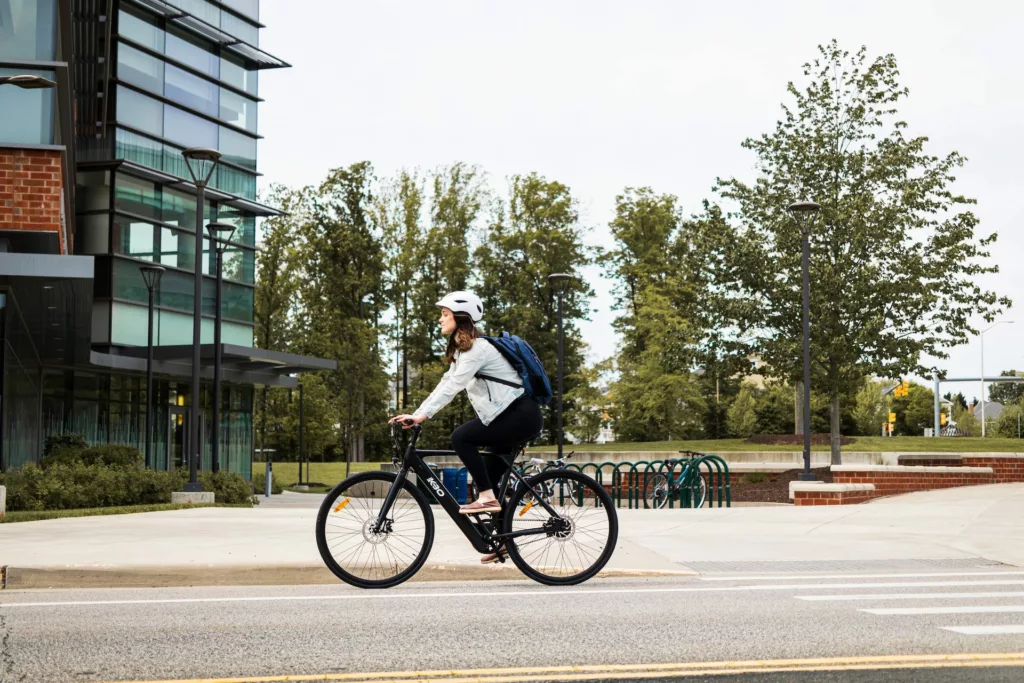
An e-bike reduces the rider’s work when the motor supplies assistance, but the effect depends on the assistance level, terrain and how you ride. It can still provide useful exercise. Do not assume either that it burns no calories or that it matches an unassisted bike at the same road speed.
How to use the estimate
Use a consistent method to compare similar rides and look at trends rather than treating small differences as meaningful. Check whether your app includes resting energy and whether a paired power meter, heart-rate sensor or basic speed calculation supplies the estimate.
For long or demanding rides, plan food and drink around the session and your recovery rather than trying to replace an exact app total calorie for calorie. Our Mallorca 312 preparation guide discusses practising fuelling for long days, while the muscles cycling works explains why the benefits extend beyond the energy number on a screen.
-
 Photo Credit: Gaetan Flamme