Travelling with your bike opens the door to some of the best riding you will ever experience. Alpine climbs, quiet islands, sunlit coastlines or classic training destinations such as Girona or Mallorca all become far more satisfying when you can ride your own familiar setup. But flying with a bike is not as simple as turning up at the airport with a boxed frame and good intentions. Airlines have their own rules, your bike needs the right protection, and packing mistakes can ruin a trip before it begins.
For UK cyclists heading abroad in 2025, the requirements are clearer than ever: pack the bike properly, understand the policies of your chosen airline and prepare for the logistics at both departure and arrival. With sensible planning, the process becomes routine rather than stressful. This guide covers the key points you need to know, plus a breakdown of current airline rules in a clear table for quick reference.
Choosing the right bike case
Your bike case is the single most important decision in the whole process. It determines how protected your bike is during handling and how easy your journey will be once you reach the airport.
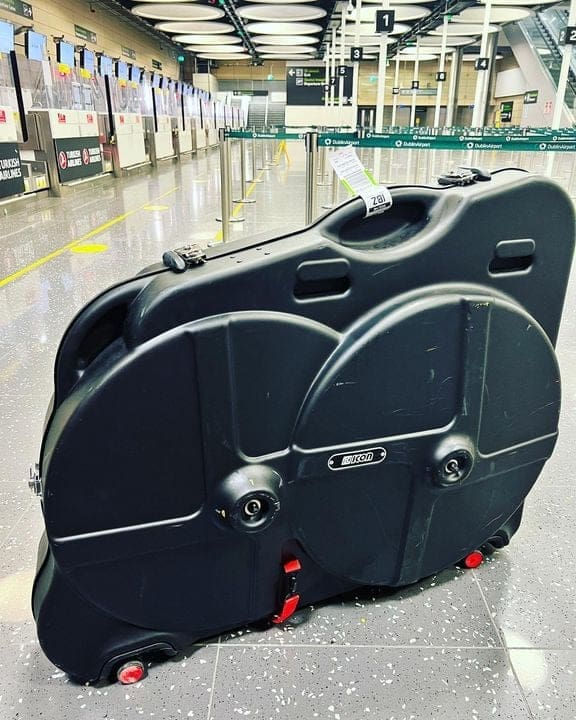
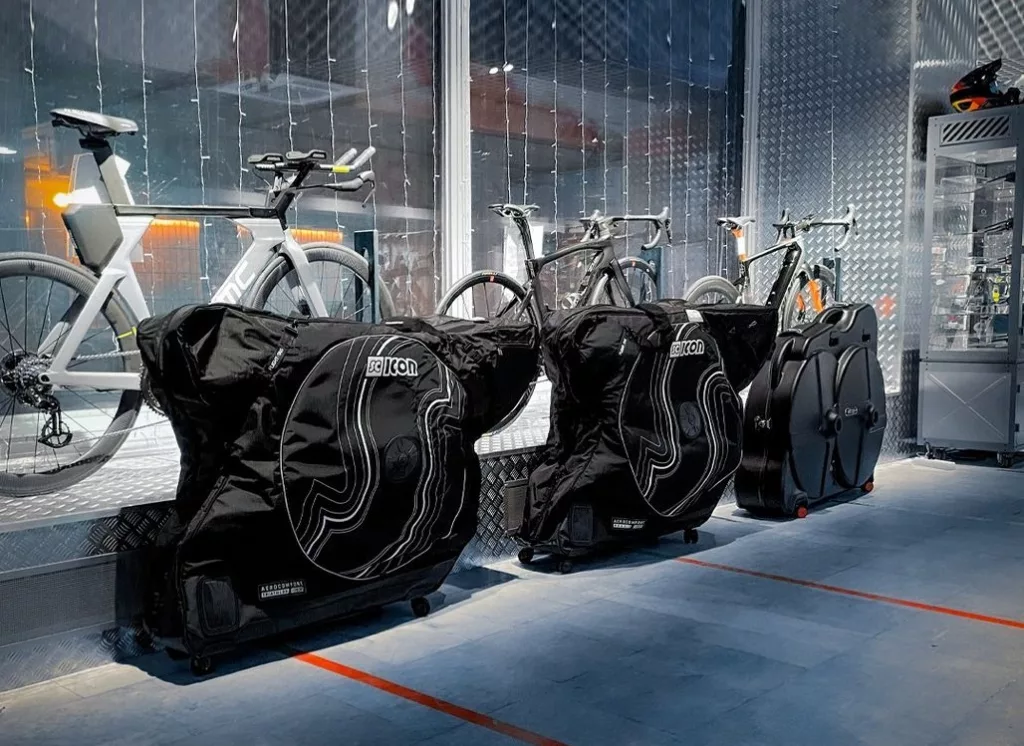
Hard cases provide maximum protection and are well-suited to carbon bikes or repeated long-haul travel. They are heavier, bulkier and take up more storage space at home, but they offer a level of security that soft bags cannot match. One example already reviewed here includes the Scicon Aerotech Evolution. The type of box that prioritises sturdiness, internal support structures and controlled loading.
Soft padded bags strike a balance between protection and practicality. They are easier to store, often lighter and kinder to your back when navigating airport terminals. The Evoc Bike Travel Bag and Scicon Travel Plus are good examples of soft cases that give enough structure to keep your bike stable, provided you pack internal padding carefully.
Budget options such as simple cardboard boxes or folding nylon bags can work, especially for shorter trips or less expensive bikes, but they require meticulous packing. They do not tolerate rough baggage handling in the same way a hard case will.
Whichever option you choose, the key is not the price but how securely the bike is fixed inside. The case is the container; the padding and structural support are what actually protect the bike.
How to pack your bike safely
Packing a bike is not complicated, but it must be done methodically. The aim is to immobilise every moving part and prevent any two components from striking one another during transport.
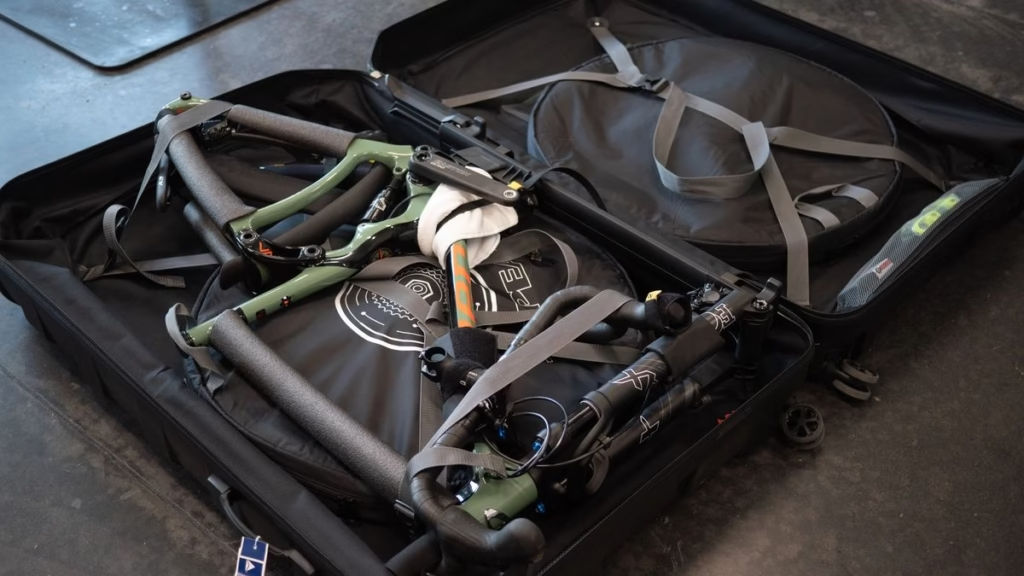
Start by removing pedals and rotating or detaching the handlebars so they sit flush against the frame. Remove the wheels and deflate the tyres slightly. Most riders also remove the rear derailleur from the hanger and wrap it in padding, as this is one of the most vulnerable components during handling.
Use foam tubing, bubble wrap or old towels to cushion the frame. Pack the wheels in dedicated sleeves if possible. Place small parts such as thru axles, tools or seatpost clamps in a labelled bag and keep it with the bike to avoid airport security pulling items out of your luggage.
Before closing the case, shake it gently. If anything moves, repack it. The goal is complete stillness.
At the airport, you will check the case in at the oversized luggage desk. Some airports handle cases gently, others less so. Assume the worst and pack accordingly.

Understanding airline rules in 2025
Airline policies are surprisingly varied, and small differences can catch riders out. Weight limits, fees, maximum dimensions and even the requirement to pre-book can differ between carriers. The safest approach is always to declare your bike as sports equipment at the time of booking, then reconfirm the rules a few days before travel.
A few principles hold across all major UK airlines. Bikes must be packed in an appropriate case or bag. They must be clean, with pedals removed and bars turned. Tyres should be deflated or partially deflated. You cannot usually add clothing or other luggage to your bike box unless it stays within the weight limit and complies with security guidance. Airlines also reserve the right to refuse your bike if it is improperly packed.
Below is a clear overview of the main rules for the airlines most commonly used by UK cyclists in 2025. Policies do change, but these reflect the typical allowances and conditions for the current travel season.
What to expect at the airport
Arrive early. Oversized luggage often uses a separate check-in desk and may require additional screening. Bikes may not travel on the same conveyor system as standard suitcases, so allow an extra 20 to 30 minutes. Keep tools in your hold luggage, not your hand luggage, and never pack CO2 canisters unless the airline explicitly permits them.
On arrival, the bike will usually appear at an oversize collection point rather than the main luggage belt. Inspect the case for damage before leaving the airport. If anything is broken, report it immediately; airlines are far more cooperative when claims are logged on the spot.
Practical tips learned from experience
- Photograph your bike and the packing process before closing the case
- Carry a small multi-tool in your checked baggage for reassembly
- Bring chain wipes or disposable gloves to avoid messy rebuilds
- Label the case inside and out with your contact details
- Pack a mini track pump or a portable floor pump if your destination does not guarantee access to tools
Travelling with your bike gains simplicity with each trip. The first attempt may feel fiddly, but once you understand the steps, it becomes just another part of the journey.
Airline rules summary for UK cyclists (2025)
Below is a table summarising common airline policies. These are typical values rather than guaranteed allowances, so always check the latest details before flying.
| Airline | Bike Fee | Weight Limit | Size Allowance | Booking Requirements | Notes |
|---|---|---|---|---|---|
| British Airways | Usually included as part of checked baggage | Up to 23 kg for standard economy allowance | Up to around 190 x 95 x 65 cm | Must declare in advance | Hard or soft case accepted, clean and partially deflated tyres |
| easyJet | Paid sports equipment item | Up to around 32 kg | Within large sports equipment dimensions | Must add during booking | No additional items allowed in the case |
| Ryanair | Paid sports equipment item | Up to around 30 kg | Must fit into approved bike container | Must add during booking | Remove pedals and turn handlebars |
| Wizz Air | Paid sports equipment item | Typically 32 kg | Must be packed in bike case or bag | Must add during booking | No tools or CO2 allowed in hand luggage |
| Jet2 | Paid sports equipment add-on | Usually 30 kg | Must be securely packed | Must add in advance | Tyres must be deflated |
| TUI | Paid sports allowance | Typically 23 to 30 kg depending on fare | Must be in protective case | Pre booking recommended | May require signature of liability waiver |
Final thoughts
Travelling with your bike demands organisation, but it gives you complete control over your riding experience. A good case, thoughtful packing and awareness of airline rules transform a potentially stressful process into something straightforward. With the logistics handled, you can focus on the real purpose of the journey: exploring new roads, new climbs and unforgettable rides on a bike that already feels like home.