

The Midwest Cycling Classic returns on the 22nd March for only its second edition, but it already feels like one of those useful early-season races that can quickly build an identity. Last year’s inaugural running ended in a bunch sprint, with Scarlett Souren taking victory ahead of Martina Alzini and Lonneke Uneken, and that result still offers the clearest starting point for reading the 2026 edition.
This time the race steps up to 1.1 level, which gives it a little more weight in the calendar and should help deepen the field. At 137.6km from Tielt to Oostrozebeke, with a broadly flat finish and only modest elevation, the route again points towards a fast finale unless the racing becomes more selective than the profile first suggests. That usually means two overlapping questions matter most. Can the sprinters’ teams keep control, and if they cannot, which rider is best placed to profit from a late split or reduced-group finish?
For broader context around this part of the season, the women’s cycling race hub is the best place to start, while Best women’s cycling races for beginners in 2026: the one-day Classics to watch first gives a wider sense of how these early one-day races fit into the year.
 Photo Credit: Tim Staes
How to watch the Midwest Cycling Classic
The Midwest Cycling Classic will be shown live on Pickx.
For Dutch-language coverage, watch via Pickx in Dutch.
For French-language coverage, watch via Pickx in French.
Live coverage starts at 12:45 GMT and the race is expected to finish at around 15:50 GMT.
That should make this a straightforward afternoon watch rather than one of the longer all-day spring broadcasts. It is the sort of race where joining on time matters, though, because a flat or semi-flat one-day event can still be shaped very quickly if the wind, positioning and road furniture start to bite.
A short history of the race
There is not much history yet, but the little we do have is useful.
The Midwest Cycling Classic was first held in 2025, with Scarlett Souren winning the only previous edition in a bunch sprint. Martina Alzini was 2nd and Lonneke Uneken 3rd, with Puck Langenbarg and Cecilia van Zuthem rounding out the top 5. That result matters because it tells us two things.
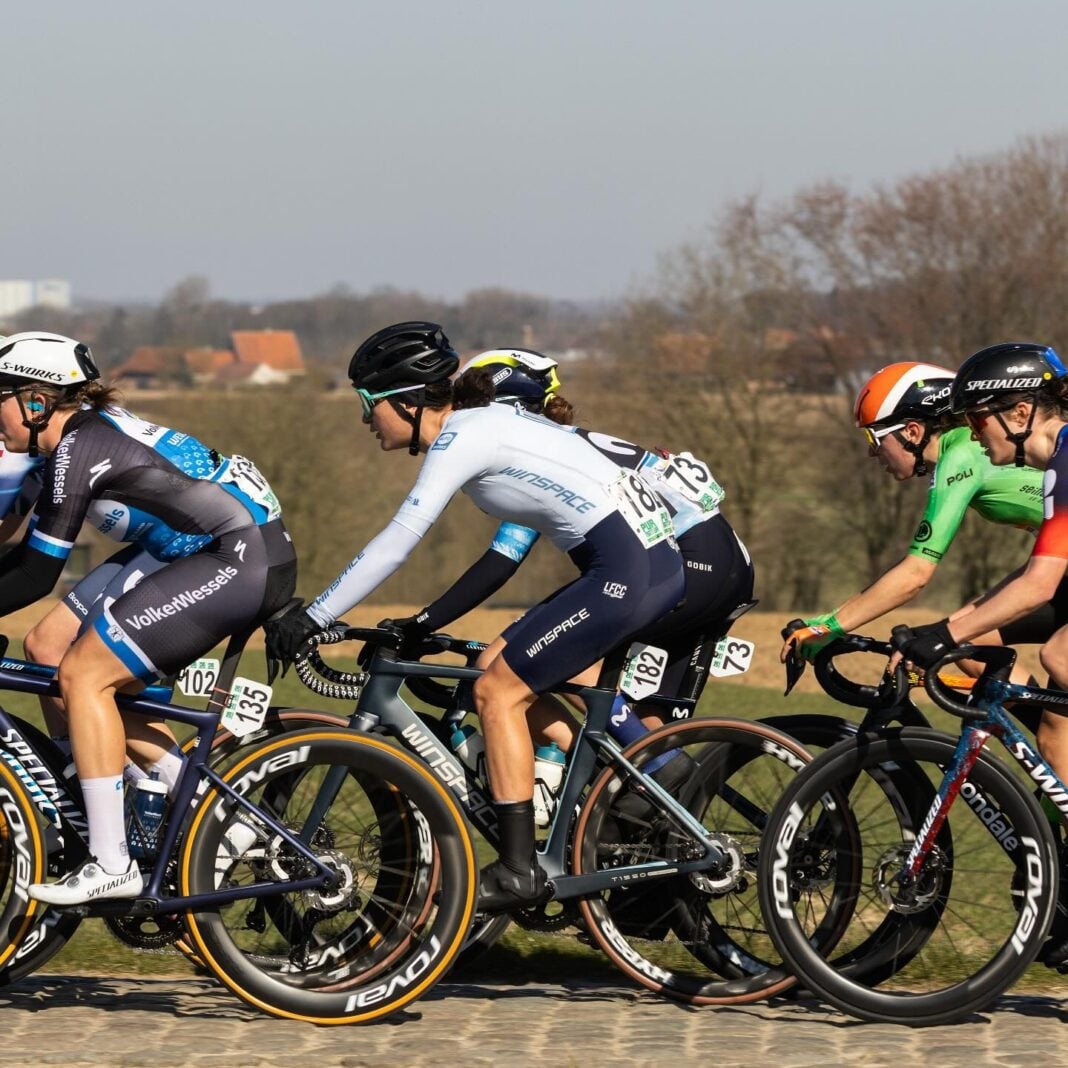
First, the race was controlled enough to finish in a sprint. Second, it still produced a front end populated by the kind of riders you would expect to handle a slightly rougher, harder sprint day rather than a totally straightforward flat drag race. Souren and Uneken, in particular, fit the profile of riders who can still be there when a race has been made a little harder than pure sprinters might prefer.
That gives the 2026 edition a useful baseline. If the route plays similarly, the finish should again favour riders with speed who can also survive a more nervous day.
What kind of race should we expect?
The route profile suggests another bunch sprint or, at the very least, a reduced-group sprint is the most likely outcome.
At 137.6km, this is not a race built around one decisive climb or a late summit finish. The flat run-in to Oostrozebeke makes it hard to imagine a pure climber or long-range soloist having the terrain needed to ride clear and stay clear without a lot of tactical hesitation behind. The more realistic danger to the sprinters is not the course itself, but the way the race is ridden.
If teams commit to a controlled day, then the finish should suit the faster women in the field. If the pace becomes more aggressive, if positioning starts to stretch the race, or if a few of the stronger all-rounders decide to make it harder than the route suggests, then the sprint field could narrow quite quickly.
That tension is what makes a race like this interesting. It is not simply flat equals sprint. It is more about which kind of sprint the race creates.

Scarlett Souren is the obvious reference point
When a rider has won the only previous edition, she has to start any preview near the top.
Scarlett Souren returns with that status and with a route that again looks highly compatible with her strengths. Winning the inaugural edition already proved she can handle whatever the Midwest Cycling Classic asks in its current form, and that familiarity matters in a newer race where the field is still learning the best way to approach the closing kilometres.
She also has the advantage of racing for a VolkerWessels set-up that knows what winning this race looks like. That may sound obvious, but in smaller or newer events, familiarity with how the day unfolds can be a genuine advantage. Souren is not starting from theory here. She is starting from experience.
Lonneke Uneken looks one of the strongest favourites
Lonneke Uneken finished 3rd here last year, and she stands out immediately as one of the clearest contenders for 2026.
She has the speed for this sort of finish and, just as importantly, the sort of engine that tends to matter in one-day races where the bunch sprint is not entirely straightforward. If the finale is a little more selective than in 2025, that may even improve her chances rather than hurt them.
In races like this, previous podium finishers usually deserve serious respect, especially when the route has not fundamentally changed. Uneken fits that perfectly. She was already close in the only previous edition and should see this as one of the more realistic winning opportunities in the early part of her spring.
-
 Photo Credit: quentinphotographiebe
 -
 Photo Credit: Getty
Valentine Fortin should be one of the riders to beat
Valentine Fortin is exactly the type of rider who can make sense of a race like this. She has enough speed to win from a reduced sprint and enough experience to read a nervous one-day race properly.
That combination is often decisive in 1.1-level racing. You do not always need to be the outright fastest rider in a laboratory sense. You need to arrive at the finish in the right position, with the right amount of energy left, and with the race having developed in a way that suits you. Fortin tends to be one of the more reliable riders in that sort of scenario.
If the bunch arrives together but in a slightly thinned or disorganised shape, she feels like one of the strongest names in the race.
Majo van’t Geloof makes sense if the race gets harder
Majo van’t Geloof is one of the more interesting names on this startlist because she sits in that useful middle zone between pure sprinter and tougher all-rounder.
If the race is ridden steadily and ends in a clean bunch sprint, there may be faster riders. But if it becomes a little more selective, if the pace rises repeatedly, or if the final group is smaller and more stressed, she becomes much more dangerous. That is often the sweet spot for riders of her profile.
This is the sort of race where that balance can matter a lot. Van’t Geloof does not need chaos. She just needs the day to be hard enough that the finishing speed is slightly dulled around her.
Victoire Berteau could benefit from a more awkward finale
Victoire Berteau is another rider who becomes more interesting the less straightforward the race feels.
She is not the obvious pick for a textbook sprint from a large bunch, but she is exactly the sort of rider who can move up the list if the race fractures, if the sprint trains fail, or if the finale becomes more about race craft than pure speed. In one-day racing, that kind of rider often sits just outside the first wave of predictions, then suddenly looks like a very logical contender once the road opens a small tactical door.
If the race turns messy late on, Berteau is one of the first names I would want near the front.
Fien van Eynde and Kaja Rysz are worth watching closely
Not every race is won by the most established name in the field, and races like the Midwest Cycling Classic often reward riders who are still climbing into wider recognition.
Fien van Eynde is one of those names who makes sense in this sort of preview. She has the kind of profile that could benefit from a race where the speed is high but the structure is not too rigid. Kaja Rysz falls into a similar category. If the sprint is not totally clean, and if the final kilometres create hesitation rather than perfect organisation, riders like these can suddenly become much more relevant than the biggest names on paper.
They may not start as the headline favourites, but they fit the shape of the race well enough to be taken seriously.
Other names who could shape the race
This race is deep enough that it should not be reduced to only a handful of names.
Puck Langenbarg was 4th last year and deserves mention again because previous top-5 finishers in a one-edition race are automatically useful form guides. Maike van der Duin is an interesting inclusion too because of the kind of speed and cobbled-race toughness she can bring to a finish like this. Martina Alzini was 2nd in the inaugural edition and again has to be respected if the race comes back to a bunch sprint.
There are also riders in the field who may be less likely to win from a direct finish, but who could still shape how the race plays out by forcing it to be harder, more selective or more nervous than the profile suggests.

What will decide the race?
The biggest factor is likely to be how many teams genuinely want a bunch sprint and how many are happy for the race to become less predictable.
If enough teams believe they have one of the fastest riders, the day should tilt towards control and a sprint finish. If there is hesitation, or if several squads decide their best chance is to wear down the purer sprinters, then the race becomes more open very quickly.
That is why riders like Fortin, van’t Geloof and Berteau feel so important to this preview. They are not only contenders in themselves. They are also the sort of riders whose presence changes what other teams may want the race to look like.
Prediction
Based on the only previous edition and the broad shape of the 2026 route, a sprint remains the most likely finish. But it does not feel like a race for the purest speed alone. It feels more like one for the rider who can survive a hard, nervous day and still finish cleanly.
Scarlett Souren deserves obvious respect as the defending winner, but Lonneke Uneken looks like one of the strongest all-round picks given her podium here last year and the way this sort of finish should suit her. Valentine Fortin also looks very well placed if the race comes back together in a slightly reduced or disorganised form.
My slight edge would go to Lonneke Uneken, with Valentine Fortin and Scarlett Souren as the two most obvious alternatives if the race follows the expected script.

