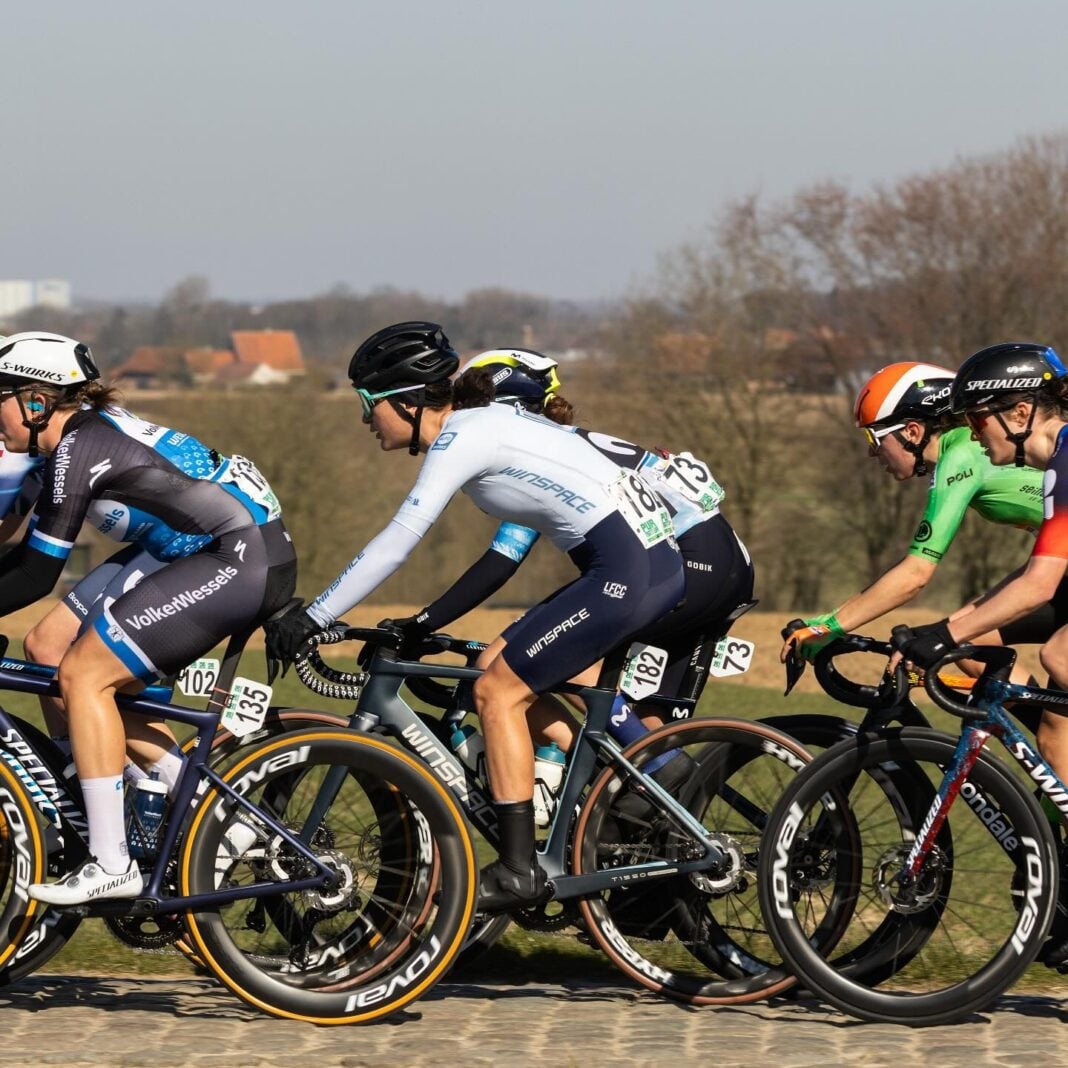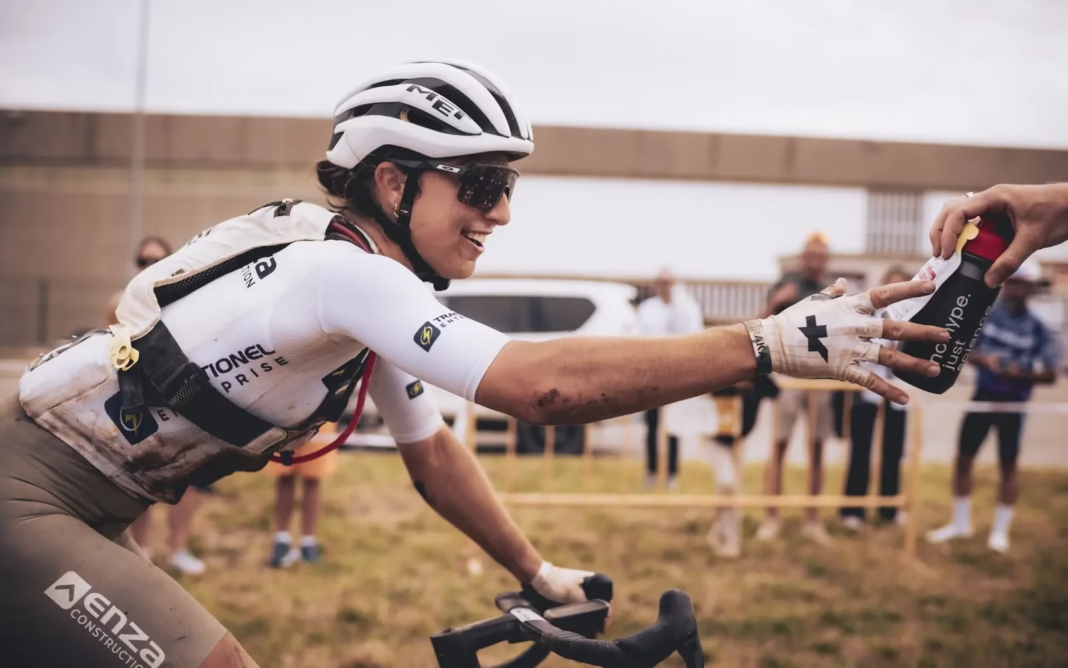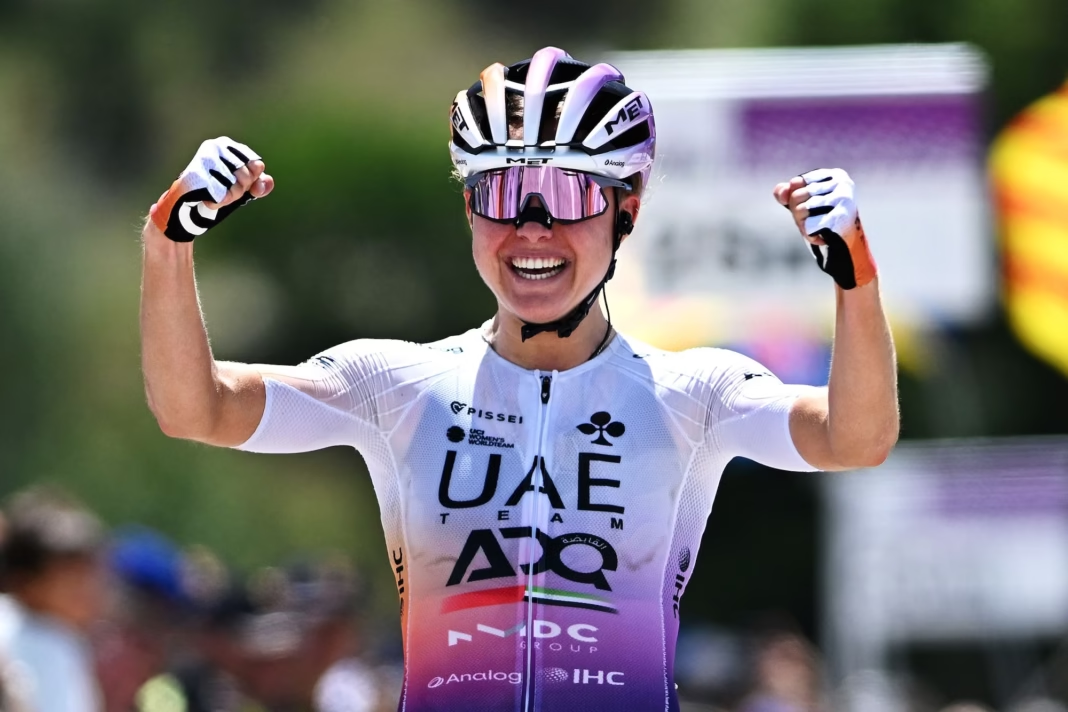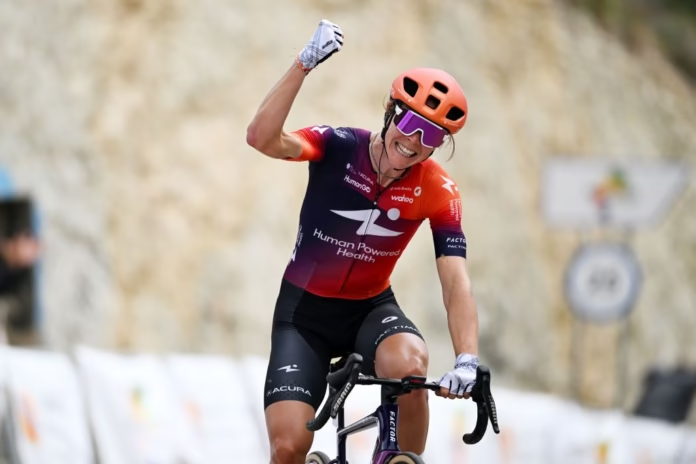
Human Powered Health heads into the 2026 season firmly positioned in the middle tier of the Women’s WorldTour. Thirteenth in the 2025 UCI team standings, the American squad remain competitive and visible across the calendar, but still some distance from the teams that shape the biggest outcomes. Their trajectory has been steady rather than dramatic, built on depth, versatility and targeted race selection rather than reliance on a single leader.
The past season underlined both the strengths and constraints of that model. Human Powered Health can win races, but doing so consistently at the WorldTour level remains an ongoing challenge.
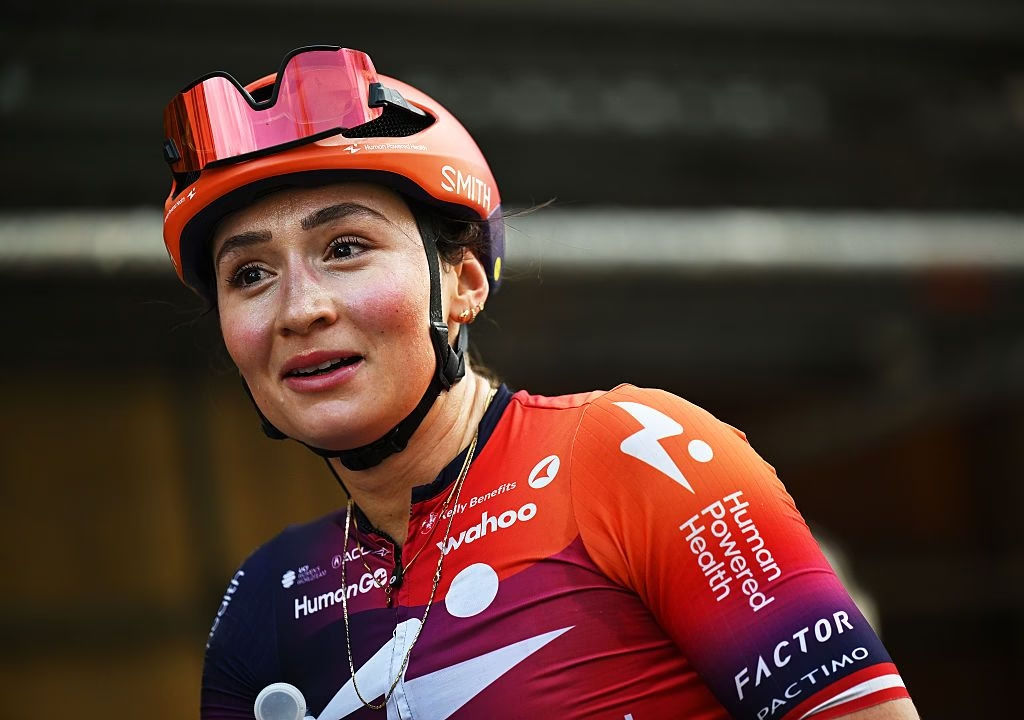
A season of selective success
The team’s victories in 2025 were limited in number, but meaningful within context. Thalita de Jong opened the season with a win at the Trofeo Binissalem-Andratx, a 1.1 race that rewarded her durability and experience on rolling terrain. Later in the year, Kathrin Schweinberger secured the Austrian national road race title, adding to the team’s collection of national-level success.
These results highlighted a familiar pattern. Human Powered Health are most effective in races that emphasise toughness, positioning and repeated efforts rather than pure sprint speed or extended high-mountain climbing. However, the absence of WorldTour victories illustrates the gap that still exists between targeted wins and sustained influence at the highest level.
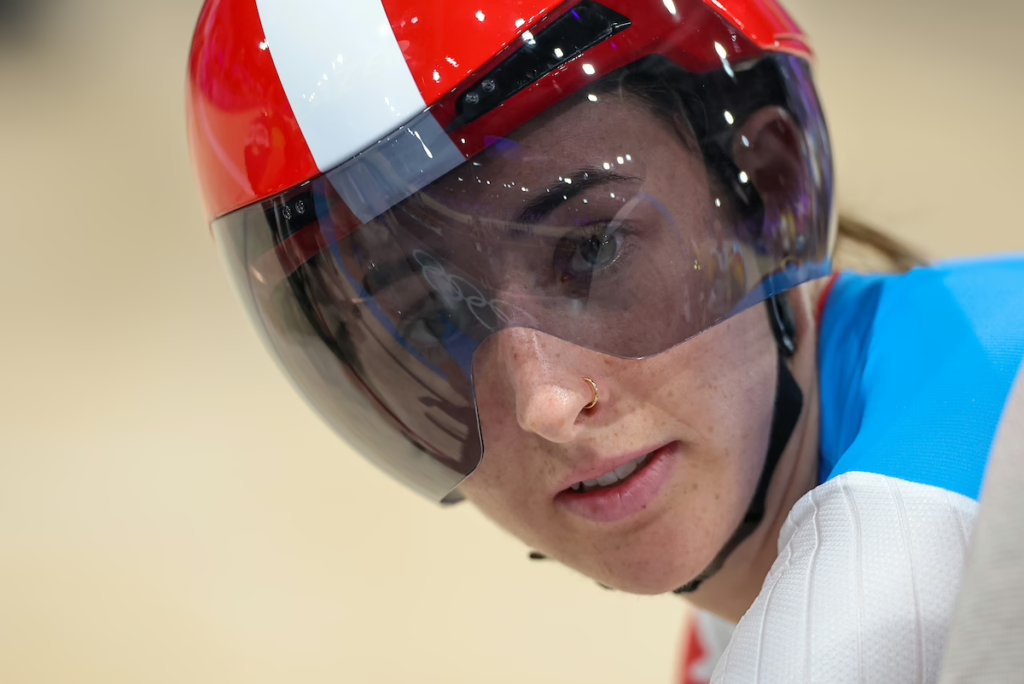
Shared leadership rather than hierarchy
Heading into 2026, Human Powered Health continue to operate without a rigid leadership structure. Instead, responsibility is spread across a group of riders capable of stepping forward depending on race profile and circumstance.
De Jong remains a key reference for cobbled and attritional one-day races, where her resilience and race sense make her effective late in contests. Giada Borghesi continues to develop as a versatile option on rolling and hilly terrain, while Maggie Coles-Lyster brings finishing speed and tactical awareness in reduced-group scenarios.
Daria Pikulik offers the clearest sprint option on flatter days, supported by Wiktoria Pikulik’s positioning and race craft. Yurani Blanco Calbet remains an aggressive presence, often at her best when races fragment early and opportunistic moves are rewarded.

Recruitment aimed at depth and continuity
Human Powered Health’s recruitment for 2026 reflects refinement rather than overhaul. Nina Buijsman arrives from FDJ United-SUEZ, bringing experience and reliability in support roles across demanding one-day races and stage transitions. Marta Jaskulska strengthens the Polish contingent with a rider capable of contributing across varied terrain.
Young Dutch rider Jente Koops steps up from NXTG Racing as a development-focused signing, while Titia Ryo and Petra Stiasny add further depth. Stiasny’s climbing ability in particular provides additional options in stage races, even if overall classification ambitions remain modest.
These additions reinforce the existing structure rather than redefine it, suggesting confidence in the team’s direction.

Stability tempered by early-season constraints
A notable feature of the 2026 roster is the volume of renewals. The majority of the squad has been retained, including experienced figures such as Ruth Edwards, Katia Ragusa and Lily Williams, underlining a commitment to continuity.
That stability does come with important caveats. Ruth Edwards is currently pregnant and will not be available for early-season racing, reducing the team’s depth in one-day and stage race support roles during the opening months. Barbara Malcotti, meanwhile, suffered a pelvic fracture in November, an injury that typically requires a cautious and extended return to competition. Her availability in the first half of the season remains uncertain.
These factors place additional responsibility on the remaining core of the roster and reinforce why expectations for 2026 are framed around measured progression rather than immediate gains.
 Photo Credit: Getty
Assessing the competitive ceiling
Human Powered Health’s challenge remains one of the ceiling rather than the foundation. The team are consistently present in races, frequently animate breakaways and regularly place riders in finals, but lack a rider capable of repeatedly converting that presence into WorldTour victories.
Early-season limitations add another layer of complexity. With Edwards unavailable during pregnancy and Malcotti’s return likely to be gradual, the team will need to manage workloads carefully and lean more heavily on riders such as de Jong, Borghesi and Coles-Lyster to deliver results while others rebuild form.
Progress in the standings is likely to come through accumulation rather than breakthrough, a viable but demanding path over a full WorldTour calendar.
Outlook for 2026
Human Powered Health approached 2026 as a team comfortable with its identity, but aware of its limitations. The roster is deep, experienced and tactically flexible, yet still short of the firepower required to challenge the upper echelon of the Women’s WorldTour.
Incremental gains, particularly through improved finishing and better conversion of race presence into results, are the realistic targets. Managing recovery and availability will be especially important in the first part of the season, given the temporary reduction in depth.
If those gains materialise later in the year, a move towards the top ten becomes plausible. If not, Human Powered Health are likely to remain a competitive but peripheral presence, capable of winning on the right days, but not yet shaping the broader narrative of the season.
2026 Human Powered Health Roster
- Yurani Blanco Calbet
- Giada Borghesi
- Nina Buijsman
- Carlotta Cipressi
- Maggie Coles-Lyster
- Thalita de Jong
- Ruth Edwards
- Marta Jaskulska
- Jente Koops
- Barbara Malcotti
- Mona Mitterwallner
- Daria Pikulik
- Wiktoria Pikulik
- Marit Raaijmakers
- Katia Ragusa
- Titia Ryo
- Kathrin Schweinberger
- Petra Stiasny
- Lily Williams
- Silvia Zanardi
-
 Photo Credit: quentinphotographiebe
 -
 Photo Credit: Getty