
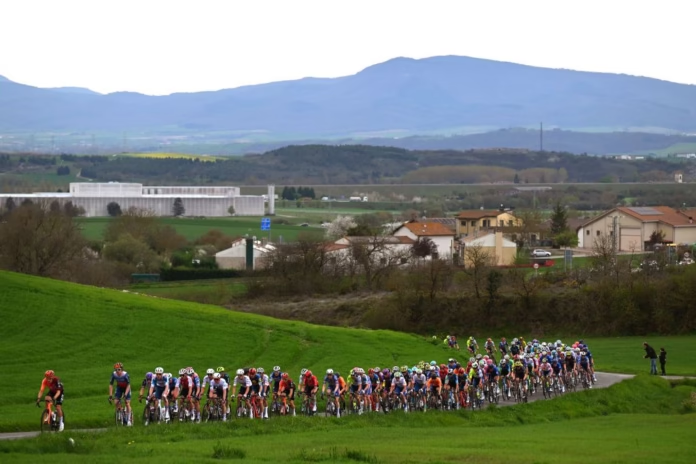
Itzulia Basque Country 2026 runs from the 6th April to the 11th April and, in classic fashion, there is very little wasted space in the design. This year’s route covers 809.6km, includes more than 16,000 metres of climbing, and packs in 29 categorised ascents across six days. The race starts with a short individual time trial in Bilbao and finishes with a difficult final stage into Bergara, with the organisers once again leaning into a route that rewards consistency rather than one huge summit showdown.
That is the key to this edition. There is no obvious soft day for sprinters to survive, reset and try again. Instead, the week is built around repeated pressure, awkward terrain and the kind of rolling Basque roads that can turn a solid GC rider into a vulnerable one if their team gets the pacing wrong. Stage 5 in Eibar is billed as the queen stage, but the whole race looks designed to chip away at the field before then.
If you are coming to the race fresh this spring, the Beginner’s guide to Itzulia Basque Country 2026 gives the broader context, while A brief history of Itzulia Basque Country helps explain why this race so often produces a more aggressive and tactical kind of GC battle than other one-week stage races.
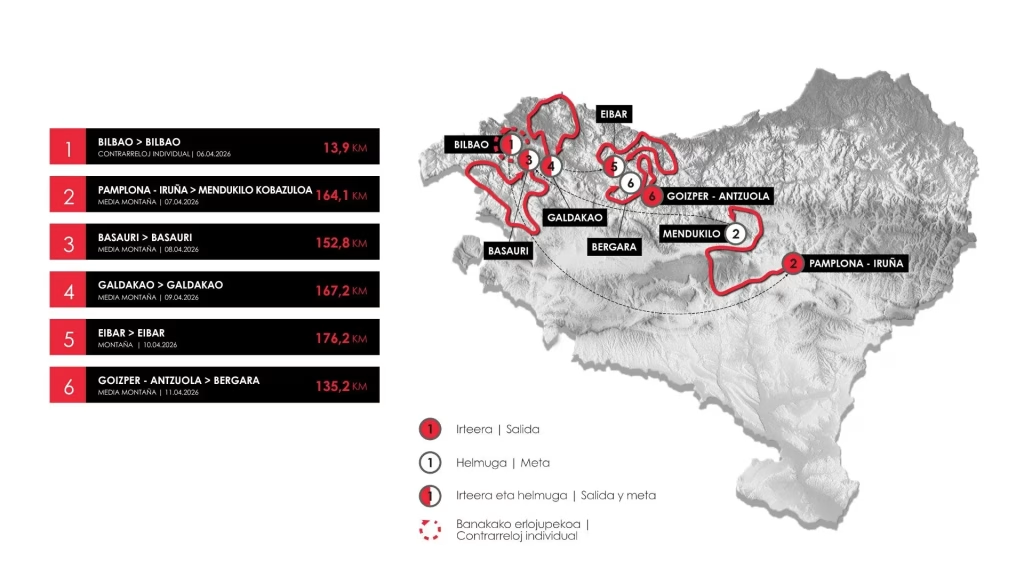
What stands out about the 2026 Itzulia route?
The broad outline is straightforward enough. Riders face a 13.9km time trial on the opening day in Bilbao, then move into a run of medium mountain and hilly stages from Pamplona-Iruña, Basauri and Galdakao, before the race reaches its hardest point with the 176.2km Eibar stage. Even then, the race is not done. The final day from Goizper-Antzuola to Bergara is only 135.4km, but it still brings six climbs and close to 3,000 metres of elevation gain.
In practice, that means two things. First, strong all-rounders and punchy climbers should be at the front of the race from the start. Second, riders hoping to win overall cannot afford to wait too long for a single defining moment. The route encourages repeated aggression, and that usually suits the riders and teams willing to race on instinct rather than simply defend.
That is also what makes Itzulia such an interesting follow-on from the cobbled classics. Where races like the Ronde van Vlaanderen 2026 full route guide or the E3 Saxo Classic 2026 route guide are built around key sectors and explosive moments, Itzulia tends to create damage through accumulation.
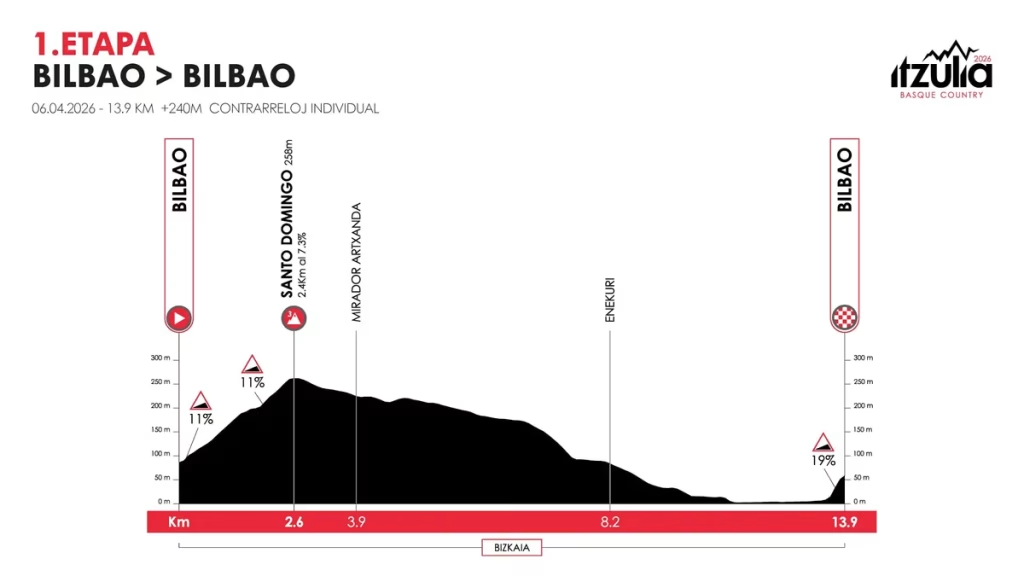
Stage 1 – Bilbao to Bilbao, 13.9km
Itzulia Basque Country 2026 opens on the 6th April with a short individual time trial in Bilbao. At 13.9km, this is long enough to create early differences, but not long enough to blow the race apart on day one. It is about establishing the first hierarchy rather than deciding the race outright.
For the specialists and the more powerful GC riders, this is an obvious opportunity. A short effort like this suits riders who can accelerate hard, hold position on a technical course and take a small but meaningful advantage. Pure climbers, by contrast, will already be thinking in defensive terms. Losing a few seconds is manageable. Losing too much this early would immediately shift the burden of the race onto them.
There is one categorised climb on the stage, which suggests it is not simply a flat power test. That matters, because Itzulia time trials often have enough shape to them to prevent the biggest engines from dominating in a straightforward way. The overall gaps may be modest, but the first leader’s jersey should still go to a rider with genuine GC ambitions.
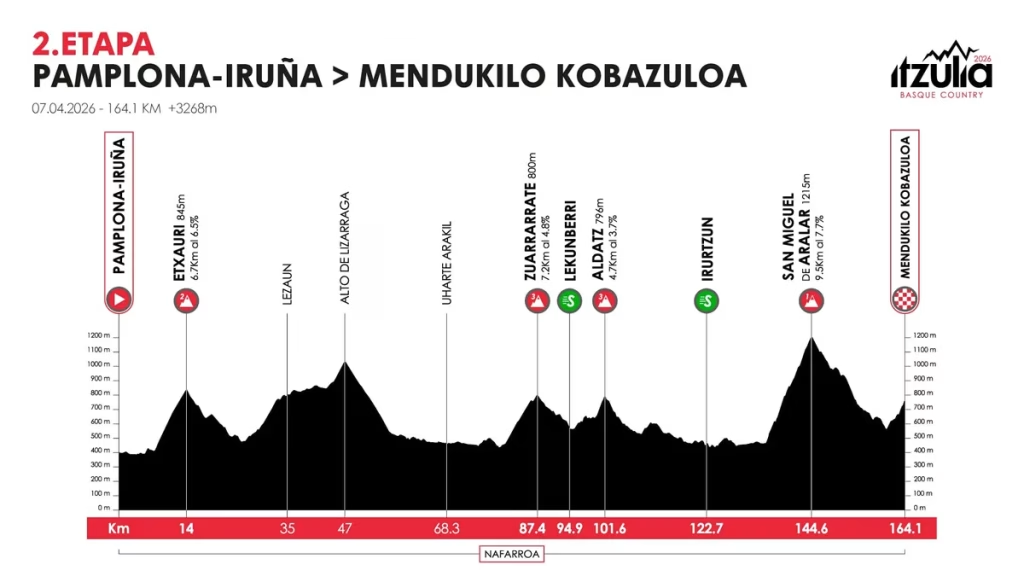
Stage 2 – Pamplona-Iruña to Cuevas de Mendukilo, 164.1km
Stage 2 is where the race immediately starts to look like Itzulia rather than a stage race with a Basque postcode. The stage is 164.1km long, includes four climbs and more than 3,300 metres of elevation gain, and the feel of it is much more mid-mountain pressure than summit-finish spectacle.
This sort of stage can be deceptively important. On paper, it may look like a day for a breakaway, especially because the finish is not pitched as a brutal uphill drag that screams GC showdown. In reality, Itzulia’s rolling stages often force teams to work harder than they would prefer, and riders who are a little undercooked can start to show their limits earlier than expected.
Cuevas de Mendukilo as a finish location also hints at a stage with a more selective feel than a standard transition day. Even if the overall favourites do not attack each other directly, this is the kind of terrain where teams begin to test the race and where domestiques can already become scarce late on. It would not be a surprise if the day ends with reduced numbers and a more nervous GC picture than the time trial alone creates.
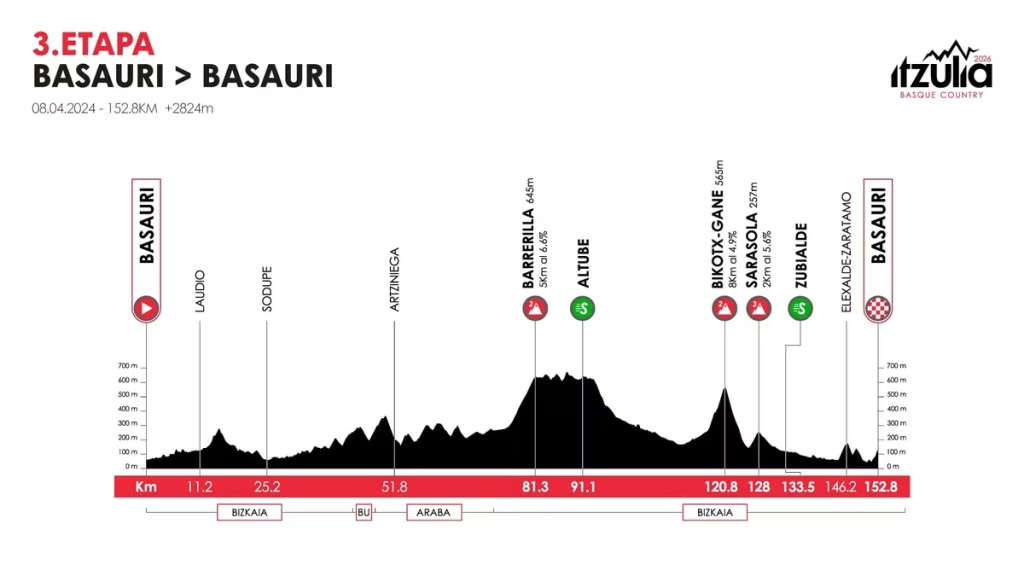
Stage 3 – Basauri to Basauri, 152.8km
Basauri hosts a 152.8km loop stage on day three, with three climbs and two intermediate sprints. It looks like one of those stages that may not appear decisive from a distance, yet could be one of the most awkward in the whole race.
Circuit stages in the Basque Country rarely settle into a predictable rhythm. Constant turning, repeated positioning fights, and the mental drain of knowing the bunch will hit the same stress points again can produce a very different race from what the profile alone suggests. This stage may not look like the queen stage, but it could be one of the most uncomfortable days for teams trying to defend a narrow GC lead.
There is also an interesting tactical point here. By stage three, the time trial has already sorted the specialists from the climbers, and stage two has already tested depth and resilience. If a team senses weakness in a rival camp, Basauri is a sensible place to force them into repeated chase efforts. It is the kind of day where you might not win Itzulia Basque Country 2026 outright, but you could absolutely begin to expose who is not going to win it.
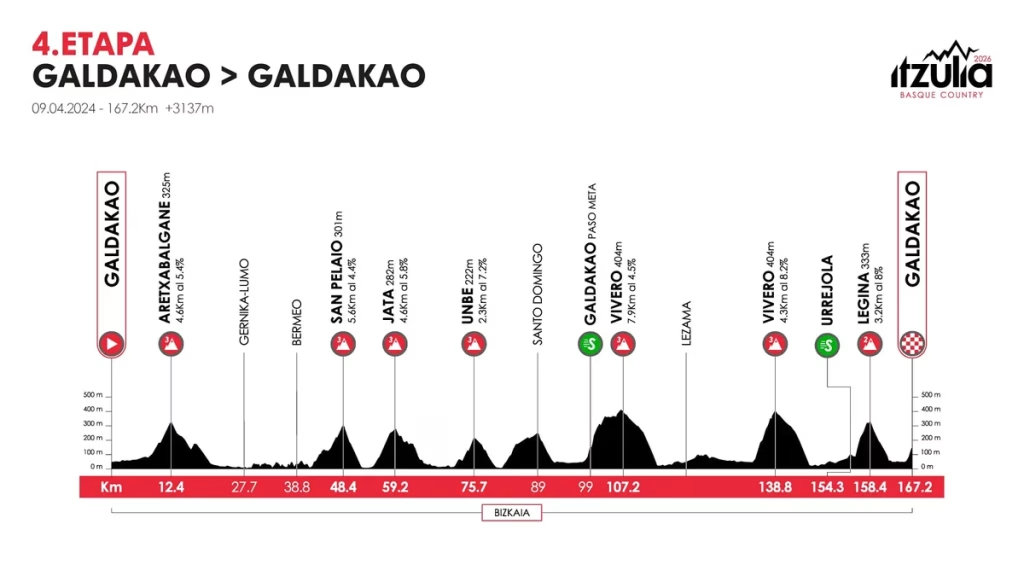
Stage 4 – Galdakao to Galdakao, 167.2km
If stage three is nervous, stage four looks even more tactically complex. Galdakao serves up 167.2km, seven climbs and more than 3,200 metres of elevation gain, which makes it one of the most loaded medium mountain days of the week.
Seven climbs in a single day does not necessarily mean one enormous mountain test. More often in Itzulia, it means a fragmented, stop-start contest where the race can split, regroup and split again. Those are difficult days to control, especially once fatigue starts to build and the domestique ranks thin out. Riders with strong teams around them should have a clear advantage, because this is the kind of stage where having two or three cards to play can transform the race.
This is also the point in the week where accumulated fatigue begins to matter more than raw freshness. Riders who handled the first three stages well should be able to race aggressively here. Riders who have spent too much energy closing gaps or limiting losses may already be in survival mode. For viewers, this could be one of the best stages of the whole race, because it offers multiple ways for the action to develop.
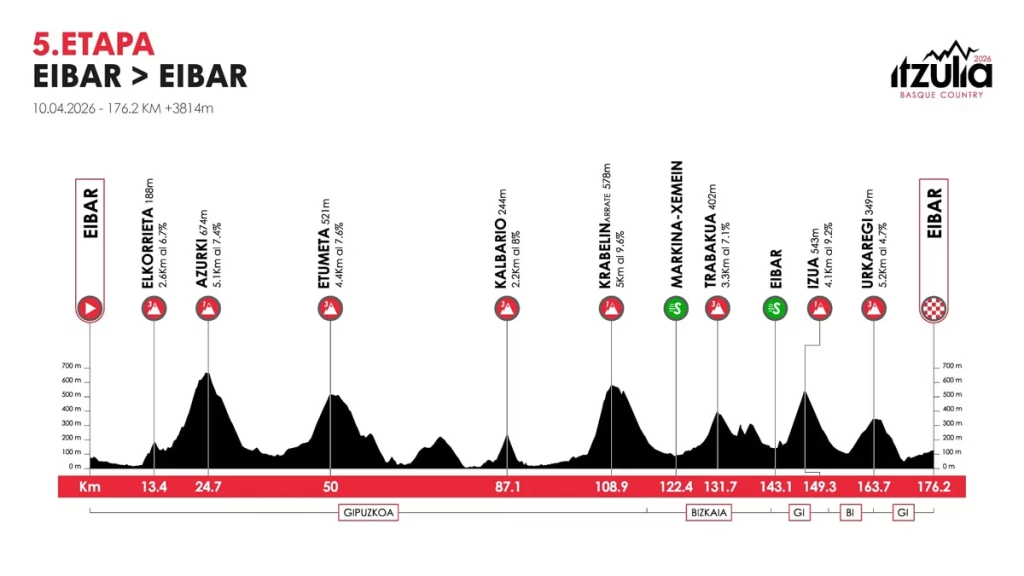
Stage 5 – Eibar to Eibar, 176.2km
This is the day everything points towards. Eibar has long been central to Itzulia’s identity, and on the 10th April it hosts the queen stage: 176.2km, eight climbs, two sprints and 3,841 metres of elevation gain.
There is no real mystery about how this stage should be raced. The distance is substantial, the climbing load is the biggest of the week, and Eibar’s terrain tends to reward riders who can attack repeatedly rather than rely on one final effort. If the strongest riders want to settle the race decisively before Bergara, this is the place to do it.
It is also significant that the race reaches this point only after four demanding days rather than after a run of easier stages. That should make the queen stage even harder in practice. Legs will not be arriving here fresh, and the selection may begin earlier than the final major climb. A rider isolated too soon could lose meaningful time even before the last decisive move goes.
If one stage is most likely to decide Itzulia Basque Country 2026, it is this one. But the final day is hard enough that nobody will want to assume the race is safely won in Eibar unless they have built a proper cushion.
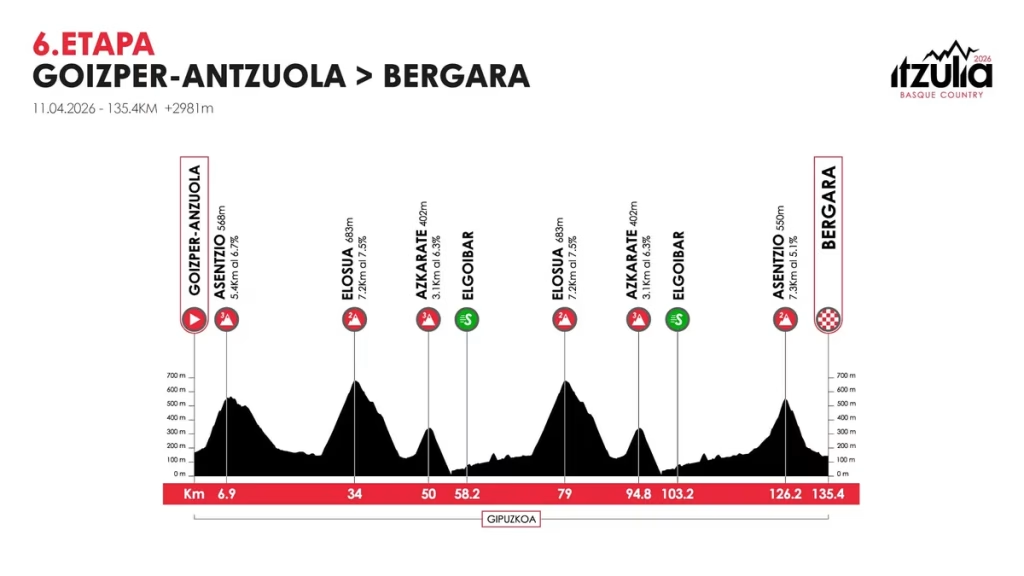
Stage 6 – Goizper-Antzuola to Bergara, 135.4km
The closing stage on the 11th April is shorter at 135.4km, but it is not remotely ceremonial. It features six climbs and around 3,000 metres of elevation gain, with repeated passes over roads that should keep the race open right to the end.
That is exactly the kind of final day Itzulia Basque Country tends to do well. Rather than a long drag to a summit finish or a flat sprint that locks everything down, this is a stage that keeps the race open. A rider sitting 20 or 30 seconds down still has terrain to work with. A team with multiple options can attack from range. A leader with a weak support group could come under pressure long before the final climb.
The repeated climbs are especially important because they create rhythm breaks. If the GC is close, this stage could produce a day of relentless marking and counter-attacking. If the GC gap is already bigger, it may become a last chance for stage hunters from a reduced field. Either way, Bergara should give the race a proper finish rather than an administrative ending.
Which stages should decide the race?
The simple answer is stages 5 and 6. Eibar is the race’s hardest day on paper and the most obvious launchpad for decisive GC attacks, while Bergara is built to punish any leader who arrives under pressure without enough margin.
But it would be a mistake to reduce the week to those two stages alone. The route’s real strength is that it creates a steady build in tension. The time trial establishes the first order. Stage 2 begins the fatigue process. Stages 3 and 4 look ideally designed for tactical stress and repeated positioning fights. By the time the race gets to Eibar, the strongest rider may already be the one who has simply had to spend the least energy surviving the first half of the week.
That wider spring context matters too. Itzulia comes immediately after the cobbled block and just before Paris-Roubaix 2026, which helps make this stretch of the season one of the most varied and tactically rich in the entire men’s calendar. You can see that bigger picture in the Men’s Cycling Race Hub.

Final verdict on the Itzulia Basque Country 2026 route
The 2026 route looks like a very recognisable Itzulia, but a particularly well-balanced one. It opens with a time trial that matters without dominating the race, moves into a sequence of rolling and mid-mountain stages that can create tactical instability, then finishes with two hard days in Eibar and Bergara that should reward the rider who has combined climbing strength, race sense and resilience across the full six days.
In other words, this is not a route built for one dramatic summit finish heroics alone. It is built for the best stage racer in the field, the rider who can time trial well enough, climb aggressively, survive repeated pressure and still make the right decision when the race turns chaotic. That should make Itzulia Basque Country 2026 one of the more tactically interesting week-long races of the spring.

