Juliette Berthet’s 2026 calendar has a very clear logic to it. This is not the programme of a rider being asked to cover every possible base. It is the programme of a rider being trusted with the sport’s more selective one-day races, then carried into the two stage races that matter most.
That makes sense for her. Berthet has always looked strongest when the racing is shaped by accumulation rather than chaos alone. She is at her best when the road keeps asking questions, whether that is over repeated climbs in the Ardennes or through the steady fatigue of a Grand Tour week. FDJ United-Suez have built a schedule around exactly that.
Juliette Berthet’s 2026 programme
Berthet is set to race:
- Omloop Het Nieuwsblad Women
- Strade Bianche
- Milano-Sanremo
- Amstel Gold Race
- Flèche Wallonne
- Liège-Bastogne-Liège
- La Vuelta Femenina
- Tour de France Femmes

What this schedule tells us
The first thing it says is that FDJ United-Suez are not treating Berthet as a pure stage-race specialist who only needs to ride into form. This is a serious spring programme before the Grand Tours even begin.
That matters because the one-day block is not random. Omloop Het Nieuwsblad and Strade Bianche give her two very different early tests. Milano-Sanremo adds a race that can reward patience and positioning. Then the calendar leans fully into the Ardennes, which is where the programme starts to make the most sense.
Amstel Gold Race, Flèche Wallonne and Liège-Bastogne-Liège are not just big races. They are races that suit riders who can handle repeated climbing efforts and still make good decisions late. That has always been Berthet territory more than the flatter, rougher northern cobbled races.
The key spring section
Strade Bianche is probably the most interesting early marker. It is a hard race to bluff your way through, and it tends to reward riders who can stay calm while the race keeps splintering. If Berthet is competitive there, it usually says something real about her level.
From there, the calendar moves toward the races that feel most natural for her. Amstel can reward a rider who reads the finale well. Flèche Wallonne is far more specific, brutally so, but still suits a rider with climbing punch and the ability to arrive in position. Liège is the broadest and deepest test of the lot, and arguably the race in this block that tells you the most about where her form really stands.
That trio feels like the heart of the spring.
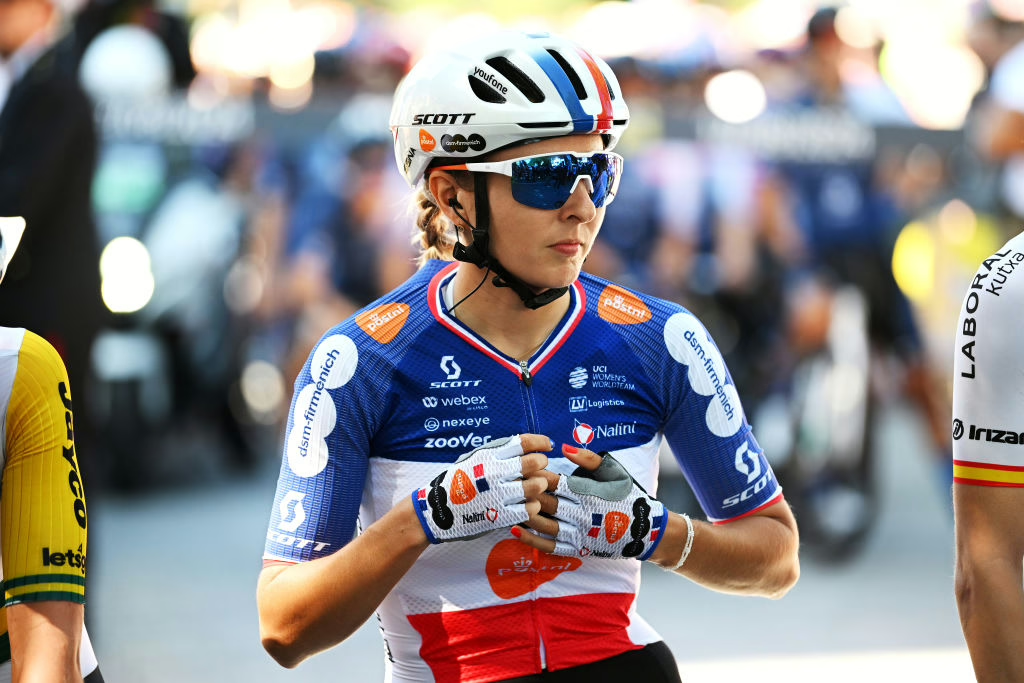 Photo Credit: Getty
Why Omloop and Sanremo are still there
Omloop Het Nieuwsblad and Milano-Sanremo are the outliers on paper, but they still make sense.
Omloop is the hardest opening test because it asks for more than climbing. It demands positioning, punch and confidence on Belgian roads. Berthet is not the obvious favourite type there, but that is partly why it is useful. It gives her a high-level race day early and forces sharpness immediately.
Milano-Sanremo is different again. It is less about raw climbing depth and more about timing, restraint and whether a rider can still be present when the race finally opens. For someone like Berthet, it is an interesting inclusion because it adds tactical variety without dragging her too far away from the wider shape of the programme.
What the Grand Tours tell us
Then comes the other half of the season plan: La Vuelta Femenina and the Tour de France Femmes.
That is where this calendar really comes together. The spring races are demanding enough to build depth, but they also feed naturally into stage-race condition. By the time Berthet reaches May, she should already have a substantial block of hard racing in her legs. That makes La Vuelta a meaningful target rather than just another step toward July.
The Tour de France Femmes, though, is the clearest long-term anchor here. A rider does not carry this kind of mixed spring and still line up in August unless the team see real value in her across the whole season. That usually means leadership, or something very close to it.
What to watch for
The most revealing part of this programme is where Berthet starts to become more than just present.
In races like Strade Bianche and Omloop, presence in the finale is already a good sign. In the Ardennes, the standard changes. There, the question becomes whether she is simply still in the group, or whether she is actively shaping the outcome.
That is the thread that runs through the whole schedule. Not whether she can get through it, but where she can begin to impose herself on it.
For FDJ United-Suez, this looks like a calendar built around a rider they trust in the sport’s more selective races, then trust again when the stage-race terrain gets serious. For Berthet, that is probably exactly where she should be.